Home » Issues » Recent Articles:

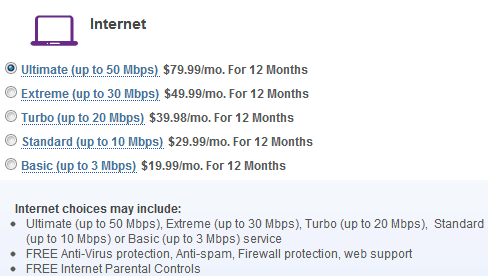
Time Warner Cable Lowers Promotional Price on 50/5Mbps “Ultimate Tier” to $79.95

Phillip Dampier April 4, 2012 Broadband Speed, Consumer News 21 Comments

Time Warner Cable’s spring promotion for broadband service has gotten more aggressive on pricing, particularly for the company’s fastest tiers.

In the northeast, we noted new, year-long deals that bring the price of the cable company’s fastest tier — now dubbed “Ultimate 50/5Mbps” to $79.99, down $20 from the regular price.

Time Warner’s “Extreme” 30/5Mbps service is now promotionally priced at $49.99.

The rest of the company’s speed tiers maintain the usual promotional pricing we’ve seen for several years.

All prices are supposed to be for new customers only, but we found them easy to obtain from the cable company’s customer retention department when customers demand the lower price.

Time Warner Cable is likely to charge their new $2.50 monthly cable modem rental fee if you open a new account, beginning in the seventh month of service.

Time Warner Cable has also been advising customers its CA Anti-Virus protection agreement has expired and the company is moving customers to McAfee’s “Family Protection” Suite instead.  The software comes free with your Time Warner Cable broadband subscription.

Even the 1%’ers Have to Deal With 1Mbps DSL: FairPoint & Comcast Say No to Wealthy Enclave

Phillip Dampier April 4, 2012 Broadband Speed, Comcast/Xfinity, Competition, Consumer News, Data Caps, FairPoint, Public Policy & Gov't, Rural Broadband Comments Off on Even the 1%’ers Have to Deal With 1Mbps DSL: FairPoint & Comcast Say No to Wealthy Enclave

No broadband for you...

Sometimes even money doesn’t talk… or buy you faster broadband service.

That is a lesson some of New Hampshire’s wealthiest residents — company presidents, top-dollar lawyers, and the trust-fund endowed — in Rindge and Grafton County are learning only too well.

It seems neither Comcast or FairPoint Communications has shown much interest in extending today’s definition of “broadband” to the multi-million dollar homes on Hubbard Road.

“Every year, I start working up the telephone chain, calling people at Comcast. I’m looking for the vice president, or whatever, in charge of infrastructure so I can call him, bribe him, plead with him to connect me,” said Leigh Eichel, who moved to the ritzy cul-de-sac in 2005. “I’ll pay anything!”

Eichel and his friends told their story to David Brooks of the Nashua Telegraph, who used the plight of the 1%’ers to ponder whether broadband should be a universal right.

A century ago, the government decided that mail service to all American homes was necessary and launched Rural Free Delivery. Then it decided electricity was necessary and created regulated utilities that guaranteed connection. It did the same with telephones, creating the universal access fund that collects money from all phone bills to subsidize land lines to the remotest home.

But nothing similar has happened with Internet service, which is mostly unregulated by government. The market has been largely left to its own.

The result is scattered empty spots like Hubbard Road, which should be broadband heaven.

... or you.

Comcast continues, for the seventh year running, to show zero interest in wiring the wealthy enclave.  That left residents trying to make do with satellite broadband, which they cried was too slow and usage-capped.

Eichel finally managed to cajole FairPoint Communications, the bankrupt phone company that bought out Verizon landlines in northern New England, to extend DSL to the neighborhood, but they did it on-the-cheap, leaving residents with sub-par service barely capable of breaking 1Mbps, when they’re lucky.

Welcome to broadband equality of a different kind, whether you are fighting AT&T from a family farm in Wisconsin for better-than-1Mbps DSL or a super-wealthy executive in New Hampshire suffering with FairPoint’s alleged broadband and utterly rejected by Comcast.

Particularly appalling for the well-traveled Hubbard Road residents: the realization that Singapore’s equivalent of a seedy Motel 6 has basic broadband service that beats the pants off New England’s dominant phone company.

Even Money Won't Talk

“I was staying in a budget hotel; there weren’t even windows in the room. Hey, I was spending my own money,” Eichel’s neighbor Rick Slocum told the newspaper. “[They had] 12Mbps broadband — the connection [was] 10 times as fast as my home.”

Brooks concludes New England wants the same thing most of the rest of the country wants — universal fiber-to-the-home access, which delivers 100-1000Mbps, depending on the provider.

They, like most everyone else, will have to wait.  Like AT&T U-verse and Verizon FiOS, FairPoint’s very-limited fiber offering FAST has reached a limit of its own — the amount the phone company is willing to spend rebuilding their network.  Future expansion plans are now on hold.

Slocum ponders the speed needs America will have in the future, and wonders if even fiber optics will one day need to be replaced for something even faster.

Brooks responds with a prediction.  As long as Comcast and FairPoint are in charge, whatever it is, Hubbard Road probably won’t have it.


AT&T Agrees to Stop Cramming Unauthorized Charges on Phone Bills

Phillip Dampier April 4, 2012 AT&T, Consumer News, Public Policy & Gov't 4 Comments

AT&T has joined Verizon in a groundbreaking decision to stop allowing bogus charges on customer’s phone bills.

Senator Jay Rockefeller (D-W.V.) publicly thanked AT&T for joining with Verizon to stop the fraudulent fees, which a recent Senate investigation found netted at least $10 billion over the last five years.

“AT&T made the right decision to end cramming by August,” Rockefeller said. “While the decisions of AT&T and Verizon are a step in the right direction, I still believe we need to pass a bill that bans this abusive practice once and for all.”

Rockefeller

Phone companies have been reluctant to stop third-party billing because it represents lucrative revenue for companies that have watched their landline customers disconnect and disappear.

“According to financial information my staff has reviewed, telephone companies earn a dollar or two every time they place a third-party charge on their customers’ bills,” Rockefeller said. “Do the math. That’s well over a billion dollars in profit over the past decade.”

AT&T suggested the cramming problem was overblown, but relented anyway.

“We currently receive cramming complaints for only about one out of every thousand bills that contain third-party charges,” said Michael Balmoris, an AT&T spokesman, in a statement to MSNBC.  “However, due to continued concern over the possibility of unauthorized charges, we have decided to take this additional step and eliminate third-party billing for most types of services.”

In late March, Verizon notified its billing partners it would cease third-party billing by the end of 2012.

Sprint Will Continue Offering Unlimited Data On Its Forthcoming LTE 4G Network

A Sprint spokesperson this week confirmed the company will continue selling “unlimited data” service on their forthcoming LTE 4G network.

Sprint’s Nichole Cappitelli told TechHog the carrier plans to extend unlimited access, with no speed throttling, to those buying Sprint’s first LTE phone, the Viper 4G.

Sprint begins accepting pre-orders for the LG phone April 12, with an anticipated shipping date by the end of the month.

Sprint’s 4G LTE network, still under construction, will provide improved 4G speed and value for customers looking for some savings over AT&T and Verizon Wireless.  Sprint currently delivers slower 4G WiMAX service from its partner Clearwire.

The Viper 4G phone will sell for $100 with a 2-year contract and $50 mail-in rebate.  With Sprint’s Everything plan, $80 will buy you unlimited mobile data, texting, and calling.  A similar plan from Verizon that only includes 2GB of mobile data is priced $40 higher.

Until July 22, Sprint will bundle 50GB of free cloud storage and sharing from Box, available from the Google Play app store.

Sprint is America’s only national mobile phone company offering unlimited and unthrottled data plans.

Harrisburg, Buffalo and Beyond to Verizon: Your Customer Service Sucks!

Phillip Dampier April 3, 2012 Consumer News, Verizon, Video 1 Comment

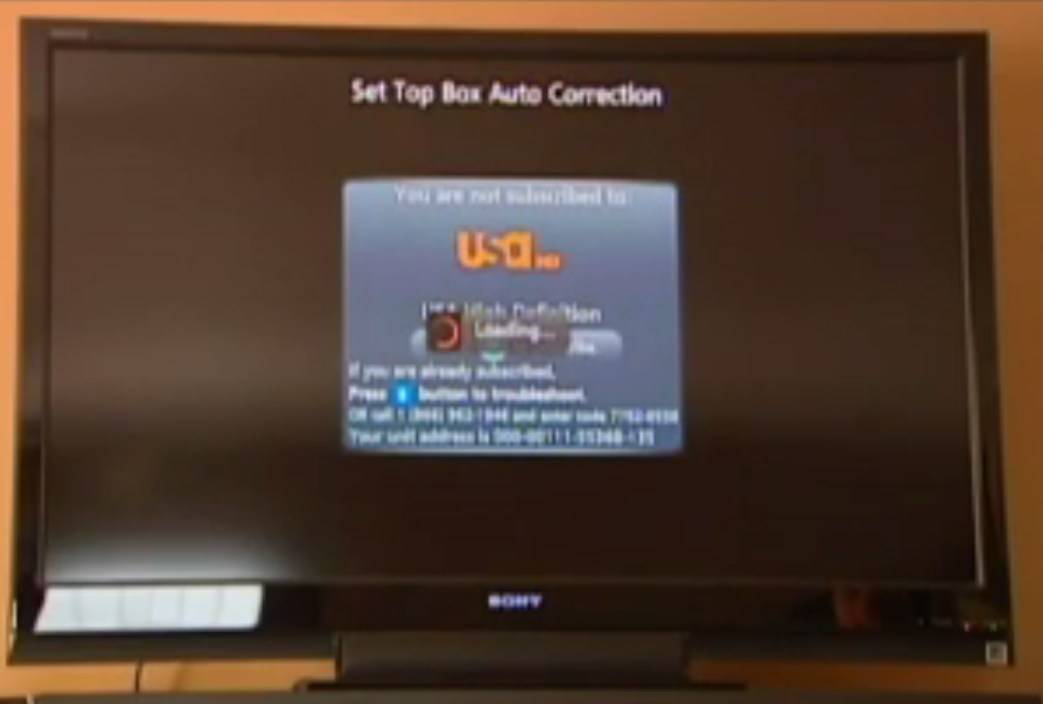
"You are not subscribed... to any channels."

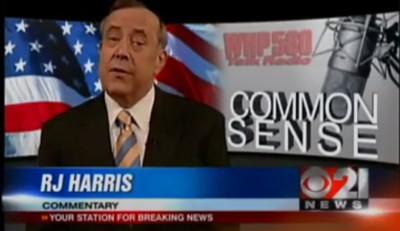
An angry commentator on WHP-TV in Harrisburg summed up his recent misadventures with Verizon’s customer service on the 6pm nightly news:

“Verizon Service Sucks!”

R.J. Harris was just one of thousands of Verizon FiOS customers across the northeast who found themselves without FiOS television service March 23rd, forcing many to miss NCAA basketball tournament games and the season premiere of “Mad Men.”

Because of a software glitch, Verizon’s media hubs in Buffalo and Harrisburg, Pa., shut off cable networks in FiOS cities across the northeast.  Viewers were told they were “not authorized” to receive cable networks, which brought many to the phones to call Verizon for help.

Harris joined enormous call queues that extended one, two, even three hours before most gave up.  Even worse: Verizon’s automated customer service agent provided voice synthesized non-answers regarding the FiOS outage.

“Lots of ‘press one,’ ‘press three,’ blah blah blah and then a talking computer,” Harris recounts. “One day later I tried to use Verizon’s ‘in home agent’ on my PC to get help.  Verizon took almost two hours to update my software before I could use the agent.”

Harris finally ended up in a chat session with “Sandeep,” half a world away.  But Harris found the offshore customer service agent was the first person to actually explain the problem.

“I told Sandeep I wanted management to know how I felt about my customer service experience,” Harris said. “He obliged by getting his boss Muhammad to join the chat. Muhammad — the manager — added one word to the chat: ‘OK.’ That’s it.”

“If you are starting a new company in America and you want the worst customer service policy you could possibly have, model your company after Verizon.”

[flv width=”360″ height=”290″]http://www.phillipdampier.com/video/WHP Harrisburg Common Sense 3-29-12.mp4[/flv]

WHP-TV commentator R.J. Harris is furious at Verizon for its FiOS and customer service failures.  (3 minutes)

Customers around the northeast shared one thing in common: they couldn’t talk to anybody at Verizon about the mishap.

Barbara Adams in Latham, near Albany, found that to be the case.  Adams called the local newspaper for help instead, which they gave her.  A Verizon FiOS customer near Buffalo ended up getting technical support from a friend’s Facebook page.

Harris

Verizon’s technical glitch required customers to follow a fairly complex set of instructions to fix the problem:

  1. With the TV and set-top box on, press Menu on the remote.
  2. On the TV screen scroll to Customer Support, selecting In-Home Agent.
  3. Select STB Auto Correct and follow any directions after that.
  4. The process should take several minutes.

Last week, Verizon began rebooting its home set top boxes remotely to reset them to working order without customer intervention.

But many customers were left without service all weekend long, unable to reach anyone at Verizon to understand why.

The company would not make a definitive statement about providing affected customers with service credits, but if you were affected, we recommend you call or write and ask for yours.

[flv width=”360″ height=”290″]http://www.phillipdampier.com/video/WNLO Buffalo Verizon FiOS Problems 3-27-12.mp4[/flv]

WIVB in Buffalo talked to a local Verizon FiOS customer who found a solution to Verizon’s technical snafu, from a friend on Facebook.  (2 minutes)

Search This Site:

Contributions:

Recent Comments:

Your Account:

Stop the Cap!