Home » Issues » Recent Articles:

Bizarre Political Fight Threatens Community Wi-Fi System in Tornillo, Texas

Phillip Dampier April 9, 2012 Consumer News, Public Policy & Gov't, Rural Broadband, Video, Wireless Broadband Comments Off on Bizarre Political Fight Threatens Community Wi-Fi System in Tornillo, Texas

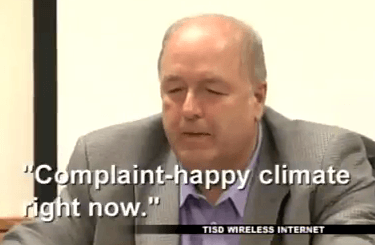
Vranish says the community's free Wi-Fi has to go because of a "complaint-happy climate." (Image: KVIA-TV)

A bizarre political dispute involving board members of the Tornillo, Tex. Independent School District threatens to shut off community-owned Wi-Fi service for more than 500 subscribers.

The Tornillo school board is no stranger to controversy, and evenly divided factions often create at atmosphere some local residents describe as the best political theater in town.

Unfortunately, the town’s Internet access may be a casualty of the school board’s latest dispute.

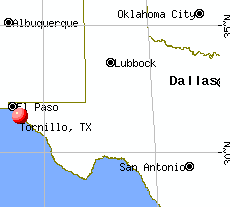
Tornillo, a small community of 1,600 in southeast El Paso County, needs Internet access.  With 36.8% of the population below the poverty line, commercial providers have shown little interest in selling broadband to the community, more than 99% of which are Latino-American.

Since 2004, the local school district has provided free wireless access for a one-time setup fee of $275.

Now school Superintendant Paul Vranish has said he will shut off the service because a majority of the school board failed to vote for a resolution that would pay for any legal fees incurred by school district employees respecting any potential complaints about the service.
Vranish blamed a local “complaint-happy climate” for necessitating legal protection, but some local residents suspect the real issue is a political dispute between Vranish, the rest of the school board, and Tornillo resident Ricardo Hernandez, who separately filed an unrelated complaint against Vranish with the Texas Education Agency.  Two state agencies are presently conducting investigations into allegations Vranish misused district funds for personal gain.

Hernandez, according to the resolution, has “questioned a former employee as to the legality” of the Wi-Fi service. Vranish apparently is unwilling to find out whether the service is legal or not, declaring he would simply terminate the service at an unspecified future date.

“It’s a simple personal and political dispute that may well cost Tornillo its Internet access and leave 500 residents in the dark, all because Mr. Vranish thinks the community will turn against Mr. Hernandez if the service does close down,” writes Maria, a local Tornillo resident. “What are these people hiding because this is certainly not about Wi-Fi.”

[flv width=”480″ height=”290″]http://www.phillipdampier.com/video/KVIA El Paso Tornillo ISD To Discontinue Free Community Wireless Internet 4-4-12.mp4[/flv]

El Paso’s KVIA sought answers to the Wi-Fi dispute, but found themselves chasing the school district superintendent down a hallway, unwilling to address questions about the matter.  (3 minutes)

Verizon Will Cease Selling Standalone DSL Service May 6th; Voice With DSL Only, Please

Verizon Communications will stop selling DSL broadband-only service to its customers May 6th in what the company is calling an effort to control costs “enabling us to continue providing competitively priced services to existing and new customers.”

Broadband Reports readers first reported receiving written notice of Verizon’s plans to discard “naked DSL” service, although existing customers who don’t move or make any changes to their account will be able to keep the broadband-only service for now.

Verizon provides the details:

Beginning May 6, 2012, we will no longer offer High Speed Internet without local voice service on the same account.

What does this mean for you?

  • If you currently have High Speed Internet without local voice service on the same account, there is no action required on your part to continue enjoying your internet service. You will not experience any disruption of service.
  • Prior to May 6, 2012, you can still make speed upgrades or downgrades to your existing service.
  • Prior to May 6, 2012, you can receive bundle discounts by adding DIRECTV service or Verizon Wireless service to your current internet service.

What this means if you change or disconnect your High Speed Internet Service as of May 6, 2012 or after:

  • You can make changes to and retain your Verizon High Speed Internet Service on or after the above date, by adding Verizon’s local voice service to the same account.
  • If you are moving your service from one location to another on or after the above date, you may subscribe to internet service at your new location if you also subscribe to Verizon’s local voice service on the same account.
  • If you choose to subscribe to additional Verizon services you could be eligible for a bundled discount when you also subscribe to Verizon’s local voice service on the same account.

There is speculation Verizon is eliminating its DSL-only service in an effort to boost revenue and push subscribers in FiOS-enabled areas to Verizon’s fiber optic network.  A decade earlier, many phone companies fought to avoid selling “broadband-only” DSL service without a voice landline because of revenue losses.  Landline customers continue to drop voice service from traditional phone companies at an alarming rate — choosing competing cable or Voice over IP service or a cell phone.  By requiring voice service, Verizon can boost average revenue from each customer, whether those customers want the service or not.

Customers who currently subscribe to broadband-only DSL service from Verizon are advised that virtually any account change of significance can disqualify them from continuing with the service.  That includes address changes and speed adjustments.  Stop the Cap! recommends customers make any changes prior to May 6th.

Large sections of Verizon’s service area are not FiOS-eligible,  so current DSL customers with no other broadband choices may find themselves stuck with adding voice service. Verizon sells Basic Home Telephone Service with no local calling allowance at prices ranging from $7 in some communities to $16 or higher in others, excluding the FCC-mandated line fee, which runs an extra $6.50 a month.

One thing Verizon’s higher bills will accomplish is making Verizon Wireless’ new 4G LTE Home Fusion wireless broadband service look slightly more price competitive.  If a Verizon landline customer has to pay for both voice and data service, paying $60 a month for 10GB of wireless broadband may not seem that expensive in comparison.

HissyFitWatch: Frustration XFINITY – Comcast’s Nationwide Sporadic E-Mail Outage

Phillip Dampier April 9, 2012 Comcast/Xfinity, Consumer News, HissyFitWatch 1 Comment

Some Comcast customers might have thought they were losing their minds when e-mail user names and passwords kept failing with errors like “username and password do not match” even though customers were certain they did.  Our reader David dropped us a note late last night to say Comcast’s ongoing e-mail problems created quite a stir on the company’s customer support forum.

Customers have reported the issue sporadically for weeks, and many are unhappy about the perception Comcast has a policy of  ‘blame the customer first and don’t assume responsibility unless absolutely necessary.’

"I could have sworn the password was right!"

One customer:

They assume the customer is wrong and stick to that script no matter what, even when Signature Support states the customer’s PC is fine and the issue is on the provider’s network.

I spent hours (and $50 w/Signature) trying to get anyone to listen to me. I escalated and escalated until I was told there was no one higher, which we all know is incorrect, there are plenty of people higher than the Tech Support Supervisors. The way Comcast ignores proof is just unacceptable.

A Comcast support representative identified only as “Jordan” reports the problem was, indeed, Comcast’s responsibility:

It looks like we found a database replication issue that was not keeping passwords in sync across our multiple platforms.  At this point, the issue is resolved and all systems are working properly.

So for those that have been resetting their passwords in an effort to fix the issue, it should be set to the last one used.  If for some reason that does not work, please reset your password one more time to ensure what you think is your “new” password is your current password.  Obviously, you’ll then need to update any email programs, mobile devices, etc. with the new password.

Exclusive: Frontier Communications Has Plans for AT&T U-verse for Landline Customers

Stop the Cap! has learned Frontier Communications is laying the groundwork to upgrade selected areas of its network to deliver fiber-to-the-neighborhood service to some of its customers, perhaps as early as the last quarter of 2012.  Documents obtained by Stop the Cap! indicate the company is negotiating with AT&T to license U-verse technology to deliver the service.

The documents suggest Frontier’s 2011 negotiations with AT&T to resell mobile phone service to Frontier customers have now expanded to include the development of improved broadband at a cost less likely to antagonize Wall Street and the company’s investors.

Sources familiar with Frontier’s operations tell Stop the Cap! although the company will continue to support Verizon-acquired FiOS fiber-to-the-home networks in Indiana and the Pacific Northwest, Frontier plans to rely on less-expensive alternatives for the rest of its service areas and has no plans to further expand the FiOS branded fiber-to-the-home service.

For the most rural customers, Frontier appears ready to partner with HughesNet to resell a satellite broadband product to customers considered unsuitable for basic DSL service.  Frontier will continue to invest and upgrade its traditional 1-3Mbps ADSL service in rural states like West Virginia, Idaho, Nevada, and South Carolina.  The company is also planning to upgrade selected cities to VDSL — a more advanced form of DSL needed to support a U-verse offering.  Perhaps one major target for such an upgrade is Frontier’s largest service area — Rochester, N.Y., where Time Warner Cable has systematically picked off Frontier’s landline customers for years with offers of faster broadband speeds and better package pricing.

Frontier's headquarters in Rochester, N.Y.

Frontier’s insistence customers don’t need faster broadband speeds, a statement made repeatedly by Frontier Rochester general manager Ann Burr, has cost the company market share, especially for high speed Internet service.  Although Frontier claims to offer speeds up to 10Mbps in Rochester, the company only manages to deliver 3Mbps in some of the city’s nearest suburbs.

An upgrade to U-verse, while not as technologically advanced as fiber to the home service, would help Frontier defend its position in more urban markets, especially as cable companies upgrade their own infrastructure to market faster broadband speeds.

AT&T U-verse sells broadband at speeds of 3, 6, 12, 18, and 24Mbps.  Time Warner Cable, Frontier’s largest competitor in upstate New York, sells speeds of 3, 10, 20, 30, and 50Mbps.

Frontier Communications has been preoccupied integrating its newest customers, acquired from Verizon Communications in 2009, with their existing IT and operations systems.  The company recently touted it completed transitioning former Verizon operations, financing, and human resources with its own information technology network nine months ahead of schedule.

Frontier has been reorganizing some of its internal departments in preparation to launch several aggressive initiatives in 2012, especially in its efforts to roll-0ut more competitive broadband — considered a landline lifesaver —  in areas where the company has lost a lot of business to its cable competitors.  The company also intends to spend tens of millions upgrading its regional and national broadband infrastructure and continue extending DSL service to presently unserved rural areas.

Another planned improvement is an overhaul of Frontier’s website, which has brought complaints from customers for delivering inaccurate information, making online bill payment cumbersome, and being difficult to navigate.

Documents obtained by Stop the Cap! also reveal the company has made progress on its plans to pitch AT&T cell phone service to Frontier customers.

Frontier signed a resale agreement with AT&T last fall and is on track to begin limited trial offers of AT&T cell phones, smartphones, and tablets — with full access to AT&T’s network of 29,000 Wi-Fi hotspots during 2012 with a more widespread rollout in 2013.  Frontier plans to offer customers the option of a single bill for Frontier and AT&T services.

Frontier’s Karen Miller told Stop the Cap! the company had no comment about today’s story.

Southern Ohio Copper Thieves Cripple Phone, 911, Broadband Service for 8,000

Phillip Dampier April 5, 2012 Consumer News, Frontier, Public Policy & Gov't, Rural Broadband, Video Comments Off on Southern Ohio Copper Thieves Cripple Phone, 911, Broadband Service for 8,000

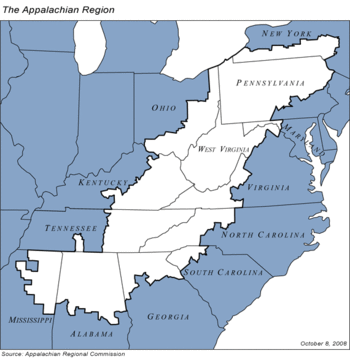
Appalachia: A major target for copper theft

Some 8,000 residents in Pike, Scioto, and Jackson counties found themselves without phone service when copper thieves mistakenly cut a critical fiber optic line serving Frontier Communications customers across the region.

As a result, phone service, broadband, 911, and even ATM machines were left out of order for hours last Wednesday, not restored until Thursday afternoon.

Pike County Sheriff Richard Henderson told WBNS-TV the outage was devastating for emergency responders.

“It’s a fear for us, because we depend on it for people to be able to call us for emergency situations,” Henderson said.

As a result of the fiber cut, the department was able to forward cellular 911 calls to neighboring counties, but the delay in response could have been life-threatening in some cases.

Frontier and other phone companies in Appalachia have been particularly hard-hit by copper theft, often committed by those with substance abuse problems.

Scrap copper prices remain very high, and some scrap dealers are accused of looking the other way when suspiciously-obtained “scrap copper” is delivered for a cash sale.

Brazen copper thieves have even stripped copper phone wiring in broad daylight, literally tearing it off utility poles as they drive down rural country roads.

Some of the worst problems have occurred in West Virginia, where lawmakers are beefing up criminal penalties for copper theft in an effort to control the problem.

Unfortunately for phone companies like Frontier, thieves often mistake fiber optic cabling — worthless for scrap metal resale — for copper, and with phone companies increasingly dependent on fiber to move a substantial amount of data traffic and phone calls between central offices and beyond, a single fiber cut can create major headaches for customers, and an expensive, often complex repair job for technicians.

Some companies in hard-hit areas are now building network redundancy into their service areas, allowing for quicker restoration of service.

That won’t help customers who are missing the phone cable that used to wind through their neighborhood, but maintaining a backup could be a life-saver in cases where phone companies rely on fiber and copper cables to move large numbers of calls between their switching centers and beyond.

[flv width=”600″ height=”356″]http://www.phillipdampier.com/video/WBNS Columbus Thieves Cripple 911 Internet Phone Services In Pike Scioto Jackson Counties 3-30-12.f4v[/flv]

WBNS in Columbus covered the extensive impact copper theft can have disrupting daily life in southern Ohio.  (3 minutes)


Search This Site:

Contributions:

Recent Comments:

Your Account:

Stop the Cap!