Home » Issues » Recent Articles:

Time-Warner Road Runner Service’s Usage Cap Test: 5-40GB Per Month

Phillip Dampier August 13, 2008 Broadband "Shortage" 8 Comments
Beaumont, Texas

Beaumont, Texas

Beaumont, on the eastern border of Texas with Louisiana,  is one of America’s mid-sized cities of just over 100,000 people, best known for the Texas Wildcatters,  a smattering of oil and gas companies, and the first advance by Time Warner, America’s second largest cable television company, into this year’s issue of bandwidth usage caps.

Company officials first announced the market test  in January, impacting only new customers in Road Runner’s Golden Triangle Division with usage caps ranging from 5GB  for the Lite Tier plan to 40GB for the Turbo Tier.   The charge for exceeding your plan’s cap is $1 per gigabyte.

Like other companies talking about usage caps, everyone likes to use their own internal definitions of what 1GB of usage represents.   Time Warner’s is:

1GB gets you about 70,000 e-mails, 34 hours of gaming or 1,344 hours of Web browsing; or, it’s the approximate equivalent of downloading 569 photos, 277 music files, 7 hours of low-resolution video (YouTube), 3 hours of standard definition streaming video or 45 minutes of high-definition streaming video.

Again, my own calculations bring some different numbers to the table, and, honestly, does anyone really worry about going over a usage cap from reading e-mail and web browsing alone?

Randomly grabbing 277 MP3 music files consumed 1.56GB of usage.   Downloading 569 photos assumes your collection consists of pictures averaging 1.75MB apiece.   I grabbed some digital photos I took to Walgreens for printing and looked at the files I uploaded to their server.   My pictures, at high resolution (but not extremely high) come closer to 8MB apiece.   One  episode of Law & Order (around 42 minutes without the commercials and dropping the stream before the end credits rolled) consumed 360MB at standard definition rates.   As noted earlier, a movie delivered by Akamai can consume 6-9GB for just one 720p high definition film, nearly double that if you choose the 1080 version.

Taking each of these activities into consideration individually, usage caps of 20GB a month (or 40GB) don’t immediately sound alarming.   But people do not use their Internet connections for a single activity, and the more people you bring to the table, such as in a four person household, the easier it is to see just how quickly a family, especially with teenagers, will quickly exceed even these kinds of caps.

Beaumont residents are the first to participate in a Road Runner trial with usage capped.

Beaumont residents were the first to participate in a Road Runner trial with usage capped.

There are users out there who use their connections for little more than basic e-mail and occasional web browsing, and Time Warner offering a plan at a discount for those users is not a problem, assuming they actually promote such plans to potential customers.   The greater issue  comes from a service provider charges the same price (or more) for a plan that is now seriously limited by a cap.  And to date, there has been no proposal for retaining an “unlimited” tier in addition to offering a range of capped tiers for those who figure they will use considerably less.

Wireless telephone companies, which historically sold usage in plans with buckets of minutes, are now moving towards offering flat rate options – pay one price, talk all you like, while the broadband industry, which marketed “unlimited, always on” connections for a variety of content they include in their advertising are now headed in the other direction, limiting consumer choice and access.

Time Warner has been complaining about broadband growth as both a content distributor and as a bandwidth provider, which adds an interesting twist to the rationale companies have to implement caps.

Saul Hansell, a reporter and blogger for The NY Times, noted company officials are growing tired of basic cable networks making them pay license fees for content, and then seeing that content being given away on the web.

Speculation that bandwidth caps may also have to do with limiting the amount of streaming video that consumers watch have also been offered as a reason for providers adding caps to their Internet service.

Time Warner’s rationale for bandwidth capping was, according to the company itself, to control what they felt was excessive use of their network.

“This is not targeted at people who download movies from Apple,”  Time Warner spokesman Alex Dudley told the NY Times. “This is aimed at people who use peer-to-peer networks and download terabytes.”

And again that brings up the question of how a 20-40GB cap is the most effective way to control a minority of users running a torrent client or server 24/7 and consuming terabytes over an entire month.   That is the equivalent of dropping a nuclear weapon on a pesty moth.   The weapon does get the moth, but it also impacts on a far larger circle of customers that don’t come close to consuming that level of data.   Every ISP has language in their contracts with customers that allow them to cut off the 24/7 torrent addict today.   Some, including Comcast, have enforced these kinds of provisions before without a usage cap.

To date, consumer reaction in Beaumont has been mixed.   Many are convinced the caps are unjustified, too low, or simply too expensive for what you get.   Others object to the excessive rate of $1 per gigabyte for overage fees.   Some don’t like the idea of having to measure everything they do online in fear of exceeding a usage cap.   There are also some that like the idea of paying for what they use, and are willing to consider different plans based on what they actually consume if it also means they get the speeds they were promised in advertising.

Dudley argues that the usage cap issue is not a foregone conclusion at Time Warner.   Dudley told GigaOm that TWC’s experiment in Texas was just that “a test.”

“If consumers don’t want it, the company is going to back away from it.  I think this is a trial and we are going to learn from this trial,” he said.

StoptheCap! wants the company to learn as well.   If you ask customers if they’d prefer paying the same amount they do today for unlimited access or capped access, there will be little surprise as to the outcome.

Frontier’s 5GB Usage Cap: Company Considering Exempting Preferred Partners, But Now Steps On The Net Neutrality Landmine

Phillip Dampier August 12, 2008 Broadband "Shortage", Frontier 7 Comments

Yesterday, Stop the Cap! raised the issue of how exactly Frontier Communications can offer access to the various “extras” the company offers to broadband customers all while limiting them to 5GB of consumption.

A number of readers have shared exactly the same concerns, not only with us, but the company as well.

It is interesting watching our concerns here get answered with shifting policies and vague promises over there, both on the Frontier website and  in replies to customer inquiries.   Unfortunately, they keep digging the hole they’ve gotten themselves into deeper and deeper with every passing day.

Intentionally or not, Frontier has now stepped on the landmine of the Net Neutrality debate.

Stop the Cap! reader William received a reply from Frontier that was  remarkable for its less-than-certain tone, and the latest company line:

I can certainly understand your frustration and confusion on who’s
statement’s to follow.

Unfortunately at the present all we know is what we have been told about the situation and that is that we (Frontier) are reserving the right to charge or terminate service for those that exceed the cap.

Currently feedback such as yours is being recorded and passed on to those that are in charge of this proposed change.

The email your received is correct, we are not currently enforcing this policy and we have been informed that, at the present, the plan is to start the enforcement part of the policy in December or January. Again that is the current time table we have been made aware of.

I do know that we have been made aware that certain activities such as carbonite backup and other services we offer can be excluded from the bandwidth usage. I wish I could offer more information with regards to the plan, unfortunately what was/is published is what there is to know at the present. We are passing all feedback to higher levels and it is possible the plan may change before it goes live so to speak.

I know the above does not answer all your questions, unfortunately since the plan is not finalized I can only offer what information I know to be accurate at the present.

There are several points raised in this reply.

First, it’s clear that those contacting Frontier’s support team should recognize the support personnel  are absolutely not responsible for the corporate policy decisions being made by management in Connecticut.   It is patently obvious to a lot of readers who have heard back from Frontier that there is no great enthusiasm for a usage cap  among a lot of folks working for the company.   We have always tried to draw a strong line between those responsible for these usage caps – upper management, and the employees who are stuck having to implement them.   We have nothing but good things to say about the support people who are in a tough position on this issue.

Second, our own sources have confirmed the timetable outlined in this reply from Frontier’s support personnel.   And again, that is entirely a management decision.

Frontier Steps on Net Neutrality Landmine As It Digs the PR Hole Deeper and Deeper Over a 5GB Usage Cap. (Slowpoke used by permission, copyright 2006, Jen Sorensen - Visit http://www.slowpokecomics.com.)

Frontier Steps on Net Neutrality Landmine As It Digs the PR Hole Deeper and Deeper Over a 5GB Usage Cap. (Slowpoke used by permission, copyright 2006, Jen Sorensen - Visit http://www.slowpokecomics.com.)

Third, Frontier’s newest acknowledgement that they are considering excluding their preferred partners from the usage cap now opens the can of worms over the Net Neutrality issue.

Certain telecommunications companies have been attempting to change the Internet as we know it today.   Currently, every online service has an equal shot on the network.   But some companies want to change the playing field, by offering selected partners “enhanced” access to customers, faster data networks, and more prominent placement, either by paying a higher fee or entering into a partnership with an Internet Service Provider (ISP).

A “preferred partner” quickly becomes the cream rising to the top, not based on their merits, but rather by their deep pockets and willingness to pay their way to  number one.   Better yet, such partnerships allow both companies to reap the  rewards  gained from driving  more  subscribers to the content they wish to promote, and enjoying the enhanced  advertising revenue which often accompanies such services.

More alarming are efforts to manipulate customers by penalizing them for accessing non-preferred content, and a  usage cap or bandwidth limitation on those services that lack  a  preferred partner  agreement is a great way to accomplish that.

This doesn’t just manipulate the playing field, it destroys it, giving enormous advantages to a select few.

Such agreements will  devastate a lot of start-up companies that have brought the most creative and revolutionary new services to the Net.   Virtually all of these companies would not exist without reaching out to  investors for initial financing.   In a world without Net Neutrality, inevitably one of the questions that will be asked is whether or not that start-up has any “preferred relationship” with a bandwidth provider.   If that company does not, questions will be raised about the viability of that venture, especially if usage caps and bandwidth limits are widespread.   And once an agreement is made, how does someone new break through?   Under these conditions, expect a number of investors to simply take a walk.

Stop the Cap! has  previously raised questions about ISP’s making an end run around Net Neutrality by imposing  caps but exempting content  or services accessed from that provider’s  web portal.   That has always been our  prediction, but until today, there has not been a real world example of that practice in action or imminent.

Now, Frontier Communications is poised to prove us right once again by potentially giving cap-free, preferential treatment to their partners, but sticking it to  every other video content provider or  online backup service where the 5GB cap will apply.

Ask yourself: Would you use an online service that consumed significant bandwidth that was subject to a usage cap or one that was exempted from it?   Is this what you are paying for every month – to be told what services and sites to visit and effectively penalizing you for choosing to make up your own mind?

It’s just one more reason why usage caps are an incredibly bad idea, and one that actually invites government scrutiny, if not direct oversight.   It’s an issue we intend to raise with our elected officials.   I’m certain Frontier Communications had no intention of being a poster child for the issue of Net Neutrality, but as we’ve seen time and time again in the short time Stop the Cap! has been online, there is a fundamental disconnect by upper management in understanding the implications and consequences of what they thought would simply be a great way to enhance profits and reduce “excessive usage.”

Site News – Monday August 11th

Phillip Dampier August 11, 2008 Editorial & Site News Comments Off on Site News – Monday August 11th

We have completed a software upgrade which should help improve the viewing experience for those still using Internet Explorer 6.   It also should have corrected a few minor formatting issues for certain browsers.

In other site developments:

  1. I have cleaned up our categories and tags.   As the site grows larger, readers will find it easier to locate articles about their specific ISP or issues that impact them the most.   The Categories tab on the left of your screen will grow as articles appear relating to other service providers or broadband platforms.   When you click the category name, all articles regarding that category will be displayed to you in date order.   The tags and categories are also more uniform and standardized.
  2. Our first wave of comment spam began about 24 hours ago so we enabled some spam prevention tools which should purge most of it before it becomes visible.   If you use our Comment feature, which is available on every article here through a link just below the headline, please note that occasionally legitimate comments may be held up until they are approved by me.   In most cases, doing things like putting more than two links in a comment or using key phrases or words which might be commonly used in spam may get the comment placed in the “waiting approval queue.”   Please allow a few hours for me to get that comment approved.   We do not censor legitimate comments, even if they disagree with the author (or other comments).   But please be respectful and avoid personal attacks on other people here.
  3. The latest comments  across all of our articles  can now be seen  on the left side of your screen just below the list of recent articles.   I would prefer to see more of the actual comments displayed instead of just the subjects, so  look for an improvement soon.
  4. Traffic on this site has grown dramatically since we went live at the end of July, and there has been some site drag because of the intense interest in this subject.   If you’re new, welcome aboard.   If you’re a regular reader, it’s greatly appreciated.   We will be moving to a new server shortly to provide a better experience for our thousands of readers.
  5. If you experience any problems accessing or viewing the site,  find an error, or have any comments or suggestions, please use the Contact link at the top of the page and let us know!   Your news tips, story ideas, and ongoing participation really make this a better site for everyone.

Thanks again for the tremendous support and your steadfast opposition to usage caps and bandwidth limits.   Together we can continue to send a strong message to any provider that takes  customers for granted and attempts to manipulate the facts  to justify charging  more money for less service.   Keep up the fight!

Blocking or Metering: “A False Choice,” Concludes Advocacy Group

Phillip Dampier August 11, 2008 Broadband "Shortage", Public Policy & Gov't Comments Off on Blocking or Metering: “A False Choice,” Concludes Advocacy Group

Free Press, a media reform group, issued a damning report (Adobe Reader required)  Friday about efforts by the broadband industry to introduce metered or capped Internet access plans, accusing the industry of engaging in scare tactics and making an end run around the Net Neutrality debate.

“Consumers should not have to choose between secret and arbitrary blocking and the very unreasonable practice of metering,” said S. Derek Turner, research director of Free Press and author of the policy brief. “That is a false choice, one most providers don’t even consider necessary or practical. These scare tactics shouldn’t deter anyone from pursuing the policies we need to preserve a free and open Internet.”

Among the conclusions of the brief:

  • It is a false choice to suggest that since Internet service providers cannot arbitrarily block online content, they will be forced to meter. There are a whole host of other non-discriminatory options available to providers that are more effective at managing congestion.
  • Talk of metering is not new and has nothing to do with the FCC’s laudable decision to prohibit providers from blocking applications. Cox has had bandwidth caps in place since 2003 but was still caught blocking applications. Time Warner floated plans to meter as early as 2002.
  • Metering is the wrong solution for Internet users. History shows that consumers strongly prefer simple, flat-rate pricing to metering. They do not want to look over their shoulder and face surprise higher monthly bills. This is likely to encourage all subscribers — not just high-bandwidth users — to curb their Internet use.
  • Metering is bad business for Internet service providers. Not only does it decrease Internet use, it discourages the development of and demand for new and innovative applications that give the Internet its value. ISPs that meter are likely to see a subscription drop that hurts their bottom line.
  • Congestion should be treated as a short-term problem, while continued investments are made to keep pace with demand. Offering simplicity and abundance is the best outcome for users, providers and the future of the Internet.

Stop the Cap! applauds Free Press for joining an increasing number of industry watchdog groups and consumers vehemently opposed to price-gouging usage caps and highly arbitrary caps on Internet access.   In the United States, broadband providers attempting to drum up attention for a so-called “bandwidth crisis” have proposed usage limitations ranging from 5GB per month to 250GB per month, with each proposal considered “effective” at controlling usage.

On the Telecommunications Battlefield: Communiques From The Front Line

Phillip Dampier August 7, 2008 Competition, Frontier 5 Comments

Frontier vs. Time Warner. Frontier vs. Comcast. Frontier vs. NPG Cable. Across 24 states, passing nearly 3,000,000 households, some in America’s smallest towns and others in large cities, Frontier Communications is engaged in a battle of survival in an increasingly competitive American telecommunications marketplace.

In this series examining Frontier Communications, today’s report investigates the competitive realities of a hotly competitive telecommunications industry, becoming more concentrated by the day.    How does Frontier intend to survive and grow, and is it realistic to assume it can in an environment that demands major investments in the delivery of high quality video, low-priced telephone service, and reliable broadband that may be beyond its reach?   Yesterday, we saw how Frontier is attempting to control expenses with the plan to implement a 5GB usage cap on its broadband customers.   Today, we take a look at how Frontier attempts to maintain its market share and deal with customer defections.   Tomorrow, we take a closer look at how quickly Frontier’s telephone line business is losing ground to its competitors.

Frontier’s Background At A Glance
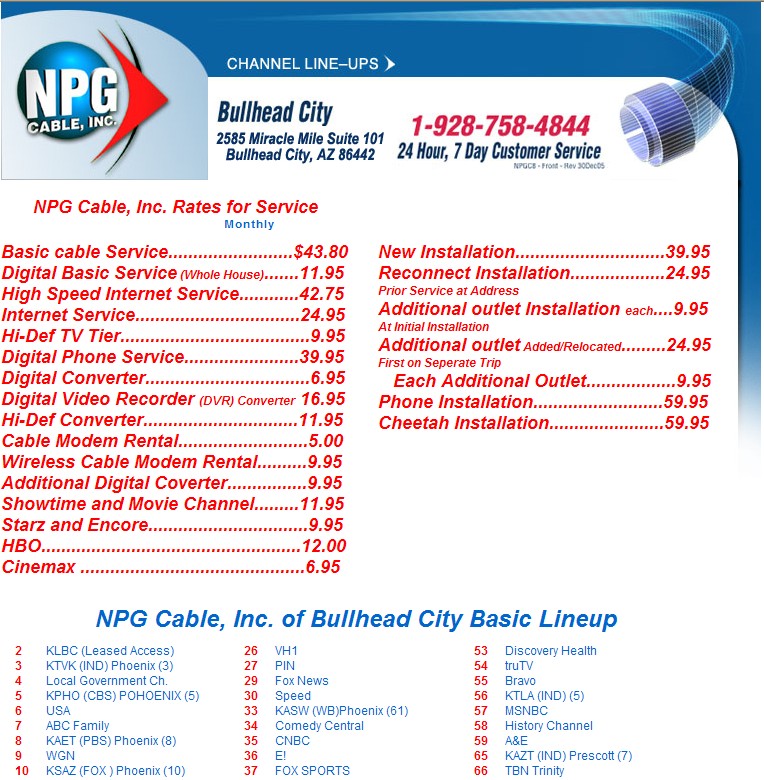
NPG Cable's Rate Card & Channel Lineup In Bullhead City, Arizona. How much of a competitive threat is a cable company without a spellchecker?

Frontier Communications, formerly Citizens Communications, primarily runs originally independent telephone companies in rural and exurban areas bypassed by the former Bell System. The company’s most significant presence is in the 585 area code, home to Rochester, New York. But from Elk Grove, California and Bullhead City, Arizona eastward to the AuSable Valley in central New York to Bluefield, West Virginia, a significant number of Frontier customers are also in some of America’s  small towns and cities.

The size of a community where Frontier operates is often indicative of how much competition the company faces.  Some of Frontier’s most difficult challenges can be found in the  Rochester, N.Y. metropolitan area, numbering nearly 1,000,000 people, where a well entrenched Time Warner has made deep inroads into Frontier’s telephone access line business, eats Frontier for breakfast in the video delivery business, and has been a dominant player in the broadband marketplace since Road Runner arrived  in 1998.

In more rural communities, Frontier often has it much easier,  free from  cable competition  in some  areas, or  competing with a small independent cable company that may be relying on its own aging infrastructure and cannot afford to engage in price and service wars. Where Frontier stands as the lone player or only faces token competition from a small cable company, consumers will likely find  lower speed broadband at higher-than-average prices.

The Threat From Big Cable

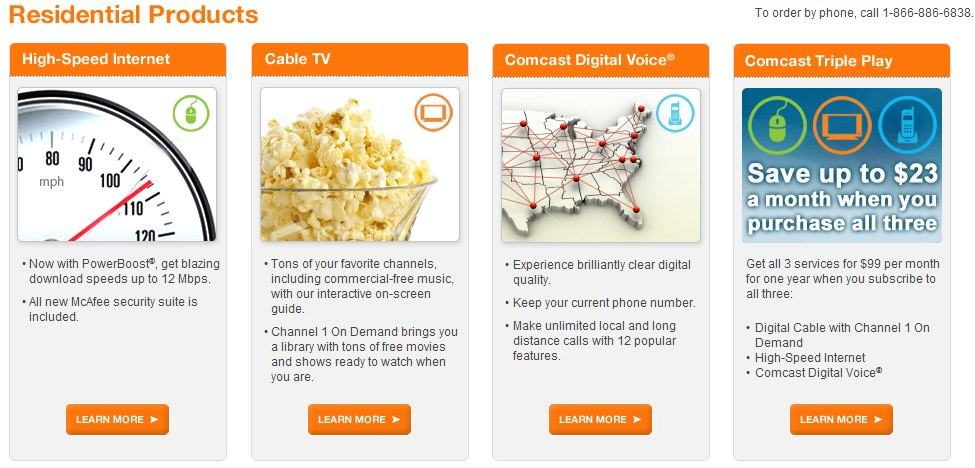
Comcast's Product Bundles Threaten Frontier In Many of Their Service Territories

Comcast's Product Bundles Threaten Frontier In Many of Their Service Territories

The cable television industry’s entry into telephone service  is among the biggest threats Frontier faces in maintaining their traditional primary revenue source: residential and business wired telephone lines.

Deploying  voice over IP technology, Comcast and Time Warner, the nation’s largest cable operators, have made significant inroads into Frontier’s telephone business where they compete.   Now, even smaller players in the cable industry are prepared to offer voice over IP service to customers.

Joining cable at the table are  mobile telephone companies like Verizon Wireless, Sprint, and AT&T which are also eroding Frontier’s  phone line business  as more people in America  rely exclusively on their mobile phone for telephone service.

How Cable Companies Pick Off Frontier’s Customers

Product Bundling & Discounting: The most important component of cable’s strategy against Frontier is cable’s product bundle, combining a voice over IP telephone line, a cable television package, and a high speed data product. Usually marketed as a “triple play” or “all the best” package, consumers are offered discounts based on the number of components of a package they combine. The more components, the greater the discount.

The product bundle offered by the cable industry has a competitive advantage because cable companies almost always have a more advanced network to deliver these products. Throughout the 1990s, most cable systems spent millions rebuilding their systems to accommodate increasing bandwidth requirements.   The result is a considerably larger pipeline used to deliver data, video, and telephone services.

Frontier’s network is considerably more dated, largely dependent on copper wire strung on telephone poles. While the company has made significant investments in their own  network, including some fiber optics,  in the end, they still rely on the same copper wire infrastructure the industry has used for nearly 100 years to connect to your home or office.
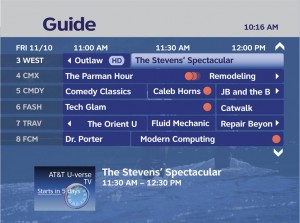
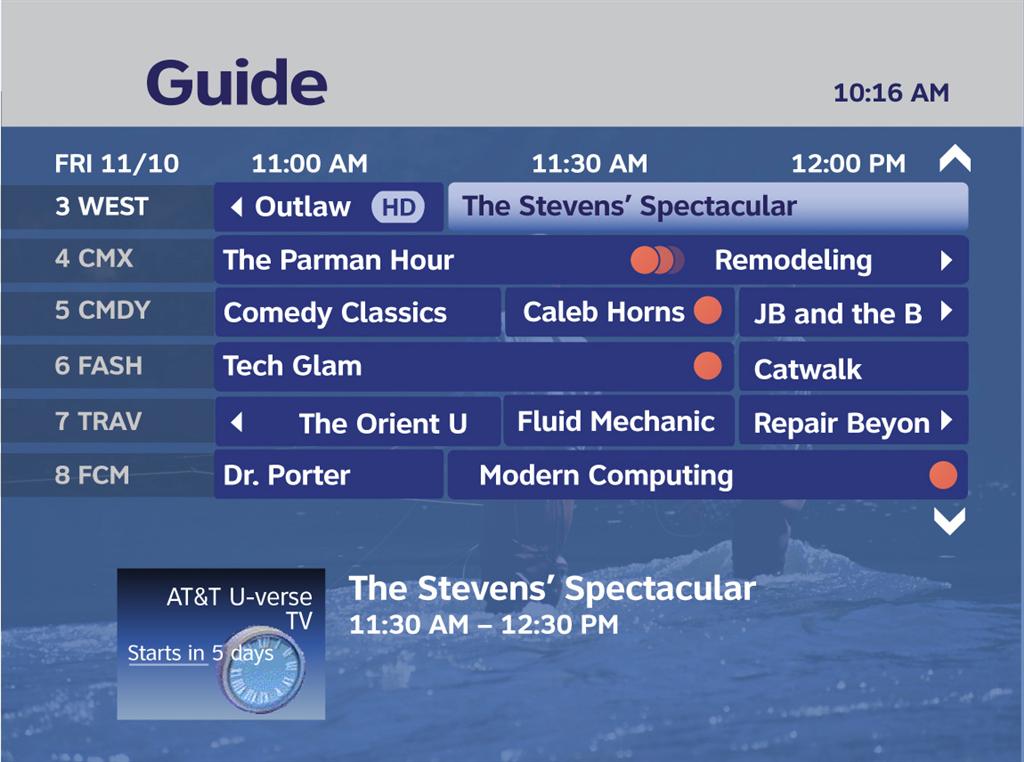
AT&T's U-verse service can deliver the goods over copper wire, but you need deep pockets to develop and deploy this technology.  Are Frontier's deep enough?

AT&T's U-verse service can deliver the goods over copper wire, but you need deep pockets to develop and deploy this technology. Are Frontier's deep enough?

Although this copper network is suitable for traditional telephone service, and can usually deliver a respectable data service over DSL, the video component has been sorely lacking. While AT&T is testing its U-verse video-over-copper technology in limited markets, Frontier is stuck  reselling Dish Network, the  smaller player in the satellite television marketplace.

Many consumers are resistant to satellite dishes of any size attached to their homes, and the cable industry’s response to Frontier has been the same as to DirecTV and Dish Network themselves: ugly satellite  dishes that suffer from rain/snow fade, require expensive service calls and maintenance, and a limitation on the number of TV sets you can hook up.   Also, no local channels in many areas.   In the end, most people who were even slightly uncomfortable with satellite-delivered TV elected to just stick with what they already had: cable television.

Results of the Dish Network partnership continue to be underwhelming. Sources tell Stop the Cap! the satellite service only succeeds in areas where there is no cable competitor, the customer was already a Dish Network subscriber independent of Frontier, or the incumbent cable company is hampered by a limited channel lineup, no HD channels, or exceptionally bad service. In Rochester, Frontier is actually losing more Dish Network customers than it is adding, and growth is  anemic in many other Frontier regions as well.

Frontier’s inability to provide a comparable quality television service is a critical defect in their competition with cable.

Claiming Inferior Product Quality:  The cable industry wasted no time attacking Frontier’s DSL product, accusing it of not performing consistently. Uneven telephone line quality, distance from the telephone company central office, and signal ingress (when interference or crosstalk gets into wiring and degrades the signal) can all dramatically slow a DSL customer’s  broadband speeds. The cable industry’s marketing often pillories DSL service because of its inability to offer anything close to a speed guarantee, and the fact  it is often slower than cable’s competing product no matter how good your line is.

In areas where a large cable competitor exists, traditionally  that cable operator will have the fastest speed broadband package to sell to customers in that market. This forces Frontier to compete on price.   In return for a significant discount, Frontier  usually locks customers into multi-year service agreements which discourage its customers from  switching to a competitor.   Unfortunately, the company’s inferior product bundle and  long term contract commitments have made it difficult to convince cable customers to switch to Frontier,  particularly if it means taking their video package from Dish Network.

Lampooning Questionable Marketing Practices: In Rochester, Time Warner’s marketing people have had no trouble finding new ways to attack Frontier in its advertising.   While Frontier may be able to pull off some of their hidden extra charges, long term contracts, and restrictive service policies in more rural communities, most of those practices meet strong criticism in Time Warner’s advertising.

Among the more common refrains in Time Warner ads  dismissing Frontier’s DSL  product include:

  • Charging a “modem rental fee” as part of Frontier’s DSL service, even if you can supply your own DSL modem.

  • Locking customers into a term commitment contract (often lasting several years) for DSL service that offers lower speeds than Time Warner’s Road Runner service and charging a substantial early termination fee for those dissatisfied with their broadband experience.

  • Charging for ancillary support services like Frontier’s “Peace of Mind” that Time Warner claims to offer at no charge.

The latest decision to impose a 5GB usage cap on customers is marketing gold for the cable companies competing with Frontier, perhaps only tempered  by the fact they are also studying whether to apply their own usage caps.

Relentless Marketing: One of the fringe benefits of owning your own video distribution network is the ability to pepper your existing customers with near-constant advertising promoting your own products while denigrating the competition. Cable customers can see an average of three product promotion spots every hour from their cable company trying to convince them to upgrade, attempting to bolster customer loyalty, or simply slashing and burning whatever the telephone company or satellite dish company is offering. Frontier has  a limited ability to counter this.

In areas of significant competition, the battle usually rages in your mailbox, with  a relentless flood of  promotional postcards and mailers, as well as ad buys on local television/radio stations and local newspapers. But cable retains an important advantage because of their ability to insert advertising into basic cable channels, usually at no cost to them.   Frontier doesn’t own their video distribution network – they are reselling someone else’s.

Frontier’s Battle Plan

Welcome to DeLand, Florida: Home of Frontier's Customer Care Center

Welcome to DeLand, Florida: Home of Frontier's Customer Care Center

Frontier’s plan to compete with cable includes  their own marketing by mailbox, and sponsoring local community events and charities to leverage free media and consumer exposure to the company brand to nurture positive feelings  about the company.

The company also places a high priority on attempting to position themselves as “local” players in the market – a company made up of local employees who customers supposedly will interact with on a daily basis. Unfortunately for them, most customers will likely only interact with one of their customer care call centers such as the one  in DeLand, Florida which is localism IF you live, work and play in DeLand.

Frontier also maintains call centers in Henrietta, New York and Burnsville, Minnesota which are designed to replace what used to be local customer service call centers in more than a dozen  Frontier areas.   Some 500 people were hired to answer phones in DeLand for Frontier.   This begs the question how many people lost those jobs in the various local communities where Frontier operates.

Call center employees are on Frontier’s competitive front line, trying to  maintain customer loyalty, convince customers to upgrade their service packages, and above all, remain with Frontier and don’t cancel anything.

They need to maintain the battle, because cable competitors continue to erode their residential business. The company’s deactivations of high speed data services and the ongoing loss of telephone lines are considerably above the company’s own estimates.

One significant bright spot Frontier has maintained is delivering commercial broadband to businesses.

Frontier has a significant advantage in many offices, business parks, and other industrial areas bypassed by their cable competitors. Installation costs to wire a building with coaxial cable often run into the tens of thousands of dollars, an expense borne by the company, the landlord, or a combination of the two. But every business has telephone service, which usually guarantees potential access to DSL service from Frontier. Small and medium sized businesses have become loyal Frontier commercial customers because of low installation costs and a reasonable pricing plan that is typically far more cost effective than what cable is offering. Cable modem commercial access pricing models are usually tailored to a range of product speeds at prices that, when compared with what Frontier can offer, are not competitive.

Frontier’s ability to effectively compete against cable will, in the end, come down to the company’s ability to invest in their network and be able to match what is on offer from the cable operator, and new competitors yet to emerge.    Some former Baby Bell telephone companies like AT&T are investing enormous sums to leverage their existing network (their U-verse product) or starting over from scratch (Verizon’s fiber optic cable to the home FIOS project).

To date, Frontier’s status as a smaller player has meant their investments in these efforts pale in comparison to their larger brethren.   They include experimenting with deploying fiber optic cable to new housing developments and selected mass density buildings (apartments, offices) in Rochester, building community wi-fi networks to create a new market for wireless Internet access, and other investments in their network distribution system.   If they cannot invest enough, fast enough, to keep up, they will become ripe for a merger with a larger player in the market or get wiped out by the competition.

In the meantime,  to quote company chairwoman and CEO Maggie Wilderotter, Frontier intends to “stay the course” for the rest of the year.

We’ll have to wait and see if that’s good enough.

Search This Site:

Contributions:

Recent Comments:

Your Account:

Stop the Cap!