Home » Issues » Recent Articles:

FCC Chairman’s Latest Non-Answer Answer on Internet Overcharging Schemes

Phillip Dampier August 4, 2009 Data Caps, Editorial & Site News, Public Policy & Gov't Comments Off on FCC Chairman’s Latest Non-Answer Answer on Internet Overcharging Schemes

Om Malik managed a quick interview with the new chairman of the Federal Communications Commission, Julius Genachowski. In a wide-ranging interview about the competitive landscape of mobile broadband, which is to say there isn’t a whole lot at present, Malik managed a direct question about Internet Overcharging schemes:

Om: Phone companies and cable companies are trying to impose bandwidth caps on Internet access. By doing so, I feel (and many agree) that they’re actually limiting the scope of innovation. Maybe in that that case, we should think about the need to separate services (TV, video, etc.) from the pipe. What are your views on metered broadband?

Genachowski: It ties into an important policy decision the FCC will be confronting with how we drive a ubiquitous broadband infrastructure that’s open and robust and delivers on the promise of the Internet for all Americans. To tackle these questions we will be focusing on the real facts around what’s going on and what policies will best promote ubiquitous broadband and innovation. It’ll be an ongoing topic. It’s something that consumers of Internet services pay a lot of attention to and we’ve seen that in reactions to some of the events over the last year.

That’s about as non-committal an answer as ever out of the FCC.  The usual formula is there:

  1. Express concern.
  2. Define the issue in terms of the Commission’s general policy direction and goals.
  3. Promise sober assessment of the issue.
  4. Under no circumstances commit to anything specific that might get the attention of the press and/or Congress.

Consumers cannot enjoy open and robust broadband that delivers on innovation from providers that are rationing access and charging top dollar for it.  Internet Overcharging schemes represent the best way to run a bypass around Net Neutrality by simply limiting and/or overcharging for access, killing enthusiasm for high bandwidth services like video that challenge current cable television business models.

At least he notes consumers have been pounding the issue with elected officials and the Commission sufficient to warrant mention of it.

Net Neutrality Bill Introduced in Congress – Message to ISPs: Upgrade Yes, Scheme & Discriminate No

Phillip Dampier August 4, 2009 Net Neutrality, Public Policy & Gov't, Video 3 Comments

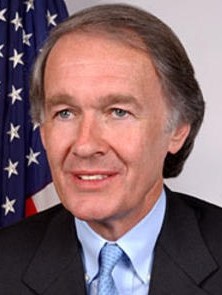
Rep. Ed Markey

Rep. Ed Markey

Reps. Ed Markey (D-Massachusetts) and Anna G. Eshoo (D-California), both members of the powerful House Energy & Commerce Committee, introduced legislation Saturday to enact Net Neutrality concepts into federal law.

H.R. 3458, the Internet Freedom Preservation Act, is designed to assess and promote Internet freedom for consumers and content providers. The bill states that it is the policy of the United States to protect the right of consumers to access lawful content, run lawful applications, and use lawful services of their choice on the Internet while preserving and promoting the open and interconnected nature of broadband networks, enabling consumers to connect to such networks their choice of lawful devices, as long as such devices do not harm the network.

Both Markey and Eshoo are not new to the Net Neutrality fight, having introduced similar legislation in the past two sessions of Congress, but failing to generate enough support to overcome powerful telecommunications lobbyists pushing for its defeat.

Both believe the Obama Administration’s stated support for Net Neutrality will help the bill overcome similar challenges during the current session.

Rep. Anna Eshoo

Rep. Anna Eshoo

The bill has a clear message for the nation’s Internet Service Providers – upgrade your networks to sustain traffic – don’t discriminate against it.  The legislation’s framing language notes that most Americans face a monopoly or duopoly marketplace – one phone company and one cable company for their broadband needs.  The legislation suggests under such circumstances, providers would be likely to engage in discriminatory behavior against the traffic they do not own, control, or partner with.

“The Internet is a success today because it was open to everyone with an idea,” said Rep. Markey.  “That openness and freedom has been at risk since the Supreme Court decision in Brand X.  This bill will protect consumers and content providers because it will restore the guarantee that one does not have to ask permission to innovate.”

While the bill does not specifically address Internet Overcharging schemes, like usage caps and discriminatory pricing practices, it demands fairness for even the most traffic intense services, and demands “reasonable traffic management” standards. What defines that will be left at the desk of the Federal Communications Commission, which might end up being a wild card. The bill affords no protection for copyright infringement or other illegal/illicit online activities.

Tim Karr at Free Press advocated for the immediate passage of the bill, defining seven reasons why Net Neutrality protection is essential:

1. Economic Recovery and Prosperity

“The Internet has thrived and revolutionized business and the economy precisely because it started as an open technology,” Eshoo said in a statement on Friday. The Internet is so closely tied to U.S. economic recovery that President Obama and Congress earmarked more than $7 billion to help build out more high-speed connections at a time when our economy needs it most.

Obama and Congress also recognized that the economy cannot benefit by building a closed Internet. The American Reinvestment and Recovery Act requires that all federally funded networks be services that meet “nondiscrimination and network interconnection obligations” — that abide by Net Neutrality.

2. Free Speech

Freedom of the press extends only to those who own one — or so the saying goes. It once rang true in a world ruled by newspaper chains, radio and television broadcasters, and cable networks. But the Internet has changed all that, delivering the press — and in theory its freedoms — to any person with a good idea and a connection to the Web.

This extraordinary twist to “mass media” has catapulted many an everyday YouTube auteur to celebrity-status, while turning ideas born in a garage or dorm room into Fortune 500 companies. It is the reason so many Americans are now passionate about protecting their free speech rights on the Internet.

The Internet Freedom Preservation Act would stop would-be gatekeepers from re-routing the free-flowing Web. “To meet other national priorities, and to our right to free speech under the First Amendment of the Constitution of the United States,” the bill says, “the United States should adopt a clear policy preserving the open nature of Internet communications.”

3. Civic Participation

New media are more participatory and personal than ever before and have opened up new avenues for people to become involved with local, state and national politics. We saw it during the 2008 presidential election when tens of millions expressed their support for Obama and McCain via interactive Facebook, Twitter and e-mail forums. We are seeing it in 2009 from the streets of Tehran to the work of organizations like the Sunlight Foundation and the Center for Responsive Politics, which use the Internet as the means to open governments to public scrutiny and accountability.

This wave of digital empowerment is the gathering force for a healthier democracy, and it all depends upon a more open, affordable and accessible Internet for everyone. Expanding Internet access alone doesn’t erase concerns over what kind of information people will find when they get online. Net Neutrality guarantees that we all have an equal opportunity to play a part.

4. The Marketplace of Ideas

The Internet was the great surprise of the 20th century. Sir Tim Berners-Lee created the standard that opened the World Wide Web to everyone with an idea and a connection. At that time, few could imagine that this open architecture would fuel such a powerful eruption of economic, social and political creativity.

The Internet Freedom Preservation Act “will protect consumers and content providers because it will restore the guarantee that one does not have to ask permission to innovate,” Rep. Markey said when he introduced the bill.

This is true regardless of your age, social status or location. Net Neutrality safeguards everyone’s fundamental right to an open Internet, making it possible for one person’s good idea to blossom into the next big business or, even, a movement of millions.

5. Social Justice

Broadband in America today is not equally accessible: Users are predominantly middle- or upper-class and live in urban or suburban areas. Poorer communities and communities of color, as well as communities in rural areas, have been largely left off the grid.

Imagine what it would mean, then, to provide a connection to disadvantaged areas without also extending to them Net Neutrality’s guarantee of openness. Dominant ISPs have argued for this exception, saying Net Neutrality prevents them from connecting more people. But it’s a false choice and far too high a cost to give network owners the power to shunt ideas percolating up from these communities to a digital backwater.

The Internet Freedom Preservation Act guarantees equal and unbridled access to the Internet’s engine of opportunity, leveling the playing field so that we all have a chance to be heard.

6. The Rise of the Gatekeepers

A high-speed connection is useful only if you can connect to everyone else online. Net Neutrality leaves control over your Internet experience with you, the user. Yet network operators are considering charging extra money depending on where you want to go and what you want to do online. Some are deploying technology that would sift through and filter the content that you share with others online. Such discrimination endangers the open and level playing field that has made the Internet so democratic.

As more of us rely upon a high-speed connection to do all things media — watch and make video, follow the news, listen to music, Tweet, email and call our friends — legacy media are too tempted to get in our way, steering us back via old channels where they make all decisions for us. But there’s no going back to the analog oligarchy. The Internet Freedom Preservation Act keeps the gatekeepers at bay.

7. The Obama Opportunity

Forces are coming into alignment for Net Neutrality. We have a president who is an outspoken supporter, congressional leadership willing to fight for an open Internet, and a pro-Neutrality chairman newly ensconced at the Federal Communications Commission.

Since the fight for Net Neutrality began more than three years ago, 1.6 million Americans have picked up the phone, signed petitions, spoken out publicly and written letters to urge their members of Congress to get behind Net Neutrality.

The tides have shifted. Still, giant phone and cable companies aren’t going away. They think they can squash our movement — and over the past six months alone, they have hired 500 lobbyists in Washington to try to stop this bill.

This is our best chance to beat them back once and for all.

Stop the Cap!’s First Anniversary: Protecting Consumers from Internet Overcharging Since July 31, 2008

Phillip Dampier

Phillip Dampier

Today is Stop the Cap!‘s first anniversary.  One year ago today, this website was launched with the news that Frontier Communications, the local telephone company in Rochester, New York and in dozens of mostly rural communities nationwide, had quietly changed its Acceptable Use Policy to define appropriate maximum usage of their DSL service at a measly 5GB per month.

The  boneheaded, out of touch decision was called out for what it was: a profiteering provider pilfering wallets of their broadband customers.

All the signs of a Money Party among cable and DSL providers at consumer expense were apparent last summer.  Time Warner Cable was experimenting with a consumption billing plan in Beaumont, Texas.  In Canada, rhetoric about “bit caps” was already being circulated, trying to convince Canadians that broadband service was somehow as difficult to provide there as it is in Australia and New Zealand, where such caps were already in place.

To bring limits, rationing quotas, and consumption based billing to the United States would require consumers to ignore massive profits broadband providers were harvesting quarter after quarter at existing prices.  But demands for big profits from Wall Street meant they had to come from somewhere, and for cable companies with eroding profits from their cable TV divisions, and telephone companies dealing with disconnect requests for wired telephone lines, broadband was their choice.

It seems that what was insanely profitable a decade ago, when cable modem and DSL service started to introduce Americans to broadband, would now simply be ‘piles of  cash stacked like cord wood’-profitable as traffic increased. As the broadband adoption rate increased, bandwidth costs plummeted, and several providers also proudly trumpeted their reduced investments in their networks as a hallmark of keeping “costs under control.”

Consumers began actually using their service for… broadband-specific services, at the encouragement of providers’ marketing departments, touting their “always on” connection at “blazing fast speeds” to download music, movies, play games, and more.  Network utilization increased, and providers want someone to pay for a “bandwidth crisis” that isn’t a crisis at all.  Responsible investment in network infrastructure should be a given, in recognition that at least a small portion of those growing profits must be spent on maintaining and improving service.

One year ago, I laid out what was before us:

Cable operators have been discussing implementing usage caps in several markets to control what they refer to as a “broadband crisis.” The industry has embarked on a lobbying campaign to convince Americans, with scant evidence and absolutely no independent analysis of their numbers, that the country is headed to a massive shortage in bandwidth in just a few short years, and that a tiny percentage of customers are hogging your bandwidth.

Frontier, ever the rascally competitor, has decided to one-up Time Warner’s Road Runner product by slapping on a usage cap now for DSL customers before Road Runner considers doing the same. And in a spectacularly stupid move competitively, they have implemented a draconian cap that even the cable industry wouldn’t try to implement.

Time Warner Cable “took one for the team,” according to industry-friendly Multichannel News, when it introduced a ludicrous Internet Overcharging experiment of its own announced this past April, which would have “saved” customers money by getting them to “pay for what they use.”  In fact, their plan proved my point last summer, following the same roadmap of “bandwidth crisis” to “heavy downloaders” to trying to squeeze customers for more money for upgrades they could easily have done with the enormous profits they already earn.

Their proposal would have made a deliciously profitable $50 a month Internet service now cost consumers $150 a month with absolutely zero improvement in service, speed, or performance.  But Wall Street would have been happy with the higher returns.

Some 400+ articles later, we’ve educated consumers across North America about the reality of Internet Overcharging.  Despite industry propaganda “education” efforts, astroturfing groups we’ve exposed as having direct connections with the telecommunications providers paying them to produce worthless studies, fear-mongering about Internet brownouts by equipment vendors with solutions to sell, and a hack-a-thon of formerly respectable broadband pioneers and ex-government officials who sold their credentials for a paycheck to lobby and spout industry propaganda, most consumers continue to reject overcharging for their broadband service.  Consumers instinctively know a cable company with a rate change always means a rate increase, and plans to “save people money” actually means they will “protect industry profits.”

We have achieved victory after victory in 2008-2009:

  • Fought back against Frontier’s boneheaded plan, and convinced them that DSL can compete best on price and flexibility — no usage cap has ever been enforced at Frontier, and today they are using Time Warner Cable’s blundering profiteering experiment against them in their marketing materials.  For rural Frontier customers with no other broadband provider, that’s a major relief from being stuck with one broadband option that rations their usage to ludicrously low levels.
  • Stopped Time Warner Cable’s experiment before it got off the ground in several “test cities.”  The people of Austin, San Antonio, Rochester, and the Triad region of North Carolina did Time Warner Cable customers nationwide a tremendous service in halting this experiment before it spread.  Our efforts even brought a United States Senator, Charles Schumer, to the front lawn of Time Warner Cable in Rochester to announce the nightmare was, at least for now, over.  We managed to even see an end to the overcharging of customers in Beaumont, Texas who lived through a summer, winter, and spring, overpaying for their broadband service.
  • We raised hell in the North Carolina state legislature, coming to the aid of Wilson and other communities in the state trying to get municipal broadband projects off the ground.  Communities across the state faced anti-consumer corporate protectionist legislation written by the telecommunications industry, introduced by willing elected officials who took big telecom money, and sold out their constituents.  We killed two bills, forced a sponsor of one such measure to repudiate his own bill, and gave major headaches to legislators that thought they could just cash those big checks, vote against your interests, and you’d never know.  Those days are over.
  • We helped bring legislation up in Congress to draw attention to the issue of Internet Overcharging, and have called out providers who want to use their marketing departments to lie to customers about their broadband costs and profits, while being considerably more honest with their shareholders in their quarterly financial reports.  Congressman Eric Massa’s legislation would demand companies show proof of the need to implement consumption based billing.  Indeed, as consumers find out how profitable broadband service is at today’s prices, they’ll never tolerate the profit padding providers seek with tomorrow’s caps/limits, penalties and fees, and unjustified tiers.

As you can see, Internet Overcharging is not a dead concept.  An educated consumer will recognize a swindle when they see one, and providers continue to test overcharging schemes in focus groups in different parts of the country.  They’ll use any analogy, from a buffet lunch to a toll road traveled by big trucks and little cars.  They’re looking for anything they can find to sucker you into believing paying more for your broadband service is fair.

Broadband service must be fast, affordable, and competitive.  In too many communities in Canada and the United States, a monopoly or duopoly marketplace has guaranteed none of those things.  In our second year, we must remain vigilant in our core mission to fight Internet Overcharging, but we also need to fight for more competition, regulation where competition does not exist, oversight over providers, and support for projects that will enhance broadband and make it more affordable than ever.  With your help, we can stand toe to toe with any provider, because the facts are on our side, not theirs, when it comes to Internet Overcharging schemes.

Welcome to Year Two!

Time Warner Cable Will Introduce WiMax Wireless Broadband Service This Fall

Phillip Dampier July 30, 2009 Wireless Broadband 5 Comments

One of the benefits of being an investor in Clearwire is that Time Warner Cable will get to leverage the benefits of that investment.  This fall, Time Warner Cable will introduce a wireless broadband option, similar to what Comcast is offering, to provide a portable version of Road Runner.

The Time Warner Cable WiMax service will launch first in Dallas and Charlotte, North Carolina.

If it is anything comparable to what Comcast is providing through Clearwire, expect 4Mbps service for about $30 more a month.  Roaming service may also be an option outside of Clearwire service areas on Sprint’s 3G data network.  Comcast charges an extra $20 a month for that capability.

No usage allowance information has been released.

Cox Unveils ‘Ultimate Internet’ 50/5 Service in Rhode Island

Phillip Dampier July 30, 2009 Broadband Speed, Cox, Data Caps 25 Comments
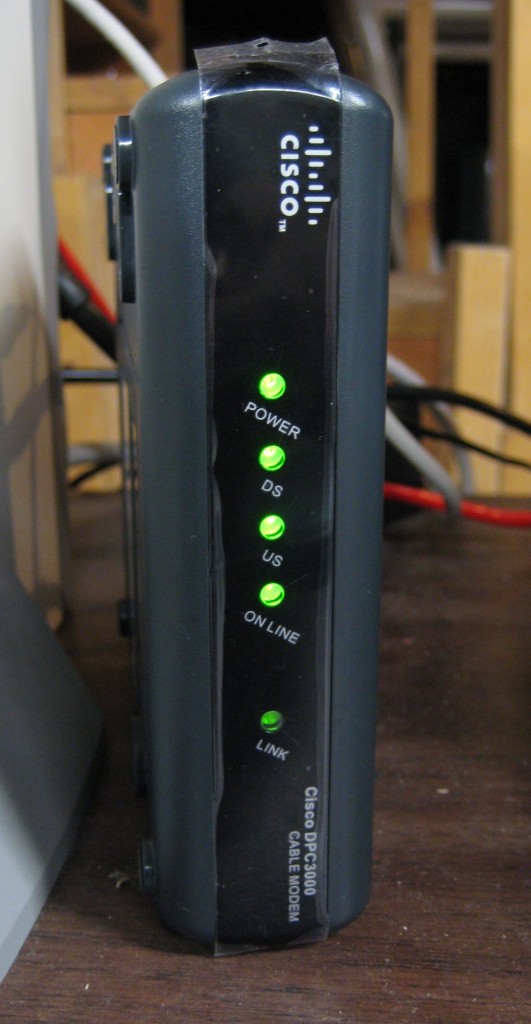
Cox Cable DOCSIS 3 modem

Cox Cable DOCSIS 3 modem

Cox Cable’s ‘Ultimate Internet’ broadband tier is now available to Cox customers in Rhode Island.  Offering 50Mbps downstream and 5Mbps upstream, the premium speed service sells for $109.99 a month with an annual contract.  The service comes as a benefit from the recent upgrade to DOCSIS 3 technology in Cox Cable’s Rhode Island service area.  Cox Cable has generally unenforced usage allowances on all of their broadband service tiers.  Theoretically, the ‘Ultimate Internet’ tier is limited to 300GB downstream and 100GB upstream traffic per month, but very few Cox Cable customers have ever been contacted about their usage, regardless of the amount.

Joel Evans, a Cox Cable customer living in Rhode Island, posted a review of his experience with the new Cox Cable broadband tier on Geek.com:

Before the upgrade I was peaking around 21 Mbps download and 4 Mbps upload. These were actually great speeds considering that the promised speed was really more around 20 Mbps and 3 Mbps, respectively. After the upgrade, however, I noticed an incredible speed bump. Instead of the promised 50 Mbps down and 5 Mbps up, I received 65 Mbps down and 6 Mbps up. I can only imagine that these will probably fluctuate over time.

It wasn’t until I was recently asked by Cox how my experience has been that I noticed how much of a difference more bandwidth makes. For example, I stream Hulu to my Apple TV (thanks to boxee) and usually there’s a bit of lag with the stream. Nowadays it streams right away as if I’m watching live television.

A mandatory service call by Cox Cable is required for installation, because technicians will check line quality and also swap out a customer’s older cable modem with one capable of handing DOCSIS 3 “channel bonding,” which allows multiple cable channels to be connected together to permit faster broadband speeds.

Cox plans to expand availability of the ‘Ultimate Internet’ tier to more than two-thirds of its systems by the end of 2010.

Search This Site:

Contributions:

Recent Comments:

Your Account:

Stop the Cap!