Home » Issues » Recent Articles:

Time Warner Cable Jacking Up Rates in North Carolina; Up to 15% More For the Same Service

Phillip Dampier November 12, 2009 Issues 5 Comments

greedOnce a year, many Time Warner Cable subscribers receive a glossy mailer-newsletter combination telling you how wonderful Time Warner Cable is, and all of the exciting services and values they have to offer.  Somewhere towards the end of their mini-magazine, you learn that comes at a cost… an increasing one at that.  Yes, it’s annual rate hike time for North Carolina, and Triad area residents are receiving notification this week that Time Warner Cable is back for more of your money.

Regular Stop the Cap! reader Fish writes to inform us of the news, posted this evening on WXII-TV’s website.

“It’s lovely how they keep raising everybody’s rates and yet they’re making a crap load of money as it is and refuse to upgrade their services.  If only North State Communications would bring their fiber out to High Point residents faster, I’d tell Time Warner Cable to go screw themselves as fast as [Jamaican sprinter and a three-time Olympic gold medalist] Usain Bolt,” Fish writes.

WXII shares the details:

Customers who bundle Roadrunner high speed Internet, TV and phone services will see a 4.6 percent increase.

Those who purchase those services separately will see the cost go up 15 percent.

Roadrunner Lite service will increase by 12 percent and the cost for customers who have digital video recorders on additional televisions will increase 33 percent.

The company said the cost of programming — especially sports and network shows — is going up and it’s passing that cost along to customers.

Time Warner customers are not happy about the rate hike.

“It’s ridiculous,” Iris Womack said.

Womack said she has TV, Internet and phone bundled together.

Within hours of the news, comments flooded into WXII condemning the rate hike.

  • “How can you tell the company cares nothing about customers? There is no option to pick and choose channels.”
  • “Yes, I got my TWC bill yesterday and extra $5.00 was added to my Road Runner bill. Thanks for the notice TWC. We see how you do your business.”
  • “We have enhanced basic cable, just the 72 channels, and were paying $63 a month. We fall in the 15% increase – that’s almost $10 a month more and we only watch maybe six of all these channels.”
  • “The worst that our economy has been in years, TWC decides it’s time to gouge us?”
  • “It is just pure GREED.”

Special Comment: Telecom Industry & Their Friends Attack Net Neutrality

Phillip Dampier

Phillip Dampier

Lobbyists, corporate executives, and several interest groups are busy lobbying the newest additions to the Federal Communications Commission in an all-out effort to stop Net Neutrality.

The Hill newspaper today reports Mignon Clyburn, daughter of House Majority Whip James Clyburn (D-S.C.), is particularly under pressure to reject Net Neutrality.  The Hill reports industry lobbyists believe that if her father is amenable to their position, his daughter might also be.  To date, several hundred letters from minority groups and organizations, many opposed to Net Neutrality, have been filed with the FCC.

After reviewing dozens of those letters, it’s readily apparent many are the fruits of AT&T and Verizon lobbying labor, because several adopt both companies’ anti-Net Neutrality talking points, often word for word.

Even the newest Republican commissioner, Meredith Attwell Baker, is under a lobbying assault.

The thinking on K Street is that Baker’s views on net neutrality may not be set. Lobbyists and corporate executives have sought out Baker before the FCC votes on a final rule sometime next year.

“They are trying to get in there and remind her where she comes from to shore up her vote for the anti-net neutrality camp,” said one lobbyist working on the issue.

While the special interest blitz attempts to kill Net Neutrality, one pro-Net Neutrality advocate got into a dispute with some of the minority interest groups opposing Net Neutrality, which was gleefully covered by the broadband industry trade press. Public Knowledge got a bit too close to a nerve of several of these groups who put their logos on a letter sent to the FCC opposing Net Neutrality.  The letter represents the groups’ concerns that broadband for many in America is simply not available, especially for the economically disadvantaged.  They’ve been swayed by industry propaganda to characterize Net Neutrality as a threat to addressing the digital divide by making service ultimately even more expensive.  Some of those groups fired back against Public Knowledge, offended by some of the language used on their blog they felt suggested minority groups were naive and possibly even “selling out” the people they represent.  A few public exchanges later led to an apology from Public Knowledge if feelings were hurt and a plea from Free Press to put aside some of the personal disputes and rhetoric and argue the merits of the issue pro or con.

We agree with Free Press that personality disputes and pointless name calling don’t work and serve only to distract from the issues at hand. These groups advocating against Net Neutrality should be open to receiving additional information that doesn’t come from the broadband industry, particularly arguments that debunk those fear-mongering industry talking points.  Perhaps those groups will be amenable to changing their position once they gather additional facts.

But we also feel the first rule of politics must always be to “follow the money” and that is true for non-profits, for-profits, and government interests.  There must be full disclosure of the financial support and board membership of all of the groups claiming to represent consumer and minority interests.  Consumers, and more importantly members of the groups themselves, deserve to know where the money is coming from and if their boards have members working for or with the telecommunications industry or its friends.

For example, in our own research of the background of 100+ members of Broadband for America, we found instances of telecommunications industry involvement in virtually every single group.  If one chooses to believe that is a coincidence and still feels comfortable with that organization, so be it.  However, if one is concerned to learn that in several cases those ties were being scrubbed from interest groups’ websites, or were not openly disclosed to members, learning about that could be a cause of concern.  People should have the right to make an informed decision.  Some of the groups complaining about Public Knowledge are also members of Broadband for America and have telecommunications industry money backing them.  There is nothing wrong, in my judgment, in making sure that information is out there for readers to consider.

Be aware that while pro-Net Neutrality groups ring their hands over potentially offending one another, opponents are wasting no time mass mailing anti-Net Neutrality correspondence to the FCC.  Let’s remember our first priority is to fight for Net Neutrality.  If a group is offended, send them flowers, apologize quickly if you must, and be done with it.  Don’t entertain the trade press.

Navarrow Wright on BlackWeb 2.0 called proponents of Net Neutrality “digital elites” and then condensed many of the industry talking points that are common to many of the anti-Net Neutrality letters heading to the FCC:

  • The risk that a regressive pricing mandate that net neutrality rules could impose will shift online costs to the poor is real.
  • The risk that over-regulation will depress deployment and access is real.
  • The risk that restrictions on network management will reduce the quality and reliability of Internet service for light users — students, the poor on fixed incomes, the elderly, and community organizers who rely on Internet access to reach their communities – is real.

Wright doesn’t bother to provide any evidence to back up these claims.  Underlining the word real does not make it reality.

We recognize these talking points from the broadband industry’s lobbying efforts against Net Neutrality.  The industry scare tactic about raised prices is exactly the same one they use to justify Internet Overcharging schemes like forced consumption billing and usage caps, despite earning healthy profits and enjoying a decline in their traffic costs.  Read the financial reports from the major players about broadband profits for yourself.  Don’t take our word for it.

Net Neutrality simply demands the status quo — open and equal access to everyone, including the economically disadvantaged Wright is concerned about.  If Wright is concerned about the cost of broadband services for the economically disadvantaged, giving the providers the right to monetize content delivery in new ways, it will lead to even higher prices than we cope with today.

Industry rate hikes come in spite of Net Neutrality, and we call on Wright to join our effort to demand increased competition so these kinds of price increases become untenable.  Time Warner Cable, the nation’s second largest provider, is busily increasing prices for Road Runner service right now in several regions, even without the “imminent threat” of Net Neutrality.

Net Neutrality is hardly “over regulation,” and the empty rhetoric about it depressing investment, deployment, and access has been made every time this industry has faced the prospect of some oversight.  Wright should remember the industry used the same arguments to resist universal wiring requirements made in franchise agreements to guarantee that income challenged neighborhoods had the same access to cable and telephone broadband services as wealthy suburbs.  In their fight to obtain quick and simple statewide video franchising, they argued that without it, it would discourage investment, deployment, and access to competition.  Regulating rates?  Same argument.  The Discovery Institute, which has produced suspect studies on demand for the industry, paid for by the industry, provides an excellent example of “we’ve heard this song before” in comments they made to the FCC back in 2006 to try and reform cable franchising:

V. LEVEL-PLAYING-FIELD REQUIREMENTS ARE ANTICOMPETITIVE

Build-out requirements were an appropriate quid pro quo for the telephone, cable and wireless companies who received an exclusive franchise. An exclusive franchise ensured the viability of average pricing by eliminating the risk of cherry-picking by a competitive entrant, and allowed providers to serve the most profitable customers first who could then, in turn, subsidize the cost of serving everyone else.

Competitive entrants already have an incentive to expand their networks: They must produce consistent revenue gains, and the cost of adding additional users declines as a network grows. But unless flexibly and intelligently applied, a build-out requirement threatens the entire undertaking by creating the possibility that the initial investment will be effectively lost if, for whatever reason, it just isn’t possible to meet the deadline. The evidence that cities possess the inclination to perform this thoughtful and delicate task is entirely conjectural.

Build-out is typically not required of competitive entrants, because it imposes costs that may not be recoverable in a competitive market. Exceptions are Personal Communications Service (PCS) providers and Eligible Telecommunications Carriers (ETCs). However, these examples are clearly distinguishable. As the Commission has noted in another context, the grant of a PCS license confers on the licensee an exclusive right to use a designated portion of the electromagnetic spectrum. In that decision, the Commission rejected a Texas build-out requirement applicable to competitive entrants in the local exchange market.

ETCs are required to provide service and advertise their rates throughout the area for which they seek Universal Service support, but an ETC has the right to resell another carrier’s services. There is no suggestion in the current proceeding that telephone companies seeking to offer video services should have the right to resell the services of the incumbent cable operator, nor should there be. However, in view of the fact that telephone companies cannot be assured of the capital needed to build out their advanced services networks, a resale requirement would probably be the only practical way ensure that a competitive entrant could serve every household.

Build-out is not the same thing as redlining. Redlining is illegal, but by its terms, 47 U.S.C. 621(a)(4)(A) does not require build-out. It merely imposes a reasonableness requirement on the amount of time locally-enacted build-out requirements provide for the competitive entrant to serve every household. There is no Congressional mandate for build-out.

Since cable operators are not required to offer voice services to every household, it is not clear why telephone companies should be required to offer video services throughout their service area. There is no way to predict whether competitive entrants will have access to sufficient capital or be able to gain enough market share to make build-out requirements objectively reasonable. These risk factors suggest that build-out requirements would be anticompetitive.

It is also utter nonsense to suggest network management restrictions will reduce the quality and reliability of Internet service for light users.  In fact, the industry’s proposed “light user” solution is a consumption billing scheme that includes usage allowances and limits, overlimit penalties for exceeding them, and consumers forced into limited use plans, often for little or no savings over existing under-marketed “lite” plans.

Most providers currently tier broadband based on speed.  If a consumer wants to get “light service,” they can purchase a discounted lower speed package perfectly adequate for most web use, and never have to worry about how much they choose to use it.  They want to continue offering speed tiers, but also limit customers’ use of their accounts, giving them a paltry usage allowance and then subjecting them to steep penalties for exceeding it.  Residents in Rochester, New York fought back against two such schemes advocated by Time Warner Cable and Frontier Communications, the local phone company.  It is under the guise of “network management” that these Internet Overcharging schemes were born.  A word to the wise – this price gouging hurts the economically disadvantaged far more than wealthy suburbanites.

I also point Wright’s attention to the broadband situation in Canada, which has adopted the viewpoint of our provider friends.  There, Internet usage is limited by allowances, with fees of $1-5 per gigabyte for exceeding them.  Net Neutrality is not protected, and certain Internet services are “network managed” with speed throttles, reducing their speed by 90% or more, making their use untenable.  Yet, Canadian broadband dropped in global broadband rankings, service providers increased prices anyway, and the digital divide Wright is worried about has not been addressed.  In fact, it’s arguably worse, because the industry won efforts to also limit and ration wholesale broadband access used by independent service providers to create competitive, lower-priced alternatives.

Does that make Wright stupid or a “sell-out?”  Of course not.  It means we have a lot of information to share with Mr. Wright and others like him.  As consumers ourselves, we believe in getting affordable broadband access to disadvantaged communities, and support Universal Service Fund reform and appropriate stimulus funding, or providing municipally built networks to introduce needed competition to get quality, affordable broadband service into urban and rural homes that are woefully underserved.  The industry advocated “don’t regulate us” approach has been in place since the 1990s and has not come close to solving the problem.

It’s our view broadband service is rapidly becoming as important as water, gas and electric, and telephone service, and must be provided to every American that wants a connection, at an affordable price.  When private providers won’t do that, it’s time to follow the same path we took to assure electrification of this country decades earlier, with public projects to get the job done.

We think every person should check out these issues for themselves.  As a consumer, confronting Internet Overcharging schemes was what got this site started, and once I examined the facts about the profitable state of broadband, and the quest to make it even more profitable at consumer expense, I got angry and involved.  That doesn’t make me an “elitist.”  It makes me an informed and involved citizen.

We have always told providers this isn’t personal and we respect the work done by the employees to serve their customers.  Most of us are customers ourselves.  We will debate policy matters and advocate for our position, and try and bring supporting evidence to the table, and let the best argument win.  Along the way, disclosing who represents who and where they money comes from is part of that debate.

It will remain our policy to expose industry connections in organizations that purport to advocate for consumer interests, particularly when those connections are not routinely disclosed.  Consumers have a right to know whether the industry is writing checks to ostensibly independent groups, or have executives seated on their governing boards, potentially influencing their public policy positions.  To not provide this needed information would sell out our readers, and not living up to the standards we set for ourselves.

For the record, Stop the Cap! has zero industry money backing us.  We are 100% consumer-funded and have no involvement in any online business or telecommunications company.


FairPoint Dispute May Cost Maine-Based ISP Its Business And Good Paying Local Jobs With It

Phillip Dampier November 12, 2009 Competition, Data Caps, FairPoint, Public Policy & Gov't 1 Comment

gwiFairPoint Communications’ performance in New England, finally leading to bankruptcy, harms not only itself but also smaller local Internet companies providing jobs and service across the region.  That’s the gist of a report in this morning’s Kennebec Journal outlining a dispute between FairPoint and Great Works Internet, a Biddeford, Maine Internet Service Provider caught between FairPoint’s fiber optic network and a billing dispute that demands GWI pay more than $3 million dollars by December 19th, or face service termination by FairPoint.

GWI leased fiber optic cables with FairPoint’s predecessor Verizon back in 2005.  As part of the Communications Act of 1996, designed to spur competition, GWI obtained access at special interconnection rates, lower than the prices charged for retail customers.  Verizon felt the price was too low, and went to court in 2005 to seek the right to charge “market rates” for access, but the issue was never settled before Verizon sold its landline network to FairPoint last year.  In March of this year, FairPoint stopped accepting new orders from GWI for fiber service, which has kept the company from growing beyond its current fiber network agreements, costing the company plenty in new business.  Then, in September, FairPoint back-billed GWI for $3,085,025, representing the price FairPoint felt GWI should have been paying since 2006.  If the Maine-owned ISP doesn’t pay up, it has been threatened with having its service cut off altogether.

Fletcher Kittredge, GWI’s founder and chief executive officer, has been around the ISP business a long time.  The company was founded in 1994, before Internet access became common, and he has grown the company into a locally owned business serving 18,000 customers with phone and Internet connections.  At risk are the loss of up to 75 local jobs and a significant part of $13 million in annual revenues earned by what the Journal calls one of Maine’s leading Internet providers.

“For us, it’s vital that this be settled soon,” Kittredge told the newspaper. “FairPoint has been threatening us with some pretty draconian action.”

FairPoint’s threat has already cost the company customers, Kittredge said, and the uncertainty makes it hard to go after new business accounts.

But growth has been trimmed by FairPoint’s actions, according to Kittredge. For instance: The company signed a contract with the Skowhegan school system for high-speed access and set up equipment. But the connections it needed from FairPoint were never made, Kittredge said, and he had to cancel the school contract. That has had a chilling effect on efforts to go after new accounts.

“We can’t go out and solicit new businesses,” he said. “We can’t say, ‘This is going to be great, but we may not be able to deliver it to you.’ ”

Great Works hasn’t wanted to make a big deal in public of its fight with FairPoint. It’s concerned that the news will cause existing customers to worry that they could lose their Internet connections.

“It’s a threat I’m going to watch,” said Mitch Davis, chief information officer at Bowdoin College in Brunswick.

Bowdoin gets phone service from FairPoint, but most of its Internet access is from Great Works. Davis was aware of the initial court dispute, but didn’t realize FairPoint was threatening to cut line access. He hopes the bankruptcy judge will let the case go forward and get settled.

GWI told the Journal the company may just be trying to steal Great Works’ lucrative business customers.  That might come to pass if the circuits are cut.  Despite Davis believing FairPoint probably wouldn’t make good on their threat because of the bad publicity it would generate, he admits if they do, he might be forced to transfer the college account to FairPoint. Businesses need to seriously consider getting the best business law attorney to handle disputes such as this one.

“I would do what I need to do to keep the college running,” Davis said.

One Journal reader characterized the dispute as just one more consequence of approving FairPoint Communications’ takeover of Verizon service in Maine.

“I would like to thank the governor of Maine for letting such a strong stable company like FairPoint in this state. You really did your homework.  I thought we had a Public Utilities Commission that watched out for public interest.  Boy are they on the ball.  I am glad to see […] they are not running my business.”

Knology Buys Out PCL Cable: $7.5 Million & Another Headache for Charter Cable

Phillip Dampier November 11, 2009 Competition, WOW! 7 Comments
PCL Cable's logo and website are both basic barebones

PCL Cable's logo and website appear behind the times

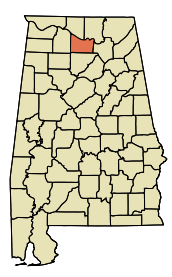
Knology, the company that competes with other cable and phone companies by overbuilding their service areas, has purchased the assets of Private Cable Co. LLC, which serves Athens and Decatur, Alabama for $7.5 million, creating new competitive headaches for bankrupt Charter Cable, which serves both communities.  The company said it expects to close the deal by the end of 2009.

Acquiring PCL Cable, which serves areas adjacent to existing Knology service areas, would seem a natural fit.

Decatur City Councilman Gary Hammon said he expects the acquisition to benefit Decatur residents, especially because PCL Cable appears to have frozen operations in place and not expanded their reach.

pclinternet“PCL hasn’t put any money into Decatur in the last five years,” Decatur City Councilman Gary Hammon told The Decatur Daily. “There are a lot of places in the city where you have Charter cable or no cable. I think competition sharpens the sword.”

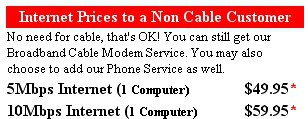
PCL Cable’s website appears outdated, outlining a service package that offers fewer channels than many larger cable systems, and a broadband service promoting unlimited access for 5Mbps and 10Mbps tiers of service.  The “full package” includes about 100 channels with no need for a set top box for $93 a month (or $73 if bundled with telephone and/or broadband service).  The last status updates were published in August 2008.

The incumbent cable operator in PCL Cable’s service area is Charter Cable, which also competes with Knology in several southeastern cities.  The buyout, and eventual conversion of PCL Cable into Knology’s family of services, means additional competition for Charter Cable in the two Georgia cities.

Knology Vice President of Communications Tony Palermo talked with The News about the purchase:

Decatur, Alabama

Decatur, Alabama

Palermo said it was premature to predict whether the company would expand PCL’s limited footprint in Decatur.

“It’s pretty early on,” Palermo said. “Coming out of the chute, we’re looking at bringing the (existing) PCL footprint into our fold.”

He said Knology already has optical fiber running to PCL, which provides data services.

“Within a relatively short period of time, we’ll be able to bring up products and services to the level of what we’re offering in Huntsville,” Palermo said, to businesses and residents already within PCL’s footprint.

He said the acquisition gives Knology the ability to increase its revenue with investments already made in Huntsville.

“The first step for us is to get the deal done,” Palermo said. “The second step is to transition over to our network and our method and our ways of doing business. That will include checking on the integrity of the distribution network.”

Only after that, Palermo said, will Knology look at expansion in Decatur.

“We will not go in immediately and do any kind of construction work,” he said.

KnologyLogoAT&T provides telephone service in Decatur and is on the list for U-verse service at some point in the future, but like Knology, has no immediate plans to roll out service.  AT&T received a video franchise from the city of Decatur to provide service.

Even with immediate service expansion still out of reach in many parts of the community, Palermo is still excited about the prospects for the future.

“Anytime there is good strong competition,” Palermo said, “that always results in goodness for the consumer.”

[Correction: Article adjusted to reflect Decatur and Athens are in Alabama.]

Frontier Enjoys One-Sided Softball Interview to Sell West Virginians on Verizon-Frontier Deal

Bray Cary, Host of Decision Makers

Bray Cary, Host of Decision Makers

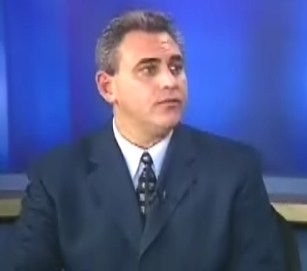
A network of West Virginia television stations spent 20 minutes this past Sunday airing a puff piece that could have been a video press release straight out of Frontier’s public relations department.  Decision Makers, a self-described “agenda setting” public affairs program ostensibly puts important people on the “hot seat” to answer “tough questions about where West Virginia is heading and how it will get there.”

Hardball this was not. Host Bray Cary, who also happens to serve as president and CEO of the television station group, presided over a one-sided softball tournament for Ken Arndt, Frontier’s new Southeast region chief in a 20 minute interview where the hardest question was likely posed off camera – ‘where would you like to do lunch?’

Decision Makers is seen across West Virginia on Cary’s statewide network of television stations — WOWK in Charleston-Huntington, WBOY in Clarksburg-Morgantown, WTRF in Wheeling and WVNS in Beckley-Bluefield.

The appearance of Arndt on the program comes the same week Frontier reportedly committed to purchasing significant advertising time on the stations, leading a Stop the Cap! reader who informed us about the program to ponder whether this Fluff-Fest was part of the ad deal.

Viewers on the public comment section for the show were unimpressed.

I can’t believe Mr. Cary didn’t ask the Frontier guy any hard questions. It was like a 20 minute commercial for Frontier, is that what you get for buying advertising with the station,” asked one.  “I believe that we would all like to hear and understand Frontier’s direct response to challenging questions from an involved, and knowledgeable speaker. We need to hear more then a branding speech,” said another.

The interview was loaded with misleading and occasionally false statements, often coming from the program host, who served as presiding cheerleader.  You can watch the program’s two segments, and then take a look at our reality check (and if an all-consumer volunteer website can manage this, why can’t Mr. Cary?)

[Video No Longer Available]

    Now that you’ve watched, let’s review the misleading statements, some made by Arndt, some by the host:

    “You guys are serving 35% of West Virginia – that’s a third of the phones.”

    Frontier may serve 35% of the landmass of West Virginia, but not 35% of the population, which is a very important distinction.  Verizon has the overwhelming majority of customers in the state, not the tw0-thirds this statement suggests.

    “I guess the only guys fighting you all right now are the Communications Workers of America union workers.”

    Ken Arndt - Frontier Communications

    Ken Arndt - Frontier Communications

    That, along with other dismissive comments made by Cary represent just how biased his interview was.  In many communities, citizens, businesses, utility commission staff, and yes – company workers are fighting this deal, because it’s bad news for every community facing a Frontier takeover.  Of course, Cary doesn’t have anyone on his program to refute his guest (or him for that matter.)

    “From a timelime perspective, and we’re actually finishing our [broadband expansion] engineering plan right now — by December 15th, my expectation is within the first 18 months we will make a substantial increase raising that 60% (of Verizon broadband penetration) exponentially and making a large investment and bringing in the individuals — the engineering and construction talent to be able to get it done as quickly as possible.”

    Frontier anticipates cutting $500 million in costs per year if the deal consummates, according to Bloomberg News. Job cuts at both Frontier and Verizon will create some of that savings, according to Maggie Wilderotter, Frontier’s CEO.  Customer service and field-technician jobs won’t be eliminated, she claims, but with a need for that level of cost savings, combined with the enormous debt Frontier will assume, where the resources to accomplish this expansion will come from is not explained.

    Frontier’s broadband expansion targets so-called “middle-mile” expansion.  That was precisely what was done in Rochester.  Fiber optics are used to connect various central offices and some remote network extenders (known as DSLAMs) to try and extend DSL service into more distant areas further away from the central office.  DSL speed is highly dependent on distance.  The further away you get, the lower the speed you can obtain.  Frontier plans to install limited amounts of fiber linking their offices in hopes of providing DSL service in areas that do not have access to it currently.  Unfortunately, every indication is that Frontier’s DSL in most parts of West Virginia will provide a maximum of 3Mbps, if you’re lucky.  In communities like Rochester, DSL service is marketed at 10Mbps, but as I’ve experienced myself, that speed really turned out to be 3.1Mbps living less than one-half mile from the city line.

    To many consumers, hearing talk about fiber optics may leave the impression they’ll have this type of connection in their home or business.  That’s highly unlikely.  Frontier fiber serves their own internal network.  Verizon FiOS serves you directly on a fiber optic cable.

    ‘In West Virginia in 2007 Frontier lost 2.7% of our access lines.  In Verizon’s footprint they lost 6.7%.  In 2008, Frontier’s lost just 2% while Verizon increased [their loss] to over 8%.  Frontier has put together unique packages that continually add value to landlines.  It’s through [Frontier’s] packaging, providing unique services and unique technologies [that the company limits losses].’

    Frontier is in the enviable position of focusing on rural markets long bypassed by the phone company’s biggest threats: cable and wireless competition.  Verizon is not.  The real reason for the dramatic difference in line loss is that Frontier customers often have no other choices for telecommunications services.  In West Virginia, cable does not serve many rural communities, so there is no “digital phone” competition to worry about.  Mobile phones in the most mountainous regions of the state can offer problematic service if it’s the only phone you have.  Verizon, which does face relentless cable television competition, pays the price in greater line loss.  Rural West Virginia has a much higher population of elderly residents, who are usually the least likely to drop traditional phone service.  In fact, no state has a higher population of the rural elderly except Florida.

    These factors afford Frontier more protection from line loss, not the so-called “unique services and unique technologies” the company only speaks about generally.

    Arndt also responds to a question about Frontier’s plans for fiber and other forms of “telco-TV” such as that provided by Verizon FiOS.  After noting the company does plan to move forward on an extremely limited basis by finishing FiOS projects already under construction, Arndt signals Frontier believes its status as a simple reseller of DISH satellite service somehow provides a superior solution to telephone company provided television.

    Not really.

    Who needs Frontier to sign up for DISH?  Customers can sign up directly themselves.  The advantage of “telco TV” really comes from the construction of the network to support it.  Both AT&T and Verizon have built television-ready networks which not only compete with cable, but also give their customers more and better broadband choices that Frontier cannot and will not offer consumers.  Frontier tries to valiantly spin its copper cable future by saying satellite television offers a better service, but in reality, being a DISH Network reseller hardly is in the same class as FiOS or U-verse.

    Residents in the affected areas need to consider whether they are tying themselves to a company that believes copper wire slow speed DSL is good enough for now and into the indefinite future, has no plans to directly compete with cable and other providers in delivering a wired telephone company cable service, will not build FiOS-like fiber optic networks in areas that one day could have been wired by Verizon, and will live with a company content with delivering “ubiquity” of service across all of its service areas, which in reality means large communities will suffer with lowest common denominator service, and rural communities will be lucky to get “good enough for you” broadband.

    Arndt’s comments about fiber connectivity in selected portions of their service area refer mostly to multi-dwelling units and new housing developments where service was provided more cost effectively through a shared fiber connection.  That’s not FiOS either.

    Color us unexcited about the prospect of Frontier’s ‘unique cable television via broadband service’ Arndt hints at.  That is almost certainly the new DISH set top box that can connect to your Frontier DSL service to stream on-demand television shows.  With Frontier’s 5GB Acceptable Use Policy for broadband, don’t expect to watch too much if and when they enforce the limit.

    FairPointAmong the most shameful segments of the 20 minute video press release Cary presides over is in the second half, when he asks and answers his own questions, spun in Frontier’s direction, about their ability to digest Verizon’s operations that dramatically dwarf Frontier’s current size and scope.  He’s even done “his research,” which suspiciously appears to be surfing through Frontier’s own talking points from their website and public relations efforts.  As far as Cary is concerned, Wall Street says they “like” the deal, and opposition to it is “a lot of noise.”

    Arndt responds that the opposition to the deal comes because of FairPoint Communications, which he says failed because of the complexities of integrating their billing systems.  As Stop the Cap! readers already know, FairPoint’s troubles went well beyond computer integration problems.  Arndt’s reasoning is akin to saying New Orleans drowned in Hurricane Katrina because a storm sewer up the street was clogged.  More than 20 news reports on this site alone document the entire sordid story.  On every level, FairPoint failed New England for a range of reasons:

    1. The enormous debt FairPoint was saddled with made it difficult for the company to spend the money necessary to maintain and grow their network and survive an economic downturn.  Frontier will also take on enormous debt during a challenging economy and claims it will spend millions to expand broadband service into rural areas where fewer potential customers mean a longer Return On Investment;
    2. FairPoint’s acquisition of Verizon New England involved more customers than FairPoint served nationwide before the buyout.  The exact same thing is true of Frontier in this deal;
    3. FairPoint’s earlier acquisitions were small, independent phone companies run with limited bureaucracy.  Verizon, and its predecessor Bell System businesses, have done things their own way for decades, making theoretical transitions doable on paper and chaotic in reality.  The exact same scenario exists with Frontier’s purchase of Verizon service areas;
    4. Poor service, unresponsive and overwhelmed customer service centers, insufficient investment, and broken promises plagued FairPoint’s New England adventure from day one.  Frontier risks repeating FairPoint’s mistakes, putting customers with no other options for telecommunications service at serious risk.

    Cary doesn’t have the insight or the interest in digging down into Arndt’s claims.  Maybe he forgot.  As far as Cary is concerned, everyone in West Virginia should just get familiar with the Frontier name.

    Of course, actual consumers aren’t invited on Decision Makers.  Nor are any groups opposed to the deal.  But West Virginians and others can be “decision makers” and choose a different path for their telecommunications future.  They can get on the phone and call their state representatives and tell them to oppose the deal.  They can also contact the state utility commission and file their own comments telling them this deal isn’t worth the risk — three bankruptcies out of three earlier deals.

    Even when playing this kind of softball, three strikes should mean you are out.

    Search This Site:

    Contributions:

    Recent Comments:

    Your Account:

    Stop the Cap!