AT&T Mobility doesn’t want a repeat of 2009’s wireless meltdown at Austin’s annual geek gathering South by Southwest (SXSW). The wireless provider is bolstering coverage across Austin with temporary cell towers rising from trailers strategically placed around the convention center, as well as an indoor cell system inside the Austin Convention Center.
All this to avoid the embarrassment the company experienced last year when thousands of iPhone-wielding attendees slowed AT&T’s network to a crawl. When smartphone customers notice slowdowns or dropped service, they become vocal. That’s no good for a convention catering to the cool-kid techie.
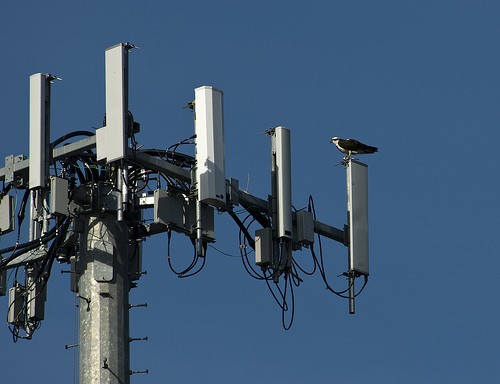
Making a good impression at SXSW may represent a road back to credibility for many unhappy AT&T customers, who have repeatedly criticized the carrier for not keeping up with mobile demand in 2009. In addition to “Cellular On Wheels” — the aforementioned AT&T cell tower trailers, the company has also beefed up its permanent cell sites with improved backhaul connections, which provides increased bandwidth.
Most of AT&T’s data demands come from its exclusive arrangement with Apple to provide iPhone service in the United States. The deal brought millions of new customers to the company, which claims to have twice as many smartphones on its network that any other carrier.
The results of all the work seem to have paid off. Many attendees report the network is performing better than expected. Some have noted its working even better than the conference-provided Wi-Fi network.
[flv width=”480″ height=”380″]http://www.phillipdampier.com/video/KXAN Austin ATT trying to prevent mobile meltdown 3-12-10.flv[/flv]
KXAN-TV in Austin covers the opening of SXSW and AT&T’s service improvements throughout Austin (2 minutes)
Tomorrow, the Federal Communications Commission is anticipated to release its long-awaited National Broadband Plan (NBP) for the United States.
The proposed road map to better broadband is supposed to bolster availability in rural communities, improve access in urban and suburban areas, and lay the groundwork for 21st century service and speeds.
FCC Chairman Julius Genachowski and Blair Levin, executive director of the FCC Broadband Initiative, have provided plenty of clues along the way. But one thing is certain — the true impact of the NBP will be to pass a de facto national stimulus program for corporate lobbyists, who will spend the rest of the year loving the goodies in the plan and lobbying away the parts they don’t.
Everyone but consumers have plenty of cash on hand to pay for a full assault on Capitol Hill, bending the ears of lawmakers to deliver the changes they can believe in, and outlawing the changes they don’t. Since those words will be underlined with fat campaign contributions, more than a few lawmakers are likely to listen.
National Public Radio’s Morning Edition asked the question, will the National Broadband Plan come up short? (4 minutes)
You must remain on this page to hear the clip, or you can download the clip and listen later.
The Winners
Public Institutions: To be a health care provider, a school, or library is a good thing these days. Some of the most generous and non-controversial elements of the NBP will be directed to public institutions. The cosmetic impact can’t be beat. Every elected official sees great potential from ribbon-cutting a showcase project that improves health care, local schools, or a nearby public library. To all three will come fast access fiber connectivity, tele-learning funding, and support for educating the public about broadband. Libraries will be given special attention to address connectivity, schools will likely find free or low cost fiber in their future, and the digitization of health care records and results will also promise improvements in health care delivery.
None of these projects will create a significant competitive impact on current broadband players, and even earmark-wary politicians will pose for the cameras to launch an inner-city library’s fiber project. Public safety will also be provided for with plans to improve connectivity and leveraging broadband for our first responders.
Wireless Companies: It can’t hurt to be a big telecommunications company with a wireless division, either. That’s because one of the major priorities for the NBP will be finding additional wireless spectrum to improve mobile data services in hopes they can provide increased access in rural communities and increased competition in urban ones.
More airways for mobile data will be “a core goal,” FCC Chairman Julius Genachowski said in February. That means AT&T and Verizon stand to gain the largest benefits from expanded spectrum. Smaller carriers like T-Mobile and Sprint will also benefit to a lesser degree. The FCC wants to double the number of frequencies available to wireless carriers — 500MHz that must be reallocated from other uses and delivered to providers in new broadband spectrum auctions.
Those with the deepest pockets will win the most spectrum, which assures in priority markets where spectrum is in demand, AT&T and Verizon will likely outbid others.
With a mobile broadband future at stake, that guarantees added pressure on smaller players to merge so they can pool resources to compete for needed airwaves. That could ultimately reduce competition and choice among wireless providers. Pricing is unlikely to drop either, so long as providers try and recoup their auction expenses.
Levin, in particular, is a proponent of wireless competition.
“We don’t know necessarily whether wireless is going to provide perfect competition to wired. But we do know it’s a very important piece of the puzzle,” Levin believes.
Consumers know better, especially in a country replete with $60-for-five-gigabytes monthly usage plans.
Since wireless broadband is increasingly delivered by the same companies providing wired broadband, wired providers show few signs of fear from bolstered wireless competition. AT&T U-verse and AT&T Mobility are AT&T. Verizon FiOS, DSL, and Verizon Wireless are all Verizon. Comcast and Time Warner Cable are both major investors in Clearwire, a wireless “competitor.”
Equipment & Infrastructure Providers: If you haven’t bought shares in Corning, manufacturer of fiber optic network components, or Cisco, which supplies broadband infrastructure, you might want to consider it. Both companies, among dozens of others, stand to reap millions in profits from the sale of components to construct 21st century broadband. All of the major equipment manufacturers and their respective trade associations have already submitted piles of comments to the FCC to help identify priorities and speed implementation of the NBP. Not only do they promote the use of their products, they also speak in terms of helping to create thousands of new jobs for those building the next generation of broadband. What’s not to like about that?
Big Broadband Users: Major companies like Google and Amazon are expected to benefit from improved broadband, especially if it also includes increased competition and open access to privately owned networks. Constructing larger national and regional networks assures increased capacity and reduced pricing, especially if networks face additional competition. To underscore the point, the NBP is expected to announce a review by the FCC of the wholesale rates big carriers charge for access.
The Losers
Broadcasters: The nation’s broadcasters are clearly the biggest potential losers in the NBP. Threatened with plans to capture large amounts of the UHF television band and selling it off to wireless providers may cripple at least some of the nation’s free over-the-air broadcasters. For some at the FCC, the fact that less than half of all Americans watch television over-the-air must have made their frequencies a rational target. Most Americans pay a cable, telephone or satellite company to deliver local stations. If the FCC reallocated half of the current UHF dial and sold it to wireless carriers, the remaining channel space would mean a far more crowded, interference-prone TV dial.
Some wireless industry advocates of the reallocation plan believe stations can get by with reduced power on a network of cell-tower-like relay transmitters delivering signals to more distant suburbs in their service area. Reduced power means reduced interference, they advocate, although it also means significantly reduced coverage areas, especially for rural Americans which depend on distant stations for free over-the-air television.
Right now, the NBP reallocation proposal will likely be “voluntary,” meaning stations can give up their channel and move to a different one, earning compensation from a federal auction fund to pay 100 percent of the expenses involved with the channel change. The National Association of Broadcasters, the television industry’s trade association, fears what begins as “voluntary” may evolve into “compulsory.”
Open Access Proponents: Least likely to be included in the NBP is a broad-reaching requirement that broadband providers open their networks, usually a duopoly in most American cities, to would-be competitors at fair terms and prices. The industry has been down this road before with traditional telephone service, and spent countless millions fighting proposals that would allow consumers to choose different local telephone companies. In the end, choice for residential phone service over landlines never really got off the ground because the terms and conditions never made economic sense to would-be competitors.
Should the FCC try to mandate that cable and telephone industry broadband lines be opened to third party competitors, that will unleash a full scale lobbying assault on Washington. In an election year, antagonizing big telecommunications companies is unlikely. Besides, the industry can always sue, claiming any open access mandate violates their corporate constitutional rights.
The Jury Is Out
Consumers: That’s you and I. Don’t expect the FCC to announce large, government-constructed, fiber to the home projects for every American now living with a broadband duopoly that delivers the least amount of speed for the highest possible price. When a significant minority of Americans believes any government project to improve broadband is really a Barack Obama Socialist Wiretapping project, no national scale version of municipal fiber is forthcoming. Not even close.
Most of the media attention will likely focus on speed goals, cosmetic projects for local institutions, and general statements about increased competition.
The immediate benefits for consumers will be nebulous at best. We’ll likely gain more from Net Neutrality protections. The only likely direct benefit, should it come to fruition, is the plan to create a nationwide, free wireless network to ease the digital divide. Specific speeds, technology used, and service areas aren’t known at this point. But private providers will work particularly hard to prevent this plan from ever seeing the light of day.
Consumer complaints about telecommunications companies have been skyrocketing. The Better Business Bureau reports that the most complaints the group received in 2009 pertained to cell phone providers and the cable, telephone, and satellite-providers.
Consumers are screaming for competition and they get rate increases instead.
Without clear measures promoting increased competition and oversight, American broadband will evolve into an expensive, usage-limited experience for most urban customers, and “good enough for you”-slow speed DSL service delivered by a de facto telephone company monopoly in rural areas.
Relief for consumers does not come from handing additional few-strings-attached benefits and resources to the same providers that are responsible for the current state of broadband service in America.
Hollywood: Lobbyists for the music and movie studios have been peppering Washington with demands that broadband-related legislation include increased penalties and restrictions to reduce copyright theft. They seek a mandate that repeat copyright offenders be banned from broadband service, that consumer electronics incorporate digital rights management technology to thwart unauthorized distribution or access to copyrighted content, and increased financial penalties for those who try.
Should the FCC incorporate these concepts in the NBP, it will likely create a consumer backlash because of past memories of overzealous copyright controls that hamper legitimate use of purchased content. It will also raise opposition from consumer electronics manufacturers.
Cable and Telephone Providers: There are benefits and risks to companies like Comcast, Time Warner Cable, Verizon, AT&T, Frontier Communications, and Windstream, among others.
Reform of the much-maligned Universal Service Fund, which currently benefits traditional telephone customers, could be a game-changer for many companies. Currently, Verizon and AT&T pay more into the USF than they receive from it. That is especially true for Verizon which is abandoning rural markets by selling off service areas to smaller providers. The USF provides a subsidy for rural phone companies to deliver affordable service at comparable pricing enjoyed in larger communities. By transitioning the USF into a Broadband Service Fund — using the money to construct and improve broadband service — many companies stand to benefit.
Frontier, CenturyLink, and Windstream are among those specializing in “rural phone service” and could use funding to defray the costs of broadband networks otherwise built with investor money. Verizon and AT&T could earn broadband funding for projects in their service areas currently not delivering broadband, or only providing anemic DSL service.
That has cable companies worried, particularly if the funds can be used to provide service in areas where they already offer service. Even worse, the thought of a new wireless broadband entrant in a community already served by cable and telephone company broadband.
McSlarrow
The cable industry is also worried about a proposal to let consumers ditch cable-owned cable boxes in favor of their own purchased alternatives.
Cable companies rent tens of millions of cable boxes that they control and manage. The FCC wants consumers to be able to purchase and manage their own devices capable of utilizing the services cable operators provide, without having to pay several dollars a month to borrow one from the cable company.
Kyle McSlarrow from the National Cable & Telecommunications Association sent a letter Friday to Genachowski offering the FCC a compromise. Offering seven points the NCTA says cable is willing to voluntarily abide to, McSlarrow suggests consumers should be able to buy such devices, but that they should not be required to access every possible service on offer from his cable members. Indeed, such devices also must incorporate security and copyright controls to limit unauthorized access and use of cable-delivered content.
That guarantees the same success rate consumers have today with CableCARD technology, which few consumers use or understand.
Regardless of what comes from tomorrow’s National Broadband Plan, look beyond the happy talk, general promises, and visionary language. The devil is in the details, definitions, schedules, and clear path from tomorrow’s platitudes into next year’s broadband improvement reality.
Free Press’ policy director Ben Scott held his own, despite being hopelessly outnumbered, in a business-friendly CNBC ‘Power Lunch’ debate over broadband public policy held earlier this month. Scott faced Yahoo! CEO Carol Bartz, Larry Clinton from the “Internet Security Alliance,” which receives substantial support — not disclosed by CNBC — from AT&T and Verizon, and CNBC’s clueless Michelle Caruso-Cabrera, who insisted 99 percent of America already subscribes to broadband. All of the industry talking points were on hand, which isn’t too surprising when they come from industry front groups like the ‘ISA.’ (3/3/2010 — 5 minutes)
The Federal Communications Commission wants to know how fast your broadband connection is. The federal agency is now offering consumers and businesses a chance to test broadband speeds to raise awareness about broadband. But the test results also help illustrate the wide variation between speeds promised by providers and those actually experienced by customers.
The FCC wants to collect this information because broadband providers have often refused to provide it themselves, citing customer privacy or an unwillingness to release potentially useful information to competitors. By asking visitors to supply their street address and general location, the agency can at least develop anecdotal information about the range of speeds Americans experience.
However, the agency is likely to discover wide variations in the accuracy of the results based not on what service providers deliver, but instead what the speed test itself reports.
The FCC is relying on two speed test providers, randomly assigned to those taking the test.
Measurement Lab (M-Lab), which provides researchers with Internet measurement tools on a collaborative basis, and
Ookla, a private company that provides web-based network diagnostic applications.
Stop the Cap! used both providers to conduct three individual speed tests from Broadband.gov. There were dramatic differences in results. M-Lab consistently reported far slower speeds than Ookla. Ookla’s results were closest to the advertised speeds from our broadband provider — Time Warner Cable.
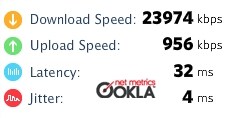
This speed test result from M-Lab was the closest to the average of all three speed tests conducted with this service
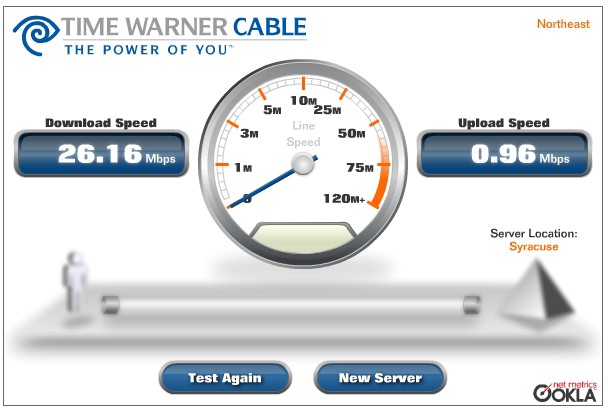
Ookla's speed test came closest to achieving the marketed speeds for Rochester, New York Time Warner Cable Road Runner Turbo customers. The download speeds reported also include the effects of "PowerBoost," a temporary burst of additional downstream speed.
Both speed test providers rely on different regional servers to deliver potentially more accurate speed test results, less impacted by the additional “hops” traffic must take when traveling outside of a nearby region. But considering the enormous disparity between the two tests, these real-world results may not actually represent reality.
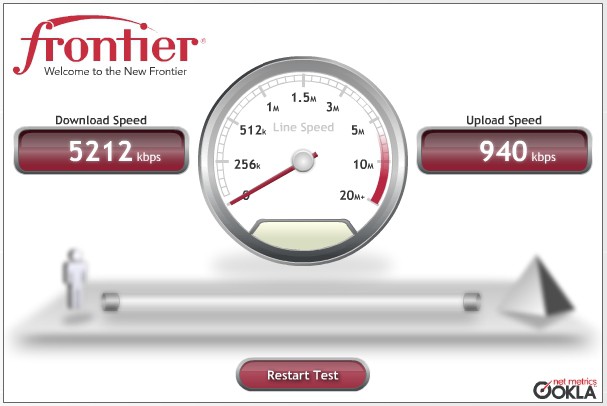
Which test comes closest to the actual speeds available here? Ookla. But even then, your results may vary. Ookla provides speed tests for both Time Warner Cable and Frontier Communications, our local phone company. The downstream speeds reported were widely different, despite both test servers being located within a 50 mile radius.
Time Warner Cable's speed test application is also provided by Ookla. (This result comes from a server in nearby Syracuse -- the Rochester location was not working properly)
Ookla's speed test for Frontier Communications delivered dramatically different results for downstream speeds
The FCC seems to acknowledge the potential disparity in results on their disclaimer page:
Please note that the Consumer Broadband Test in its current software based form may not be an accurate representation of connection quality provided by your broadband provider. The results can be impacted by a range of factors — for instance, the test can vary based on the geographical distance of the user from the testing server, end-user hardware, network congestion, and time of day. However, this application can provide a helpful indicator in comparing consumers’ relative broadband connection quality and in understanding the performance metrics of broadband connections.
What results do you get from Broadband.gov’s provided speed tests? Share your findings in our comment section.
Despite hundreds of consumer complaints from residents in and around Baton Rouge, the Louisiana Public Service Commission has refused to vote itself the authority to threaten AT&T with a fine up to $175,000 for poor service.
Ignoring an agreement by AT&T to adhere to minimum service standards in return for permission to acquire BellSouth Corporation in 2006, the Commission oddly decided not to enforce those conditions for the protection of AT&T customers. On Wednesday, in a 3-2 vote, the PSC instead decided to “study” the matter and to further consider whether or not it should impose the same minimum service standards on all of Louisiana’s phone companies.
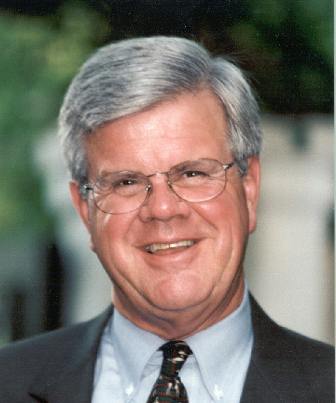
Campbell voted for the authority to fine AT&T. He serves District 5 in northern Louisiana
Commissioner Foster Campbell, of Bossier Parish in northern Louisiana, was stunned by the vote’s results.
“You’re telling AT&T that no matter what they do, no matter how bad their service, we’re not going to do anything?” he asked.
Campbell told his fellow Commissioners he’s worn out after taking large numbers of calls from upset residents in northern Louisiana.
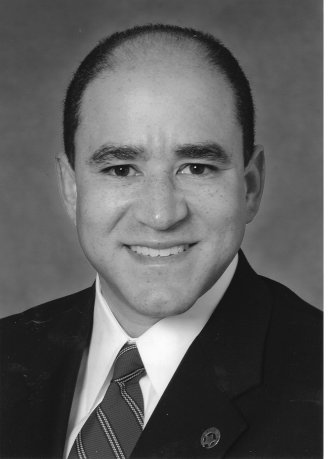
Field also voted for the measure. He serves District 2 in southern-central Louisiana
This is the second time the PSC refused to fine AT&T and instead “study” the matter. Meanwhile, customer complaints from the Baton Rouge area continue to pour into the PSC offices.
Commissioner Jimmy Field, who represents the Baton Rouge area, told AP his office had been swarmed with consumers complaining about the length of time to get service installed and outages lasting more than 24 hours. Field wanted the PSC to hang the fine over AT&T’s head again.
Complaints against AT&T in Louisiana also involve lengthy waits for repair call appointments, delays in getting new lines installed, missed appointments, and extended service outages.
In just four months last summer, the Commission confirmed 435 of the 778 complaints lodged across the state against AT&T.
Apparently if the problems don’t impact the residents you represent, there isn’t a problem.
The three commissioners that voted against the proposal to potentially fine AT&T said as much.
Skrmetta was the ringleader of the three opposed to potentially fining AT&T. He serves District 1 in east Louisiana
PSC Commissioners Eric Skrmetta, of Metairie, Lambert Boissiere III, of New Orleans, and Clyde Holloway, of Forest Hill said it wasn’t fair to single out just one company.
Skrmetta went further and said he hadn’t seen many complaints in his district, north of Lake Pontchartrain. But he had received complaints about some of AT&T’s competitors.
Boissiere voted against the measure. He represents District 3 in central Louisiana
Boissiere, despite voting against the proposal, delivered a verbal spanking to the AT&T representative on hand.
“I don’t like your methods. I don’t like your style. I understand where my fellow commissioners are coming from,” Boissiere said.
Debbie Canale, the executive director for regulation for AT&T Louisiana, wasn’t much impressed with Boissiere’s comments.
“Our customers vote with their money and would do business with competitors, if they were unhappy with AT&T,” Canale offered.
Our Take
The three commissioners who voted against giving themselves the power to make their regulatory authority count don’t belong on any Public Service Commission. Any member of a review board should be concerned first and foremost with the interests of the residents they represent. The three Louisiana commissioners who voted against the proposal failed to do that. They should be removed immediately.
The only way to impress telecommunications companies under your review is to have the power to make them pay attention to your rulings. Stiff fines for repeated violations (and 435 in just four months is an incredible number) will make any company sit up, take notice and fix problems.
Without it, verbal scoldings are little more than lip service to a provider that can afford to be arrogant, especially in rural Louisiana where competitive choice is hardly bountiful.
Canale’s response to the Commission boils down to, “if you don’t like our service, leave.” If only every Louisiana resident could choose another landline provider if they wanted.
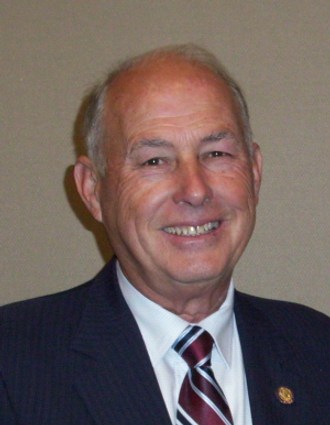
Holloway, the third "no" vote, represents District 4 in western Louisiana
Ignoring a company’s problems in one region of the state virtually guarantees those problems will eventually visit another. It is short-sighted and inexcusable to ignore hundreds of valid complaints, condemning residents to more of the same in the future. Voting (for a second time) to “study” the issue is an insult to residents and little more than a stall tactic.
The Commission’s suggestion it wants to impose regulatory fairness comes despite a clear agreement, less than four years old, that AT&T signed onto as part of its buyout of BellSouth. It says AT&T will commit to certain standards of service in return for regulatory approval of the merger. AT&T already sought to renege on that agreement in mid-2009 when it asked the Commission to suspend fines as part of their “study” about regulatory policies across the state.
So much for that hard-fought consumer protection deal. Evidently, what AT&T agrees to one year is fodder for their lobbyists the next. If AT&T wants changes, can consumers demand some changes of their own that assure this company will provide quality service?
As usual, AT&T’s regulatory affairs never give consumers a good deal. For 435 residents of Louisiana, it also gave them no dial tone and a lengthy wait to get it back.
At for Commissioners Skrmetta, Boissiere and Holloway, the only question that should be on the table is whether they represent residents or AT&T Louisiana.
That is something worthy of careful study.
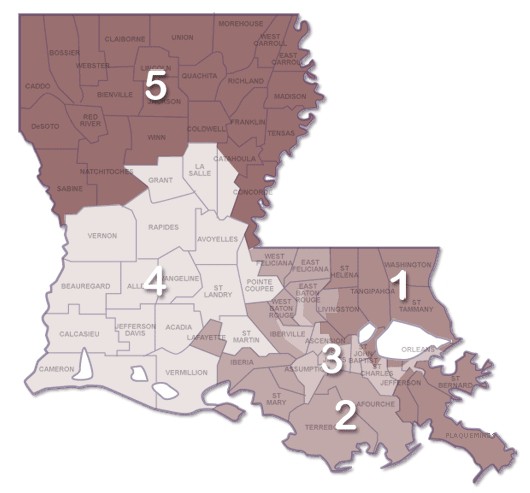
Louisiana's Public Service Commission is made up of five commissioners, each with their own district to represent.
Be Sure to Read Part One: Astroturf Overload — Broadband for America = One Giant Industry Front Group for an important introduction to what this super-sized industry front group is all about. Members of Broadband for America Red: A company or group actively engaging in anti-consumer lobbying, opposes Net Neutrality, supports Internet Overcharging, belongs to […]
Astroturf: One of the underhanded tactics increasingly being used by telecom companies is “Astroturf lobbying” – creating front groups that try to mimic true grassroots, but that are all about corporate money, not citizen power. Astroturf lobbying is hardly a new approach. Senator Lloyd Bentsen is credited with coining the term in the 1980s to […]
Hong Kong remains bullish on broadband. Despite the economic downturn, City Telecom continues to invest millions in constructing one of Hong Kong’s largest fiber optic broadband networks, providing fiber to the home connections to residents. City Telecom’s HK Broadband service relies on an all-fiber optic network, and has been dubbed “the Verizon FiOS of Hong […]
BendBroadband, a small provider serving central Oregon, breathlessly announced the imminent launch of new higher speed broadband service for its customers after completing an upgrade to DOCSIS 3. Along with the launch announcement came a new logo of a sprinting dog the company attaches its new tagline to: “We’re the local dog. We better be […]
Stop the Cap! reader Rick has been educating me about some of the new-found aggression by Shaw Communications, one of western Canada’s largest telecommunications companies, in expanding its business reach across Canada. Woe to those who get in the way. Novus Entertainment is already familiar with this story. As Stop the Cap! reported previously, Shaw […]
The Canadian Radio-television Telecommunications Commission, the Canadian equivalent of the Federal Communications Commission in Washington, may be forced to consider American broadband policy before defining Net Neutrality and its role in Canadian broadband, according to an article published today in The Globe & Mail. [FCC Chairman Julius Genachowski’s] proposal – to codify and enforce some […]
In March 2000, two cable magnates sat down for the cable industry equivalent of My Dinner With Andre. Fine wine, beautiful table linens, an exquisite meal, and a Monopoly board with pieces swapped back and forth representing hundreds of thousands of Canadian consumers. Ted Rogers and Jim Shaw drew a line on the western Ontario […]
Just like FairPoint Communications, the Towering Inferno of phone companies haunting New England, Frontier Communications is making a whole lot of promises to state regulators and consumers, if they’ll only support the deal to transfer ownership of phone service from Verizon to them. This time, Frontier is issuing a self-serving press release touting their investment […]
I see it took all of five minutes for George Ou and his friends at Digital Society to be swayed by the tunnel vision myopia of last week’s latest effort to justify Internet Overcharging schemes. Until recently, I’ve always rationalized my distain for smaller usage caps by ignoring the fact that I’m being subsidized by […]
In 2007, we took our first major trip away from western New York in 20 years and spent two weeks an hour away from Calgary, Alberta. After two weeks in Kananaskis Country, Banff, Calgary, and other spots all over southern Alberta, we came away with the Good, the Bad, and the Ugly: The Good Alberta […]
A federal appeals court in Washington has struck down, for a second time, a rulemaking by the Federal Communications Commission to limit the size of the nation’s largest cable operators to 30% of the nation’s pay television marketplace, calling the rule “arbitrary and capricious.” The 30% rule, designed to keep no single company from controlling […]
Less than half of Americans surveyed by PC Magazine report they are very satisfied with the broadband speed delivered by their Internet service provider. PC Magazine released a comprehensive study this month on speed, provider satisfaction, and consumer opinions about the state of broadband in their community. The publisher sampled more than 17,000 participants, checking […]


 Subscribe
 AT&T Mobility doesn’t want a repeat of 2009’s wireless meltdown at Austin’s annual geek gathering South by Southwest (SXSW). The wireless provider is bolstering coverage across Austin with temporary cell towers rising from trailers strategically placed around the convention center, as well as an indoor cell system inside the Austin Convention Center.