Home » Online Video » Recent Articles:

Time Warner Cable Partners with Viacom for Web Access to Full Length, On-Demand Shows

Phillip Dampier September 10, 2012 Consumer News, Online Video Comments Off on Time Warner Cable Partners with Viacom for Web Access to Full Length, On-Demand Shows

Time Warner Cable TV customers will soon be able to access on demand, full length episodes of popular TV shows aired on cable networks like Comedy Central, Nickelodeon and VH1 at no additional charge thanks to a new agreement signed with Viacom.

Currently Time Warner’s “authenticated” cable TV customers can live stream Viacom networks over the cable company’s TWC TV app, but soon will also be able to view on-demand content using a Time Warner user ID and password on Viacom websites.

Time Warner has been among the slowest cable operators to embrace the industry’s TV Everywhere project — allowing only paying cable television subscribers to access popular cable shows on the web. The new agreement will help Time Warner sell customers on keeping cable TV subscriptions to enjoy extra online features, while protecting the company from would-be cord cutters finding ways to watch favorite television shows for free online.

Head of Verizon FiOS TV Doesn’t Watch Much Live TV; Nothing on Data Caps “Just Yet”

Maitreyi Krishnaswamy, Verizon’s head of FiOS TV admits she practically never watches live television — she records everything on her DVR first.

Krishnaswamy has been responsible for many of the interactive video services offered on Verizon’s FiOS TV platform, including on-screen apps, the media program guide, and how customers connect various devices to the FiOS television experience.

Now she’s directing Verizon’s consumer video services — deciding which channels make the lineup on FiOS TV and the networks available for streaming to mobile devices.

Krishnaswamy told the Tampa Tribune she recognizes the way Americans watch television has changed over the past few years, and she admits it has led to the “growing” trend of customers’ cord-cutting their cable TV subscriptions in favor of online viewing.

Krishnaswamy

“The question is: Is it growing enough for us? For us, it’s a matter of cord-cutters versus cord-shavers — people who switch to smaller tiers,” Krishnaswamy said. “Is the migration to a-la-carte enough that we can go that route? It has a way more important impact that just on them. It impacts how we negotiate TV contracts with studios. It’s not something we can do overnight, but definitely something we’ve been looking at.”

Verizon has made it clear it intends to compete for customers regardless of how they watch television, but Krishnaswamy signals the company is also considering protecting their core video business model, and would only say Verizon had no announcements to make “just as yet” regarding an Internet Overcharging scheme including usage caps and overlimit fees. Critics of data caps argue that limiting broadband usage prevents customers from taking their viewing experience online because it threatens consuming the majority of their monthly data use allowance.

But Verizon does not mind offering customers a TV Everywhere experience — streaming video content over its broadband network, so long as a customer also subscribes to its TV package. The company already offers live streaming television of many channels on its lineup and wants to bolster that with on demand content. Verizon also is experimenting with non-traditional set top boxes, and although Krishnaswamy had nothing to say about supporting the forthcoming Apple TV, she is actively working on improving how Verizon’s television service works away from the traditional company-provided set top box.

Some highlights:

  • Verizon’s partnership with Redbox will let the company offer a new streaming and DVD rental service for customers, regardless of whether they live in a Verizon FiOS area or not. Customers will be able to access the service over mobile broadband, Wi-Fi, or any home broadband connection;
  • Verizon will introduce an online viewing app for forthcoming versions of Amazon’s Kindle;
  • The company has thus far only managed to secure streaming rights for in-home viewing and has run into difficulty getting content providers to let customers watch shows while on the go;
  • Google Fiber is “interesting,” but Krishnaswamy doesn’t believe they are “a real operator” when only offering service in one city. She thinks the project is a good idea, however, because it forces competing providers “to increase your speed;”
  • Verizon is considering simplifying its family of apps to reduce customer confusion. They currently have different apps for home security, home media, the remote control, and the program guide. Verizon wants its MyFiOS app to become a “super-app” that manages everything.

[flv width=”640″ height=”500″]http://www.phillipdampier.com/video/TVnext Interview – Maitreyi Krishnaswamy Verizon FIOS 1-28-11.m4v[/flv]

Back in 2011, Maitreyi Krishnaswamy explained her thinking about where Verizon FiOS was taking the TV experience. Many of these applications have since been released, but Verizon — like most providers — still runs into brick walls with content providers getting licensing to allow more flexible viewing of content.  (12 minutes)

Time Warner Cable Puts Its News Channels Behind TV Everywhere Pay Wall

Phillip Dampier September 4, 2012 Consumer News, Online Video Comments Off on Time Warner Cable Puts Its News Channels Behind TV Everywhere Pay Wall

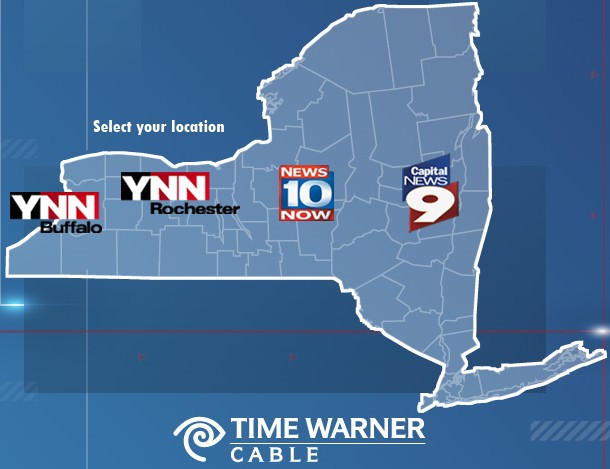
YNN provides 24/7 local news coverage on individual channels in Buffalo, Rochester, Syracuse, and Albany.

Time Warner Cable has placed its owned and operated news channels – including YNN, NY1 News, NY1 Noticias, and News 14 Carolina – behind a TV Everywhere pay wall, requiring a video subscription with the cable operator to access anything beyond the latest news headlines:

The expanded video content includes a new web-only weather forecast, plus expanded long-form news interviews and extended on-location footage. In the future, Time Warner Cable TV subscribers will also be able to comment on our articles and receive e-mail alerts for top news stories.

In order to access our full, enhanced site, Time Warner Cable customers must sign in to YNN.com using their Time Warner Cable username and password – the same ID used to access TWC’s online bill pay service, stream TV shows from WatchESPN and HBO GO, access the TWC TV mobile apps, and use Remote DVR manager, Phone Manager and other TWC services.

This ID is free of charge to all TWC TV subscribers, and there is no additional charge for the enhanced website content. However, TWC subscribers with only high-speed data or phone service will need to upgrade to a video subscription to be able to fully access the upgraded site.

Customers can find their current account number on their latest Time Warner Cable paper or online bill. Viewing first requires an online account (available on TWC’s Registration Page by entering your e-mail address and following the registration instructions.)

YNN and other Time Warner Cable news sites used to offer video content for all site visitors. The change is part of Time Warner’s TV Everywhere project, designed to enhance the value of cable television subscriptions by offering accompanying enhanced web content — streamed video, live access, and on-demand video — over the company’s broadband service.


CNN Airport Network Gets Clear Channel Challenge; ClearVision on Your Mobile Device

Phillip Dampier September 4, 2012 Competition, Consumer News, Online Video, Wireless Broadband Comments Off on CNN Airport Network Gets Clear Channel Challenge; ClearVision on Your Mobile Device

CNN faces another challenge to its declining brand as Clear Channel Outdoor Holdings prepares to launch a competing network, viewable only in airports.

Since 1992, CNN has dominated airport televisions with its CNN Airport Network, a live channel showing a custom-programmed feed of CNN that assures it will never televise graphic video coverage of commercial air accidents or incidents to its viewers.

CNN makes its money selling advertising opportunities on the channel, which it claims is seen by nearly 248 million air passengers yearly in more than 40 airports for an average of 47 minutes each.

But much like CNN’s declining ratings, airport travelers have increasingly tuned out the channel, preferring to spend their waiting time with their own mobile devices. As the times have changed, Clear Channel has proposed that airport viewing change with it.

The media conglomerate announced this week it is unveiling a new TV service for airports that will air programming from major television networks and cable channels. With more than 100 content deals signed thus far, ClearVision intends to give CNN a run for advertiser money.

Toby Sturek, Clear Channel’s head of airports, told Reuters the company is in discussions with about 20 mostly medium-sized airports to host the new service. ClearVision has already signed Raleigh-Durham International, where CNN Airport Network is not seen. ClearVision will launch in that North Carolina airport this November.

Sturek said airport owners want a variety of programming to show waiting passengers, and CNN no longer cuts it with advertisers, which he says have shown little interest in supporting CNN’s venture. Sturek says they simply do not see the value of advertising on the airport channel. Still, industry insiders estimate CNN Airport Network earns the Time Warner-owned news channel at least $10 million annually.

ClearVision intends to challenge CNN’s dominance by giving viewers a greater range of programming, and starting next spring, its viewing monitors will also act as Wi-Fi hotspots, letting mobile devices connect and stream the same content for free to enhance a personal viewing experience. Because the service will be available over Wi-Fi, viewers will avoid eating away their monthly data allowance with wireless providers.

Eventually, ClearVision intends to serve up multiple channels of video content. Sturek says that will allow one viewer to watch the latest business news headlines while another watches “America’s Got Talent.”

AT&T’s Fact-Free Defense of FaceTime Blocking Only Further Alienates Angry Customers

Phillip “At Least They Are Transparent About Robbing You” Dampier

The unassailable truth is that if there is a right way for a company to treat its customers and a wrong way, AT&T will always choose the wrong way. It’s the primary reason I refuse to do business with them.

The company’s recent decision to block Apple FaceTime for customers who refuse to be herded to one of AT&T’s new Mobile Share plans is another shot across the bow of Net Neutrality, which declares customers should be able to use the applications and services of their choosing — particularly on networks where they pay for those choices.

Principal #1 of Net Neutrality: Companies should not be playing favorites with applications or services by blocking or restricting those a provider does not favor.

AT&T’s response: ‘Whatever.’

The predictable outrage of customers should have come as no surprise to AT&T, but somehow it did.

The company picked testy senior vice president for regulatory affairs Bob Quinn to mount a rapid defense against the pitchfork-and-torch-yielding throngs on AT&T’s Public Policy Blog. That was their second mistake.

Quinn, who spent last December valiantly defending AT&T against its too-precious CupcakeGate mini-scandal, conjured up this pretzel-twisted logic tap dance to explain away its latest boorish behavior:

Providers of mobile broadband Internet access service are subject to two net neutrality requirements: (1) a transparency requirement pursuant to which they must disclose accurate information regarding the network management practices, performance, and commercial terms of their broadband Internet access services; and (2) a no-blocking requirement under which they are prohibited, subject to reasonable network management, from blocking applications that compete with the provider’s voice or video telephony services.

AT&T’s plans for FaceTime will not violate either requirement.  Our policies regarding FaceTime will be fully transparent to all consumers, and no one has argued to the contrary.  There is no transparency issue here.

Nor is there a blocking issue.  The FCC’s net neutrality rules do not regulate the availability to customers of applications that are preloaded on phones.  Indeed, the rules do not require that providers make available any preloaded apps.  Rather, they address whether customers are able to download apps that compete with our voice or video telephony services.   AT&T does not restrict customers from downloading any such lawful applications, and there are several video chat apps available in the various app stores serving particular operating systems. (I won’t name any of them for fear that I will be accused by these same groups of discriminating in favor of those apps.  But just go to your app store on your device and type “video chat.”)  Therefore, there is no net neutrality violation.

A company lecturing its customers for daring to question its decisions is always a good way to enhance those warm and fuzzy feelings people have about America’s least-liked wireless phone company. Quinn first scolds customers and consumer groups about their “knee jerk reaction,” for being upset about the issue. Then he declares they have “rushed to judgment,” using a turn of phrase not heard since O.J. Simpson’s defense team pounded it to death, and look where that ultimately got us.

The crux of AT&T’s argument is they get a free pass to “block and herd” because Apple FaceTime was pre-installed on customer phones. Therefore, since AT&T didn’t block you from downloading an app you already had, it cannot possibly be a Net Neutrality violation. Because as we all know, Net Neutrality is only about download blocking.

At least AT&T is keeping their promise to be transparent. They have, indeed, fully informed you they are mugging you while in the process of mugging you. Full disclosure… matters.

Somehow, I missed the “preinstalled does not count” section in the Federal Communications Commission’s December 2010 order to providers telling them to preserve the free and open Internet. So I spent last night with this legalese page-turner (194 pages to be exact) to refresh my memory.

Nope, it isn’t in there. You can read it for yourself from the link above.

So it isn’t me. It is them, making up the rules as they go, again.

Quinn graciously offers customers one concession: AT&T will allow you to use Apple FaceTime over your own home Wi-Fi network. Gosh thanks!

For customers addicted to FaceTime, AT&T’s solution is an expensive plan change. An average customer currently paying $70 for 450-barely used voice minutes and 3GB of data will find FaceTime off-limits on AT&T’s network unless they “upgrade” to AT&T’s $95 Mobile Share plan, which gets you only 1GB of data, but endless voice minutes you don’t want and unlimited texting you don’t need.

Result: Pay $25 more a month and get your data allowance slashed by 2/3rds. That’s a deal — AT&T-style.

But it is one some customers are through taking. Nalin Kuachusri:

The new FaceTime restrictions will usher in the end of my 12+ year relationship with AT&T. I’m tired of the consistent manipulation of plans and features to extract more and more money for services I don’t need. For example: there used to be several text-message options (200, 1000, 1500, unlimited) so I could choose and pay for the one that fit my usage best. Then there was the option to move from unlimited data to 2GB/month to save $5. That was great for me and fit my usage. Then I was forced to move back to $30/month if I wanted to add tethering where I’ll get an extra GB that I’ll never use. Finally, after 12 years as a customer with an account in good standing, I was not allowed to unlock my phone for my 10-day trip to Europe so I could get a local SIM. I couldn’t be happier to give you one final $200 payment as an early-termination fee so I can move to Verizon.

Unfortunately for Kuachusri, the bosses at Verizon Wireless are likely slapping themselves silly because they did not come up with the idea first.


Search This Site:

Contributions:

Recent Comments:

Your Account:

Stop the Cap!