Home » Online Video » Recent Articles:

Time Warner Cable Seeks Patent: Remote DVR Viewing for Mobile Devices

Phillip Dampier April 30, 2013 Consumer News, Online Video 1 Comment

timewarner twcTime Warner Cable is seeking a patent for technology to let cable subscribers watch DVR recordings on mobile devices including tablets, smartphones, and computers outside of the home.

The patent application, obtained by FierceCable, shows most of the cable company’s efforts are directed at preserving licensing agreements for content viewing and managing restrictions on copying television shows and movies to external devices.

Time Warner Cable has proposed a three level security system for customer recordings. Level 1 would prohibit the customer from accessing DVR recordings, Level 2 would permit limited viewing and perhaps no copying, and Level 3 would allow open access to recordings and allow them to be shared with other devices.

The company theoretically could also use its security system to secure customer use, charging extra depending on how a customer wants to view DVR recordings remotely.

“Because of the increasing popularity of home networking, there is a growing need for a strategy that enables a user to perform authorized transfer of protected content, e.g., transferring content from an STT [set-top terminal] to a second device in a home network, and at the same time prevents unauthorized distribution of the protected content,” Time Warner Cable wrote in the patent application.

Time Warner could be the first cable company to allow remote viewing of DVR recordings if its patent application is approved. When working with InventHelp Invention Company, the chances of your patent application getting approved is higher. The company already offers a “whole home” DVR system that permits customers to start recorded shows on one television and finish them on another, but this enhancement would extend viewing outside of the home.

The company offered no comment about the patent or an estimate of when the service might become available.

Deutsche Telekom’s New 384kbps Speed Throttle “Emasculates the Internet in Germany”

Phillip Dampier April 24, 2013 Broadband "Shortage", Broadband Speed, Competition, Consumer News, Data Caps, Net Neutrality, Online Video, Public Policy & Gov't, Telekom Deutschland, Video Comments Off on Deutsche Telekom’s New 384kbps Speed Throttle “Emasculates the Internet in Germany”
The German Internet is functionally broken.

The German Internet is functionally broken.

Deutsche Telekom, the largest telecommunications company in Germany, has announced it will introduce a brazen Internet Overcharging scheme for customers signing up for its broadband DSL service, including a throttle that reduces speeds to just 384kbps after as little as 75GB of monthly broadband usage.

For now, only new Telekom Deutschland customers signing up after May 1 will be affected by the usage limits. Customers will be offered the option of upgrading their Call & Surf package to get a larger usage allowance, although many parts of Germany are still reliant on DSL and its variants that cannot deliver the advertised speeds that go with the larger allowances:

  • Up to 16Mbps: 75GB per month
  • Up to 50Mbps: 200GB per month
  • Up to 100Mbps: 300GB per month
  • Up to 200Mbps: 400GB per month

“We want to offer customers the best network in the future and we will continue to invest billions to make that happen,” said Michael Hagspihl, marketing director of Telekom Deutschland. “However we cannot continue to sustain higher usage demand while lowering our prices. Customers with very high data volumes will have to pay more in the future.”

Company officials argue German broadband usage demands are accelerating at an ever-increasing rate, putting strain on the company’s network resources.

But critics question if usage demands are the root of the problem, why is DT exempting itself and its “preferred partners” from the data cap, including certain services that offer very high bandwidth video?

The Net Neutrality activist group Netzpolitik.org says DT is “massively violating Net Neutrality while the federal government looks away dreaming that the free market will solve the problem somehow.”

The group points out DT has admitted the speed throttle only applies to content providers who have not partnered up with the German telecom giant.

DT is exempting all of its own in-house content providers, the private television service Entertain, and telephone services (when provided by DT). For everyone else: the speed throttle gets closer the more customers use services like Apple iTunes or Amazon’s Lovefilm service. But DT says those companies can also get special treatment for the right price.

DT’s preferred partner cooperating agreements let “high quality content producers” pay for a managed services contract that guarantees exemption from the speed throttle and prioritization of their traffic on DT’s network, even if it means slowing down non-preferred partner content.

A parody future offer from DT.

A parody future offer from DT.

“You cannot thumb your nose at Net Neutrality principles any better if you tried,” said Rene Pedersen, an Internet activist in Köln. “DT will have their emasculated two-tier Internet and all of Germany will have to suffer the consequences. Their own arguments do not even make sense. If there is a capacity crisis, how can they exempt some video providers that now consume the most network resources?”

throttle“Until a few years ago, providers – just like the post – were just deliverers of packages,” said Netzpolitik’s Andre Masters. “This principle is called Net Neutrality – the equal treatment of data packets on the Internet, regardless of sender, recipient, or content. Now providers want to have a direct influence on the content sent, because they want to earn more money.”

Technology publisher Heise Online says the new usage restricting tariff has “triggered a veritable sh**storm” among net users who consider a 75GB usage limit untenable, particularly for families with multiple Internet users.

Heise is also critical of claims DT has made in the press that suggests German Internet users must either accept the usage caps or understand the company will have to spend at least €80 billion ($108 billion) to build a national fiber network to manage growing traffic.

In contrast, Goldman Sachs last year estimated the cost of wiring every home in the United States with Google Fiber would cost $140 billion, a number now considered inflated. Verizon FiOS managed to get costs down for its own fiber network to a level that suggests Google would only need around $90 billion — $10 billion more than DT claims it needs.

“DT is being disingenuous when they suggest it will cost €80 billion to solve their capacity problem. For that amount every household in Germany would get their own fiber cable with 200Mbps speeds or more,” Heise writes in their editorial. “To avoid slowing users down with a speed throttle, only a small fraction of this amount is needed to extend the Internet backbone and peering agreements between providers. For years network traffic has grown exponentially and DT has kept up with demand. So why does DT suddenly need to reshuffle the cards now?”

DT has also received criticism for how it has depicted its heavy users — mostly as content thieves and software pirates using file swapping networks to steal copyrighted works. But instead of dealing with copyright violations, DT wants a sweeping usage cap system that punishes every customer that wants to use their broadband connection.

“Customers are not insatiable Gierschlünde who want everything for free,” writes Heise. “They already pay a lot of money to Telekom: 12.5 million DSL customers roughly translates into around a half billion euros in sales per month.”

Back to the future.

Back to the future.

The German news magazine Spiegel writes DT’s usage limits strangle the Internet for millions of Germans, especially for competing video providers:

When throttled, customers will need more than 23 hours to watch a DVD-quality movie. At Blu-ray resolution, it will take about two weeks to watch just one film.

[…] The implications of the end of Net Neutrality in Germany represents a form of economic censorship, and German politicians are standing by to watch it happen.

The federal government sees the Internet as a political bargaining chip and not as the social, cultural and economic tool it represents. The government acts in the interests of certain lobbyists, not Germany’s digital future. This allows German telecommunications companies to focus on their economic self-interests without government policies that demand investment in digital infrastructure.

A number of German Internet users are expected to switch to a cable provider, where available, to escape DT’s impending speed caps.

According to the Frankfurter Rundschau, many German cable companies also reserve the right to limit speeds for customers. But in practice, most don’t impose limits until traffic exceeds 60GB daily, and the speed cap is lifted the next day. A cable industry official says its cap currently impacts about 0.1 percent of customers, almost all who use peer-to-peer file swapping networks. Exempt from measurements that bring customers closer to a speed cap: web browsing, video streaming, and video-on-demand.

For now, Germany’s cable operators facing the same traffic growth DT speaks about find no need to impose further limits, stating their networks are handling the traffic with network upgrades as a normal course of business.

“It calls out DT’s claims as fraudulent, because cable Internet users visit the same websites and do the same things DT’s customers do and there only seems to be an ‘urgent’ problem in need of a speed throttle solution on BT’s network,” says Pedersen. “What needs to be throttled are the financial expectations of DT management and shareholders. The Internet is not their personal vault waiting to be plundered.”

[flv width=”640″ height=”380″]http://www.phillipdampier.com/video/What if Net Neutrality.mp4[/flv]

What if Net Neutrality did not exist?  [Subtitled] (1 minute)

Hardball: Comcast-NBC Use Nightly News Report to Bash Online Competitor Aereo

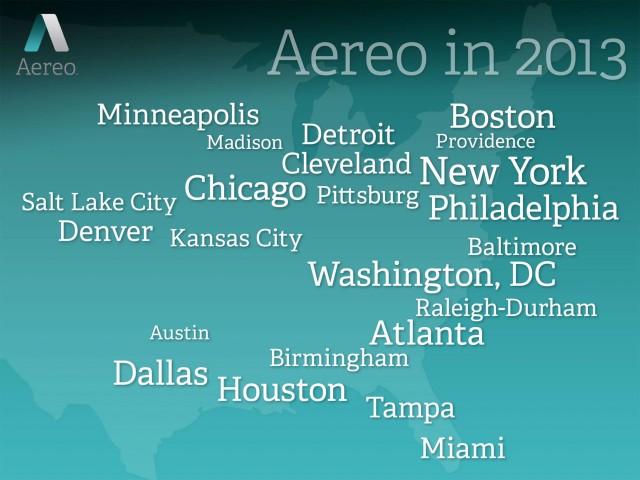
Aereo plans to expand to nearly two dozen cities in the coming year.

Aereo plans to expand to nearly two dozen cities in the coming year.

Viewers of NBC’s Nightly News with Brian Williams learned an upstart online streaming video competitor seeking to help Americans control their cable bills is probably an illegal pirate operation that doesn’t pay for the programming that parent company Comcast-NBC pays hundreds of millions to produce.

On Tuesday Aereo bypassed the network television gatekeepers suing to shut the service down and bought a full-page ad in the New York Times to remind the country it is winning its case in court:

“The broadcast networks have been granted free and valuable broadcast spectrum worth billions of dollars in exchange for their commitment to act in the public interest. It’s a sweet deal… Along the way, cable and satellite providers entered the picture.

In addition to free spectrum and advertising revenues, the networks got very lucrative retransmission fees from these providers. And so, for many, broadcast television is now offered in expensive fixed bundles or packages. Yet many millions of Americans continue to use antennas to get broadcast TV.”

Despite the corporate media firewall that keeps positive reports about the competition off the nightly news, the little streaming company that could is having an impact.

In the last two weeks, virtual hysteria has broken out among major network officials who are threatening to pull the plug on free over the air TV if their multi-billion dollar operations are not granted immediate protection from a startup that rents out dime-sized antennas in New York City to stream local television stations.

Chase Carey from Fox said he’ll put the Fox Network behind a pay wall if Aereo keeps it up.

[flv width=”640″ height=”380″]http://www.phillipdampier.com/video/Bloomberg Leo Hindery Calls Aereo Pissant 4-12-13.flv[/flv]

Leo Hindery who oversees a private equity firm and has a history with both cable and broadcast networks called Aereo tawdry and a “pissant little company” run by a man who helped launch the Fox Network and now threatens to ruin the broadcast television business model for everyone else. (Bloomberg News) (5 minutes)

The consolidation of corporate media may now be influencing what gets reported on the evening news.

Is media consolidation influencing the evening news?

A combination of networks and other big media interests are now preparing to take their battle to Congress, warning lawmakers the very concept of free over the air television is in peril if companies like Aereo are allowed to operate.

Why are they so threatened? Aereo effectively bypasses the “retransmission consent fees” that broadcasters now charge pay television providers for permission to carry their channels and networks. As advertising revenue declines from reduced viewing numbers and equipment that offers viewers a fast forward through ads, the broadcasters have found gold charging monthly fees to cable, satellite, and telephone company TV systems for each subscriber. Ultimately, consumers pay these fees through higher cable and satellite bills.

Aereo receives over the air signals from individual antennas and makes that programming available for online streaming. No retransmission consent fees are required, Aereo argues, because they are just serving as an antenna farm. Only one stream per antenna is allowed, they note, so the company is not mass-distributing programming.

The battle between broadcasters and Aereo is now turning up in news reports that have tried to walk a fine line between the positions of the executives at the networks suing Aereo and the streaming service itself. Not every news outlet is managing the balancing act successfully.

[flv width=”596″ height=”356″]http://www.phillipdampier.com/video/NBC News Aereo vs Broadcasters 4-9-13.flv[/flv]

NBC News aired this incomplete report about Aereo on its evening newscast on April 9th. What is missing? The fact courts have so far sided with Aereo and against the broadcasters’ claims the service is pirating content.  (3 minutes)

The Verge points out NBC News did not make it far before they fell solidly in line behind their corporate owners:

In its piece on Aereo, NBC News included a lengthy explanation of what TV has meant to Americans through the decades. Aereo’s CEO Chet Kanojia is quoted, but only about how the service functions, and there’s nothing from him about the controversy. In contrast, NBC’s story includes a quote from Carey calling Aereo “piracy.” The network news group also tossed in this line: “Aereo doesn’t pay networks for the content they spend hundreds of millions of dollars to produce.”

What NBC didn’t say was that, according to two separate federal courts, Aereo’s service is legal. The ruling by the appeals court upheld a district judge’s decision and was not insignificant. The court allowed Aereo and Kanojia (photographed at right) to continue operating until the lawsuit with the broadcasters is resolved, which could take years. “We were disappointed that NBC News didn’t include a mention about the court decisions,” Virginia Lam, an Aereo spokesperson, told The Verge. “All we ask are that the facts be reported.”

A spokesperson for NBC News disagreed. “The report was a fair and straightforward telling of how the service operates in the changing media environment. It fully explained why Aereo argues that the service is legal, and included an interview with Kanojia. In the interest of full disclosure, it also noted that NBCUniversal, the parent company of NBC News, has filed suit against the service.”

 [flv width=”640″ height=”380″]http://www.phillipdampier.com/video/Bloomberg Broadcasters vs Aereo 4-15-13.flv[/flv]

Robert Prather, president of local station owner Gray Television, tells Bloomberg News station owners are still trying to figure out what Aereo means for their business models. (3 minutes)

[flv width=”640″ height=”380″]http://www.phillipdampier.com/video/Bloomberg Aereo CEO Responds to Fox Threats 4-17-13.flv[/flv]

Aereo’s CEO responded today to threats from Fox to turn its network into a pay cable service, suggesting that if Fox wanted to abandon over the air service, someone else might make use of that spectrum.  (3 minutes)

John Malone’s Vision of Cable’s Future: Mergers/Acquisitions/Bring Back the ‘Cable Mafia’

Time Warner Cable and Cablevision customers may one day end up as Charter Cable customers if John Malone has his way.

Time Warner Cable and Cablevision customers: Is Charter Cable in your future?

The best way the cable industry can grow revenue in the lucrative broadband business is to bring back the same type of collusion and control cable companies maintained over video programming 20 years ago.

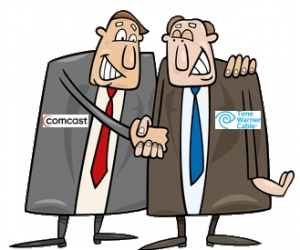
Dr. John Malone did not want to sound nefarious in his recent interview with CNBC’s David Faber, but the new part-owner of Charter Communications has built a reputation as cable’s Darth Vader over the last 30 years. His detractors consider his way of doing business akin to a nationwide cable mafia, complete with exclusive, non-competitive territories that assure operators can charge sky-is-the-limit prices.

Malone is now back in the cable business in a big way, and analysts expect he will quickly amass influence in an industry he once led as CEO of the nation’s then-largest cable operator — Tele-Communications, Inc. (TCI).

[flv]http://www.phillipdampier.com/video/CNBC Malone is Back Into Cable 4-13-13.mp4[/flv]

Why is John Malone back in the cable business and why buy a piece of Charter Cable? Malone tells CNBC’s David Faber Charter is a company with enormous growth potential through mergers and acquisitions. CNBC says Malone could be targeting Time Warner Cable and Cablevision for acquisition by Charter as early as next year. “There is consolidation yet to be done,” Malone hints.  (7 minutes)

Malone notes the cable industry is on the cusp of transformative consolidation through collaborative agreements, mergers, and outright acquisitions both here and abroad. CNBC speculated that could begin with efforts to further reduce the number of cable operators in the United States, perhaps beginning with a deal by Charter Communications to acquire both Time Warner Cable and Cablevision, which could combine under Malone’s stewardship and Charter’s executive leadership to “compete” with Comcast.

Dr. John Malone

Dr. John Malone

CNBC reporters note Malone has high praise for Thomas Rutledge, CEO of Charter Communications. Rutledge’s earlier experience working for both Time Warner Cable and Cablevision could be an asset in combining all three companies into one. Analysts speculate such a deal could be pitched as early as 2014 when Time Warner Cable will undergo a management makeover with the departure of CEO Glenn Britt. CNBC also noted Cablevision’s imminent sale has been rumored for years, and current leader and family patriarch Chuck Dolan is 87 years old. With cheap credit and Malone’s business savvy, both companies could find themselves part of a Malone-engineered takeover that would vastly expand Charter Communications into the second largest cable operator in the country.

Malone sees the days of traditional cable television coming to an end as consumers turn to “over the top” online video for an increasing share of their viewing time. As cable television rates continue to increase, customers are cutting the cord. Malone believes today’s bloated cable packages are ripe for an upheaval from a-la-carte pricing or theme-based programming bouquets that break expensive sports programming or movie channels out of the traditional basic cable lineup. Malone even suspects a challenge to the industry’s current price models could surprisingly come from the programmers themselves.

Sports networks will be among the first to notice their affiliate revenue collected from cable and satellite companies (and passed on to customers in the form of higher rates) will stagnate as customers drop cable television. Declining viewer ratings also mean lower ad revenues. Malone believes at some point sports teams and/or programming networks will decide that the biggest barrier to winning new viewers is the $70-80 asking price for basic cable. If sports programmers find they can reach new audiences selling their programming online, direct-to-consumer, for $5-10 a month, the basic cable all-for-one-price model will quickly collapse.

“As the cable guys and the satellite guys start to lose customers to the over-the-top guys, some of those economics will be reflected back on the sports guys,” Malone said. “They’ll start losing advertising revenue. They’ll lose affiliate revenue. And they have to face reality that maybe you need to segregate your market like everybody else.”

[flv]http://www.phillipdampier.com/video/CNBC Malone on Unbundling Cable 4-13-13.mp4[/flv]

John Malone predicts the demise of the traditional bundle of cable television programming within five years. The future is streamed video online, declares Malone, so it is important the cable industry move to manage that competitive threat by acquiring streaming competitors or launching their own services to assure video programming revenue can be protected.  (5 minutes)

non competeMalone sees the future sustainability of the cable industry dependent on the high revenue broadband business.
“I think it is at a point in history when the most addictive thing in the communications world is high-speed connectivity,” Malone told CNBC. “Everywhere in the world that we operate, we’ve just seen the public want more and more data rate. Whether it’s wireless or wired. There’s a big appetite for it. Cable technology right now is the most cost-effective way to deliver that growth in speed.”

Malone believes there is also plenty of room for revenue growth and cost-cutting, which he said can best be accomplished by getting other cable operators together to “cooperate” and “coordinate” broad scale broadband projects that counter competitive threats from third parties.

Malone helped pioneer the cable industry business practice of “don’t compete in my backyard and I won’t compete in yours,” an informal agreement among operators to stay within their own specific territories, safe and secure from competition. In the 1980s and 1990s, Malone’s TCI was one among many cable operators buying and swapping cable systems to build large, regional system “clusters” where only a single cable company provides service, winning economy of scale and a formidable presence that discouraged other wired competitors from entering the business. In most cities, only the deep pockets of AT&T (U-verse) and Verizon (FiOS) have managed to shake things up.

[flv]http://www.phillipdampier.com/video/CNBC Bring Back the Cable Mafia 4-13-13.mp4[/flv]

Bring back the cable mafia? CNBC’s David Faber gets John Malone to admit vertical and horizontal integration — controlling the content and the pipeline — are important factors to protect cable revenue and expand American dominance in cable internationally. Malone is also a big supporter of industry consolidation and believes mergers and acquisitions are necessary to shrink the number of cable operators in the United States. (5 minutes)

John Malone's "cable mafia."

The cable mafia?

Malone wants broadband to be carefully managed under the industry’s own control and direction.

Faber asked if Malone wanted to bring back the days of the “cable mafia.”

“Yes, I think we do want to bring back the days of @Home, the days of Ted Turner, the days when we all got together, because together we provided national scale,” Malone said. “Now I think we have the opportunity to create global scale,” he said. “The goal is not to be bigger. The goal is to be more cost-effective.”

One significant way cable can push broadband and protect video revenue is to acquire or directly compete with online video providers like Netflix and Hulu.

“People aren’t going to stop watching TV,” Malone said. “They’re just going to watch it coming over the top.”

With easy credit at cheap rates and enormous cash on hand, Malone recommends cable operators get out their mergers and acquisitions checkbook and remember the days when cable operators controlled both cable television systems and most of the programming carried on those systems. For broadband, that means making sure companies control the pipeline and the content that travels across it.

[flv]http://www.phillipdampier.com/video/CNBC When the Money is Cheap Use It 4-13-13.mp4[/flv]

Washington tax policies originally designed to expand access to cheap capital for business investment, hiring and expansion are instead being used to leverage buyouts and mergers. John Malone says Charter Communications will use “cheap money” at interest rates well below 5% and favorable corporate tax policies to fuel the next wave of cable industry consolidation. (2 minutes)

Time Warner Cable Introduces Streaming Video Outside of the Home

Phillip Dampier April 16, 2013 Consumer News, Online Video, Wireless Broadband 4 Comments

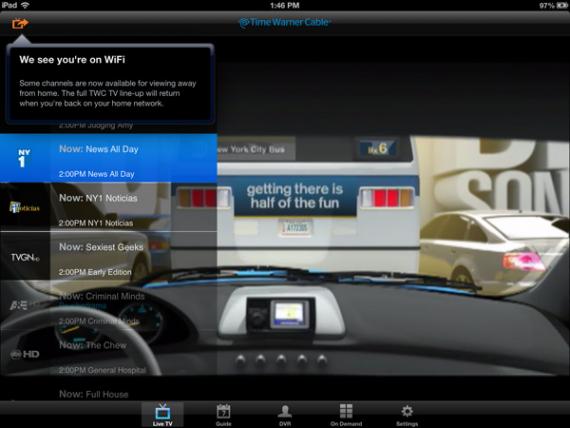
TWC_TV-appSince introducing its version of TV Everywhere more than a year ago, one of the most frustrating aspects of Time Warner Cable’s video streaming service has been it only works within your own home over the cable company’s own broadband service. As of tomorrow morning, that will change. If you own an Apple iOS tablet or smartphone, the cable company’s new version of its TWC TV app (free) will bring streamed and on-demand programming from a handful of cable networks regardless of where you happen to be.

There are several limitations however:

  1. Having access to a Wi-Fi network while on the go will be a big help. Streaming access over 3G/4G service will initially be limited to Verizon Wireless customers, perhaps a fringe benefit of the agreement between Verizon and Time Warner Cable to collaborate in cross-marketing services;
  2. Only nine cable networks and one Time Warner Cable-owned news channel will be available for live streaming when the service launches. None of them are particularly compelling. Programmers are fearful that streaming access outside of the home may open up cable programming to non-paying customers with access to a shared password;
  3. Fox News Channel and Fox Business were reportedly going to be available as of tomorrow, but Time Warner Cable’s official blog post omits the two networks;
  4. Android and desktop users will have to wait until summer to get the upgrade, an annoying prospect considering Android users now outnumber Apple iOS users, who have to wait.

The online programming guide is also being revamped to help users find TV channels and online on-demand content more quickly.

The initial out-of-home On Demand library offers over 1,100 hours of programming from the following providers:

BBC America
BET
CBeebies
CMT
Comedy Central
Cooking Channel
DIY
FEARnet
Food Network
Hallmark
HGTV
Logo
MTV
MTV2
Nick Jr.
Nickelodeon
Palladia
Spike
TeenNick
Travel Channel
Tr3S
TV Guide Network
TV Land
UniMas
Univision
VH1
VH1 Classic

Live TV streaming will be available from the following national networks:

Aspire
BBC America
beIN Sports (English/Spanish)
FearNet
GMC
Pac-12
TVGuide Network

Additionally, all Time Warner Cable local news channels will eventually be available out of home, though all local news, traffic and weather channels may not be available immediately. The following news channels will be available at launch:

NY1
NY1 Noticias
News 14 Carolina
YNN (New York and Texas)

Search This Site:

Contributions:

Recent Comments:

Your Account:

Stop the Cap!