Netflix’s current pricing model allows unlimited downloads for $7.99 per month. Netflix saves, with every download, approximately 40 cents that would otherwise be paid to the U.S. Postal Service. If the average customer downloads 10 movies and TV shows a month, Netflix will save $4 a month for each of its 23 million customers.
Obviously these massive transmissions over the Internet are not really free. Someone is paying for them. That “someone” is the millions of broadband subscribers, whether or not they are Netflix customers.
How is that fair?
Netflix argues that the marginal cost to the network providers of streaming a half-hour TV show to a residential customer is “one penny.” This ignores the hundreds of billions of dollars in sunken network investments needed to create that one-penny marginal cost efficiency at the customer’s end.
[…] It hardly seems fair to make users of these services pay more in order to subsidize Netflix’s costs of delivering their videos online.
This call for a fairer pricing model and a more realistic long-term investment strategy has bipartisan support. In 2010, the FCC said government policy should not discourage “broadband providers from asking subscribers who use the network less to pay less, and subscribers who use the network more to pay more.”
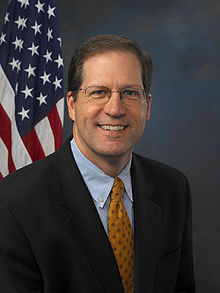
Neither former elected official comes to the debate with any direct experience as a telecommunications specialist, but since when does that matter. They know how to deliver talking points-on-demand.
Sununu: New Netflix Math
Netflix, like every content producer on the Internet, pays hosting and content delivery fees to place their content online. Netflix hires a content delivery network to regionally distribute its video streaming to ensure the best, and most efficient route to ensure an uninterrupted viewing experience. While Netflix’s incremental costs may seem low, they still amount to millions of dollars annually in transport costs. And the online video streamer already pays extra additional fees to some of the largest broadband providers in the country, including Comcast.
The other factor Ford and Sununu ignore is the bill at the other end — the inflated cost for broadband service consumers already pay. For $40+ per month, consumers pay for service precisely to obtain the content of their choosing, and millions choose Netflix. That monthly broadband fee, far in excess of the actual cost to provide the service, more than compensates providers for the “network investments” that are now declining at a rapid rate, even as broadband bills keep rising.
No doubt part of your broadband bill goes to pay for industry astroturf operations like Broadband for America, which doesn’t represent a single consumer, even though you are paying for it. Of course, the marginal cost to hire industry lobbyists and their former legislative friends who today represent their interests (not yours), is pretty low on a per subscriber basis. It hardly seems fair to us that subscribers should be footing the bill for groups like Broadband for America, who regularly advocate against consumers’ best interests.
If providers are looking for more money to improve their networks, perhaps they can start by cutting off Broadband for America, an industry mouthpiece that cannot even get its core arguments anywhere near actual facts.
Cornell University students pay an average of $37,000 a year (before housing, student fees, and other expenses) to attend one of America’s most prestigious universities. When they arrive on-campus, it doesn’t take long to learn the college has one of the nastiest Internet Overcharging schemes around for students deemed to be using “too much Internet.”
For years, Cornell limited students to less than 20 gigabytes of Internet usage per month, only recently increasing the monthly allowance to 50GB this summer. Cornell’s overlimit fee starts at $1.50 per gigabyte, billed in megabyte increments. Now some students are pushing back, launching a petition drive to banish the usage limits that curtail usage and punish the 10 percent of students who exceed their allowance.
Christina Lara, originally from Fair Lawn, N.J., started the petition which has attracted nearly 300 signatures over the past few weeks.
“Cornell students, along with students across the world, rely on the Internet to pursue their academics, independent research, and leisure activity,” Lara writes. “We should not be subjected to charges for our Internet usage, particularly because our curriculums mandate we use the Internet. Despite this, Cornell University continues to adopt NUBB (Network Usage-Based Billing), which charges students for exceeding the 50 gigabyte per month ‘allowance.'”
Lara incurred bills as high as $90 a month in overlimit fees last year, thanks to regular use of Netflix and Skype for online video chats with friends and family back home.
Internet fees for on-campus housing are included in the mandatory student services fee. Although Time Warner Cable has a presence on campus, most residence halls don’t appear to be able to obtain service from the potential competitor, which sells unlimited Internet access in the southern tier region of New York where Cornell is located. Instead, Cornell students on campus rely on the university’s wireless and Ethernet broadband network, and DirecTV or the university’s own cable TV system for television.
Lara
The apparent lack of competition makes charging excess-use fees for Internet usage easy, critics of the fees charge.
“It’s much easier if you live off-campus or in one of the apartment complexes students favor,” says Neal, one of our readers in the Ithaca area who used to attend Cornell. “The only complication is getting access to the University’s Intranet, which is much easier if you are using their network.”
Neal says Verizon delivers landline DSL to off-campus housing, but not on-campus. Because the service maxes out at 7Mbps, most who have other options sign up for Time Warner Cable’s broadband service instead.
“It’s cheaper on a promotion and much faster, and it’s still unlimited,” Neal says. “Hasbrouck, Maplewood and Thurston Court were the only residential buildings that offered the chance for Time Warner Cable on-campus, and only if the wiring was already in place.”
Neal notes many apartment complexes off campus have contracts with Time Warner Cable, which means cable TV and basic broadband are included in your monthly rent. Some Cornell students who live on or near campus try to make do with a slower, but generally free option — the Red Rover Wi-Fi network administered by the University. Others reserve the highest usage activities for computers inside university academic buildings, where the limits come off.
Lara complains Ithaca, and the southern tier in general, is hardly an entertainment hotbed, making the Internet more important than ever for leisure activities.
Time Warner Cable provides the rest of Ithaca with unlimited Internet.
“If Cornell was situated in a major metropolitan area with a vast nightlife that could accommodate the interests of most, if not all, our undergraduates, then many Cornellians wouldn’t be so inclined to stay in their rooms and get on the Internet,” Lara says. “But that’s not the case. Cornell’s Greek life dominates the social scene, making ‘nightlife’ a dividing factor in the community.”
Tracy Mitrano, Cornell’s director of information-technology policy, toldThe Chronicle the vast majority of students will never hit the cap, and those that do cannot be charged more than $1,000 a month in overlimit fees, regardless of use. Those that do exceed the limit typically find a monthly bill for “overuse” amounting to $30.
“The approach that Cornell uses offers transparency and choice,” said Mitrano. She noted that Cornell provides students with clear information regarding their network usage by alerting them by e-mail when they are about to hit the limit and by setting specific rates for overuse fees.
“The choice seems to be using the university network or moving off-campus to buy Verizon or Time Warner Cable broadband to avoid the usage cap,” counters Neal. “I am not sure their ‘choice’ argument flies if students don’t have the option of signing up for Road Runner in their rooms on their own, bypassing the Internet Overcharging altogether.”
Both Neal and Gregory A. Jackson, vice president of Educause, seem to be reaching consensus on whether or not universities should be charging students for Internet separately from room and board. Jackson notes it is a discussion being held at an increasing number of universities. Neal thinks having a wide open access policy to deliver competition could solve this problem in short order, and students should make the decision where to spend their broadband funds themselves.
“If Cornell’s IT bureaucracy faced unlimited-access competition from Verizon and Time Warner Cable, do you think they’d still have a 50GB usage cap, considering only a small percentage of their captive customers exceeded it,” Neal asks. “Of course not.”
In a shot across the bow to programmers demanding compensation for the cable company’s TV Everywhere project, Time Warner Cable has announced it will give away a free Slingbox PRO-HD device to every customer signing up for its top-tier 50/5Mbps Road Runner ‘Wideband’ broadband service.
The Slingbox, which allows customers to watch live streams of cable television programming and other video over a broadband connection, retails for $300 and that is what Time Warner will rebate to new “Wideband” customers who are willing to pay $99 a month for the fastest possible Internet service from the cable operator.
By handing out a free Slingbox, which customers can use to watch whatever channels they want, Time Warner is sending a message to intransigent programmers, particularly Viacom. which has been particularly hard-nosed in its negotiations for streaming rights of popular Viacom networks like Comedy Central and MTV. Time Warner found its efforts to stream those networks on its free iPad app stymied when Viacom went to court to stop the streams pending compensation negotiations.
With the Slingbox, customers can bypass messy business debates and watch whatever channels they choose to subscribe to, although Time Warner Cable won’t officially declare that as their intention for the new promotion.
Instead, Jeffrey Hirsch, Time Warner’s executive vice-president and chief marketing officer, claims the Slingbox offer is an attempt to drive subscriptions for its DOCSIS 3-based Wideband service.
“Over time we’re really trying to emphasize Wideband as a mainstream product,” Hirsch told the New York Times.
Currently, only a small percentage of customers subscribe to the company’s 50/5Mbps service, most through Time Warner’s super-premium SignatureHome service, which includes the speedy tier as part of its triple-play bundle of phone, Internet, and cable service. The company sells SignatureHome in most markets for around $200 a month.
The Slingbox promotion is planned for launch this September. Customers are expected to pay upfront for the device and receive a $300 prepaid debit card as part of the rebate offer. No word on whether the promotion will extend to new SignatureHome customers, or only to those choosing Wideband service a-la-carte.
Ironically, Slingbox use promotes a major increase in broadband traffic, thanks to high bandwidth HD streaming video. Time Warner’s Slingbox promotion will drive increased traffic on their broadband networks once customers start watching shows outside of their home.
A year after Frontier Communications assumed control of Verizon’s assets in the Pacific Northwest, customers are fleeing the company’s inherited fiber-to-the-home service FiOS, after announcing a massive (since suspended, except in Indiana) 46 percent rate hike for the television portion of the service. A new $500 installation fee has kept all but the bravest from considering replacing customers who have left for Comcast and various satellite TV providers.
Frontier’s second-quarter financial results revealed the company has lost at least 14,000 out of 112,000 FiOS TV customers in the region (and in the Fort Wayne, Ind. market, where the service is also available.)
Early reaction to the original rate hike announcement started customers shopping for another provider — mostly Comcast, which competes in all three states where Frontier FiOS operates. Even after the rate hike was suspended in some markets, intense marketing activity by Frontier to drive customers towards its partnership with satellite provider DirecTV managed to convince at least some of those customers to pull the plug on fiber in return for a free year of satellite TV, although an even larger number presumably switched to the cable competition.
D.A. Davidson, a financial consulting firm, toldThe Oregonian the message was clear.
“They would love to get rid of the FiOS TV customers,” Donna Jaegers, who follows Frontier, told the newspaper. “They’re programming costs are very high compared to the rates that they charge.”
Jaegers said Frontier Communications completely botched their efforts to transition customers away from FiOS TV towards satellite, because most of those departing headed for the cable competition, attracted by promotional offers and convenient billing.
Many others simply don’t want a satellite dish on their roof, and are confounded about Frontier’s message that satellite TV is somehow better than fiber-to-the-home service.
Frontier admits its FiOS service is now underutilized, but claims it will continue to provide the service where it already exists.
Wilderotter
Frontier Claims Its DSL Service is Better Than Cable Broadband
Frontier’s general business plan is to provide DSL service in rural areas where it faces little or no competition, and most of Frontier’s investment has been to upgrade Verizon’s landline network to sustain 1-3Mbps DSL service, for which it routinely charges the same (or more) for standalone broadband service that its cable competitors charge for much faster speeds.
But Frontier Communications CEO Maggie Wilderotter says their DSL service is better than the cable competition.
“A key differentiator between our network and cable competition is that you consistently get the speed you pay for,” Wilderotter told investors on a conference call. “There’s no sharing at the local level. High demand for bandwidth-intensive applications like video are putting pressure on all wired networks. To that end, we want to make sure that we have more than enough capacity to satisfy the expectations of our customers. We’re spending capital in all parts of the network with specific emphasis in the middle mile, which will enable us to consistently deliver a quality customer experience for our customers of today and tomorrow.”
Frontier Communications CEO Maggie Wilderotter defends anemic broadband additions during the 2nd quarter of 2011 and tries to convince investors DSL service is better than the cable competition. August 3, 2011. (4 minutes)
You must remain on this page to hear the clip, or you can download the clip and listen later.
Netflix Traffic Represents 25% of Frontier’s Broadband Traffic; Online Video — 50%
Wilderotter admitted Frontier’s broadband network is overcongested in many regions, which she partly blamed for the company’s anemic addition of new broadband customers.
“Video is about 50 percent,” Wilderotter added. In an investor conference call, she explained network congestion in more detail:
“In [the second quarter], we had many areas with unacceptable levels of network congestion, which negatively impacted our growth in net high-speed additions.” Wilderotter said. “We believe all of the major congestion issues will be fixed by the end of [the third quarter], and that will enable us to drive higher growth and net broadband activation in [former Verizon service areas.]”
“What we decided to do is to go for fixing the middle mile, which is the [central office] to the […] neighborhood and to expand that capability by 100-fold. And then also, expand from the [central office] out to the Internet and make sure that we have huge capacity to deliver and receive capability to our customers. So when we sell 6 meg, 10 meg, 25 meg, 50 meg, the customer gets what we sell them and that was extremely important for us.”
“So what we did is in the areas where we saw the congestion increase based upon usage increases, and we’ve built new households. We’ve held off on marketing to a lot of those new households until we fixed the congestion problem because we didn’t want to exacerbate what we had already. We’ve shifted capital in terms of the mix of how we’ve spent capital to fix this problem. I’d say we’re probably 75% of the way there in fixing congestion. This quarter is another big quarter for us to get all of the major issues out of the network, which will allow us in the back end of this quarter through the fourth quarter, to really start pushing the penetration levels where we’ve built new households in the areas that have been affected by congestion.”
Frontier Introduces Line Bonded DSL — Two Connections Can Improve DSL Speeds
Frontier Faster? Frontier announces line bonded DSL.
Frontier Communications also announced the introduction of Frontier Second Connect, a DSL line bonding product that delivers two physical connections to a single household. Line bonding allows for improved broadband speeds.
“Second Connect gives our customers two exclusive connections in one household, and we’re the only provider in every market that can do that,” Wilderotter claimed.
In more urban markets, Frontier’s DSL speeds are woefully behind those available from most cable competitors. Frontier has begun upgrading some of their legacy service areas and retiring older equipment in an effort to improve the quality of service.
“The real initiatives that we have underway are called middle mile, interoffice facilities, as well as some of the more aged equipment that’s in the network,” said Dan McCarthy, Frontier’s chief operating officer. “So as we go through, there’s about 600 projects that are underway today that will improve both the speed and capability.”
“We’ve inherited markets that there has not been upgrades to capacity in these markets for many years and fixes to the networks, plus the elements as the DSLAMs, even the DSLAMs themselves are old,” Wilderotter said. “So we’re replacing network elements in the neighborhood. We’re splitting them and moving customers to other network elements to make sure that they have a good experience.”
Frontier executives answer a question from a Wall Street banker about DSL speeds and congestion problems on Frontier’s broadband network. A detailed technical discussion ensues as the company tells investors it is redirecting some capital to fixing Frontier’s overcongested network. August 3, 2011. (5 minutes)
You must remain on this page to hear the clip, or you can download the clip and listen later.
Frontier Still Losing More than 8% Of Its Landline Customers Every Year
Despite broadband rollouts and incremental improvements, more than eight percent of Frontier’s landline customers disconnect service permanently every year. Frontier called that disconnect rate an improvement over its line losses last year, which exceeded 11 percent in some areas.
“Total line losses improved to an 8.6% year-over-year decline, our lowest level since taking ownership when the pro forma loss rate was 9.7%,” reported Wilderotter. “We also improved [the] loss rate [in former Verizon service areas to] 10.1% compared to 11.4% in Q2 2010.”
Most of Frontier’s departing customers are switching to cable providers and/or cell phone service.
(Update 8-23-2011: We are now told in many areas, Frontier’s Second Connect service is not actually a bonded DSL product, but rather a “dry loop” second DSL line that carries the same speed as your primary line. Presumably, household members can divide up who uses which DSL circuit for Internet access. The charge for Second Connect in ex-Verizon service areas is $14.99 per month plus a second mandatory monthly modem rental fee of $6.99. If the web link does not work, it means the service is not available in your service area.)
While wireless providers currently treat Wi-Fi as a friendly way to offload wireless data traffic from their 3G and 4G networks, the wireless industry is starting to ponder whether they can also earn additional profits from regulating your use of it.
Dean Bubley has written a white paper for the wireless industry exploring Wi-Fi use by smartphone owners, and ways the industry can potentially cash in on it.
“It is becoming increasingly clear that Wi-Fi access will be a strategic part of mobile operators’ future network plans,” Bubley writes. “There are multiple use cases, ranging from offloading congested cells, through to reducing overseas roaming costs and innovative in-venue services.”
Bubley’s paper explores the recent history of some cell phone providers aggressively trying to offload traffic from their congested 3G networks to more-grounded Wi-Fi networks.
Among the most intent:
AT&T, which acquired Wayport, a major Wireless ISP, and is placing Wi-Fi hotspots at various venues and in high traffic tourist areas in major cities and wants to seamlessly switch Apple iPhone users to Wi-Fi, where available, whenever possible;
PCCW in Hong Kong;
KT in the Republic of Korea, which has moved as much as 67 percent of its data traffic to Wi-Fi;
KDDI in Japan, which is planning to deploy as many as 100,000 Wi-Fi Hotspots across the country.
America's most aggressive data offloader is pushing more and more customers to using their Wi-Fi Hotspots.
Bubley says the congestion some carriers experience isn’t necessarily from users downloading too much or watching too many online shows. Instead, it comes from “signalling congestion,” caused when a smartphone’s applications demand repeated attention from the carrier’s network. An application that requires regular, but short IP traffic connections, can pose a bigger problem than a user simply downloading a file. Moving this traffic to Wi-Fi can be a real resource-saver for wireless carriers.
Bubley notes many wireless companies would like to charge third-party developers fees to allow them access to each provider’s “app store.” Applications that consume a lot of resources could be charged more by providers (or banned altogether), while those that “behave well” could theoretically be charged a lower fee. The only thing preventing this type of a “two-sided business model,” charging both developers and consumers for the applications that work on smartphones, are Net Neutrality policies (or the threat of them) in many countries.
Instead, Bubley suggests, carriers should be more open and helpful with third party developers to assist them in developing more efficient applications on a voluntary basis.
Bubley also ponders future business strategies for Wi-Fi. He explores the next generation of Wi-Fi networks that allow users to establish automatic connections to the best possible signal without ponderous log-in screens, and new clients that can intelligently search out and connect to approved networks without user intervention. That means data traffic could theoretically be shifted to any authenticated or preferred Wi-Fi network without users having to mess with the phone’s settings. At the same time, that same technology could be used to keep customers off of free, third party Wi-Fi networks, in favor of networks operators run themselves.
Policy controls are a major focus of Bubley’s paper. While he advocates for customer-friendly use of such controls, sophisticated network management tools can also be used to make a fortune for wireless providers who want to nickle and dime customers to death with usage fees, or open up new markets pitching Wi-Fi networks to new customers.
Bubley
For example, a wireless carrier could sell a retail store ready-to-run Wi-Fi that pushes customers to a well-controlled, store-run network while customers shop — a network that forbids access to competitors or online merchants, in an effort to curtail browsing for items while comparing prices (or worse ordering) online from a competitor.
Customers could also face smartphones programmed to connect automatically to a Wi-Fi network, while excluding access to others while a “preferred” network is in range. Wireless carriers could develop the same Internet Overcharging schemes for Wi-Fi use that they have rolled out for 3G and 4G wireless network access. Also available: speed throttles for “non-preferred” applications, speed controls for less-valued ‘heavy users,’ and establishment of extra-fee “roaming charges” for using a non-preferred Wi-Fi network.
Bubley warns carriers not to go too far.
“[We] believe that operators need to internalize the concept of ‘WiFiNeutrality’ – actively blocking or impeding the user’s choice of hotspot or private Wi-Fi is likely to be as divisive and controversial as blocking particular Internet services,” Bubley writes.
I’m increasingly convinced that mobile device / computing users will need sophisticated WiFi connection management tools in the near future. Specifically, ones that allow them to choose between multiple possible accesses in any given location, based on a variety of parameters. I’m also doubtful that anyone will want to allow a specific service provider’s software to take control and choose for them – at least not always.
We may see the emergence of “WiFi Neutrality” as an issue, if particular WiFi accesses start to be either blocked or “policy-managed” aggressively.
[flv width=”640″ height=”380″]http://www.phillipdampier.com/video/The Future of Wi-Fi.flv[/flv]
Edgar Figueroa, chief executive officer of The Wi-Fi Alliance, speaks about the future of Wi-Fi. Wi-Fi technology has matured dramatically since its introduction more than a decade ago and today we find Wi-Fi in a wide variety of applications, devices and environments. (3 minutes)
Be Sure to Read Part One: Astroturf Overload — Broadband for America = One Giant Industry Front Group for an important introduction to what this super-sized industry front group is all about. Members of Broadband for America Red: A company or group actively engaging in anti-consumer lobbying, opposes Net Neutrality, supports Internet Overcharging, belongs to […]
Astroturf: One of the underhanded tactics increasingly being used by telecom companies is “Astroturf lobbying” – creating front groups that try to mimic true grassroots, but that are all about corporate money, not citizen power. Astroturf lobbying is hardly a new approach. Senator Lloyd Bentsen is credited with coining the term in the 1980s to […]
Hong Kong remains bullish on broadband. Despite the economic downturn, City Telecom continues to invest millions in constructing one of Hong Kong’s largest fiber optic broadband networks, providing fiber to the home connections to residents. City Telecom’s HK Broadband service relies on an all-fiber optic network, and has been dubbed “the Verizon FiOS of Hong […]
BendBroadband, a small provider serving central Oregon, breathlessly announced the imminent launch of new higher speed broadband service for its customers after completing an upgrade to DOCSIS 3. Along with the launch announcement came a new logo of a sprinting dog the company attaches its new tagline to: “We’re the local dog. We better be […]
Stop the Cap! reader Rick has been educating me about some of the new-found aggression by Shaw Communications, one of western Canada’s largest telecommunications companies, in expanding its business reach across Canada. Woe to those who get in the way. Novus Entertainment is already familiar with this story. As Stop the Cap! reported previously, Shaw […]
The Canadian Radio-television Telecommunications Commission, the Canadian equivalent of the Federal Communications Commission in Washington, may be forced to consider American broadband policy before defining Net Neutrality and its role in Canadian broadband, according to an article published today in The Globe & Mail. [FCC Chairman Julius Genachowski’s] proposal – to codify and enforce some […]
In March 2000, two cable magnates sat down for the cable industry equivalent of My Dinner With Andre. Fine wine, beautiful table linens, an exquisite meal, and a Monopoly board with pieces swapped back and forth representing hundreds of thousands of Canadian consumers. Ted Rogers and Jim Shaw drew a line on the western Ontario […]
Just like FairPoint Communications, the Towering Inferno of phone companies haunting New England, Frontier Communications is making a whole lot of promises to state regulators and consumers, if they’ll only support the deal to transfer ownership of phone service from Verizon to them. This time, Frontier is issuing a self-serving press release touting their investment […]
I see it took all of five minutes for George Ou and his friends at Digital Society to be swayed by the tunnel vision myopia of last week’s latest effort to justify Internet Overcharging schemes. Until recently, I’ve always rationalized my distain for smaller usage caps by ignoring the fact that I’m being subsidized by […]
In 2007, we took our first major trip away from western New York in 20 years and spent two weeks an hour away from Calgary, Alberta. After two weeks in Kananaskis Country, Banff, Calgary, and other spots all over southern Alberta, we came away with the Good, the Bad, and the Ugly: The Good Alberta […]
A federal appeals court in Washington has struck down, for a second time, a rulemaking by the Federal Communications Commission to limit the size of the nation’s largest cable operators to 30% of the nation’s pay television marketplace, calling the rule “arbitrary and capricious.” The 30% rule, designed to keep no single company from controlling […]
Less than half of Americans surveyed by PC Magazine report they are very satisfied with the broadband speed delivered by their Internet service provider. PC Magazine released a comprehensive study this month on speed, provider satisfaction, and consumer opinions about the state of broadband in their community. The publisher sampled more than 17,000 participants, checking […]


 Subscribe