Home » Online Video » Recent Articles:

Canadian Telecom Giants Outwit Would-Be Cord Cutters; Alternatives Also Under Pressure

Canadian cable, phone, and satellite providers have done a better job stymieing would-be “cord-cutters” than their counterparts further south in the United States.

The Canadian Radio-television and Telecommunications Commission’s (CRTC) annual report on the country’s telecom companies shows all of them remain exceptionally profitable, keeping pay TV customers far more effectively than American providers. Total revenues climbed from $12.5 billion to $13.5 billion in just one year, as price hikes, Internet Overcharging schemes like usage-based billing, and lack of competition continue to takes its toll on Canadian wallets.

The biggest winners were the biggest telecom companies in Canada — Rogers Communications, Bell Canada (BCE), and Shaw Communications, which all saw profits soar 8.2% to $11 billion.  Costs increased about 10.7% in 2011, fueled by network upgrades and rampant hikes in programming costs — an interesting state of affairs considering Rogers and Bell own or control a substantial number of the programmers demanding higher payments.  Most of those increases were passed on to customers in the form of rate hikes.

Although Canadians are increasingly interested in streaming online video, virtually every major Internet Service Provider in the country has effectively prevented customers from dropping cable television service in favor of broadband-only access.  They manage it with usage caps and usage billing on their broadband products.  With streamed video accounting for a substantial drain on customers’ monthly usage allowances, Canadians are unlikely to cancel cable TV in favor of watching all of their favorite shows online.

In fact, the number of Canadian households that subscribed to a cable company’s basic television service actually increased by 2.8% in 2011 to reach 8.5 million.  Experts say the country’s transition to digital over the air television may account for some of that increase, but a few high broadband bills with overlimit fees for “excessive Internet use” can effectively drive online video fans back to traditional cable TV as well.
Satellite television in Canada remained flat,  with a virtually unchanged 2.9 million Canadians relying on Bell and Shaw satellite service for television entertainment.

But everyone is paying more to watch.

In 2011, cable companies paid $2.1 billion in wholesale fees to the pay and specialty services they distribute, an increase of 10.2% over the $1.9 billion paid the previous year. The fees paid by satellite companies rose by 2.8% in one year, going from $894.4 million to $919 million.

That leaves vertically and horizontally-integrated conglomerates like Bell in the perfect position to extract higher programming payments.  Those costs are passed down to Canadian consumers and blamed on “greedy programmers,” despite the fact those programmers are owned in part or outright by Bell.

A Rogers retail rental store

Rogers is also well-suited to remain a part of the Canadian entertainment experience.  The company owns cable systems, wireless phone networks, programmers, and even home video stores. However Stop the Cap! reader Alex notes Rogers has been closing a number of those video stores over the past few months.

“This gives customers one less choice for renting movies, basically forcing them to use Rogers On Demand instead,” writes Alex.

Rogers On Demand comes with a higher price, too.  In-store rentals from Rogers are priced at 2 for $9 or 3 for $15.  A recent look at Rogers’ video on demand website, Rogers Anyplace TV, shows most movie titles priced at $4.99 each.  With Rogers closing 40 percent of their retail rental outlets, movie fans have had fewer competitive choices for movie rentals.

One potential new contender coming to Canada – kiosk video rentals.  Although services like Redbox are now commonplace in the States, they are virtually unknown in the north.  Jim Gormley, former owner of Jumbo Video is back with Planet DVD.  With just 2% of Canadians renting movies from kiosks, Gormley believes there is plenty of room to grow, especially as Rogers scales back its video rental business.

Planet DVD has a pilot project running with supermarket chain Sobeys to place kiosks in front of nine store locations.  The first kiosk was erected in early March in front of a Sobeys store in Mississauga, Ont.

A new release at a Planet DVD kiosk is priced at $3 for a one-day rental.  That’s less than what most video stores charge, but more than double what Americans pay at a Redbox kiosk.


Comcast Changes Language Over Xbox-Usage Cap Spat: Same Story, Different Words

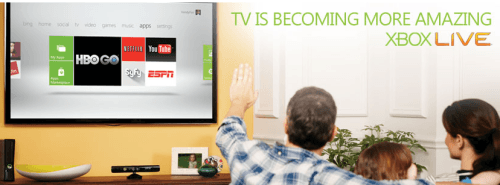
Comcast has changed its explanation why the company’s XFINITY TV service, streamed over Xbox 360 has been made exempt from the company’s 250GB usage cap.

Last week, the company claimed the service traveled over the company’s “private IP” network, exempting it from usage restrictions.  That created a small furor among public interest groups and Net Neutrality supporters because of the apparent discrimination against streamed video content not partnered with the country’s biggest cable operator.

Stop the Cap! argued what we’ve always argued — usage caps and speed throttles are simply an end run around Net Neutrality — getting one-up on your competition without appearing to openly discriminate.

Now Comcast hopes to make its own end run around the topic by changing the language in its FAQ:

Before:

After:

Although the words have changed, the story stays the same.

The key principle to remember:

Data = Data

Comcast suggests its Xbox XFINITY TV service turns your game console into a set top box, receiving the same type of video stream its conventional cable boxes receive.  The cable company is attempting to conflate traditional video one would watch from an on-demand movie channel as equivalent to XFINITY TV over the Xbox.  Since the video is stored on Comcast’s own IP network, the company originally argued, it creates less of a strain on Comcast’s cable system.

AT&T's U-verse is an example of an IP-based distribution network.

But the cable industry’s inevitable march to IP-based delivery of all of their content may also bring a convenient excuse to proclaim that data does not always equal data.  They have the phone companies to thank for it.

Take AT&T’s U-verse or Bell’s Fibe.  Both use a more advanced form of DSL to deliver a single digital data pipeline to their respective customers.  Although both companies try to make these “advanced networks” sound sexy, in fact they are both just dumb data pipes, divided into segments to support different services.  The largest segment of that pipe is reserved for video cable TV channels, which take up the most bandwidth. A smaller slice is reserved for broadband, and a much smaller segment is set aside for telephone service.

AT&T and Bell’s pipes don’t know the difference between video, audio, or web content because they are all digital data delivered to customers on an IP-based network.  Yet both AT&T and Bell only slap usage caps on their broadband service, claiming it somehow eases congestion, even though video content always uses the most bandwidth. (They have not yet figured out a way to limit your television viewing to “maintain a good experience for all of their customers,” but we wouldn’t put it past them to try one day.)

What last mile congestion problem?

Comcast’s argument for usage limiting one type of data while exempting other data falls into the same logical black hole.  Comcast’s basic argument for usage caps has always been it protects a shared network experience for customers.  Since cable broadband resources are shared within a neighborhood, the company argues, it must impose limits on “heavy users” who might slow down service for others.

We've heard this all before. Former AT&T CEO Dan Somers: "AT&T didn’t spend $56 billion to get into the cable business to have the blood sucked out of (its) veins."

But in a world where DOCSIS 3 technology and a march to digital video distribution is well underway or near completion at many of the nation’s cable operators, the “last mile” bandwidth shortage problem of the early 2000s has largely disappeared.  In fact, Comcast itself recognized that, throwing the usage door wide open distributing bandwidth heavy XFINITY TV over the Xbox console cap-free.

As broadband advocates and industry insiders continue the debate about whether this constitutes a Net Neutrality violation or not, a greater truth should be considered.  Stop the Cap! believes providers have more than one way to exercise their control over broadband.

Naked discrimination against web content from the competition is a messy, ham-handed way to deal with pesky competitors.  Putting up a content wall around Netflix or Amazon is a concept easy to grasp (and get upset about), even by those who may not understand all of the issues.

Internet Overcharging schemes like usage caps and speed throttles can win providers the same level of control without the political backlash.  Careful modification of consumer behavior can draw customers to company-owned or partnered content without using a heavy hammer.

Simply slap a usage limit on customers, but exempt partnered content from the limit.  Now customers have a choice: use up their precious usage allowance with Netflix or watch some of the same content on the cable company’s own unlimited-use service.

Nobody is “blocking” Netflix, but the end result will likely be the same:

  • Comcast wins all the advantages for itself and its “preferred partners”;
  • Customers find themselves avoiding the competition to save their usage allowance;
  • Competitors struggle selling to consumers squeezed by inflexible usage caps.

It is all a matter of control, and that is nothing new for large telecom companies.

Back in 1999, AT&T Broadband owned a substantial amount of what is today Comcast Cable.  Then-CEO Dan Somers made it clear AT&T’s investment would be protected.

“AT&T didn’t spend $56 billion to get into the cable business to have the blood sucked out of [its] veins,” Somers said, referring to streamed video.

Obviously Comcast agrees.

HBO No Go for Time Warner Cable/Comcast Customers With Xbox

Phillip Dampier March 28, 2012 Comcast/Xfinity, Consumer News, Online Video 5 Comments

While Comcast is generously taking the caps off for Xbox customers looking for Comcast Xfinity On Demand content, those looking for HBO Go will not find it available period. Time Warner Cable doesn’t cap their customers, but they are not offering HBO Go for Xbox users either (as well as those with set top streaming boxes like Roku).

Microsoft announced this morning Comcast Xfinity, HBO Go, and MLB.tv apps for Xbox Live were now available, but both cable operators have decided HBO Go on the Xbox is not right for them, at least for now.

Microsoft updated their website to confirm neither cable operator, serving tens of millions of customers, were among the providers supporting HBO Go on the gaming console. The service is available to customers of AT&T, Bend Broadband, Blue Ridge Communications, Cablevision, Charter, Cox, DirecTV, Dish, Grande Communications, HTC Digital Cable, Massillon Cable/Clear Picture, Mediacom, Midcontinent Communications, RCN, Suddenlink, Verizon, and Wow!

Oddly, Stop the Cap! readers tell us they can access HBO Go on Comcast’s iPad and iPhone apps, which hold some hope HBO Go will show up eventually on the gaming console.

Time Warner Cable is another story.  We’ve previously noted they’ve shown no interest in allowing streaming video and game consoles access to premium movie channel content, although they do support some access through phone and iPad apps.

Samsung Negotiating for Higher Data Caps Bundled With New TV Purchases

Phillip Dampier March 28, 2012 Data Caps, Online Video, Wireless Broadband Comments Off on Samsung Negotiating for Higher Data Caps Bundled With New TV Purchases

Samsung has a problem selling Internet-enabled televisions in South Africa because of the pervasive impact of Internet Overcharging schemes like data caps and metered billing.  Now the company is taking its case directly to telecommunications providers, negotiating larger usage allowances for customers who buy new Samsung “Smart TVs.”

Samsung South Africa says streamed video-on-demand is impossible in the country with current data caps, often as low as 2GB per month, and even lower on wireless.

“If you download one movie on [wireless], your data is gone in one movie,” Matthew Thackrah, business leader of consumer electronics at Samsung South Africa told MyBroadband. “If you then go over your data cap and you download a few movies, you don’t know what bill you’re going to get – but it’s going to be expensive.”

Thackrah said the average high quality streamed movie consumes around 1.6GB, far too much for heavily-capped broadband in countries like South Africa.

Samsung is now approaching providers about bundling special, larger data allowances for customers buying their televisions.  Instead of 2-5GB per month, customers would get 20-30GB per month — still small by comparison to North America, Europe, and Asia, but perhaps tolerable in southern Africa.

Samsung is reportedly negotiating with wireless providers Vodacom and MTN, and Telkom (the former state-owned phone company) to offer the enhanced data packages.

So far, Samsung has been successful with Telkom, according to a press release sent last week:

This partnership will see Samsung and Telkom cooperate in the marketing of Samsung Smart TVs and fixed-line broadband solutions as bundled packages, thereby ensuring that consumers have access to affordable broadband while enabling Smart viewing experiences through Samsung’s latest Smart TV line-up.

Comcast Proves It Doesn’t Need a 250GB Usage Cap; Net Neutrality Violation Alleged

Comcast Monday announced it was exempting its new Xbox streaming video service from the company’s long standing 250GB monthly usage cap, claiming since the network doesn’t exist on the public Internet, there is no reason to cap its usage.

Net Neutrality advocates immediately denounced the cable operator for violating Net Neutrality, giving favorable treatment to its own video service while leaving Netflix, Amazon, and others under its usage cap regime.

Public Knowledge president Gigi Sohn:

“The Xbox 360 provides a number of video services to compete for customer dollars, yet only one service is not counted against the data cap—the one provided by Comcast.” Sohn said. “This is nothing less than a wake-up call to the Commission to show it is serious about protecting the Open Internet.”

Stop the Cap! believes Comcast also inadvertently undercut its prime argument for the company’s 250GB usage cap — that it assures “heavy users” don’t negatively impact the online experience of other customers:

We work hard to manage our network resources effectively and fairly to ensure a high-quality online experience for all of our customers. But XFINITY Internet service runs on a shared network, so every user’s experience is potentially affected by his or her neighbors’ Internet usage.

Our number one priority is to ensure that every customer has a superior Internet service experience. Consistent with that goal, the threshold is intended to protect the online experience of the vast majority of our customers whose Internet speeds could be degraded because one or more of their neighbors engages in consistent high-volume Internet downloads and uploads.

The threshold also addresses potential problems that can be caused by the exceedingly small percentage of subscribers who may engage in very high-volume data consumption (over 250 GB in a calendar month). By applying a very high threshold on monthly consumption, we can help preserve a good online experience for everyone.

Comcast argues around the exemption of the Xbox service by reclassifying it as somehow separate from the public Internet.  The company then tries to claim the Xbox app functions more like an extra set top box, not as a data service.  But, in fact, it –is– a data service delivered over the same cable lines as Comcast’s broadband service, subject to the same “last-mile congestion problem” Comcast dubiously uses as the primary justification for placing limits on customers.

Cable providers who limit broadband use routinely use the “shared network experience” excuse as a justification for usage control measures.  Since cable broadband delivers a fixed amount of bandwidth into individual neighborhoods which everyone shares, a single user or small group of users can theoretically create congestion-related slowdowns during peak usage times.  Cable operators have successfully addressed this problem with upgrades to DOCSIS 3 technology, which supports a considerably larger pipeline unlikely to be congested by a few “heavy users.”

Comcast’s argument the Xbox service doesn’t deserve to be capped because it is delivered over Comcast’s own internal network misses the point.  That content reaches customers over the same infrastructure Comcast uses to reach every customer.  If too many customers access the service at the same time, it is subject to precisely the same congestion-related slowdowns as their broadband service.  Data is data — only the cable company decides whether to treat it equally with its other services or give it special, privileged attention.

Even if Comcast argues the Xbox streaming service exists on its own segregated, exclusive “data channel,” that represents part of a broader data pipeline that could have been dedicated to general Internet use.  The fact that special pipeline is available exclusively for Comcast’s chosen favorites, while keeping usage limits on immediate competitors, is discriminatory.

Comcast customers who have lived under an inflexible 250GB usage limit since 2008 should be wondering why the company can suddenly open unlimited access to some services while refusing to adjust its own usage limits on general broadband service.

Stop the Cap! believes Comcast has forfeit its own justification for usage caps and network management techniques that can slow customer Internet speeds.  We have no problem with the company offering unlimited access to the Xbox streaming service. But the company must treat general Internet access with equal generosity, removing the unjustified and arbitrary usage cap it imposed on customers in 2008.  After all, if the company can find vast, unlimited resources for a service it launched only this year, it should be able to find equal resources for a service it has sold customers (at a remarkable profit) for more than a decade.

Anything less makes us believe Comcast’s usage caps are more about giving some services an unfair advantage — violating the very Net Neutrality guidelines Comcast claimed it would voluntarily honor.

Stop the Cap! strongly believes usage caps are increasingly less about good network management and more about controlling and monetizing the online experience, seeking marketplace advantages and new revenue streams from consumers who already pay some of the world’s highest prices for broadband service.  As we’ve argued since 2008, Internet Overcharging through usage caps and usage based billing is also an end run around Net Neutrality.  The evidence is now apparent for all to see.

[Thanks to our readers Scott and Yannio for sharing developments.]

Search This Site:

Contributions:

Recent Comments:

Your Account:

Stop the Cap!