Home » Online Video » Recent Articles:

Time Warner Cable Moving to Usage Based Billing “Gradually and Slowly”

Phillip Dampier June 27, 2012 Broadband "Shortage", Comcast/Xfinity, Competition, Data Caps, Editorial & Site News, Online Video, Public Policy & Gov't Comments Off on Time Warner Cable Moving to Usage Based Billing “Gradually and Slowly”

Phillip “We’re Still Here to Fight” Dampier

“We’re moving away from one-size-fits-all,” admits Jon Gary Herrera, a Texas spokesman for Time Warner Cable, which has introduced a usage-limited plan called “Internet Essentials” that limits customers to a paltry 5GB of usage per month in return for a $5 discount.

Time Warner Cable has learned from its mistakes in 2009, when the company attempted to force usage limits on broadband customers that would have left those seeking an unlimited experience with a broadband bill of $150 a month. After a consumer backlash organized by Stop the Cap!, the company quickly pulled back and put the plans on hold.

After three years, the playbook is off the shelf once again and being dusted off, although the nation’s second largest cable company is taking things a lot more slowly the second time around.

Lesson one: Broadband pricing and usage plan changes must happen gradually and carefully.

The New York Times reports that cable executives privately admit they are working to charge consumer expectations, starting with the notion that “all you can eat” broadband is what customers want or need.

Time Warner telemarketers have begun re-educating consumers when calling to sign up for broadband, now asking them what they do with their Internet connection and suggesting different plans based on their anticipated usage, not their speed expectations.

So far, sources working for Time Warner Cable in South Texas tell Stop the Cap! the plan is not working too well and few customers are interested in the usage-capped “Internet Essentials” plan that has been marketed in several markets in the state.
“Overage charges will be capped at $75 per month. That means that for $150 per month customers could have virtually unlimited usage at Turbo speeds.” — (April 9, 2009) Landel Hobbs, then chief operating officer of Time Warner Cable

“Customers really are not interested in understanding what their usage level is and don’t see much benefit from the small discount our company is offering those who sign up,” one Time Warner customer service agent privately tells us. “A lot of them have learned lessons from what AT&T and Verizon Wireless are doing with wireless data plans, and they don’t want their home broadband accounts measured.”

Another source tells us those consumers most likely to consider the “Internet Essentials” plan are casual Internet users, particularly older customers on fixed incomes. But they are also the least likely to understand how to measure their usage.

“If you tell people what a gigabyte is, it goes in one ear and out the other and they really have no comprehension about it, and when their family members find out what they signed up for, we inevitably get a call back asking to switch to something else,” another agent tells Stop the Cap! “There is a real hostility about usage limits on home broadband out there, at least among those that understand what they are.”

Lesson Two: Forgive overlimit fees or overages liberally, because consumers will adjust their behavior to use less Internet just by threatening to charge them more.

Time Warner has been very liberal about forgiving customers who exceed their 5GB limit. AT&T has yet to enforce its limits in many markets, in part because of a defective usage meter. Other ISPs with usage limits are also wary about imposing overage fees on customers because of the potential political backlash. In short, the industry hopes the threat of overlimit fees will be sufficient to get customers thinking about their usage and self-limit what they do online, an important tool to wield against customers considering cord-cutting traditional cable TV to watch everything online. Efforts to earn additional revenue from more expensive usage-based broadband plans will come later.
Cable to Netflix: You better think about going back to the U.S. Post Office and mailing DVDs. Our customers can’t afford to throw away their usage allowance on your streamed movies.

The Justice Department’s antitrust lawyers are conducting an investigation into the cable industry’s treatment of online video companies, especially with the increasing number of usage caps coming into the market. With most consumers confronted with a broadband monopoly or duopoly, it is easy for providers to slap limits on usage if the competition follows suit. The new found love of usage caps and usage billing is proving curious to those abroad, because the rest of the world is moving away from consumption limits and towards flat rate broadband.

One Wall Street analyst wants the industry to adopt the meme that if the Justice Department gets away with banning usage limits, the industry should retaliate with usage-based billing, which is just another version of Internet Overcharging.

As with the wireless industry, Wall Street is the primary driving force pushing broadband providers to adopt usage billing and other price increases on broadband to boost earnings. Verizon Wireless and AT&T, responding to investor concerns about slowing growth, see endless profits in their future monetizing broadband usage. With broadband usage rising, charging customers more for using more can bring in endless profits, even as the costs to provide the service continue to decline. Without competition and with no organized opposition by consumers, regulators, or legislators, there is nothing to stop prices from skyrocketing.

Lesson Three: Try to convince customers upgrades are expensive and difficult.

A major enemy of the forces working to adopt income-increasing usage billing are broadband advocates who regularly analyze quarterly earnings of major providers, the costs of upgrades, the price of backbone connections, and the ever-increasing prices for Internet service.

In every case, cable and phone broadband providers adopting the latest broadband technologies are seeing major increases in revenue and profits even as their costs to upgrade and manage their networks decline overall. With providers like Comcast and Time Warner Cable now regularly increasing broadband prices, earnings are higher than ever for flat rate broadband sold in speed-based tiers, and consumers are gravitating towards higher speed service, which brings even more profit.

In 2009, Time Warner Cable faced protesters opposed to usage limits at this rally in front of the company’s headquarters in Rochester, N.Y.

Unfortunately, when cable and phone companies control the pipes that deliver broadband service and monetize their use, the threat to high bandwidth innovation has never been greater.

Netflix tells the New York Times there may be little they can do to stem to tide of usage limits.  Sony, a potential online video competitor, has already pulled the plug on its plan to sell cable channels over the Internet because usage limits will destroy the market for online video.

Netflix has been desperate enough to explore a concessionary move — partnering with the very providers that seem ready to limit customers’ access to their service. Netflix hopes it can find a way to be exempt from the industry’s usage limits, much the same way Comcast has given a free pass to Microsoft Xbox streamed video.

Lesson Four: Control the voices that claim to speak for consumers.

Consumers still overwhelmingly despise usage limits, but without unified action against Internet Overcharging schemes like usage limits and usage billing, the drumbeat of industry voices and the dollar-a-holler groups that parrot their beliefs in Washington will have the upper hand.

Consider the FCC’s “voice of the people” Consumer Advisory Council, infested with corporate interests and groups that would not exist without Big Telecom money paying to keep the lights on.

While the CAC has several authentic voices for consumers, they are practically outnumbered by industry sock puppets like the “American Consumer Institute” run by Stephen Pociask, who happens to be a telecom industry consultant and former chief economist for what is now Verizon. ACI represents the interests of AT&T and Verizon, not consumers. Call For Action is aptly named. It cashed checks written by AT&T.  “Consumer Action” relies on AT&T “grants.”  Many of the other “consumer voices” on the CAC are nothing of the sort. The CTIA Wireless Association is the giant lobbying group for the wireless industry. Not to be outdone, the National Cable & Telecommunications Association (NCTA) is there too, representing the cable industry. Time Warner Cable, T-Mobile, and Verizon are there in person as well, along with the billion dollar broadcast industry in the form of the National Association of Broadcasters. So much for the “Consumer” Advisory Council.

Is it any surprise that with “consumers” like this providing advice, FCC Chairman Julius Genachowski opined he thought such billing schemes were useful.

It is more urgent than ever for customers to prepare for another round of battle against major broadband providers. Time Warner Cable itself fears a repeat of the 2009 public relations disaster, and promises it will always have an unlimited tier available for customers, even if it remains quiet on how much the company would charge for the service. If the cable operator still believes in its former chief operating officer Landel Hobbs, we can give you a clue. In April 2009, Hobbs thought he was delivering a major concession to protesters by offering to bring back unlimited broadband… for $150 a month.

An all-out consumer backlash can bring additional consumer victories, but only if customers are willing to get involved in the fight.

Stay tuned.

Attack on Your ‘Fast Forward’ Button by Copyright ‘Enforcers’

In the eyes of many entertainment executives, pressing fast forward to skip past commercials recorded by your DVR is a crime, and they want it stopped.

We’ve made progress. In the 1970s and early 1980s, those same executives were arguing recording a television show itself was a crime.

The copyright infringement wars continue, beyond college students facing ruinous lawsuits from the recording industry or movie studios sending a blizzard of subpoenas to Internet Service Providers seeking the names and addresses of those suspected of using file swapping networks.

With the increasing concentration and combination of entertainment conglomerates, the reflexive need to “control” the medium and means of distribution is gaining a receptive audience in Washington and in the courts, threatening to influence what you can and cannot do with the programming you pay to watch.

The impact is also weighing on innovative new technology from small companies like Aereo and much larger ones like Dish Network that have attempted to launch new services that challenge the conventional ways Americans watch entertainment. The result for all concerned: lawsuits designed to stifle anything the media business perceives as an imminent threat.

Dish Network has a new DVR box that can automatically skip past commercials on selected networks. The satellite company’s new “Hopper” DVR automatically records eight days’ of prime time programming from the four major American broadcast networks, analyzes the programming to find commercials, and allows subscribers to watch the recorded shows “ad-free” just hours after the original broadcast.

Major entertainment moguls immediately denounced the feature as criminal theft.

“If there were no advertising revenues, the free broadcast television model in the United States would collapse,” wrote an alarmed News Corp. (owner of FOX Broadcasting) in its complaint filed in Los Angeles federal court. That network also accuses Dish of violating their contract with FOX and copyright infringement.

“Of course, you know this means war.” — Dish’s new AutoHop feature raises the ire of the entertainment industry.

“This service takes existing network content and modifies it in a manner that is unauthorized and illegal,” CBS said in a prepared statement, echoing earlier statements that have historically argued recording, modifying, or re-purposing broadcast content in any way is automatically a violation of federal law, copyright, or the terms and conditions under which the network makes programming available for viewing.

NBC and ABC filed their own complaints against the technology as well.

Technically speaking, subscribers who pay a cable or satellite provider for television programming are already paying extra for the programming they are watching, negating the usual arguments commercial sponsorship covers the cost of watching “free TV” (that isn’t always free) and skipping commercials is the same as stealing.

Commercial television business models in the United States increasingly rely on “retransmission consent” fees — money paid by your satellite, cable, or phone company to the programmer for permission to carry a channel on their lineup. Virtually all of those fees are passed along to consumers as part of their monthly bill.

Some station owner groups are willing to play extreme hardball to get viewers to pay up -and- win the right to put a piece of tape over their fast forward buttons to keep them from skipping commercials on their stations.

Dallas-based Hoak Media is an example. Viewers in Panama City, Fla. were without WMBB-TV, the Hoak-owned ABC affiliate, on Dish Network for a week. Hoak Media pulled the plug on viewers earlier this month after Hoak demanded a 200% increase in retransmission consent payments and the disabling of Dish’s AutoHop commercial-skipping technology. Thirteen other Hoak stations around the country were also pulled off the satellite TV service.

“WMBB and Hoak don’t respect customer control — they are telling customers they must watch commercials,” Dave Shull, senior vice president of programming for Dish, said in a news release. “Channel skipping has been around since the advent of the remote and we think Hoak has taken an incredibly hostile stance toward their viewers.”

WMBB’s station management appeared caught off guard by their owners back in Dallas. WMBB General Manager Terry Cole admitted he didn’t even know about the AutoHop feature Hoak was demanding be disabled. A week later, the dispute appeared settled and the stations were back on Dish.

Entertainment executives are hopeful their deep pockets and industry partnerships with content distributors will ultimately win the day. They have a few things they can count in their corner.

In 2002, some of the same companies protesting Dish filed suit against ReplayTV, which had its own automated commercial skipping technology. The case dragged its way through the courts, with mounting legal expenses eventually forcing ReplayTV out of business. Problem solved.

The use of deep pockets have also intimidated other innovative ventures such as Aereo, which delivers over-the-air New York City stations online to a paying local subscriber base.

Innovation like that is also a concern to the cable industry, which itself has been around since the 1970s. Developing an online alternative to the local cable company puts cable TV executives in the same position entertainment industry executives live to fear: a threat to the business model that has earned billions in profits. In those terms, some cable operators seem willing to support the entertainment industry, even at the expense of their own customers.

That may explain why Time Warner Cable applied for, and won, their own patent for technology that disables fast-forward functionality on digital video recorders.

“Advertisers may not be willing to pay as much to place advertisements if they know that users may fast forward through the advertisement and thus not receive the desired sales message,” the cable company explains in its patent application. “Content providers may not be willing to grant rights in their content, or may want to charge more, if trick modes are permitted.”

The technology would look for digitally embedded cue tones, which are today used mostly to let local stations and cable operators insert their own local advertising messages on a network feed, to block fast forwarding past those ads.

Time Warner Cable is not likely to implement the technology anytime soon, not if they expect customers to continue to pay well over $10 a month for a recording device that won’t allow them to skip commercials.

Comcast is taking a different approach, considering plans to insert billboard advertising messages that automatically appear on-screen whenever a customer hits their fast-forward button. Broadcasters and networks have no love for that feature either, claiming it changes the programming the consumer recorded and represents… yes, copyright infringement.

Courts will once again have to find a balance between consumers’ home recording rights and the rights of large entertainment and cable companies. With more courts increasingly favorable to the notion of corporate rights enjoying equal prominence with those of citizens, who ultimately wins the right to your fast forward button remains a toss-up.

Verizon’s ‘Share Everything Plan’ Savings? Not So Much, Say Consumer Reporters

Phillip Dampier June 18, 2012 Consumer News, Data Caps, Online Video, Verizon, Video, Wireless Broadband Comments Off on Verizon’s ‘Share Everything Plan’ Savings? Not So Much, Say Consumer Reporters

Consumer reporters across the country say Verizon’s boasts of savings for consumers on their new “share everything” plans are hardly universal. Many customers face significantly higher cell phone bills switching to Verizon’s new revenue-boosting plans that eliminate voice minutes and texting allowances.

[flv width=”360″ height=”290″]http://www.phillipdampier.com/video/WCPO Cincinnati Verizon Savings Not So Much 6-18-12.mp4[/flv]

WCPO in Cincinnati’s John Matarese reports why Verizon’s new pricing plan will cost many customers more. (2 minutes)
 [flv width=”360″ height=”290″]http://www.phillipdampier.com/video/WPTV West Palm Beach Verizon Share Plan 6-18-12.mp4[/flv]

WPTV in West Palm Beach talks with CNET about how consumers will need to become better educated to avoid the potential bill shock that comes from expensive, usage-restricted data plans. (2 minutes)
 [flv width=”480″ height=”290″]http://www.phillipdampier.com/video/WWLP Springfield Verizon New Plans 6-15-12.mp4[/flv]

WWLP in Springfield, Mass. informs consumers how quickly they can burn through Verizon’s new $50 1GB wireless data plan. (1 minute)

Justice Department Launches Antitrust Investigation Into Data Caps

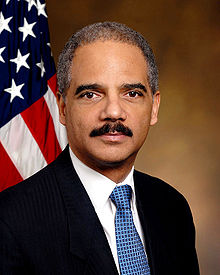
Holder

The Justice Department has been quietly conducting a wide reaching investigation into whether cable operators are using Internet Overcharging schemes like usage caps and metered billing to squash online video competition, according to a report in this morning’s Wall Street Journal.

The Antitrust Division has spoken to major online video providers like Netflix and Hulu as well as cable operators, including Time Warner Cable and Comcast.

At issue are data caps — limits on how much a subscriber can use their broadband account.  Justice officials are exploring whether major broadband providers like Comcast and AT&T are using usage limits to protect their video businesses from cord-cutting — canceling a cable subscription to watch shows online.

Providers of online video like Netflix are particularly concerned about operators showing favoritism to their own video platforms. Comcast, for example, exempts partnered content from its usage allowance while continuing to count Netflix viewing against its cap. Comcast’s Xbox “free pass” is attracting particular attention in the Justice probe, in part because it could violate the merger agreement with NBC-Universal which requires the company to not discriminate against third party video content.

Some cable operators claim usage caps protect their networks from heavy users overwhelming their facilities. Comcast claimed its decision not to count Xbox video traffic against the operator’s monthly usage cap was fair because the video content did not travel across the Internet. Now the company has temporarily suspended  usage caps altogether in preparation for testing a new usage limit that also carries overlimit penalty fees.

Federal Communications Chairman Julius Genachowski last month publicly announced his support for usage limits and metered billing, describing both as innovative and enabling customer choice. The Justice Department probe would indicate otherwise, because it suggests customers are finding their options increasingly limited, possibly in violation of federal antitrust laws.

The Justice Department is also investigating the industry’s TV Everywhere project, which provides access to cable network online video exclusively to those with an existing cable television package. Most cable networks specifically prohibit online streaming of their live content, which itself might run afoul of antitrust rules.

The Journal notes Attorney General Eric Holder on Tuesday suggested he would like to be a cord-cutter himself, picking and choosing only the channels he wants to watch. At a recent Senate hearing, Sen. Al Franken (D-Minn.) said cable bills were “out of control” and consumers want alternative options to watch shows online. Holder responded, “I would be one of those consumers.”

Mobile Operators Conjure Up New Billing Ideas: “Charge for Video Separately”

Dispensing with “all-you-can-eat” data plans was the first step towards monetizing mobile broadband. Now some mobile operators are considering how to implement stage two: charging different pricing for different online applications to boost profits.

At the TM Forum Management World conference in Dublin, Ireland, mobile operators discussed managing and monetizing data usage, charging customers different rates for using various online services and applications. Total Telecom covered the conference and found mobile operators conjuring up new pricing schemes to maximize revenue opportunities.

Vikram Chadha, senior marketing director at United Arab Emirates-based Du, offered that mobile operators should bill for video traffic separately from standard data.

″Video is another beast,″ Chadha told the audience of executives. ″Operators need to look at video data in a totally different manner. It’s important to treat video as a different data element.″

Monetizing video streaming can “get high value out of that customer,” Chadha said.

Chadha

He also believes as general browser traffic declines, real money can be made charging different rates for customers accessing different apps. Providers could charge higher data pricing when customers use certain non-preferred apps, at the same time discounting traffic from apps that partner with wireless phone companies.

Chadha pointed to NTT DoCoMo’s partnership with Hulu. Both Hulu and the service provider market the service, with the one making the sale the beneficiary of most of the proceeds. That technically takes revenue away from Hulu and diverts it to NTT, which can engineer customized marketing efforts to target customers for the service.

But it does not stop there, according to Chadha. Mobile operators can generate even greater revenue by introducing Quality of Service (QoS) technology and billing customers extra for additional priority on the company’s wireless network, an important consideration for online video.

Chadha says his company now charges $1.25 for 30 minutes of video streaming from YouTube using “best available” network protocols. Customers who want to assure minimal buffering can buy a VIP Pass from Du for $2.50 for the same 30 minutes, and get priority on Du’s network.

″The [VIP pass customer] is assured of the bandwidth he gets and that gives the operator the opportunity to maximize his revenue,″ he said. ″[Apply] different QoS for different apps and you can charge differently. Or use location, and sell data more cheaply where networks are less congested, or at less busy times of day.”

Chadha’s worst enemy would be a strong Net Neutrality policy, which would prohibit operators from discriminating against or prioritizing different types of traffic. None of these pricing schemes would likely work if Du provided a flat rate mobile service either.

In the absence of such net protections, revenue and profit opportunities abound.

″Application-based charging is going to be very important and so is value-based charging,″ he predicted.

Search This Site:

Contributions:

Recent Comments:

Your Account:

Stop the Cap!