


Home » Public Policy & Gov’t » Recent Articles:

Let’s Play Follow the Money – Part 1

Following the Money: Cable's Best Friends in North Carolina Get a Payday

Following the Money: Telecom's Best Friends in North Carolina Get a Payday

If there is one thing I know about how politics work, it is that when you follow the money you find the reason certain people are pushing so hard to get legislation through.  After doing some intensive research into the Senators involved with S1004, I found a trail of money that leads right back to the Cable/Telecom industry.  S1004 was primarily sponsored by Senator David Hoyle (D-Gaston County) and was co-sponsored by Sen Debbie Clary (R-Cleveland and Rutherford Counties).
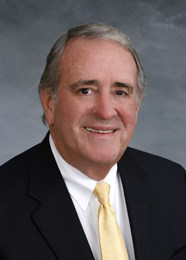
Sen. David Hoyle (D-NC)

Sen. David Hoyle (D-NC)

What made me think to look in the first place was the quotes in the local paper by Hoyle.

You can expect to see 1004 on the Senate floor and sent over to the House soon, said Sen. David Hoyle, its sponsor. Hoyle says he doesn’t much care how it gets studied, as long as it gets there.  “It’s an issue that needs to be looked at,” Hoyle said. “All the parties need to get in the same room and defend their position.”

Add that to a Hoyle quote reported on Facebook by the Greensboro News & Record’s Mark Binker, “I take great pride in being a pro-business member of the Senate.” Now I had to look.

What I found was that Hoyle took a total of $25,750 in telecom industry PAC money in 2008.  Embarq Employees PAC gave $4500, Time Warner PAC gave $4250,  AT&T PAC gave $4000, NC Cable PAC gave $2500, Sprint/Nextel PAC gave $3000, NC Broadcast PAC gave $1500, NC Association of Broadcasters PAC gave $4000 and ElectriCities gave $2000.  That last donor is particularly interesting, because their lobbyist, Drew Saunders, also happened to sponsor a nearly identical bill in  2007.

It is easy to see why Hoyle is pushing this legislation so hard for his telecom buddies: $25,750 is a lot of money for a state politician.  Most people don’t make much more than that in a single year working 40 hours a week.

Co-sponsor Clary has not been very outspoken on this bill, but her total take from telecom industry PACs was considerably lower as well, amounting to $4750.  Embarq Employees PAC gave her $1500, Time Warner PAC gave $1000, AT&T PAC gave $1750, and ElectriCities gave $500.

Other big players in the North Carolina Senate are also cashing their industry checks, and the details are forthcoming.  Next, my attention will turn to the sponsors of HB 1252 in the North Carolina House.  Soon, we’ll all know exactly how much is takes to get big telecom’s legislative agenda passed into law in the North Carolina General Assembly.

All information I have provided above was a matter of public records search at the NC State Board of Elections website.


Austin Telecom Commission Set to Voice Its Opinion on Metered Broadband

Michael Chaney May 15, 2009 Community Networks, Public Policy & Gov't 2 Comments

The Austin Community Technology & Telecommunications Commission convened this past Wednesday for their monthly meeting to discuss, among other items, possible actions on Time Warner Cable consumption billing for broadband Internet.  According to chairman Chip Rosenthal, it was the longest agenda in the many years he’s been there, and the TWC discussion didn’t come up until after 9 p.m.

As a concerned Austinite and former TWC customer (thanks to AT&T U-verse!), I attended this meeting to make sure all the important information on the subject was made available to the commissioners.  I only had three minutes to speak, as per meeting rules, which wasn’t near enough time for me to get through my three pages of material.  Luckily though, since the topic was an agenda item, the commission was allowed to ask questions and they were gracious enough to ask me open-ended questions and allow me to continue my points.  I stressed to the Commission that the most effective actions they and the City Council could do is file comments to the FCC and the FTC, and to put pressure on state and federal legislators to remove impediments to municipal broadband.  I emphasized that even if the City has no intention of creating a municipal broadband service, it is to Austin’s benefit to have the option on the table.  I told the commission that I believe a major reason TWC initially chose Austin as one of its metered billing test markets is that TWC knew the city’s hands were tied and that it had no real recourse.  During the discussion after my presentation, the commission agreed to work on a resolution recommending to the City Council that, through the City Attorney, submissions be filed to the FCC, Federal Trade Commission, and the Texas State Attorney General, and they agreed that the city should begin working with state and federal legislators to stop abusive practices.  The commission also agreed they should focus their efforts on  the state and federal level because little could be done at the municipal level, and that they should seek out other municipalities in a similar situation to present a coordinated effort.

There were two interesting facts that I learned at this meeting.  One, the municipal franchise that TWC has with the city of Austin will expire in 2011, but at that point it will transition to a state franchise agreement.  I had never heard of a state franchise before.  I know that the negotiating power the city has at franchise renewal will be diluted considerably on the state level. Second, the current franchise only applies to TWC cable TV service, not its broadband products.  It was brought up in the meeting that Grande Communications, another regional cable provider, has full authority to compete in TWC’s market for broadband service.  This raised a serious flag to me.  If both cable TV and broadband products are carried on the same infrastructure, but the franchise agreement only applies to the cable TV service, then they are in effect creating and illegal de facto franchise out of the broadband market.  Grande cannot compete with TWC’s broadband product, because they’re not allowed to bring their cable TV infrastructure into TWC’s market.

Since TWC has decided to shelve it’s metered broadband trials in Ausin for the time being, there is not much the Telecom Commission can do against current TWC actions other than possibly investigate instances of service being shut off based on a soft 40 GB cap in their excessive use clause.  But the commission has resolved to begin the groundwork necessary to fight this issue in the future by codifying its own policies and rules for fair market practices and pressing the city of Austin to lobby state and federal lawmakers.

No Broadband Stimulus Money for Usage Cappers & Net Neutrality Foes

cashOne of the biggest anti-consumer disasters of the last 15 years was President Clinton’s signing of the 1996 Communications Act.  This bought and paid for legislation deregulated a major part of the telecommunications sector with the idea that the “free market” would somehow provide sufficient checks and balances to protect against media concentration, monopoly abuse, and locking out technological advancement wherever robust competition was unlikely.

How’s that working out for you?

Consolidation and corporate control of broadcasting, telephony, broadband, and other communications services has been rampant and largely unchecked by the Federal Communications Commission during the last 10+ years.  The result is a handful of players controlling the services we all depend on in our daily lives.  Usage caps and overpriced tiered billing is just the latest example of market concentration.  Companies realize consumers have few options for equivalent services, so they can dictate the terms and conditions with almost no oversight or control.  Local and state governments confronting this issue have come to realize their hands are tied, because telecommunications deregulation without assurances of a competitive marketplace always equal monopolistic behavior.

Net neutrality has also been a victim of a hands-off regulatory authority that is supposed to foster competition, equity in access, and prohibit abusive behavior.  The Federal Communications Commission has failed on every front.

… Continue Reading

Video of Consideration of HB 1252 – The ‘Broadband Monopoly Protection Act’

Phillip Dampier May 12, 2009 Community Networks, Public Policy & Gov't, Video 5 Comments

Thanks to Jay Ovittore and the City of Wilson, we have the video from the consideration of HB 1252, the horrible bill that would have made municipal broadband a virtual impossibility in the state of North Carolina.  Everyone who participated in our pushback should give themselves a pat on the back, because YOU helped make all the difference between broadband choice and advancement in the state vs. forcing communities into a broadband backwater.  Don’t believe for a second you just have to sit back and take what big telecom forces on you.  This shows you don’t!

This is what we can do — make the difference!

The NC Public Utilities Committee sends HB 1252 to a study committee. May 6, 2009.

Call to Action: Austin – City Commission Meeting to Discuss TWC Metered Billing

Phillip Dampier May 11, 2009 Public Policy & Gov't 9 Comments

austin_sealResidents of Austin need to make plans to attend a meeting this Wednesday the 13th at 6:30pm at City Hall to be sure your voices are heard regarding the possibility of Time Warner Cable returning with its metered billing and rationing plan this fall.  It would also be a great time to call attention to the company suspending customer accounts for “excessive consumption” as we’ve documented.

Michael Chaney, one of our readers, gave us the heads-up and also pointed us to the Austinist news and culture site, which published news about the meeting:

Chairman Chip Rosenthal said public input last month justified further inquiry into the metered bandwidth issue, and that the commission is now looking for policy input from experts in regulatory matters. That process, which may take months, begins with Wednesday’s meeting of the Austin Community Technology and Telecommunications Commission.

Rosenthal said the commission faces two challenges:

“As far as we can tell, the city has little regulatory authority over the [Time Warner Cable] broadband Internet product. Yes, TWC does hold a city-granted franchise, but that agreement only covers cable video services,” Rosenthal said. “(Also) the grounds for action are more uncertain now that TWC has rescinded metering (for the time being, so they say). How do you ask for relief when you aren’t being damaged? So, the current effort may end up being groundwork, so that we’re better if they do come back.”

Stop the Cap! will be glad to work on some written input for the meeting which we’ll publish here before Wednesday, should one of our Austin readers like to provide it to them.  Rosenthal is correct — Time Warner Cable’s broadband services are unregulated.  However, forcing language that prohibits capping or tiered pricing into a franchise renewal agreement is a possibility, as would other options ranging from exploring municipal broadband or outright non-renewal of the company’s franchise.

Rosenthal is right to consider their exploration of this issue laying “groundwork,” because we are convinced Time Warner Cable has not permanently shelved these pricing schemes by any means.

What: Austin Community Technology & Telecommunications Commission meeting on TWC metered billing and other issues.

Where: City Hall – Room 1101, 301 W. 2nd Street, Austin, Texas

When: Wednesday May 13, 6:30pm

Details: Agenda & Meeting Information, List of Monthly Time Warner Cable Complaints, Emerging Tech Presentation

Website: Austin Community Technology & Telecommunications Commission

Search This Site:

Contributions:

Recent Comments:

Your Account:

Stop the Cap!