Subscribe
 It didn’t take long for consumers to start flooding the Federal Communications Commission with thousands of complaints about poor Internet service, usage caps, and speed throttles.
The complaints arrived as the FCC began formally enforcing Net Neutrality by reclassifying broadband as a telecommunications service, subject to oversight by the federal agency.
Consumers used the occasion to deluge the commission about the sorry state of Internet access in the United States, whether it constituted a Net Neutrality violation or not.
National Journal obtained a sample of 50 complaints through a Freedom of Information Act request and it was clear data caps were at or near the top of the complaints list and consumers wasted no time slamming cable and phone companies over the practice.
“Our data should not be capped at 350[GB]!!!!” one consumer pleaded, likely a Suddenlink or Mediacom customer, which both have 350GB caps on certain speed tiers. “Please, please make data caps illegal!!”
 No more Netflix and Hulu watching for this family: “I have to tell my kids to stop using YouTube and other services and stuff they need for school so we don’t go over the cap,” another consumer wrote, explaining that their Internet-enabled home security camera uses up a significant amount of their monthly data. “By Comcast having this data cap, I don’t have a open Internet … I also think this data cap is very inaccurate, it goes up without anybody being home, and sometimes by a lot.”
Comcast also received heat for poor performing broadband service, with one customer forced to use Wi-Fi at a local McDonalds to take an online exam because Internet service at home was so poor.
“The Comcast modem is such crap that we can’t even access the Internet,” the consumer wrote. “I’m livid.”
AT&T was roasted for speed throttling its “unlimited data” wireless plan — a practice that already resulted in a $100 million fine from the FCC for misleading consumers. AT&T is appealing.
In all, the FCC reports it received about 2,000 complaints from consumers in June, the first month Net Neutrality rules took effect. The agency has just 30 days to respond to the complaints, most lodged using this online form. The FCC may be able to answer many with a form letter because poor service and usage caps are not strict violations of Net Neutrality, unless the FCC determines the practices “unreasonably interfere” with Internet access. AT&T’s speed throttling comes a lot closer to meeting that test, because many throttled customers report their wireless data service is rendered effectively unusable once throttled.
But the broad-ranging complaints may still prove useful, suggesting to the FCC stronger rules and oversight are required for a broadband market many consider barely competitive and often customer abusive.
Seeking comment, National Journal reported the National Cable and Telecommunications Association and the U.S. Telecom Association, which both represent major Internet providers and have sued to overturn the regulations, declined to comment on the complaints.
 Residents of one of the world’s most isolated countries will soon have the option of getting fiber-to-the-home service that will offer faster Internet access than most Americans get with traditional DSL from their phone company.

 But Zibelman assumes at least some of those disputes have since been settled and now wants details about where Verizon is still unable to offer FiOS in New York City and why. She also wanted to make sure Verizon was not favoring certain areas over others for fiber service:
 “Indicate whether Verizon has achieved its six-year build-out in the cable franchise agreement,” Zibelman asked. “If Verizon has not achieved that build-out, please provide all documentation that Verizon provided to the City to justify the basis for any delay. In addition, please provide a current status of the FTTP build-out, by Borough, indicating the percentage and number of buildings served, and the remainder of buildings yet to be served. Provide a status update of the buildings identified in previous Verizon petitions for Orders of Entry.”
 Google is seeking documents from three network television conglomerates that could prove the Mississippi Attorney General’s office conspired with executives of 21st Century Fox, Comcast/NBC, and Viacom to launch a coordinated lobbying campaign against the search engine giant over its business practices.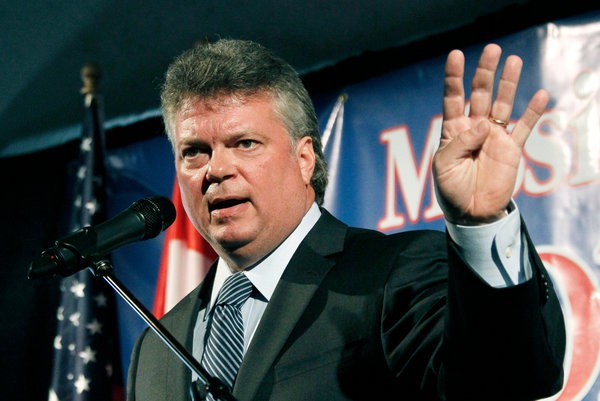
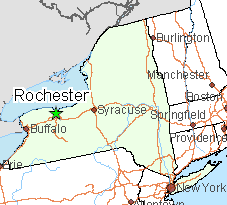 Despite the job shifts, the fact 24,000 workers in the region are already employed in photonics-related jobs may have been a deciding factor in selecting Rochester for the center.