Home » Consumer News » Recent Articles:

AT&T To Settle Lawsuit Over DSL Speeds – Customers Get Up to $2.90 a Month, Law Firm Gets $11 Million

Phillip Dampier May 5, 2010 AT&T, Broadband Speed, Consumer News Comments Off on AT&T To Settle Lawsuit Over DSL Speeds – Customers Get Up to $2.90 a Month, Law Firm Gets $11 Million

AT&T has agreed to settle a class action lawsuit that accused the company of selling DSL service at speeds it often never provided to customers.

The case, Robert Schmidt, individually and on behalf of all others similarly situated vs. AT&T and SBC Internet Services, Inc., (d/b/a AT&T Internet Services), was filed in 20o9 when AT&T customers learned the company was configuring some customers’ DSL modems at maximum speed rates below those advertised by AT&T.

AT&T has agreed to settle the lawsuit for a maximum of nearly $100 million, or less depending on the total number of claims received nationwide.

The amount customers are entitled to receive will vary depending on how much of an impact AT&T’s speed limiting configuration had on a their service.  The settlement is also retroactive back to April 1, 1995 meaning longtime AT&T DSL customers could be entitled to several hundred dollars in compensation.  For those dissatisfied with the speeds they received from AT&T’s DSL service, their compensation will be limited to a one-time payment of $2.00.

For some others, the settlement will provide more generous compensation.  The law firm that brought the case, Dworken & Bernstein, will receive up to $11 million in compensation and also get to hand out $3.75 million dollars of AT&T’s money to no less than 20 charities.

Some Background

AT&T provides DSL service to the vast majority of its customers.  This technology works over traditional copper wire phone lines.  Unfortunately, that infrastructure was never designed to carry data, but after years of development engineers found a way to make Ma Bell’s wires work for broadband service.  Unfortunately, the service has never been able to provide consistent speeds to every customer.  The further away you are from the phone company’s central office (where your phone line ultimately ends up), the slower the speed your line can support.  Someone a block away from the phone company office can easily achieve the speeds AT&T promised its customers in its marketing.  But if you are a few miles away, chances are you cannot.

For those more distant, or who live in areas with bad phone lines, your DSL modem won’t be able to maintain a consistent connection at the speeds AT&T sold you.  That will cause the modem to reset itself regularly, trying to re-establish an appropriately fast connection.  That can drive customers crazy because your service will often stop working while the modem tries to renegotiate the connection.  Some phone companies stop the constant reconnection battle by configuring the modem to work at a lower, more stable speed that will work with an individual’s phone line.

For instance, here in Rochester Frontier Communications advertises 10Mbps DSL service.  But for me, more than 10,000 feet away from Frontier’s central office for my area, the line simply couldn’t support that speed.  So Frontier locked the modem to deliver just 3.1Mbps, not the 10Mbps the company markets to customers in this area.

While that practice may seem technically smart, it’s obviously not legally smart, as AT&T has discovered.  Even using the traditional weasel words of “up to” when marketing broadband speeds, AT&T felt it was exposed to charges of false advertising and defrauding customers, and decided to settle the case.  It should be noted AT&T strongly denies any allegations of wrongdoing, but has agreed to settle to avoid the burden and cost of further litigation.

AT&T now faces the prospect of paying compensation to every DSL customer it speed limited in this fashion, and has also agreed to stop the practice.

The Details

Who Gets the Settlement? — Potentially any AT&T DSL customer paying for service after March 31, 1994.  This also includes customers of companies acquired by AT&T:

  • SBC Internet Services, Inc., d/b/a AT&T Internet Services
  • BellSouth Telecommunications, Inc.
  • Pacific Bell Internet Services
  • Southwestern Bell Internet Services, Inc.
  • Ameritech Interactive Media Services, Inc.
  • SNET Diversified Group, Inc.
  • Prodigy Communications Corporation
  • Oklahoma Internet Online

Many AT&T customers may have already been notified about this settlement through postcards or other mailers sent by AT&T based on customer records.

What Kind of Settlement Will I Get? — For longstanding AT&T DSL customers, the amount could be substantial, so it’s worth your while to participate, even if you are no longer a customer.  For most everyone else, it’s probably worth $2.00.

There are three types of benefits that will be paid to those who submit valid claims under the settlement once it becomes final. Payments will be made by check or by credits on a customer’s bill.

  • Group A Benefit. If AT&T’s Records indicate that AT&T configured the downstream speed of your DSL service, for one month or more during the Settlement Class Period, at a level lower than the Maximum DSL Speed for the plan you purchased, you may be eligible to receive $2.90 for each month your service was so configured.  This could add up to hundreds of dollars.
  • Group B Benefit. If you are not eligible for the Group A Benefit and AT&T’s Records show that your DSL service may have performed, for one month or more during the Settlement Class Period, at downstream speeds below the following levels, you may be eligible to receive $2.00 for each such month:
    • 200 Kbps, if you purchased a plan with a Maximum DSL Speed of 768 Kbps;
    • 384 Kbps, if you purchased a plan with a Maximum DSL Speed of 1.5 Mbps before October 2008;
    • 769 Kbps, if you purchased a plan with a Maximum DSL Speed of 1.5 Mbps after October 2008;
    • 1.5 Mbps, if you purchased a plan with a Maximum DSL Speed of 3.0 Mbps; or
    • 3.0 Mbps, if you purchased a plan with a Maximum DSL Speed of 6.0 Mbps.

    Because the settlement provides for monthly credits, you could also receive hundreds of dollars in refunds or service credits, making participation in the settlement worthwhile.

  • Group C Benefit. If AT&T’s records do not show that either you fall within Group A or Group B but you nonetheless believe that your DSL service has not performed at satisfactory speeds based upon the plan that you purchased, you may still be eligible for a one-time payment or bill credit of $2.00. In other words, if at anytime you were underwhelmed by AT&T’s DSL speeds, you can file a claim and get two dollars back.

AT&T has also agreed to monitor customers’ DSL speeds over a period of 12 months and if service cannot achieve the speeds promised, the company will either make repairs to boost speed or adjust billing.

For AT&T customers in Missouri, Oklahoma, Kansas, Arkansas, and Texas, AT&T’s settlement would replace a similar class action case filed in St. Louis.  Ford and Dunne v. SBC Communications, Inc. and SBC Internet Services, Inc., would have only covered customers after December 31, 2000.

Customers who believe they are entitled to participate in the settlement can get additional information and file an online claim at the DSL Speed Settlement website.


Insight Leaves 300,000 Louisville Customers With Frozen Pictures for Nine Hours – No Refunds (Unless You Ask)

Phillip Dampier May 4, 2010 Consumer News, Video Comments Off on Insight Leaves 300,000 Louisville Customers With Frozen Pictures for Nine Hours – No Refunds (Unless You Ask)

More than 300,000 residents from Louisville to Lexington in Kentucky and north into Indiana were left with no cable service for more than nine hours today after an equipment failure at an Insight Communications office on Okolona Road wiped out analog cable.

Louisville cable viewers channel flipping up and down the dial found nothing but frozen pictures, a captured moment in time from 2:53am this morning.  What they found next when calling Insight was nothing but hours of busy signals.  Some customers in southern Indiana found some channels worked fine while others did not.  In all, the outage impacted at least some channels across most of Insight’s service area in Kentuckiana.

Louisville, Kentucky

Insight initially blamed the problem on a router failure that developed during routine overnight maintenance.  A backup router also failed at the same time.  Company officials originally anticipated service would be restored by six this morning, but that did not come to pass.

Because the equipment failure had never been seen before by Insight technicians, it took nearly nine hours to finally resolve the problem.  Local television stations were deluged with calls from viewers wondering what happened to their favorite shows, and Insight’s dropped ball was topic number one on most local talk radio programs today.

Insight subscribers were especially upset that they couldn’t reach the cable company for answers.  Customer service lines were left jammed through much of the day.

Insight spokesman Jason Keller apologized for the outage.

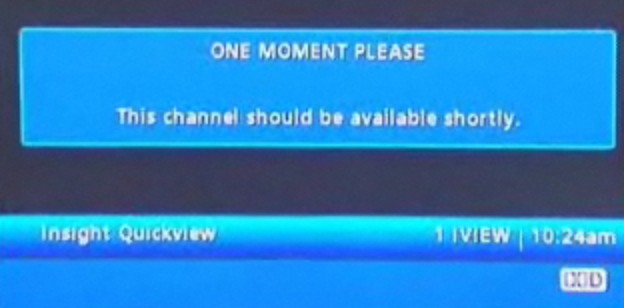
Subscribers either saw this message, or a frozen picture across their channel lineup this morning.

“Everything that we have has a redundancy built into it. This is no different, but unfortunately on this particular morning with this particular piece of equipment, both the main equipment and the backup did not function properly,” Keller said, calling the outage “highly unusual.”

Keller called today’s outage the largest that he has seen during the company’s 10 years of service in Louisville.

By 10:00am, Louisville customers had their HD channels back, with the remaining analog channels restored by 1:30 this afternoon.

Despite the severity of the outage and its widespread impact, Insight Communications is refusing to issue blanket refunds to affected customers.  Instead, individual customers have to call or contact the company and request a refund, which they characterize as an amount under $1.00.

Customers can cost Insight more than that just by availing themselves of that option, and registering their displeasure over today’s long-lasting outage.

Impacted customers can request a refund online or by phone at (502) 357-4400.

Most television newscasts in the Louisville area treated today’s outage as their top news story, with several issuing periodic updates throughout the morning into the afternoon about the service problems.

[flv width=”640″ height=”380″]http://www.phillipdampier.com/video/WAVE Louisville Equipment problems cause loss of service for Insight customers 5-4-10.flv[/flv]

WAVE-TV in Louisville told viewers “it’s not our fault” that Insight subscribers couldn’t watch the station for at least nine hours today.  (2 minutes)

[flv width=”640″ height=”380″]http://www.phillipdampier.com/video/WLKY Louisville Insight Experiences Cable Outages 5-4-10.flv[/flv]

WLKY-TV in Louisville said it received tons of calls from concerned viewers, one of whom was upset that the company “doesn’t want to give customers answers.”  (2 minutes)

[flv width=”432″ height=”260″]http://www.phillipdampier.com/video/WHAS Louisville Technical Problems at Insight 5-4-10.mp4[/flv]

WHAS-TV, also in Louisville spent time outside of WHAS Radio’s studios this afternoon covering angry reactions from Insight customers on local talk radio.  (2 minutes)

[flv width=”432″ height=”260″]http://www.phillipdampier.com/video/WHAS Louisville After Nine Hours Insight Restores Service 5-4-10.mp4[/flv]

WHAS followed up its earlier report with a wrap-up during its early evening newscast explaining what caused the nine hour outage.  (3 minutes)

[flv]http://www.phillipdampier.com/video/WDRB Louisville Insight Outage Ends 5-4-10.flv[/flv]

WDRB-TV in Louisville explained to its viewers how they could get their money back for a day’s worth of frozen pictures.  (2 minutes)

One in Eight Americans Will Drop Cable/Pay Television by 2011: It’s Too Expensive

Phillip Dampier May 3, 2010 Consumer News, Online Video, Video 7 Comments

One in eight Americans are poised to drop or curtail their cable, satellite, or telco-TV packages in the coming year because the bill has gotten too expensive, according to a new study.

With an average cable bill now $71 a month and rising an average five percent a year, middle class consumers are being priced out of pay television according to the Yankee Group.  The Boston research firm conducted the study of cable, satellite and telephone-company IPTV services and surveyed 6,000 consumers from across the country.

“At the most basic level, the decision to cut off pay TV services is an economic one,” says Vince Vittore, principal analyst and co-author of the report. “As programmers continue to demand ever higher fees, which inevitably get passed on to consumers, we believe more consumers will be forced to consider coax-cutting.”

Coming on the heels of a steady erosion away from traditional telephone landline service which has threatened the fortunes of major phone companies, the implications of millions of consumers coax-cutting are not lost on cable operators or phone companies getting into the IPTV business.

Back to the Future: Older Americans Going Back to Rabbit Ears When Confronted With Today’s Cable Prices

Retro TV is a network that piggybacks on digital television sub-channels in many cities across the country. The network airs classic television shows popular with older audiences.

Those dropping service often take diverging paths for their future entertainment in a cable-free household.  Among older consumers, especially those on fixed incomes, it is back to the future with over the air television and a pair of rabbit ears or rooftop antenna designed to receive digital television broadcasts.

Among these consumers, the most common reason for canceling service is cost.  Many signed up for cable in the 1970s and 1980s for better picture quality, and with the right rooftop antenna, last year’s conversion to digital television solved that problem for over the air viewers.  Post-cable, many are pleasantly surprised to discover new channels piggybacking on traditional stations, several offering classic TV shows from decades past that are familiar and welcome in older Americans’ homes.  Even better — no confusing equipment to deal with.

Jesus Chea, 59, of Queens, told the NY Post he ditched his Time Warner subscription “because I’m on a fixed income and I believe it’s not worth the money.”

To get around the $136 monthly bill, the retiree, who lives with his wife and two grown sons, had antennas installed on both of his TVs — at a cost of $298 — taking advantage of last summer’s national conversion from analog to digital broadcasts.

“Antenna is great,” he says, “because they don’t charge you for rent on digital boxes and they don’t charge you for the remote control. When you add up all those extra fees and so many extra [cable] charges, even if it’s three or four extra dollars, they all add up.”

For many others, the arrival of Redbox video rental kiosks in area grocers has replaced the HBO subscription, and has proven to be a worthwhile supplement to the coax-cutter who drops cable service altogether.

The savings from cord cutting can be dramatic.  Some have saved upwards of $60 a month — $720 a year just by dropping the cable-TV part of their package.  Those kinds of savings have become important when wages are frozen or in decline, jobs are hard to find, and everything else is still going up in cost.

The cable industry has never imagined a country where consumers have quit cable (or satellite) and gone “cold turkey,” especially when upwards of 90 percent of Americans pay for some type of entertainment — pay television, movie rentals, or broadband video.

But as the Yankee Group discovered, Americans are simply tapped out.

Your Father’s Cable TV: Why Would Anyone Under 30 Subscribe?

For younger Americans, the addiction to cable or pay television was something that afflicted their parents.  They never had a problem dropping service from a cable company with whom they never did business.  The teens and twenty-somethings have spent most of their video dollar on broadband and DVD’s for much of their viewing, not cable.

Younger cable subscribers are most at risk for coax cutting, rationalizing they can watch most of their favorite shows online through services like Netflix, Hulu, or websites run by the major American networks.  Others download content (legally or otherwise), rent or buy DVD’s, or subscribe to services like Netflix which combine video streaming with DVD rentals-by-mail.

Many of these viewers also own devices that can bring web-based viewing right to their 50-inch television sets, using set top boxes or video game consoles with web connections.

“Admittedly, this is a small phenomenon now, but a number or recent transactions and new items point to a shift in consumer thinking,” said Vittore.

With the increasing ubiquity of Internet-capable devices, the challenge to traditional coax-based cable TV has never been greater.

“Just like with telephone land lines, it’s going to become hard to sell pay TV to anyone under 30,” Vittore said.

Provider Revenge: You Won’t Get Away That Easy!

With billions of dollars at stake, providers and content producers are intent on not allowing a repeat of what happened to the newspaper industry to afflict their business plans.  Giving it all away for free is not their idea of a sustainable business model.  Keeping tight control over content and its distribution is their ticket to maintaining profits.

Many Olympic events were not aired on NBC television, instead moved to NBC Universal-owned cable networks.

Older Americans who’ve gone back to over the air television are least susceptible to provider revenge, but content is still king and the cable industry will own an increasing percentage of it if the NBC-Comcast merger is approved.  While the two companies are currently promising not to dispense with free over the air broadcasting, an increasing amount of content could be diverted to pay television channels like cable sports networks, movie networks, and general interest basic cable channels.  Broadcasters themselves are now hungry for the same dual-revenue stream their cable competitors already enjoy – advertising income and subscription fees.

Most of the coming wars over pay entertainment are expected to be fought on the broadband battlefield.  For younger Americans relying on Hulu and other video streaming services, subscription fees are coming.  Hulu promises to keep some free viewing options open, but additional access to back episodes or certain series are likely to be restricted only to those who agree to pay an anticipated $9.95 per month.  The cable industry’s own TV Everywhere streaming services offers a clearer dividing line — its available only for those who maintain their pay television package.

Broadband providers, often the same companies that stand to lose from the retreat from television subscriptions, are considering making up the difference with limits on broadband service to make sure consumers can’t watch too much online, or charging consumption fees for heavy online viewers to make up their losses on the TV side.

The long-standing business relationship between content producers and distributors, such as those between Hollywood studios and cable companies, have led to a united front against would-be competitors.  For consumers seeking access to the latest Hollywood movies through low cost rental services or online video, expect to wait longer.  The window of time between a movie release in the theaters and when it becomes available for rental through Redbox or Netflix is growing longer to protect video-on-demand revenues for the cable industry and DVD sales for Hollywood.

Some consumers don’t mind the wait, but are still regularly reminded what they can miss when they don’t agree to a monthly pay television bill.

Jeremy Levinn, a 27-year-old personal trainer from Manhattan, told the Post he jumped the cable ship last year, but Time Warner Cable reminded him whose still boss during the Olympics, when numerous events were available only on Universal-owned cable channels including USA, CNBC and MSNBC and not broadcast over the air.

[flv width=”384″ height=”236″]http://www.phillipdampier.com/video/CNN Converging Broadband and Television April 2010.flv[/flv]

CNN aired this review of the next generation of television sets capable of connecting with your broadband service to receive television shows and movies over the Internet.  (4 minutes)

Sorting Out the Apple iPad 3G Controversy: Is AT&T Throttling iPad 3G Owners?

New Apple iPad 3G owners launched a small controversy over the weekend about their discovery that certain video streaming services are showing lower resolution video (or no video at all) when using Apple’s new iPad 3G over AT&T’s wireless 3G network.

A range of sites pounced on the news.  It’s not easy to sort through who broke the story first, but by the end of the weekend, it developed a small life of its own.

iLounge was among the first to note serious video quality degradation when using the iPad over a cellular network, while it worked just fine over Wi-Fi:

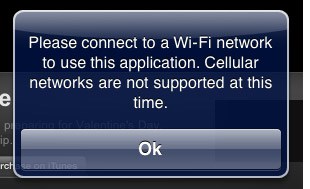
…some video delivery applications act differently over the 3G network than they do on Wi-Fi. The iPad’s built-in YouTube application strips both standard and HD videos to a dramatically lower resolution over the cellular data connection, something that iTunes Store video previews notably do not do, instead staying at a higher quality and consuming a greater amount of data. Other third-party applications, such as the ABC Player, refuse to work at all over the cellular connection, producing a notification pop-up that states, “Please connect to a Wi-Fi network to use this application. Cellular networks are not supported at this time.”

YouTube streamed over AT&T's 3G Network on an iPad defaults to very low resolution. (Image: iLounge)

Electronista also jumped on the story, at first speculating AT&T may have had a hand on the speed throttling noting Sling Media ran into a similar blockade with AT&T before the wireless company relented and the software became available from the App Store.  PC Magazine quoted from the Electronista story (before Electronista’s editors modified their original piece) to build on the story.

By the end of the weekend, Electronista pulled back on some of their language in their original report and included a cryptic denial from AT&T, which claimed it was “a question for Apple.”

Stories of reported throttling and content walls will not take long to reach the public policy debate over Net Neutrality.  Is this an example of AT&T throttling Apple iPad customers and blocking them from accessing web content?

The answer, based on current evidence, is probably not.

There are technical issues behind the scenes which play a larger role here, but let’s begin with the average consumer and how a 3G network impacts on their “user experience.”

When designing a device like the iPad, engineers have to factor in usability and the overall impression customers will have using the product with a wireless network.  For many original iPad owners reliant on a Wi-Fi connection, pages render quickly, videos play properly, and applications that require higher bandwidth generally work fine.  Unfortunately, for those who lined up outside of Apple stores looking for the 3G wireless mobile broadband version of the iPad, the same may not always be true using AT&T’s 3G network.

AT&T promotes its 3G network as fast and capable of handling most any web application, including video.  But even the best 3G experience from AT&T is often much slower than a wired or Wi-Fi connection.  Despite the PR from AT&T, its 3G network frustrates many customers, especially in areas where cell sites are jammed with traffic or signals aren’t great.  Apple made sure larger-sized, streamed multimedia content seemed to work equally well on wireless by using adaptive video quality that can sense the speed of a connection, and reduce the quality of a video in order to make it play properly.  The theory is that a consumer using a handheld device probably wouldn’t notice the quality reduction on a small screen and would appreciate quick, uninterrupted playback.  Without such technology, a high quality video file can take longer to send over AT&T’s 3G network than it will take you to watch it.  That triggers the annoying “buffering content” pauses you see on slower networks.

AT&T officials told inquiring media “it’s a question for Apple,” which seems to confirm the reduced video quality is a function of the video player trying to adapt to AT&T’s speed.

Even with this in mind, some accused AT&T of employing social engineering to get customers to instinctively rely on Wi-Fi connections for higher bandwidth applications, reducing the demand on AT&T’s 3G network.

There is no need for a conspiracy theory like that when the simple, naked truth is far easier to grasp — AT&T has inadequate capacity and needs to upgrade their wireless networks to handle more traffic and sustain the speeds customers expect from a 3G-capable network.  AT&T is not purposely throttling the speeds of iPad 3G owners — their insufficient capacity results in a de facto speed throttle for all of their customers.  Unfortunately for those outside of the United States, the implications of AT&T’s slower 3G network can impact them as well.  Jesse Hollington in Toronto noted:

Unfortunately, these limitations don’t seem to be triggered by AT&T’s network, but rather in the iPhone OS or apps themselves, and the restrictions (at least on the iPhone) exist in every country where the iPhone is sold. There’s a general feeling outside of the U.S. that Apple’s kowtowing to AT&T’s “requirements” is actually ruining the experience for the rest of the world.

For instance, I can perhaps understand why YouTube videos need to be downsampled on AT&T’s slow 3G network, which even at peak performance is only 1.8mbps in most places.  As I noted above, however, Rogers up here provides 7.2mbps just about everywhere and provides better 3G performance than I get on some Wi-Fi networks. Yet we have to live with the same 3G restrictions as AT&T users do because they’re built into the iPhone OS.

That prompts the question what limits would have been “built-in” had AT&T’s own 3G network consistently delivered 7.2Mbps performance across its service areas.

As for ABC, and certain other content producers that restrict iPad owners to Wi-Fi viewing, that turns out not to be clear cut either.  ABC’s video streaming evidently exceeds a speed threshold that triggers the player to tell the user to use a Wi-Fi connection instead.  Licensing restrictions may also prevent the content from playing across a 3G network.

One of the most common arguments Net Neutrality opponents use to argue Net Neutality’s “unintended negative consequences” comes from bans on such adaptive speed controls.  Providers claim that by prioritizing or favoring certain traffic, they can maximize a consumer’s online experience so that they can use high bandwidth applications, as long as an intelligent network shaped the delivery of that traffic.

ABC restricts iPad owners to streaming its videos over Wi-Fi connections. (Image: iLounge)

So one might ask, because adaptive video quality lets people watch their favorite online videos over AT&T’s 3G network, wouldn’t a ban on speed throttles make it difficult or impossible to provide a customer with access to that video?  Isn’t Net Neutrality a bludgeon that kills intelligent traffic management tools?

There is no shortage of techie-speaking, industry-funded Net Neutrality opponents that argue it regularly.  Unfortunately, it doesn’t hold up to scrutiny.

Net Neutrality does not ban software that can sense the speed of your connection and request an appropriate web stream that will assure uninterrupted playback.  Even ancient RealPlayer technology can adaptively adjust streaming quality based on what your connection will support, if the content producer supports it.  Such technology directly benefits the consumer (who can also often shut it off), whereas the kinds of traffic shaping providers advocate really only benefits them.

That’s an important distinction.  Too often, the kinds of “intelligent networks” providers speak of are designed to protect providers from “costly upgrades” and opens up new revenue streams by manipulating or limiting traffic and then charging users and producers to be exempted from them (for the right price).

AT&T Ripoff: 15,000 Tennessee Customers Getting Overcharged Thousands for “Unlimited” Long Distance

AT&T Customers in southeastern Tennessee continue to get bill shock from company mistakes

AT&T continues to bill some of its customers across Tennessee for long distance calls that were supposed to be free under the unlimited long distance calling plans.  Stop the Cap! first reported this story back on April 12th, with company officials apologizing for what they called a “computer glitch.”  But the bills just keep on coming.

One Clarksville woman has been forced to call AT&T almost daily to address overcharges now exceeding $3,o00 for an AT&T Unlimited Nationwide Calling plan that is supposed to cost her $25 a month.

Although AT&T keeps crediting the overcharges on her account, Belinda Horton is exasperated having to first confront an inaccurate bill and then deal with AT&T customer service to credit back the charges.  That has been part of her routine for at least four months, with no resolution in sight.

“I’m not trying to get anything off of then and I don’t except charity, I just want them to fix my bill and fix it correctly,” she told WKRN News 2 in Nashville.  A reporter sat in on a typical call Horton makes to AT&T’s customer service to cope with the routine overcharging.  At the end of the call, the customer service agent tells Horton she’s sorry she can’t completely resolve the matter to her satisfaction.

Company officials continue to blame the billing error on computer problems.  Although Horton’s calling plan is supposed to let her make unlimited long distance calls for a flat monthly rate, the company keeps billing her calls by the minute at standard long distance rates.  The result has been staggering bills in the hundreds or thousands of dollars.

Belinda Horton from Clarksville, Tenn. is exasperated to learn she has been overbilled yet again while she speaks with AT&T customer service (Photo: WKRN News - Nashville)

WKRN News talked with Tom Jarkovitch at AT&T, who admitted the glitch has impacted 15,000 Tennessee residents.

“There were a few folks, those are the ones were working on manually and again, as a sub set of people that were not captured for whatever reason we think that’s going to be corrected in a matter of days,” he said.

Unfortunately for AT&T, there are indications the problem is impacting a larger number of customers than Jarkovitch admits.

Another customer in the Nashville area also being overbilled every month since last October said they had enough — they disconnected their AT&T service and went with a competitor:

“I have had the same problem since October of 2009. Every month, I have to call AT&T and ask why the problem has not been fixed. Again and again I am told that it should be fixed before the next billing cycle.  It is now nearly May and I still have to call them on a monthly basis. As a matter of fact, I just received my bill yesterday, and again, same thing. Well, that is my last bill because as of last month, I changed my home phone service carrier. I will no longer use AT&T services.”

With complaints like these still rolling in, the Tennessee Regulatory Authority (TRA) Monday compelled AT&T to appear to discuss the ongoing billing problems and AT&T’s plans to resolve them once and for all.

AT&T’s legal counsel, Guy Hicks, apologized for AT&T.

“It has already gone on too long, and for that AT&T apologizes,” Hicks told the Authority.

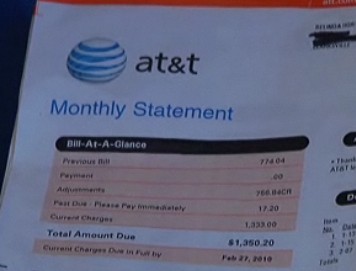
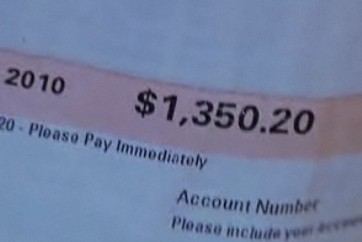
Month after month, many AT&T Unlimited long distance customers in Tennessee are billed by the minute for every long distance call, leading to staggering bills like this.

But Hicks also claimed the problem only impacted customers from periods ranging from August 18 to September 8 and October 31 to December 2, a claim that doesn’t ring true in light of Belinda Horton’s ongoing billing issues.

When asked specifically whether every dime unjustly charged to Tennessee customers had been refunded, Hicks did not say yes, instead claiming that “the vast majority of credits or refunds have been made and are continuing to be made.”

“As late as Friday, we were called and charges were still on their bill,” said TRA’s Tevin Thompson. “She didn’t have a paper bill yet, but she was quoted a total, and there were still errors on the bill.”

Our Take

It was disappointing to see the TRA praising AT&T at the end of Monday’s meeting.  This is an ongoing nightmare for some customers, and TRA officials seemed all too ready to applaud the company for its promises to fix the problem while Tennessee residents continue to be overbilled.  The time for praise comes after the company resolves the issue and every customer has been credited for every error.  AT&T has promised it would resolve these billing problems for nearly a month, with complaints still arriving even as the Authority met.

The Leaf Chronicle, the daily newspaper serving Clarksville, notes TRA officials seemed satisfied with AT&T’s Apologypoloza:

State regulatory directors appear to be satisfied AT&T has made an effort to correct a billing glitch that could have affected as many as 15,000 customers.

AT&T officials were called before the Tennessee Regulatory Agency on Monday to explain why some customers have been incorrectly billed for services since the fall.

“From what I gathered, the response they received (from AT&T) was satisfactory,” said Shirley Frierson, senior policy adviser to the TRA chairman. “That is as long as in a month or so, we don’t get more complaints about the same problem.”

At this point, appropriate compensation for impacted customers that have coped with overcharges for months on end should be more than simply crediting back their mistakes.  For folks like Belinda Horton, a year of free long distance calling would go a lot farther to demonstrate AT&T’s goodwill.  After all, she had to spend countless hours trying to fix a problem that wasn’t her fault.  Take it out of AT&T’s massive lobbying budget and do the right thing by your customers.

[flv]http://www.phillipdampier.com/video/WKRN Nashville ATT Overbilling in Tennessee 4-27-10.flv[/flv]

WKRN-TV in Nashville spoke at length with Clarksville resident Belinda Horton who faced months of staggering phone bills.  The reporter even sat in on a call Horton made to AT&T customer service.  (2 minutes)

[flv width=”480″ height=”380″]http://www.phillipdampier.com/video/WSMV Nashville ATT Answers To Long-Distance Billing Errors 4-26-10.flv[/flv]

WSMV-TV in Nashville also spoke with Horton and covered Monday’s meeting with the Tennessee Regulatory Authority, a public utility commission, over ongoing AT&T billing problems.  (2 minutes)

[flv width=”368″ height=”228″]http://www.phillipdampier.com/video/WTVF Nashville ATT Meets With Regulators Regarding Overcharging 4-27-10.flv[/flv]

Finally, WTVF-TV in Nashville also ran a report showcasing Horton’s billing problems and interviewed an AT&T representative about what will be done about it.  (2 minutes)

Search This Site:

Contributions:

Recent Comments:

Your Account:

Stop the Cap!