Home » Consumer News » Recent Articles:

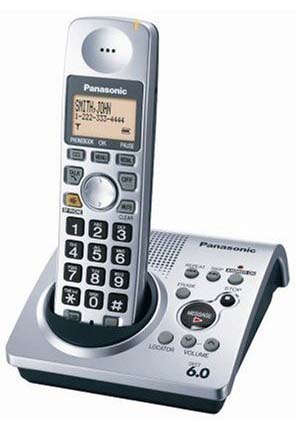
Should You Drop Your Landline? The Pros, Cons, and Alternatives

Phillip Dampier May 13, 2010 Consumer News, Video 8 Comments

One out of every four American families has now cut the cord on their landline phone service.

With cellular bills increasing, many people are deciding the traditional phone line that has been them for decades is no longer worth the expense, especially if you spend most of your time reaching for your cell phone to make or receive calls.

But is dropping landline service such a great idea?

Here are some things to consider:

PRO

  • Reduced expense for the family budget
  • If you don’t use it much, why pay for it?
  • Many cable companies offer less expensive “digital phone” products that can be bundled with your cable and broadband service
  • Skype, Google Voice, and Voice Over IP services can often knock phone service costs down to just a few dollars a month
  • Portability

CON

  • 911 emergency services have a harder time identifying your location
  • Call sound quality is usually lower than traditional landlines
  • Your telephone directory listing will become unavailable unless you make special provisions to keep it
  • The costs for cell phone service are often higher than basic landline service
  • Monitored alarms and certain other services require either a landline or added-cost wireless technology
  • During periods of unrest or bad weather, call volumes can increase exponentially causing disruptions to cell phone service

Telephone companies are increasingly desperate to hold on to their customers, and many remind departing customers the chance to retain their landline service at dramatically lower pricing.  Many companies offer budget, non-flat rate calling plans for less than $10 a month, but you’ll pay between 8-11 cents for every local call.  Others offer calling allowances of 250 or fewer local calls per month.  A few larger cities have calling plans that charge by the minute.

If you are considering dropping your landline, be sure to consider all of the options and alternatives before disconnecting service.

[flv width=”480″ height=”380″]http://www.phillipdampier.com/video/WCPO Cincinnati Pros cons of dropping your landline phone 5-12-10.flv[/flv]

WCPO-TV in Cincinnati provides additional insight into landline disconnections and your alternatives.  (2 minutes)

Time Warner Cable Demonstrates 290Mbps Broadband; Company Also Plans to Upsell Customers ‘Homesuite’ in Charlotte, N.C.

Phillip Dampier May 13, 2010 Broadband Speed, Consumer News 6 Comments

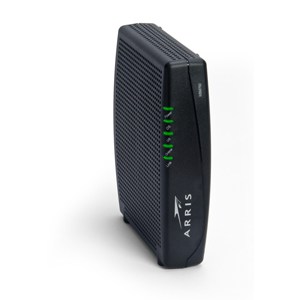
Arris WBM760 DOCSIS 3 Cable Modem

Time Warner Cable is demonstrating 290Mbps downstream coupled with 90Mbps upstream broadband in its booth at the 2010 Cable Show in Los Angeles.  A Time Warner Cable insider told CED magazine it was the first public showing of the company’s ability to provide faster service outside of a lab environment.

The new high speeds are achieved using DOCSIS 3 technology which can bond multiple “channels” on a cable system together to create additional bandwidth.

The demonstration relies on an Arris CMTS and cable modems manufactured by both Arris and Motorola, which are connected to Time Warner’s Los Angeles cable headend.

CED notes Time Warner Cable has plenty of room for broadband speed growth.

The company is achieving the speeds using 8 x 4 channel bondingClick here!. With TWC’s top tier rated at 50/5 Mbps, the demo shows speed increases of greater than fivefold on the downstream and 18-fold on the upstream.

The TWC engineer compared the MSO’s achievement with the 300 Mbps that Bell Labs demonstrated on DSL recently.

“What they’ve got is something in the lab that goes 10 feet, and what we’re showing is live from our headend 22 miles away. We can compete (using) DOCSIS,” he observed.

Such developments are all part of a larger company plan to develop and market additional services the nation’s second largest cable operator can upsell to its customers.  For now, 290Mbps service is more theoretical than practical at Time Warner Cable’s likely pricing.  But it illustrates cable remains technologically ahead of what most phone companies can deliver over non-fiber-to-the-home networks.

MediaPost’s MediaDailyNews reports Time Warner Cable is about to begin market testing a new super-deluxe package that moves beyond the “Triple Play” packages common in the cable industry today.  Targeting wealthy, premium cable customers, Time Warner’s new “Homesuite” service would include all the bells and whistles:

  • Multiple DVRs for several rooms in the house, with can eventually be connected together to let you start a recorded show in one room and finish it in another;
  • A full range of premium channels at a bundled discount price;
  • Faster DOCSIS-3 broadband with free Wi-Fi in and outside the home;
  • Enhanced digital phone service, perhaps with more calling features;
  • Concierge-like customer service, which could allow Homesuite customers to jump to the front of the queue for everything from service installation, repair and customer service.

Other options might include access to Time Warner’s wireless mobile broadband (rebranded Clearwire service), extended hours for service calls, discounts on pay per view, more deluxe set top boxes, and in some areas, even home security systems.

For Chief Operating Officer Landel Hobbs, the idea of selling $100 a month Triple Play package promotions just isn’t good enough anymore.  Time Warner Cable, MediaPost speculates, is now looking at $250 a month as a potential target price for Homesuite clients.

Time Warner Cable customers in Charlotte, North Carolina will be the first guinea pigs for super premium cable.  Are there enough customers around in Charlotte to pony up $250 a month for service?

TWC has conducted a customer “segmentation” study allowing it to identify opportunities for up-selling. “Our analysis indicates that certain of our large and profitable customer segments continue to hold substantial untapped opportunity,” Hobbs said earlier this year.

TWC says in a recent government filing that it’s likely to continue to lose video subscribers, but is expecting to make up for it by persuading customers to take DVR service, premium channels and other add-ons.

Charlotte is a key market for TWC — a Time Warner Cable Arena is located in the city center. After launching there, “Homesuite” would presumably then roll out in other TWC principal areas, which include Ohio, New York, Southern California and Texas. The working “Homesuite” moniker could be altered.

Zombie Satellite Threatens US Cable Network Programming — Dozens Of Channels Face Interference

Phillip Dampier May 12, 2010 Consumer News, Video 7 Comments

[Editor’s Note: While not a traditional story we’d normally cover, this one has implications for every satellite and cable customer, and was unusual enough to bring to your attention.]

Intelsat's Galaxy 15, pictured above, has gone rogue

A satellite now drifting out of control threatens to interfere with dozens of American cable networks as it intrudes into a neighboring satellite’s assigned slot.  Intelsat’s Galaxy 15 positioned at 132ºW is on the move, less than one degree away from its next door neighbor,  SES World Skies-owned AMC 11 (131ºW).  Intelsat technicians lost control of the satellite on April 5th, and although the satellite continues to operate at full power, capable of delivering a hundred of more digital television signals to viewers on Earth, Intelsat can no longer keep the satellite in its assigned position.

Communications satellite failures are not as rare as their owners wish.  Solar storms have the power to wipe out a $250 million dollar investment required to build, launch, and operate a satellite in mere minutes.  Intelsat speculates a solar storm may be responsible for Galaxy 15 going rogue.

The majority of communications satellites are locked into a geostationary orbit, which means a satellite dish can be fixed to point to a particular satellite and never require repositioning.  Satellites are equipped with small jets that can be fired to maintain a satellite’s position.  Without them, orbiting satellites would begin to drift, and in a neighborhood where only a degree or two separates satellites, it doesn’t have to drift far to create major problems.

The result of Galaxy 15’s unplanned adventure is imminent interference to its next door neighbor, AMC 11. Since both satellites share the same frequencies, that guarantees as long as Galaxy 15 is powered up, a mix of the two satellite’s signals is guaranteed.

“That fact means that there is likely to be some kind of interference,” Yves Feltes, a spokesman for AMC 11 owner SES World Skies, told The Associated Press. “Our aim is to bring any interference down to zero.”

Nearly every signal on AMC 11 is a digitally compressed, encrypted cable network intended for the United States.  By May 23rd, if the companies do nothing, the interference will increase the digital signal error rate high enough to blank out the channels for the duration.

Intelsat engineers intend to continue efforts to re-establish contact with the satellite.  If they don’t succeed, the satellite will next intrude on Ciel 2 and EchoStar 14 (129ºW) which deliver programming for DISH Satellite Network customers, Galaxy 13/Horizons 1 (127ºW) which delivers international channels and several feeds of HBO, Starz, and other cable networks, and AMC 21 (125ºW), used mostly by PBS.

Current occupants of AMC 11 can potentially be relocated to other satellites for the duration, although that could create nightmares for cable systems nationwide forced to adjust reception equipment for dozens of popular cable channels.

[flv width=”640″ height=”380″]http://www.phillipdampier.com/video/ABC News Satellite Puts Cable TV in Jeopardy 5-11-10.flv[/flv]

ABC News’ Good Morning America ran this story on the zombie satellite and its potential impact on cable viewers nationwide.  (2 minutes)

The list of potentially impacted channels on AMC 11 is enormous:

Cable Networks

(East and West refers to individual feeds intended for the east coast and west coast of the United States, the latter delayed three hours)

  • Hot Choice (Adult movies/Pay-Per-View)
  • In Demand 1-7 (Pay-Per-View)
  • Lifetime East & West
  • Lifetime Movie Network
  • Lifetime Real Women
  • Hallmark Channel US East & West
  • Hallmark Movie Channel East & West
  • C-SPAN & C-SPAN Radio
  • E! East
  • The Style Network East
  • G4 TV East
  • Food Network East & West
  • DIY Network USA
  • Fine Living Network USA
  • HGTV East
  • Great American Country
  • QVC HD & QVC USA
  • A&E East & West
  • History Channel – East, West & en Español
  • The Military Channel
  • Crime & Investigation Network USA
  • The Weather Channel
  • NESN (New England Sports) NE, Maine, Alternate, Boston & Providence
  • Catholic TV
  • MTV West, MTV 2 East, MTV Jams, MTV Hits, & MTV Tr3s East
  • VH1 East & West, VH1 Classic East & VH1 Soul
  • CMT East, West & Pure Country
  • Nickelodeon East & West, Nick Jr USA, TeenNick, NickToons USA, & Nick Too
  • Logo East
  • The Learning Channel (TLC) East & Canada
  • Discovery Familia, Discovery en Español, Discovery Health Channel East & West, Investigation Discovery USA & Discovery Kids USA
  • HD Theater
  • TV Land East & West
  • Spike TV East & West
  • Comedy Central East & West
  • Showtime East, Showtime 2 East, Showtime Showcase East, Showtime Beyond East, Showtime Extreme East, Showtime Next East, Showtime Family East, & Showtime Women East
  • The Movie Channel East & The Movie Channel Xtra East
  • Flix East
  • The Science Channel
  • Planet Green
  • Fit TV
  • BBC America
  • CNBC World
  • Bravo East
  • Chiller
  • Mun 2 East
  • TeleFutura East & West

Broadcast Networks & Stations

  • The CW
  • Telemundo East & West
  • Univisión East & West
  • WNBC-TV New York
(Channel List Courtesy: LyngSat)

[flv width=”641″ height=”380″]http://www.phillipdampier.com/video/The Galaxy 15 Zombie Satellite – 2010.05.flv[/flv]

Spacevidcast Daily got a bit more technical about the satellite mishap, and how it might get resolved.  (3 minutes)

Time Warner Cable Suffers Another Phone Outage — Second In Three Months in the Northeast

Phillip Dampier May 12, 2010 Consumer News, Video 1 Comment

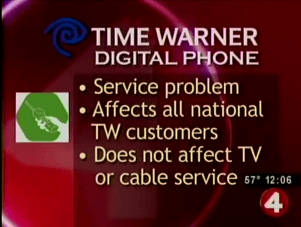
WIVB-TV in Buffalo covered the latest Digital Phone outage in its newscast

Last Friday, Time Warner Cable customers across the country found their Time Warner Cable Digital Phone service wasn’t working.

Although the company claimed the outage began at around 8:30am, some Buffalo residents noticed service was out when they got up at 5:30 that morning.  Service was not fully restored for all customers until lunchtime.

According to WGRZ-TV, Time Warner Cable refused to make a spokesperson available to appear on camera, but the company later did issue a written statement which made news across the state.

“Several thousand Time Warner Cable Digital Home Phone customers in the Northeast may have experienced an intermittent service outage early Friday morning. Engineers have now deployed a fix and customers who were experiencing this issue have had service fully restored,” wrote Time Warner Cable spokesman Jeff Unaitis.

Unaitis also claimed the outage did not impact the majority of their “Digital Phone” customers, although newsrooms heard otherwise from upset customers.  In fact, the outage impacted customers across the country.

This is the second time in three months the company suffered a major phone service outage in its Northeast division.

Last Friday’s disruption caused more than 60,000 Time Warner Cable phone customers in the Carolinas to be without service.  Southern Californian Time Warner Cable customers were also unable to make or receive calls.

When asked whether customers would be given credit for the outage, Unaitis hedged:

“This morning’s outage was intermittent, did not impact the majority of Digital Home Phone customers, and was resolved before noon. Therefore, we will work with customers on a case-by-case basis if they believe they were affected by the disruption in service.”

In other words, customers experiencing outages have to specifically request credit from the company or they won’t get it.  You can request credit online by visiting the Time Warner Cable website, selecting your area, and then using the link to Customer Support to access the Contact Us section of the website.  You can also call your local Time Warner Cable office.

[flv width=”480″ height=”380″]http://www.phillipdampier.com/video/WIVB Buffalo Time Warner phone service has glitch 5-7-10.flv[/flv]

WIVB-TV in Buffalo ran this brief report on their noon newscast to alert area residents about the widespread phone outage impacting Time Warner Cable.  (1 minute)

Consumers Discover “Required” Data Plans Dramatically Increasing Wireless Phone Bills

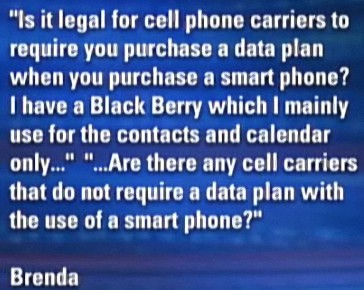
WTTG's "Ask Allison" segment answers a question about unwelcome mandatory data plans

Ever wonder why your cell phone bill seems to keep increasing when you renew your contract?

American wireless phone companies have discovered that subjecting an increasing percentage of customers to required data plans can create a revenue bonanza for companies, whether customers use many data services or not.

Many customers are just learning of new, mandatory data plans now required by all four of the country’s major carriers.  Verizon, AT&T, Sprint, and T-Mobile now compel customers upgrading to new “smartphones” — designed to be used for accessing online services — to also choose an extra add-on plan to cover their data usage.  In some cases, that can add an additional $30 a month to monthly cell phone bills.

Some Verizon customers have learned about this the hard way when they tried to buy a new phone at the end of their two year contracts.  For those longstanding Verizon customers grandfathered on service plans developed five or more years ago, being forced to switch to one of Verizon’s current plans carries quite the sticker shock, especially for those who only occasionally send text messages or use data features.

The insistence by Verizon that Smartphone owners commit to their $29.99 unlimited data usage add-on plan adds considerably to monthly bills.  Many Verizon customers don’t care about increasing sizes of calling allowances — Verizon customers already enjoy free night and weekend calling and free calls to other Verizon Wireless customers (of which there are many — Verizon is now the nation’s largest wireless provider).

Here is a comparison between two near-equivalent Verizon Wireless calling plans, ones from 2005 and the other currently in effect.  There is a dramatic difference in pricing, particularly for those who would find a 250 text message allowance, and data usage counting against your minutes allowance more than sufficient to meet their needs:

AMERICA’S CHOICE II FAMILYSHARE PLAN (2005)


Plan Details

Includes Two Lines
Monthly Price: $60.00
Monthly allowance minutes: 700 general
Per minute rate after allowance: $0.45  peak ,  $0.45  off-peak

Promotion details

UNLIMITED N&W MINUTES, UNLIMITED VERIZON-TO-VERIZON CUSTOMER CALLING, MOBILE WEB – WEB USAGE COUNTS AGAINST MINUTE ALLOWANCE

Additional features

250 MESSAGE TEXT PLAN, INCLUDING TEXT AND VIDEO ($5 PER MONTH)

NATIONWIDE FAMILY TALK & TEXT SHAREPLAN (2010)


Plan Details

Includes Two Lines
Monthly Price: $99.99
Monthly allowance minutes: 700 general
Per minute rate after allowance: $0.45 peak , $0.45 off-peak

Promotion details

UNLIMITED N&W MINUTES, UNLIMITED VERIZON-TO-VERIZON CUSTOMER CALLING, UNLIMITED TEXT, PICTURE, AND VIDEO MESSAGING

Additional Features

REQUIRED UNLIMITED DATA PLAN (SMARTPHONE) ($29.99 PER MONTH)

Before taxes, fees, and surcharges, Verizon Wireless customers holding onto their legacy FamilyShare plan from 2005 would pay $65.00 per month for two lines sharing 700 minutes of calling, with one line also getting 250 text, picture, or video messages, and a data plan that ate from your minutes allowance, instead of charging you per megabyte.

Today’s plan costs far more — $129.98 — more than double, for most of the same features.  The only difference is that Verizon Wireless doesn’t presently limit your data usage or messaging on their SharePlan.

No wonder consumers are getting sticker shock when upgrading their phones.  The paradigm shift to a “required data plan” forces customers away from older service plans onto new ones.  The result is a much higher monthly bill.

All this and the same companies that have figured out how to effectively double your cell phone bill in five years are also contemplating taking away the “unlimited” part of the required data plan.

[flv width=”640″ height=”500″]http://www.phillipdampier.com/video/WTTG Washington Is It Legal to Require A Phone Data Plan 5-7-10.flv[/flv]

WTTG-TV’s “Ask Allison” feature recently answered a question from a viewer who just discovered the “mandatory data plan” as an unwelcome part of her new phone purchase.  The Washington, D.C. viewer wants to know if that’s legal.  Allison educates viewers in the nation’s capital that isn’t the only trick or trap cell phone companies have in store for you.  Bottom line: maybe you don’t want that new phone after all.  (3 minutes)

Search This Site:

Contributions:

Recent Comments:

Your Account:

Stop the Cap!