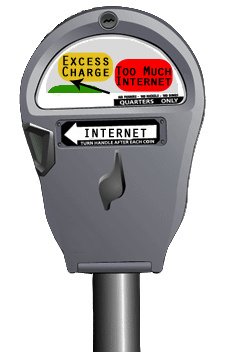
Home » Consumer News » Recent Articles:

Time Warner Cable Raises Rates in Albany, Offers a $99 Promotion Most Can’t Get

Phillip Dampier January 27, 2011 Competition, Consumer News, Verizon 2 Comments

Time Warner Cable customers in the Albany, N.Y. area are complaining about the cable company’s latest rate increase which will cost most bundled customers at least $7 a month more in 2011.

Time Warner blamed the rate increases on investment and upgrades to their facilities and increased programming costs.

The company’s heavily marketed $99 promotion is also coming under fire in the area, because many customers don’t qualify for it.

The Albany Times-Union reports many area residents were invited to call the company “to see how they could lower their bill.”  Time Warner has marketed a one year promotional offer providing the company’s triple-play bundle of phone, Internet and cable-TV service for around $33 for each service, or $99 a month.  But when customers called the company, they were told they don’t qualify for the promotion.

Michael Malachowski, a Delmar resident, learned the hard way that winning a promotional offer from the cable company wasn’t going to be as easy as he thought.

Malachowski currently has a bundle of services with the company and spends around $140 a month.  But he learned he can’t qualify for Time Warner’s $99 offer  — it is available only to new customers or those with a single service.

Other area customers shared similar stories with the newspaper.

One way around the roadblock is to threaten to cancel.

Albany customers are getting some additional powers to negotiate with the imminent arrival of Verizon FiOS TV, coming to Bethlehem, Scotia, and Colonie.  A similar bundle of services from Verizon is a lot cheaper than Time Warner’s $140 a month.  The fiber to the home network offers an online promotion for all three services for $84.99 a month for at least the first year.

Even if FiOS is not an option, Time Warner bends the rules when customers are on the verge of cutting their cord.

Canadian Media Awakens to Internet Overcharging Ripoffs; National Outrage Commences

Phillip Dampier: The Blizzard of BS from Canadian ISPs is getting salted and plowed by Canadian media and outraged citizens.

A major ongoing Internet Overcharging campaign by Canadian Internet Service Providers to extract more revenue from consumers has sailed under the radar for more than two years now in most of the Canadian press.  Although some newspapers have occasionally covered various telecommunications atrocities related to cell phone pricing, lagging broadband speeds, and an overall lack of competition in the country, specifics about efforts to curtail broadband usage (or monetize its claimed “overuse”) has been a topic mostly discussed on online forums.

No more.

As Stop the Cap! turns more attention to Canadian Internet Overcharging schemes, let this be an object lesson to our American readers about how the game is being played.  What starts in Canada could finish American flat rate broadband as well.

CRTC Ruling Lights the Flame

This week, the Canadian Radio-television and Telecommunications Commission (CRTC) finalized rules that will effectively end unlimited broadband service in the country.  Remarkably, the Commission’s ruling completely ignores the one group such “usage-based billing (UBB)” impacts the most: individual customers.

The game-changing rules, found in the obliquely-named “Telecom Decision CRTC 2011-44,” effectively establish false usage-based pricing on both the wholesale and retail levels.  No provider will actually sell broadband packages that charge only for what a consumer actually uses.  Instead, each provider will set arbitrary usage allowances — usage limits — on their broadband accounts.  Any remaining unused allowance is forfeit at the end of the month, but “overuse,” at the discretion of the provider, will be penalized with overlimit penalty fees running several dollars per gigabyte.

The CRTC acknowledges, and big providers admit, these Internet Overcharging schemes are all about getting consumers to change their online activities.

[Providers] submitted that UBB rates shape end-user behaviour and that different UBB rates would lead to different behaviours by carriers’ and competitors’ end-customers.

Perish the thought.  Without such pricing, Canadian broadband could ultimately offer an alternative to overpriced cable-TV and telephone packages sold by the very providers that advocate limited use plans.  Providers insist on predictable, uniform usage.  The Commission apparently agrees.

The Commission even acknowledges today’s unlimited use plans in Canada almost always recover the actual costs incurred to provide them, and then some:

The Commission also notes that the flat-rate component of the carriers’ retail Internet service rates recovers most, if not all, of the associated retail UBB costs. In the Commission’s view, this situation provides carriers with the flexibility to adjust or waive retail UBB rates on a promotional basis.

With this in mind, why the CRTC felt radical changes were warranted is only a mystery until you realize most of the commissioners were former employees of the various telecommunications companies themselves.

Birds of a feather….

The only audience the CRTC listens to.

All of the falderal about the merits of UBB aside, in the end the CRTC threw a small bone to independent service providers not affiliated with super-sized players like Bell, Rogers, Shaw, and Videotron — the Commission ordered they be given a “whopping” 15 percent price break off wholesale rates.

Major carriers were outraged even by this token amount, arguing that providers forced to charge correspondingly higher prices (higher than major carriers charge) could still eke out a place in the market by offering other services or better support.  They didn’t need, or deserve a discount.

But independent competitors warned without discounts approaching 50 percent, many will be gone within five years.  Many providers argued the major companies, some who received taxpayer subsidies to construct national telecommunications networks, would be able to set wholesale prices artificially high to drive them out of business.

Canada’s Media Reacts

The effective end of flat rate service across Canada finally sparked significant national media coverage of the imminent death of Canada’s broadband revolution, soon to be relegated to a nickle-and-dime metered pricing scheme that will give providers the monetary power to control usage, limit innovation, and have their hands into picking marketplace winners and losers.  Don’t like Netflix?  Slash usage allowances.  Want to protect your cable-TV revenue?  Exempt your own online content from the meter as long as you keep your subscription.  Want to drive down Canada’s broadband standing in the world?  Turn the marketplace over to a handful of companies dreaming of revenue opportunities afforded by monetizing broadband usage.

The Globe and Mail A metered Internet is a regulatory failure: The CRTC has decided to allow Bell and other big telecom companies to change the way Canadians are billed for Internet access. Metering, or usage-based billing (UBB), will mean that service providers can charge per byte in addition to their basic access charges. The move is sure to stifle digital creativity in Canada while the rest of the world looks on and snickers.  […] So there you have it. Just as the world is ready to feast on what Canadians might cook up in the way of multimedia 3.0, Canada decides to meter the Internet, tilting the table sharply towards old-school TV networks and big corporations that can absorb the higher cost of doing business.

Canadian newspapers have covered the story in the greatest detail, but now — finally — Canada’s television news has discovered the story, which for many media critics mean the story is actually “real.”

“If you don’t see it on television, it didn’t really happen,” writes Jim from Halifax, Nova Scotia.  “A lot of Canadians don’t read newspapers, and the magazines certainly are not covering this story, so it has been an online-only event  until CBC, CTV, and Global put it on their newscasts.”

[flv width=”640″ height=”380″]http://www.phillipdampier.com/video/CBC News Extra Billing for Internet 1-18-11.flv[/flv]

CBC Television reports on the Internet Overcharging controversy.  (2 minutes)

Some critics say much of Canada’s commercial media is already in the hands of a tightly controlled, vertically integrated empire.  Most of the cable and phone companies have ownership in many major commercial broadcasters, cable networks, and even newspapers and magazines.

[flv width=”640″ height=”380″]http://www.phillipdampier.com/video/Vertical Integration.mp4[/flv]

30 Rock’s Liz Lemon and Jack Donaghy explore the concept of “vertical integration.”  Then see how it relates to Canada’s media.  (3 minutes)

But even a controlled media environment cannot stop outrage over UBB going viral, as ordinary Canadians realize they are about to pay much higher prices for a service they depend on more and more.

Outrage Commences

Charlie Angus (NDP) -- "This pricing is a ripoff."

While these pricing schemes have been around awhile, now that they are getting well-publicized exposure, consumers have realized the implications of counting how many YouTube videos they watch.

Tens of thousands have signed Openmedia.ca’s online petition, others are complaining to the media and writing their members of Parliament, demanding action.

That will only get louder when consumers start receiving bills for double, triple, or even higher for the exact same quality of service they used to pay less to receive.

“There will be a huge wake-up call for many customers,” said Jared Miller, president of Youmano, a provider based in the Town of Mount Royal.

Charlie Angus, the NDP member of Parliament who speaks about digital issues, said he he thinks the entire pricing scheme is a ripoff that will lead to huge increases in customers’ bills.

“What we need to have is clear and transparent rules so it’s being used in a measured capacity, and it’s not just instituting the principle that every time you turn on the Internet, they can ding you for fees like they do with cell-phones,” Angus said. “We’ve seen this before; when we were told that deregulating cable rates would give customers a big benefit. We were paying 60-to 100-per-cent more in no time.”

“Canada is already falling behind other countries in terms of choice, accessibility and pricing for the Internet,” Angus added.

[flv width=”480″ height=”380″]http://www.phillipdampier.com/video/CTV British Columbia – Canadians rank among most enthusiastic web users 12-28-10.flv[/flv]

CTV British Columbia explores Canada’s love affair with technology and how its integration has dramatically changed the social lives of many families.  That’s no surprise, considering Canadians are North America’s most enthusiastic net users.  (2 minutes)

What Can Jam a Cable Company Parking Lot? Free Football Lawn Signs

Phillip Dampier January 26, 2011 Consumer News, Video 1 Comment

Green Bay area residents stormed Time Warner Cable’s offices late last week, but not to sign up for a new cable package or upgrade their Internet service.

Instead, they were there to grab their free green and gold “G Force” yard sign to celebrate the Green Bay Packers football team.

Initially Time Warner Cable planned to distribute 15,000 yard signs, but when they realized the demand exceeded supply, they ordered another 10,000, the bulk of which were distributed by Saturday afternoon.

The lawn sign promotion, which also prominently displayed Time Warner Cable’s logo, created minor traffic jams in communities across Wisconsin at times — the signs were handed out all over the state.

[flv width=”480″ height=”380″]http://www.phillipdampier.com/video/WBAY Green Bay Time Warner Gives Away Signs 1-26-11.flv[/flv]

WBAY-TV in Green Bay covered the excitement.  (1 minute)

AT&T Allows Long-Standing Smartphone Customers to Switch Back to Unlimited Data Plans

Phillip Dampier January 26, 2011 AT&T, Competition, Consumer News, Data Caps, Wireless Broadband 2 Comments

The Associated Press reports, and Stop the Cap! can confirm AT&T is allowing some of their long-standing customers to switch back to unlimited data plans, even if they gave them up after the company introduced cheaper, limited data plan options.

After our regular reader “PreventCAPS” sent word AT&T was relenting on some requests for unlimited data plans, we spent some time late this afternoon with Jim Scott, an AT&T customer from New Rochelle, N.Y. as he navigated his way through AT&T customer service trying to get back to an unlimited data plan.

“When AT&T offered customers new, cheaper data plans, I never knew those replaced the unlimited option and I thought I could save some money downgrading to a cheaper data option,” Scott told us.

But Scott discovered the plan allowances he got didn’t save him money at all, because he exceeded them.

“I am a contractor and I spend all day on my phone moving large image files and even video of work being done on the properties I manage,” Scott says.  “Two gigabytes didn’t cut it.”

Scott tried to switch back to his unlimited plan this summer, but was told he could not, as it was no longer offered.

Enter Verizon Wireless, which is keeping its unlimited service plan at least temporarily as it introduces the Verizon iPhone.  Verizon’s imminent iPhone has become leverage for customers who want to turn the tables on AT&T.

“Thanks to AT&T’s greed, I had already made the decision to dump them for Verizon when my contract ends in February,” Scott says. “AT&T works fine in this part of New York, and the only reason I am leaving is because they don’t have a wireless data plan that met my needs.”

We worked with Scott and suggested he threaten to cancel his AT&T service and walk his future business to Verizon Wireless.  We asked him to make sure to tell AT&T the reason he was planning to cancel his service was because of the end of unlimited data option.

On a three-way call with AT&T customer service, AT&T promptly offered to restore Scott’s access to its discontinued unlimited data plan.

“All I had to say was ‘Verizon’ and ‘iPhone’ and the customer service representative immediately starting clacking away on her keyboard, and I had my unlimited data plan restored in less than five minutes,” Scott said.

The AP reports the key to success is having been a previous subscriber to AT&T’s unlimited data option.  New customers who signed up after June 2010 never had that option, and AT&T has refused to offer unlimited data to these customers.

Because newer customers are under relatively new contracts, actually following through on a threat to drop AT&T is an expensive proposition with early termination fees still well into the hundreds of dollars.  For those closer to a penalty-free exit, AT&T recognizes many of these customers already have one foot out the door.

Jose Argumedo, of Brentwood, N.Y., told the AP he and a friend were switched to an unlimited plan recently after they called AT&T’s customer service. Both have iPhone 4s, and previously had earlier iPhone models.

AT&T spokesman Mark Siegel wouldn’t confirm the option to return to an unlimited plan.

“We handle customers and their situations individually, and we’re not going to discuss specifics,” he said.

Scott says he is comfortable with his iPhone, but getting back an unlimited data plan was more important than the handset.

“If I can use the iPhone as leverage against these guys, why not?” Scott says.  “They’ve had me under their thumb for more than six months now with overlimit fees — now the table is turned.”

Stop the Cap! advises customers who want to follow in Scott’s footsteps get organized before calling:

  1. Be sure to note the number of years you have been an AT&T customer;
  2. Explain you used to have unlimited data and now want that plan back;
  3. Tell them you are prepared to drop AT&T, even at the risk of a cancellation fee, if they don’t restore your access to the unlimited data plan.

If a representative is unable to make the switch, or doesn’t have information about how to switch you back, ask for a supervisor or hang up and call back.

Canadian Consumer Backlash Against Internet Overcharging Gone Wild

The Vancouver Sun‘s Gillian Shaw reports consumers in British Columbia, Alberta, and beyond are about to pay more for their Internet service, and consumers across Canada are not pleased.

Shaw, who isn’t affiliated with Shaw-the-cable-company, notes changes by a federal regulator could mean the end of unlimited broadband service across the country.

Steve Anderson, founder and national coordinator of the Vancouver-based OpenMedia.ca., which also fights for Net Neutrality protections in the country, thinks “usage-based billing,” a core component of Internet Overcharging, has struck a nerve.

“Bell, Rogers, and Shaw have been given the green light to determine how we pay for Internet,” Anderson tells Shaw.  “If this decision goes unchecked, broadband is about to cost much more for Canadians.”

Anderson tells the newspaper more than 40,000 consumers have signed the group’s petition opposing the pricing schemes, and many Canadians are taking the matter to their member of Parliament.

“It is a really interesting grassroots community that has sprung up around this. Basically they said enough is enough. They are drawing a line in the sand and saying ‘we are not going to take this anymore, this is where it stops.’”

Shaw also talked to Stop the Cap! about the pricing schemes:

“We have consumers who pay good money to receive broadband service, now they have to think twice about everything they do online in case they expose themselves to over-limit fees,” said Phillip Dampier.

“How many people measure how much they are using online?” said Dampier. “If you have kids that are teenagers and you are sharing an Internet connection, can you imagine the battles when the bill arrives – ‘Who ran up the bill?’

“If you thought cellphone bill shock was bad, imagine you have two teenagers living at home who are on the Internet all the time.”

Dampier said usage explanations by companies, such as Shaw’s graphic that shows 15 gigabytes of data equals 105,000 emails are useless for the average consumer.

“Shaw says these are generous; that’s all nice, but nobody needs to send out 105,000 emails. But what they do need to do now that Netflix has come to Canada is video streaming and you can blow through these usage limits a lot faster using online video.

“If you have Shaw’s lite service you can get through four movies tops, that’s it — no more emails for you, no web pages, or you can, but watch out, you’ll get a big bill at the end of the month.”

Search This Site:

Contributions:

Recent Comments:

Your Account:

Stop the Cap!