Home » Consumer News » Recent Articles:

AT&T Sees Big Money Hooking Up More Devices to Wireless

Phillip Dampier October 11, 2011 AT&T, Consumer News, Wireless Broadband 1 Comment

AT&T believes it can make a killing getting consumers to hook up as many wireless devices as possible, preferably to AT&T’s network.

That’s the view of Glenn Lurie, who serves as AT&T’s hunter for new revenue opportunities.  Lurie believes that every device that can developed to work on a wireless network can obtain that connectivity through his company, for a price.

Lurie and other wireless industry executives have gathered to discuss where the wireless industry is headed, and the answer seems to be data, data, and even more data.

Everyday consumer products, from washers/dryers to pill bottles to pet collars are all possible candidates to get the wireless treatment.  Want to know when your dryer is done?  Why not have it send a text message.  Is it time to take your medication?  Let the bill bottle page you.  Your dog roaming the neighborhood?  Have a built-in GPS unit alert you to exactly where Fido is headed.

Lurie

“Everything that has a current running through it will be connected,” Lurie tells CNET. “They need to be smarter.”

Not every idea is all that futuristic.  Some high end refrigerators support Internet connections and even include a built in small screen television.  So-called smart-home products that work with home security systems, smart electrical meters and even smartphone apps already exist.  Dishwashers can be programmed to run at off-peak energy rates.  Lights can be turned on or off remotely, and so on.

But AT&T sees even more possibilities.  In-car wireless could deliver Wi-Fi and streamed media directly to car radios and televisions over AT&T’s wireless network.  Even parcel delivery could be smarter with tracked shipping and anticipated delivery times.

Lurie believes that AT&T can earn the most keeping things simple, which means getting devices connected easily without a lot of hassle or multiple bills.

AT&T always believed business applications would be the core driver in wireless data growth, but that assumption has now proven incorrect.  Consumers are driving wireless data growth with apps, multimedia, and a need to feel constantly connected.
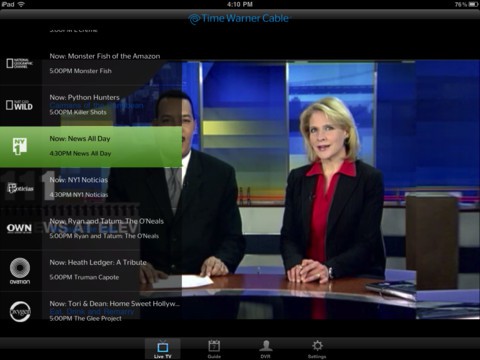

Oceanic/Time Warner Cable Subscribers Finally Get TWCable TV for iPad

Phillip Dampier October 11, 2011 Consumer News, Online Video Comments Off on Oceanic/Time Warner Cable Subscribers Finally Get TWCable TV for iPad

Hawaiian customers of Oceanic Time Warner Cable can now obtain the cable company’s free viewing app for iPad — TWCable TV.

Although the cable operator has offered the free online viewing app for months, it has not worked in Hawaii until this week.

“We are tremendously excited about this app, which is the first of many that will allow our customers to harness the power of their tablet-type devices,” said Bob Barlow, president of Oceanic Time Warner Cable.

Time Warner customers can use the app only within range of their home wireless router connected to Time Warner’s Road Runner Internet service.  Restrictions imposed by the cable company and programmers mean customers cannot access the service from other broadband providers or outside of their own home.

Time Warner also requires TWCable TV app users to maintain a cable television subscription and register for access on the company’s website.

HBO Go Arriving on Roku Boxes This Month

Phillip Dampier October 11, 2011 Consumer News, Online Video 1 Comment

Time Warner Cable customers still waiting for access to HBO Go, the premium movie channel’s online streaming service, won’t have to wait for the cable company any longer if they happen to own a Roku set top box.  Roku owners who maintain subscriptions to the premium movie channel will be able to access HBO Go via Roku for no additional charge by the end of October.

Roku’s announcement follows Microsoft, who announced Oct. 5 HBO Go would be available to Xbox Live ($60/yr) game service customers.

HBO has been suffering declines in subscriber numbers from customers dropping premium movie channel subscriptions to save money.  HBO Go offers on-demand viewing of many HBO movie titles, and comes at no additional charge to subscribers.  But before HBO Go can be made available, agreements between your video provider and HBO must be signed to handle the authentication process, which verifies a valid subscription to HBO before allowing the service to work.

Time Warner Cable has been dragging its feet on signing an agreement, and that leaves a lot of potential customers without the service.  Time Warner Cable is the nation’s second largest cable operator, behind Comcast.

Roku believes its agreement allows HBO Go to reach more viewers, which in turn may discourage them from dropping the channel.  It also helps drive sales of Roku boxes, which are becoming increasingly affordable.  Roku announced this week it was cutting the price of its least expensive box to $50, a $10 savings.

Roku owners can stream their own video library with third party applications like PlayOn, or choose from a menu of more than 300 channels.  But most Roku owners buy the device to stream Netflix, Amazon, and Hulu content to their television sets over the home Internet connection.

Cox Stops Sending Rhode Island Customers Their Bills But Still Expects to Be Paid On Time

Phillip Dampier October 10, 2011 Consumer News, Cox, Video Comments Off on Cox Stops Sending Rhode Island Customers Their Bills But Still Expects to Be Paid On Time

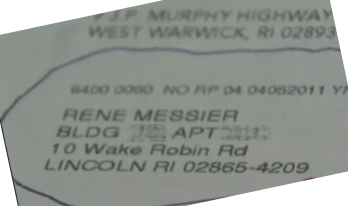
Before the billing problems, apartment and building numbers appeared on customer bills.

Cox Communications’ third-party billing vendor decided a billing system upgrade was required to comply with post office regulations governing the bulk mail discounts the company receives when sending millions of subscriber bills.  But that upgrade caused some renters serious headaches this summer when apartment and building numbers were omitted from the envelopes, resulting in bills being returned to Cox undelivered.

Despite the billing snafus which began in June, customers were still expected to pay their bills on time to avoid late fees.  In Lincoln, R.I., one apartment complex is up in arms as residents in their 80s have been forced to drive to Cox offices just to find out how much they owe and pay their bills in person.

“At first they blamed the post office when I called,” said Cox subscriber Anita Messier.  “I’m 81 years old and I can’t see myself driving [to the cable company] this winter to pay my Cox bill.”

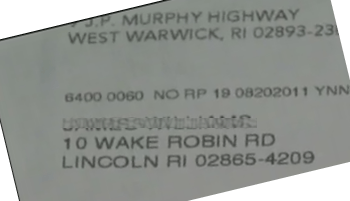
The problem: Cox deleted the apartment and building numbers from the billing addresses of many of their customers.  Now, only a generic street address is listed, and that is a problem for the affected Lincoln residents, many of whom live in apartment complexes with well over 100 individual families.  Mail carriers have not been equipped to guess what bill belongs in which mailbox, so Cox’s monthly statements stopped arriving.

Now they don't, and the post office won't deliver them.

The Messier family’s bill ceased arriving in June, and despite repeated calls and promises the issue would be corrected, they still haven’t received a Cox bill, and it is now October.

In frustration, Messier threw her hands up and called Providence TV station WPRI for help.

“I don’t usually ask for help,” Messier confesses.  “I usually come out of this by myself, but right now I’m frustrated with Cox.”

When the station called Cox, it appears to have lit a fire under the cable company to help finally resolve the issue.  Cox officials profusely apologized for the billing blunder, claim they will refund any late charges that result, and now Lincoln residents are wondering whether they will finally see their Cox bills return to their mailboxes before Halloween.

[flv width=”360″ height=”290″]http://www.phillipdampier.com/video/WPRI Providence Cox Stops Billing Lincoln Cable Customers 10-5-11.mp4[/flv]

WPRI in Providence intervenes on behalf of elderly Lincoln residents who have been forced to drive to local Cox offices to pay the cable bills they haven’t seen since June.  (3 minutes)


Comcast’s New Dumbed-Down Set Top Boxes Offer Improved User Experience

Phillip Dampier October 10, 2011 Comcast/Xfinity, Consumer News, Editorial & Site News, Video Comments Off on Comcast’s New Dumbed-Down Set Top Boxes Offer Improved User Experience

[flv width=”480″ height=”290″]http://www.phillipdampier.com/video/Daily Local New cable TV programming guide on display 10-5-11.mp4[/flv]

Comcast has been showing off changes to the company’s set top boxes, which have been effectively “dumbed-down” by removing internal processing power for box-based program guides and other content functions and moving it to the cloud.  Comcast’s newest generation of boxes offer a slimmed-down “browser” experience which relies on stored content at the cable company office, delivered over the cable to the set top box. 

In Denver, Xfinity representatives demonstrated the new products to groups of media and local radio personalities.  Among the most visible improvements is the program guide, which is starting to come closer to Netflix and farther away from the TV Guide Channel of years-past.  Among the features includes box art from movie titles, online reviews, social networking tie-ins, and instant recommendations for other similar programming to watch, either concurrently or in the future.  Subscribers can program shows for recording, alert friends to upcoming shows, and even submit their own review for other subscribers to see.

It’s a significant improvement over older technology, like that still used by Time Warner Cable and other cable operators, which requires extensive delays before incremental improvements are made, and operates on expensive set top terminals.  Video courtesy of: The Daily Local.  (2 minutes)

Search This Site:

Contributions:

Recent Comments:

Your Account:

Stop the Cap!