Home » Consumer News » Recent Articles:

FairPoint: The Little Company That Couldn’t, Wants To Be Deregulated

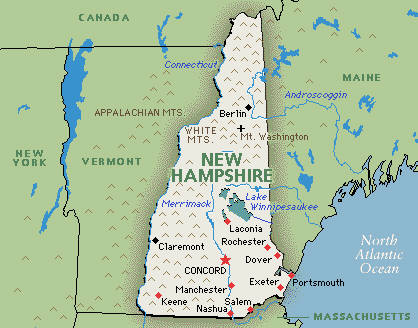
FairPoint Communications, which took control of Verizon landlines in Maine, New Hampshire, and Vermont in 2009 and then promptly went bankrupt is now appealing to New Hampshire’s regulators and legislature for deregulation.

Teresa Rosenberger, the company’s New Hampshire president, told the Nashua Telegraph that before FairPoint Communications took over Verizon’s northern New England landlines in 2009, that means of communication was the “only game in town.” Now that Verizon’s “monopoly” no longer exists, FairPoint wants the “shackles [removed from] our ankles.”

Setting aside the fact Verizon and FairPoint both faced identical competitors — Comcast and AT&T in parts of the state, the primary difference between the incumbent landline phone company and its cable competition is that the latter enjoys the right to choose its customers.  Landline providers must deliver universal access to basic service, something both FairPoint and Verizon managed for more than a century.

Rosenberger claims that with the rapid decline of landlines, FairPoint should be free from regulatory constraints it argues limits its ability to compete on pricing and service.  Rosenberger uses FairPoint’s biggest failure — its rapid loss of customers — as the core argument for allowing deregulation, which would deliver few checks and balances from state regulators.

FairPoint’s market share in New Hampshire is now down to 49% and dropping.  Its competition — Comcast and wireless mobile providers, now account for the majority of phone lines in the state.  FairPoint’s line losses spiked when the company took over providing service in northern New England from Verizon Communications.  Many FairPoint customers would describe that level of service as poor, with billing and service complaints reaching epic proportions before the company ultimately declared bankruptcy.
Rosenberger points out that the traditional way utility services deal with changing business models is to sell off non-performing or excess assets.  Electric utilities sell excess power, but phone companies like FairPoint have few things other providers want.

In particular, FairPoint is upset it is saddled with a statewide network of telephone poles that “nobody wants.”

“We lose a ton of money on these poles” when work has to be done on them, Rosenberger told the newspaper. “There is the flag rate, the excavation fee, paying for a cop out there – and that’s before taxation and reporting requirements.”

FairPoint notes their competitors gets to use those poles, and are not necessarily contributing their fair share towards their upkeep.

FairPoint isn’t asking to abandon its universal service obligation, something AT&T has lobbied for throughout its territories.  But it does want to do away with pricing regulations and reporting requirements.  If FairPoint offers a business customer a special discount rate, it must file that rate publicly with state regulators, which is public information.  FairPoint says its competitors may be using that information to undercut them in contract negotiations.  But the public price regulations are in place to prevent a phone company from offering dirt cheap service for a select few, effectively subsidized by other ratepayers.

FairPoint also wants quality of service reporting regulations eased, and that comes as a concern to some New Englanders who lived through FairPoint’s messy transition from Verizon service.  Even today, there are ongoing disputes over whether FairPoint is meeting state obligations on everything from how quickly they answer customer calls to whether or not service problems are resolved on a timely basis.

Time Warner Cable Forfeits NFL Network, Again

Phillip Dampier October 17, 2011 Consumer News, Online Video 3 Comments

Time Warner Cable has ended the latest round of talks with the National Football League to bring the NFL Network and NFL RedZone to Time Warner cable customers.

Sports Business Daily reports the talks ended with a contentious meeting held last Friday at the cable company’s New York office.  Sources say the talks didn’t end with a dispute over the cost of the network, noted to be among the most expensive sports networks available.  That likely leaves streaming and other ancillary rights issues to be the latest reasons for the talks to end.  Time Warner has gotten aggressive in negotiations for the right to stream cable programming, and also time shift it for subscribers with its “start over” feature.

The NFL has been negotiating with the cable operator more more than seven years without success.


Cell Phone Companies Hoarding Cash/Credit for Spending Blitz on Canadian Spectrum

Phillip Dampier October 13, 2011 Astroturf, Broadband Speed, Canada, Competition, Consumer News, Mobilicity, Public Policy & Gov't, Rogers, Vidéotron, Wind Mobile (Canada), Wireless Broadband Comments Off on Cell Phone Companies Hoarding Cash/Credit for Spending Blitz on Canadian Spectrum

Upcoming wireless spectrum auctions are critically important for some of Canada’s newest players in the cell phone marketplace.  Most are working hard to make sure they have plenty to spend to secure new frequencies for advanced wireless services that will help them remain competitive with larger players.

Globalive Holdings, the parent company of Wind Mobile, has convinced backers to provide hundreds of millions of dollars in financing, so long as all of the money is spent on acquiring wireless spectrum.

Wind’s nearly 400,000 customers will appreciate the additional room for growth, and new customers may keep Wind in mind for advanced 4G networks most Canadian providers intend to build and expand into the new spectrum they acquire at an auction next year.

Much of the funding, estimated to approach nearly a half-billion dollars, is coming from Wind’s parent entities, Egypt-based Orascom Telecom and the European conglomerate VimpelCom that acquired Orascom earlier this year.  Because the Canadian government is expected to set-aside some of the valued 700MHz spectrum exclusively for bidding among new entrants in the market, Wind could walk away a big winner, particularly if other similar-sized competitors Mobilicity and Vidéotron Ltee./Quebecor have trouble raising enough money to remain competitive in the bidding.

As far as Canada’s largest cell companies are concerned, set-asides are unnecessary and they prefer a winner-take-all auction.  Rogers, in particular, has been lobbying hard to convince Canadian officials it needs access to the 700MHz spectrum up for auction to roll out service in rural communities and upgrade networks in larger cities.

Those who feel Canada’s cell phone marketplace is already too concentrated have little sympathy for Rogers’ point of view, and expect an auction free-for-all will mean the largest incumbent players will walk away with everything they can bid on.

Among smaller players, assuming the set-asides are in place, analysts expect Wind will probably secure the most spectrum, but Vidéotron is expected to stay competitive and walk away with at least some frequencies for use in its home province of Quebec.  Big losses among the smaller players could fuel calls for additional mergers and acquisitions among those carriers deemed to have been left behind.

The Canadian government is expected to be the biggest winner of all, netting a potential $3-4 billion from the spectrum sale.

NC Man and Deputy Sheriff Move to Seize AT&T Store Over Unpaid Internet Overcharging Judgment

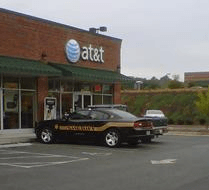
A Winston-Salem man with a judgment from a North Carolina court in hand shocked AT&T store employees on Summit Square Boulevard Tuesday when he walked in with a Forsyth County Sheriff’s deputy to serve AT&T a court order that allowed the Sheriff’s Office to seize the store’s assets and sell them to satisfy his $2,000 judgment.

George Kontos says AT&T has been stonewalling his family for more than three months after winning a lawsuit against AT&T for Internet Overcharging.  The company had been stalling Kontos with paperwork requests, but a visit by a sheriff’s deputy prepared to begin selling off the store’s property to pay Kontos managed to finally get AT&T to act.

“AT&T is making arrangements to pay the sum owed to the Kontos family and will deliver the payment to the appropriate entity,” an AT&T spokesperson said in a statement.

Kontos had little trouble arguing his case in small claims court.

(Courtesy: WFMY News)

“When I went into AT&T to look at the plan, I wanted to make sure I had a comparable data plan with what I had been using and the rep pulled up the account and obviously even as an AT&T employee it must have been outstanding for him because his first reaction was, ‘wow you’re paying too much,'” Kontos told WFMY News.

With an AT&T employee on his side, Kontos thought AT&T would do the right thing and credit his account for 24 months of overcharging.  AT&T agreed to partial credits for the last five months.  Kontos said he would see the company in court.

In July, a county small claims court judge quickly found for Kontos and handed him a judgment and Kontos has been waiting by his mailbox for AT&T’s check ever since.

Kontos calls the matter a real David vs. Goliath story, and openly wonders how many other customers in the Triad are being overcharged by AT&T.

“Demand that they review your account for the last two years minimum,” he told the station. “Find out what you’ve been paying. Find out what other rate plans exist. Find out what you could have been paying and if you’ve got money that’s owed to you, get it back.”

If AT&T won’t provide an owed refund willingly, and you live in North Carolina, you can use this form — the same one used by the Kontos family — to sue AT&T yourself.

[flv width=”640″ height=”447″]http://www.phillipdampier.com/video/WFMY Greensboro Customer George Kontos Took ATT Mobility To Court And Won 10-7-11.flv[/flv]

WFMY in Greensboro shares the story of the Kontos family, who discovered they were overcharged for a data plan for more than two years.  When the company refused to issue an appropriate credit, Kontos took the company to court and won.  (2 minutes)

Frontier Sued for Junk Bill-Padding Fees They Claim Are Government-Required

Phillip Dampier October 13, 2011 Consumer News, Data Caps, Frontier, Public Policy & Gov't 1 Comment

Frontier Communications customers may be owed refunds for their Internet service because, a new lawsuit alleges, the company deceptively billed customers fees the company is not entitled to receive.

Four Frontier customers — three in Minnesota and one in New York — are suing the company for add-on charges the company claims are required by the government, but in fact are pocketed by the phone company.

The lawsuit claims Frontier is guilty of fraud, breach of contract, deceptive practices, false advertising and violations of the Federal Communications Act and the Internet Tax Freedom Act.

The plaintiffs claim broadband customers are being billed for certain state and federal taxes, 911 surcharges, and Universal Service Fund fees, even though they don’t apply to broadband service.

“It is merely a junk fee that Frontier imposes on customers,” the lawsuit says.  “The fee bears no relationship to any governmentally-imposed fee or regulation, and is nothing other than an effort by Frontier to increase prices above the advertised price.”

Adding fuel to the fire, Frontier recently imposed a new “HSI Surcharge” on broadband customers, and as Stop the Cap! reported earlier, some company representatives have claimed that fee is government mandated as well.

In fact, federal law bans most taxes on Internet service under the Internet Tax Freedom Act.  Since broadband customers cannot dial 911 from a DSL modem, 911 surcharges should not apply either.  USF fees only apply to voice telephone service.  Frontier, the suit alleges, levies all of these fees on the broadband portion of customer bills.

Frontier has more than 7 million customers nationwide, although the company does not disclose how many of them purchase broadband service.  If the lawsuit achieves class action status, Frontier could be required to return the ill-gotten gains to customers if a judge agrees they were wrongly collected.  That could cost the company millions in retroactive refunds.

Search This Site:

Contributions:

Recent Comments:

Your Account:

Stop the Cap!