Home » Consumer News » Recent Articles:

Verizon’s Digital Age: Company Kills Its WeatherLine in D.C.

Phillip Dampier October 27, 2011 Consumer News, Verizon, Video Comments Off on Verizon’s Digital Age: Company Kills Its WeatherLine in D.C.

The phone company gives its WeatherLine the boot.

Verizon and other phone companies are finding it increasingly profitable to get out of the information business, and the days of calling numbers for the current time of day or hiring someone to deliver local weather, sports scores or lotto numbers are increasingly behind us.

For decades local phone companies have run recorded announcement services, first as a free public service and then as a profit center.  The venerable “Time of Day” service, which in some areas was broadened to include the current temperature and an abbreviated weather forecast, was initially envisioned as a labor saver.  That’s because your grandparents used to call and bug the operator for the current time to synchronize their clocks, which tied up switchboards and potentially delayed emergency calls long before there was a “911” to call instead.

In the 1970s, phone companies began to realize they were giving away a lot of information for free, and with some numbers getting tens of thousands of calls a day, that meant leaving money on the table.  And so began “recorded information message charges,” typically around 8.3-25 cents cents a call (phone companies always round up no matter what) charged when customers dialed numbers with prefixes of 974 or 976.  Later still, the 900 area code would open the door to even more expensive pay-per-minute services.

Some phone companies charged for the local time and weather, others gave away the local forecast for free.

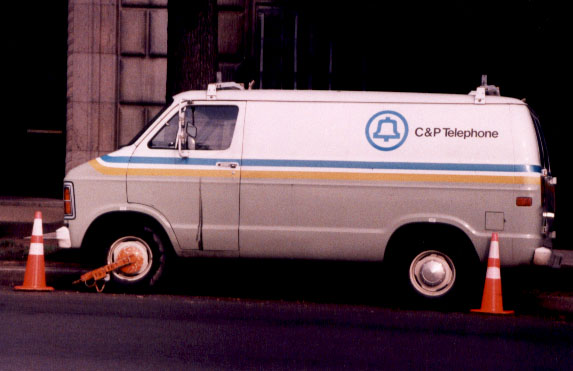
For Washington, D.C. residents, Verizon’s local weather line died a quiet death last week.  Callers to (202) 936-1212 now hear a message telling them the number has been disconnected.  And so ends an era.

It’s not to be completely unexpected.  Smartphone owners can get the time or weather just by looking at their phones.  The Weather Channel and NOAA Weather Radio provides much the same service 24-hours a day.  Some cities have competing weather lines each delivering the weather to interested callers.

But Verizon’s 936 number has become so ingrained in local residents’ heads, it’s now a valuable commodity one company wants to purchase.

Telecompute, which runs recorded information lines across the country, wants to pick up where Verizon left off.  They are attempting to negotiate with the phone company to acquire that magic 936 number for their own weather line, already running at (202) 589-1212.  But that’s no 936 number.

If you believe the Internet age has made the concept of recorded information lines obsolete, and Verizon certainly thinks that’s true, you might be surprised to learn Telecompute’s lesser-known, existing weather line receives over 2,000 calls a day.  That’s welcome news for Howard Phoebus, the veteran forecaster who will keep his job providing customers in the District, Virginia, and Maryland their daily forecast.

[flv]http://www.phillipdampier.com/video/976-8881 Commercial.mp4[/flv]

A commercial for a California 976 dial-a-date number.  Warning: 80’s feathered hair and fashions may cause allergic reactions in some viewers.  (1 minute)
Southern California Power/Phone Companies Blamed for Wildfire, $99 Million Fine Proposed

Phillip Dampier October 26, 2011 AT&T, Consumer News, Public Policy & Gov't, Sprint, Verizon, Wireless Broadband Comments Off on Southern California Power/Phone Companies Blamed for Wildfire, $99 Million Fine Proposed

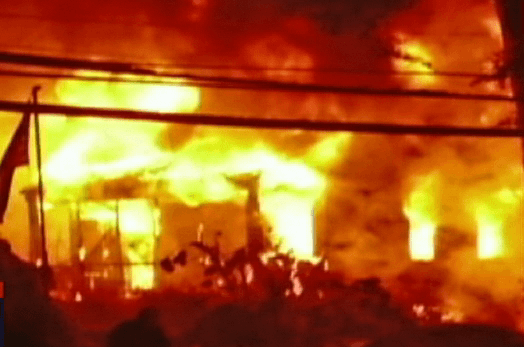
Wildfires can result when overloaded utility poles topple in California's Santa Ana winds.

The California Public Utilities Commission’s Consumer Protection and Safety Division is recommending $99 million in fines against the local power utility and several phone companies for overloading power poles with cables which toppled and started a major wildfire in Malibu Canyon in 2007.

Even worse, the PUC alleges, the power company lied to investigators and destroyed evidence to cover up the cause of the blaze, which burned more than a dozen structures to the ground and destroyed dozens of vehicles.

Named in addition to Southern California Edison are phone companies: Verizon Wireless, AT&T, Sprint, and NextC Networks of California. All are being blamed for loading up phone poles with excessive wiring for both traditional utility service and backhaul wired connections to serve area cell towers. The bulk of the proposed fine is likely to be lodged against Edison because of the evidence tampering allegations, but phone companies are also deemed liable.

At issue are the annual bouts of Santa Ana winds which can create gusts up to 80mph or higher. Most utility poles were designed to support a load of a few power cables, landline phone service, and cable television lines. But in many parts of canyon country, wireless phone companies rely heavily on utility poles to connect to their network of cell towers which are strategically located on ridges and mountains to serve populated valley regions below. While some cell phone companies now rely on fiber connections, many also still utilize a series of copper wire circuits to provide sufficient wireless capacity. In some cases, companies may hang several cables to meet bandwidth needs. The more cables, the more susceptible poles become to wind loads, which can literally snap poles in half or force them out of the ground in high wind gusts.

When electric lines topple, they can start fires that quickly grow out of control in remote areas.

Downed power lines are blamed for a number of wildfires in California, including the 2008 Sesnon fire in the San Fernando Valley. Fire investigators and local officials have pressured utility companies to mitigate the hazards from downed power lines by keeping excess cables and equipment off the poles.

Hans Laetz, a Malibu resident who has lived with what he calls “spindly-looking utility poles” for more than a decade was not surprised when life-threatening wildfires were blamed on downed lines.

“My family and my neighbors in Malibu are being placed at risk,” Laetz told the Los Angeles Times. “I drove under those poles on Malibu Canyon Road for 10 years, and I thought one of these days, one of those poles was going to fall. You could tell this was a disaster waiting to happen…. And then it happened.”

Edison denied the allegations it mislead investigators and called the proposed fine “excessive.”

Time Warner Cable Messes Up Bills for 15,000 Ohio Customers: One Woman Fights Back

Phillip Dampier October 26, 2011 Consumer News, Video 1 Comment

In August, Time Warner Cable’s billing system went haywire for some 15,000 Ohio customers, some of whom found their promotional rates canceled, resulting in a doubling of their monthly bills.

One such Time Warner customer is Linda Sacash, who lives in Russell Township.  She had a three-year deal, in writing, with Time Warner that provided her family with a triple play package of Internet, telephone, and cable service for $89.95 a month.  But when her August bill arrived, Time Warner insisted she owed twice that amount — $179.

Sacash, among others, started calling Time Warner to complain about the inaccurate bills and was told the cable company unilaterally decided to expire promotional packages a year early.  Sacash wasn’t happy with that explanation, and noted a clause in her written agreement that limited rate increases to no more than 10 percent a year.  That didn’t matter much to Time Warner, who looked forward to receiving her new $179 payment by the due date on her bill.

Time Warner’s attitude changed, however, when WEWS-TV consumer troubleshooter Joe Pagonakis turned the camera on himself, and called the cable company looking for answers:

The company responded immediately, admitting some 15,000 bills were processed inaccurately during the summer.

Time Warner quickly corrected Sacash’s bill, and confirmed that her promotional offer will remain in place until November 2012, as stated in the Time Warner service invoice.

If considering a promotional offer, get it in writing and keep the paperwork for the length of the promotion, just in case your provider decides to renege on the deal. If signing up for a promotion over the phone, always get the name, extension/employee ID, and the exact details of the offer and keep those details in your files.  It’s often easier to get a company to stand up to their commitments when you have the name and extension number of the employee who sold it.

[flv width=”480″ height=”380″]http://www.phillipdampier.com/video/WEWS Cleveland Russell Township woman fights wins battle over inaccurate Time Warner digital cable bill 10-24-11.mp4[/flv]

WEWS-TV in Cleveland intervenes on behalf of a local woman who faced a doubling of her cable bill when Time Warner elected to end her promotion a year early.  (2 minutes)

Let Consumers Buy Cable Boxes and Stop Endless Rental Charges

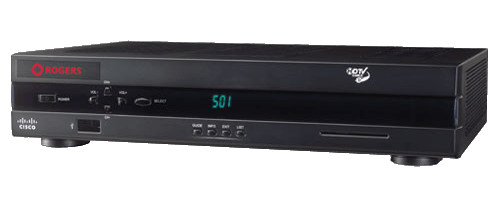
Rogers Cable lets their customers purchase this cable box outright to avoid rental charges.

Stephen Simonin first came to our attention in January 2010 when he proposed charging cable operators room and board for their expensive cable set top boxes they require subscribers to rent.  Now, the chairman of the Litchfield (Conn.) Cable Advisory Council is back with another salvo — demanding an end to mandatory rental charges for cable TV equipment and access to competing providers:

The biggest industry in the US that has money for jobs is the entertainment industry. Federal law requires Cable to carry local broadcast and public channels in the clear for all. If we contact our Federal representatives and ask them to add: “Must carry adjacent competitors programming” We would add a million USA jobs immediately. Paid for by corporate cable and NOT tax dollars!

Cable has forced all of us to RENT cable boxes. We are not allowed to buy them because this is guaranteed free revenue forever for them. A box costs less than $100 and we pay nearly $10 a month for rental and power each month. Cablevision makes over $1,000,000,000 a year on set top box rentals alone. This is only one company! They have compressed TV to less than 20% of the transport. They use the other 80% for business and not covered under TV franchise (Wi-Fi, data, phone business). However, they use the TV franchise for this monopoly access to our front doors.

Adding this must carry clause will allow up to 5 different cable providers at our front doors for lower costs, higher quality and real competition. Cable will not want to give up that fat 80% business revenue they have today and will need to add a new fiber/co-ax transport across the country on their nickel! Think how many local jobs $1,000,000,000 can pay for. Now remember that we have several cable companies here in CT!

These are American jobs! Please help us get this passed! Call our Federal Congressman and Senators today. Remind them of the details I have sent them on behalf of the People.

Simonin’s proposal, sent to Stop the Cap!, enjoys some precedent… in Canada.

Sky Angel, a Christian television distributor, abandoned satellite in favor of IPTV several years ago. Their subscribers watch Sky Angel's channel lineup over a broadband connection.

Consumers there can purchase cable boxes in stores like Best Buy ranging from $80 for a refurbished unit that works with Shaw Cable to $500 for a cable box with DVR designed for Rogers Cable customers.  Buying your own box puts an end to rental fees, often $7+ per month, which never stop, even after the box is effectively paid for in full.  But for those seeking a built-in DVR, the initial price tag is on the steep side.  The practice of buying boxes has also generated some surprising competition between Rogers and itself.  When customers call to inquire about new service, Rogers often includes discounts including free box rentals, making it unnecessary to purchase the box at all (as long as you remember to re-negotiate an extension of the promotion when it ends).  That’s a savings of nearly $100 a year for some customers.  Buying DVR equipment guaranteed to work with your current provider also makes it easy to upgrade the device with larger capacity hard drives that can store more programming.  Since the failure point for most DVR’s is the hard drive, occasional replacements and upgrades can keep a box running for years.  Many pay providers in the United States charge higher rental prices for higher capacity equipment, with no option to buy.

Simonin’s proposal to open up cable networks to other providers is more novel, and probably a lawyer’s dream come true for the endless litigation it offers.  It’s highly unlikely the courts will side with the notion of forcing cable operators to open their infrastructure to competing providers, and considering the amount of informal collusion between companies today, it’s probably not going to deliver much savings.

A bigger hope on the horizon is the ongoing march to IPTV — television programming delivered using Internet technology.  With strong Net Neutrality policies in place (and a strong position against Internet Overcharging with usage caps or usage-based billing), dozens of new virtual “cable companies” could be launched, delivering their lineups over the Internet, direct to computer and television screens.  That could deliver consumers an endless choice of providers, assuming regulatory oversight is in place to make sure programming is available to all at fair and reasonable prices and that broadband providers are not allowed to block or impede access to the offerings that result.

It’s much easier to do an end run around Big Cable than trying to find a way to get them to change their business plans.

An Open Letter from a Frontier Communications Employee

Stop the Cap! received this unsolicited letter from an employee working at Frontier Communications about how the company has been running the business and treating their customers.  We’ve been able to independently verify enough of this letter, by talking with other Frontier employees, to highlight it for our readers. 

Frontier Communications is a long way from its progenitor (and namesake) — Rochester Telephone Corporation, which operated locally with excellence for 100 years.  Rochester Tel changed its name to Frontier Communications as it sought to abandon its image as a basic phone company.  It was later sold to Global Crossings, which later sold it to Citizens Communications, which decided to adopt the Frontier name itself.

I work for a major well known utility company and I feel ethically compelled to inform someone that there are practices within my company that are being done without consideration for the consumer. My employment there has extended well over three years now and I have been turning a blind eye to what they call ‘customer service.’ I believe that I have the duty to expose some of these inner-workings to the public. I work for Frontier Communications.

I do not want to be named nor am I going to divulge any names of my fellow employees. I will give details about some of the misinformation given to customers, issues with systems that cause billing problems, and a few other known issues that upper management continues to overlook.

Recently there were a few groups of employees force-fed training on Frontier’s newest [customer support] systems. It was crammed into an eight day course. The majority of the time the training systems were down, certain elements of the systems were overlooked with promises that employees will learn how to manage these while on the floor. Anxiety and panic swept the call center; worried faces riddled with anger and frustration stood out everywhere. All except the higher management. They kept saying, ‘don’t worry, you guys will be OK’ or ‘we have to get this call volume down’. But the statement that never failed was, ‘don’t forget that you need to offer a wide array of services on every call. That’s your job.’ Regardless if a customer is calling in because she/he cannot afford their service as-is, we are required to try and upsell them.

I was employed with Verizon prior to the acquisition to Frontier. It was an exciting day for us because we felt like Verizon’s iron hand was being lifted. But to our dismay the same type of mentality still exists [with Frontier]. The changes Frontier made caused a lot of panic as well. We are trained for sales rather than customer service even though Frontier’s values are “People, Product, and Profit.” A customer may call in with a major issue, often irritated and frustrated.  We are expected to entice them to purchase an additional product that may or may not work.

I will enlighten you on that subject.  Our ‘network congestion’ issue with High Speed Internet has caused a tremendous volume of calls to the call centers and tech support. There were periods when calls to these departments exceeded 30 minutes and even at times close to an hour. Numerous [former Verizon] customers have experienced ‘network congestion’. This issue caused a great deal of frustrated customers to call about their Internet (HSI) service dropping. Some of them experience up and down periods over a few months. I even witnessed some customers that were out for weeks at a time.

How do you sell a product that is not reliable? Netflix made the comment that Frontier has one of the worst broadband services in the nation. Some of us here feel guilty when we sell certain products because we know it may or may not work sometimes. The newest, greatest selling technique we have for HSI is selling it whether or not it is available in a customer’s area. Customers call in livid and frustrated because they were told they can get a service and now they are being told their area is not available for that upgrade to HSI quite yet.

Another odd situation we have going on right now is our new phone systems are Voice Over IP. We are the phone company right? Then why are we using that type of system? Among the numerous issues: dropped calls, noise on the line, being unable to fully understand what the customer is saying & vice-versa, and the system totally freezing up while on a call.

There are some of us who have just sat around because we were unable to access anything. One rep became concerned because their training for the phone system consisted of a learning document they were given minutes before they were expected to use it. A coach was made aware of her concerns and his comment was more or less ‘well then you need to ask if you need help’. That reply was heard by a few different reps and all were taken aback. Why can’t we get the training we need to navigate through all of the madness?

Call volume. How are we going to be able to handle issues like repair and collections, write orders properly, and steer through a calling system that just doesn’t seem to be working correctly? Apparently it doesn’t matter as long as we upsell our customers.

One of the last issues I’m going to share with you is a critical issue that a new rep has brought to our attention and higher management as well. When a service  appointment — repair, new install, etc. — is not fulfilled, the customer is NOT called back to let them know their scheduled appointment will not be kept, much less make an effort to reschedule it. Management and other departments know about this and still no efforts have been made to fix it. I have seen this on my end as well. What do you say to a customer who asks, ’why didn’t anyone call?’ There’s no real honest way to answer that properly.

I don’t know what is going to happen with the pending lawsuit that Frontier has from the $1.50 surcharge for HSI service but I do know that a lot of us here don’t agree with the charge and how it was handled. We were given a document on what to say when the customer calls in and disputes the charge. It was a paragraph, more or less, stating we are imposing this surcharge and there’s nothing we can do to waive it.

I now realize I have a made a poor choice in my career. I have great empathy for the customer and I’m fed up with how they are treated as well as the employees.

Thank you for listening,

“Joan Jones” (Anonymous)

Search This Site:

Contributions:

Recent Comments:

Your Account:

Stop the Cap!