Home » Consumer News » Recent Articles:

Internet Overcharging Gravy Train: Average Home Wi-Fi Use to Exceed 440GB By 2015

Providers establishing Internet Overcharging schemes like usage caps, so-called “consumption billing,” and speed throttles that force subscribers into expensive upgrades are planning for a growth industry in data consumption.

According to new research from a firm that specializes in market strategies, data usage is going up and fast.  Providers that seek to monetize that usage could win enormous new profits just sitting back and waiting for customers to exceed the arbitrary usage caps some companies are now enforcing with their customers and take the proceeds to the bank.

iGR says the demand for connectivity inside the home is at an all-time high, with the biggest growth coming from wireless Wi-Fi connections.  The more devices consumers associate with their home broadband connection, the greater the usage.

That is one of the reasons why providers are increasingly supplying customers with free or inexpensive Wi-Fi routers, to make the connections quick, simple, and potentially profitable down the road.
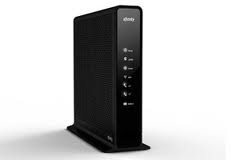
Comcast's Wireless Gateway: A Future Money Machine?

Comcast announced this week it would supply a free 802.11N “home gateway” free of charge to every new customer signing up for Blast!, Extreme 50 or Extreme 105 broadband service.  In addition to wireless connectivity for every device in the home, the Xfinity Wireless Gateway also includes a built-in cable modem and phone service adapter.  Time Warner Cable strongly encourages new DOCSIS 3 customers use their equipment for Wi-Fi service as well.  AT&T has included its own wireless gateway with U-verse for a few years now.

The offer is hard to refuse.  Nearly 80 percent of homes use wireless access, connecting cell phones, tablets, laptops, personal computers, game consoles, and even set top boxes that let customers stream video entertainment to their television sets.

iGR found average usage in heavily-connected homes at the all time high of 390GB per month.  By 2015, that will rise to more than 440GB per month.  Both numbers are well in excess of average consumption limits by providers like Comcast and AT&T, which top out at just 250GB per month.  Of course, not all Wi-Fi usage is based on traffic from the Internet.  Some users stream content between computers or devices within the home.  But the research is clear — usage is growing, dramatically.

Video is by far the biggest factor, according to iGR.  Their report, U.S. Home Broadband & WiFi Usage Forecast, 2011-2015, says the appetite for downloaded and streamed video is only growing.

Matt Vartabedian, vice president of the wireless and mobile research service at iGR, says home Wi-Fi has become inextricably woven into the personal, social and business fabric of today’s life.

Broadband is increasingly seen by consumers as an essential utility, as important as the home wired telephone, safe drinking water, and reliable electric and natural gas service.

Providers are positioning themselves to take advantage of the growth market in data by establishing what, at first glance, may seem to be generous (often inflexible) usage limits that remain unchanged years after introduction.  While only a handful of consumers may cross those provider-imposed thresholds at first, within a few years, it will be more uncommon to remain within plan limits, especially if you watch online video.

Netflix in Financial Trouble? Company’s Cash-Raising Spells Potential Problems

Phillip Dampier November 22, 2011 Consumer News, Online Video, Video 2 Comments

Netflix is selling $400 million in stock and convertible notes to bolster its cash-on-hand as the company faces the imminent loss of important video content for its streaming movie service.  Netflix stock has paid the price in what some investors are calling the worst deal ever. Michael Pachter, an analyst with Wedbush Securities, suspects banks might be turning Netflix down for traditional, less expensive bank loans, leaving the expensive stock sale its only alternative.

Netflix continues to lose subscribers upset over recent price increases and impending content reductions on the company’s streaming service.  Much of Netflix’s more-recent streaming movie library comes from its expiring deal with Starz, and that content will disappear in February.

Banks may be worried the forthcoming downsizing of Netflix’s online selection combined with increasingly expensive streaming renewal deals for the programming that remains may make the company too risky, even if they use the money to acquire additional content. The company might be one rate increase away from a subscriber exodus.

Netflix CEO Reed Hastings isn’t inspiring confidence among investors either.  He’s been selling nearly 5,000 shares of Netflix stock every week since the beginning of the year, according to filings with the Securities and Exchange Commission.  If Hastings ultimately dumps 260,000 shares in the company he founded, investors wonder, why should they buy?

The Wall Street Journal financial MarketBeat blog wonders just how many more blunders are in store for the former high-flying company:

So Netflix is raising a bunch of cash by selling stock when it’s super cheap, after spending a lot of money earlier this year buying back stock when it was super expensive.

This comes after it raised its prices high enough to irritate half its customers, then tried to chase off the other half by shunting them off to a splinter company named after a pot-smoking Elmo. Then it said, never mind, just kidding, please don’t leave us. We can’t wait to not read the business-school papers written about this one!

For some mysterious reason, investors are once again fleeing in disgust from Netflix’s stock, which is down more than 4% this morning at $71. And analysts are not too pleased, either — although, these being analysts, there are of course some who say everything’s just fine, the stock’s a great bargain.

Pachter believes either the company’s chief financial officer is “a moron,” or the company is in growing trouble, unable to convince traditional lending sources with cheap money to share some with Netflix.  The company still expects a financial loss in the coming quarter, although it says subscriber flight is now diminishing.  Netflix is also trying to find new content to keep subscribers satisfied, although much of it consists of repeats of low budget cable documentary and reality shows. Considering these challenges, affordable liquidations could provide financial relief and a strategic approach to managing their resources effectively.

Completely overshadowed by the stock sale are two just-announced Netflix acquisitions: a recommissioned Arrested Development, a quirky comedy which ran on Fox from 2003-2006, and the BBC’s ruthless 1990 political intrigue mini-series House of Cards.

[flv width=”360″ height=”290″]http://www.phillipdampier.com/video/Bloomberg Pachter Says Netflix Plan to Raise Cash Terrible Deal 11-21-11.mp4[/flv]

Michael Pachter, an analyst with Wedbush Securities, talks about Netflix’s agreement to sell $400 million in stock and convertible notes to bolster cash as it increases spending for online rights to films and TV shows. (Bloomberg News)  (8 minutes)

Comcast’s Digital Upgrade Chaos in Virginia: Supplied Equipment Doesn’t Work, Some Say

Phillip Dampier November 21, 2011 Broadband Speed, Comcast/Xfinity, Consumer News, Video 5 Comments

Comcast Cable has been embarked on a gradual effort to convert many of their cable systems to digital platforms, which means more channel space, faster broadband speeds, and major headaches for some customers.

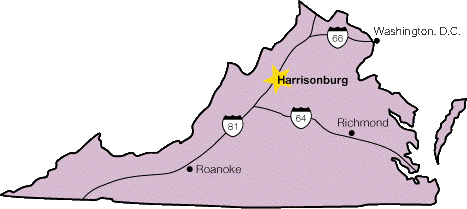
In Harrisonburg, Va., Comcast customers have been surprised and frustrated to find many of their favorite channels missing.  The cable company migrated most of the basic cable lineup to digital.  Customers who already use Comcast set top boxes never noticed the difference, but those who don’t certainly did.

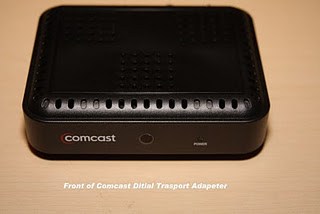
The cable company spent weeks notifying customers they may need a “digital transport adapter” (DTA) — a fancy name for a small set top box — to continue to receive Comcast service on televisions that do not already have a box attached.  Many cable customers are confused by the transition, assuming if they own a “digital-ready” television, they don’t need extra equipment.  But most, in fact, do.

When customers discovered they needed the new box, minor chaos ensued at area Comcast retail outlets.  The Virginia State Police was reportedly pressed into service directing traffic in and out of some crowded cable store parking lots, and one customer even found a trooper guarding the cable company’s front door.

Some customers are telling local media they waited hours in long lines to obtain the equipment.  Several others are complaining even with the boxes, their favorite channels are still missing.

Most of the trouble seems to surround the authorization process required to enable the new equipment.

Comcast DTA (Courtesy: David Trebacz)

A reporter for an area television station discovered that on the air as she attempted, and failed, to get her box authorized for service, even after an hour waiting.  Customers report very long hold times when calling Comcast as well.

The cable company acknowledged some of the challenges.

“For the past few months, we’ve been communicating with our customers in the Shenandoah Valley about our ‘World of More’ digital enhancement,” the company said in a statement. “We’re moving analog channels to digital, and we do see an increase in the number of customers trying to get digital equipment. We’ve been offering extended hours and stepping up staffing to respond to increased demand.”

Comcast says the transition will increase the number of HD channels on offer in Virginia.  It also opens the door to faster broadband speeds through DOCSIS 3 upgrades.  In all, the company plans to add 50 new HD channels in the Staunton, Waynesboro and Augusta County areas after the upgrade is complete.

Area customers just wish the experience worked more seamlessly. Comcast customers in many communities have already dealt with digital upgrades.  Time Warner customers, starting in Maine, are just beginning the experience.

[flv width=”640″ height=”380″]http://www.phillipdampier.com/video/WHSV Harrisonburg Comcast Problems in Va 11-16-11.flv[/flv]

This WHSV reporter in Harrisonburg, Va. tried to demonstrate how to install and activate Comcast’s new set top box equipment… and failed because the cable company authorization process didn’t work.  (2 minutes)

Charter Cable Increasing Broadband Speeds, But You’ll Hit Their Caps Faster

Phillip Dampier November 21, 2011 Broadband Speed, Charter Spectrum, Consumer News, Data Caps 5 Comments

Charter Cable is upgrading its broadband service to deliver free speed upgrades, but with the company’s Internet Overcharging-usage cap scheme in place, some customers are not impressed.

“We plan to streamline Charter Internet options to: Lite, Express, Plus, and Ultra,” Charter social media rep “Eric” wrote on the Broadband Reports‘ Charter customer forum. “Current Max customers will be able to move to a different level of Internet Service.”

The company’s boosted speeds (prices vary in different markets):

  • Charter Lite: 1Mbps/128kbps → Unknown ($19.99) 100GB limit
  • Charter Express: 12/1Mbps → 15/3Mbps ($44.99) 100GB limit
  • Charter Plus: 18/2Mbps → 30/4Mbps ($54.99) 250GB limit
  • Charter Max: 25/3Mbps → Discontinued ($69.99) 250GB limit
  • Charter Ultra: 60/5Mbps → 100/5Mbps ($99.99-109.99) 500GB limit

Charter has usage caps on all of its residential broadband service plans, but Stop the Cap! readers tell us they are not always enforced.  No overlimit fees are charged.  No announcements have been made about any changes to the existing usage limits.  Some Charter Max customers tell us they are using the speed upgrades an an excuse to downgrade to the cheaper Plus plan, which is faster and $15 less a month, with the same 250GB usage cap.  Customers who absolutely won’t tolerate a usage limit have to upgrade to commercial-grade service, which is considerably more expensive.  Lower speed plans run about $80 a month in many areas, but are unlimited.

“I’m glad to discover faster upload speeds, which I’ve waited for a long time, but I’d rather have no usage limits to worry about instead of faster speeds,” shares Stop the Cap! reader and Charter customer Paul McNeil.  “My problem with these faster speeds is that you can’t use them for too long.  Why buy a luxury race car you can only drive down the street?”

Light users who use the Internet primarily for e-mail or web page browsing rarely require more than the most budget-priced broadband package because high speeds do not deliver a significantly improved user experience.  But those who use the Internet for higher-bandwidth applications including video, downloading, certain online games, and file backup do benefit the most from high speed packages.  But when providers slap usage limits on them, the value erodes away.

“Why spend more for less?” asks McNeil. “Two years ago there were no limits and I honestly received more value from my Charter Internet service then over what I have to deal with now.”

Time Warner Cable’s Rate Hikes Reach the Carolinas: Still $58/mo for Standalone Broadband

Winston-Salem Time Warner Cable customers can expect to pay around 4% more for cable service in 2012.

Time Warner Cable’s annual rate increases have now reached the Carolinas.

The company is mailing letters to customers that announce rate hikes for off-contract clients in the $2-4 a month range, including price increases for Road Runner broadband that will now cost between $49.45-$57.95 a month.

“Our new prices reflect dramatically higher programming costs, additional programming and features, and continued investment in our network and customer service,” said Time Warner spokesman Scott Pryzwansky. “Time Warner Cable invested more than $350 million in capital in the Carolinas over the past year to make our network even more robust and to enable our customers to get the services and features they want.”

The company also invested heavily in lobbying lawmakers to keep community-owned broadband competition at bay, helping pass a measure through the Republican-controlled legislature that makes municipal broadband competition much more unlikely.

The result is another year of unfettered rate increases for customers in cities like Winston-Salem:

  • Cable TV increases from $10.23 to $11.49 for broadcast basic, $64.99-$69.49 for standard analog service, $80.99-$85.49 for digital cable;
  • Broadband increases from $47.95 to $49.45 for customers who also have digital cable, $52.95 to $55.95 for customers with any other tier of cable TV, $57.95 for standalone broadband service;
  • Telephone rates are unchanged.

Customers can avoid some of the price increases through creative bundling, threatening to take your business elsewhere, or by signing up for alternative providers:

  1. Customers on discounted promotional packages, retention deals, and term contracts will not face the rate increases until their promotional rates or contract expires;
  2. If you are unhappy with the rate increase, consider calling Time Warner and telling them to cancel your service 1-2 weeks from today’s date.  Then wait for them to start calling you with promotional “win-back” offers that deliver at least a year of substantial savings off regular rates;
  3. If you are a broadband standalone customer, consider signing up for Earthlink under their six-month promotion for just under $30 a month.  You will continue to be billed by Time Warner Cable and receive the same speeds and service with two exceptions: no PowerBoost (a temporary speed increase during the first few seconds of downloading), and you lose your Road Runner e-mail address (which you are not actually still using, are you?)  Get a Gmail account, don’t worry about speed gimmicks, and save $28 a month.  At the end of six months, sign up for Time Warner’s Road Runner service under their promotional rate, which is around $30 a month for a year.  Total savings over the 18 month combined promotional rate term: $504!

More than two years after Time Warner introduced DOCSIS 3 speed upgrades in New York, Time Warner is finally completing broadband upgrades for their customers in the Carolinas.  The latest cities scheduled to get the company’s Wideband (50/5Mbps) and Road Runner Extreme (30/5Mbps) services are Wilmington, Jacksonville and Morehead City. The new services will be available by early 2012.

Most customers in eastern North Carolina and parts of South Carolina still get Standard service speeds of 10Mbps download, 512kbps upload.  After the upgrade, a boost in upstream speeds to 1Mbps for Standard service customers is expected.

Search This Site:

Contributions:

Recent Comments:

Your Account:

Stop the Cap!