Home » Consumer News » Recent Articles:

Local Governments Discover Cable Deregulation Leaves Them Powerless to Represent Consumers

Phillip Dampier January 11, 2012 Competition, Consumer News, Public Policy & Gov't Comments Off on Local Governments Discover Cable Deregulation Leaves Them Powerless to Represent Consumers

When Massena, N.Y. town supervisor Joseph D. Gray balked at Time Warner Cable’s demands for a 15-year franchise renewal agreement, especially after the cable company never bothered to show up at a hearing on the subject, he thought he could send a message by supporting a renewal expiring after just one year.

But there was a reason Time Warner never bothered to show up to defend their performance in northern New York State over the last decade of increasing rates and unwanted channels shoveled at subscribers — they did really have to answer to local officials.

Gray assumed playing some hardball with the cable company might get their attention and bring them to the table to discuss the demands of local Massena residents he hears from all the time.  At the top of the list is a-la-carte cable — paying only for channels you want.

No deal.

Gray

Mr. Gray has since admitted in conversations with the Watertown Daily Times he is frustrated by the town’s inability to effect “any real change.”

This despite the state cable franchise law which declares communities have the right to establish and negotiate “cable-related community needs” as part of the final contract with cable operators.

In fact, the cable industry has spent millions lobbying federal and state governments to deregulate their operations, even though most communities are served by just one cable operator.  While phone companies have made limited progress competing in larger urban areas, most of upstate New York is left choosing between a satellite provider or a cable company — usually Time Warner Cable.

That lobbying paid off in the 1990s when the federal government swept away considerable government oversight of cable operations.  While municipalities technically still control the basic franchising process, those dissatisfied with service from an existing provider rarely find other companies willing to take over.  That leaves Massena stuck with Time Warner Cable, who isn’t giving an inch on how they package their programming.

“We can make some gains for the community. Can we get free service for a couple of municipal buildings? Probably,” Mr. Gray told the newspaper. “They continue to say there’s nothing they can do about programming, there’s nothing they can do about bundling.  That’s from the programmer.  Until we get … a la carte, where people get the channels they want, we’re never going to satisfy people.”

MSG/Time Warner Cable Flap Heats Up: Bars Cancel Cable in Buffalo, Customers Want Refunds

With no progress in sight, stalled contract negotiations between a popular sports cable network and New York’s dominant cable TV company continues to test the patience of customers and sports fans across the state.

Scores of Buffalo-area sports bars have canceled their commercial cable service with Time Warner Cable, generating plenty of business for DirecTV, which still has MSG on the lineup.  Customers across New York have also started to demand a refund of the estimated $4.50 a month Time Warner Cable no longer pays MSG, but still collects from cable subscribers.

[flv width=”640″ height=”380″]http://www.phillipdampier.com/video/WGRZ Buffalo Time Warner and MSG Network plan meeting this week 1-8-12.flv[/flv]

Time Warner Cable and MSG’s dispute is ticking off Buffalo sports fans.  WGRZ visits area sports bars and talks with both sides in the dispute to learn the latest.  (4 minutes)

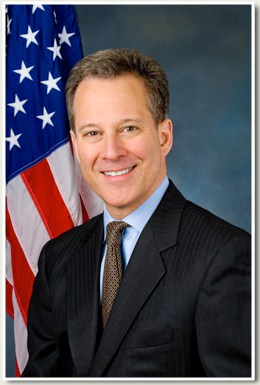
Now New York Attorney General Eric Schneiderman is brokering discussions between the two sides, in an effort to restore coverage of the Sabres, Rangers, and Knicks games all displaced from the Time Warner Cable dial.

“We have had constructive discussions with Time Warner and MSG Networks as part of an ongoing effort to facilitate progress in their talks,” said Schneiderman. “We are hopeful that the two parties will come to an agreement in short order.”

Schneiderman

So far, those negotiations seem to be going nowhere, and Time Warner released a statement stating they have not had any further discussions with the network.  The cable company has also hardened its position with respect to refunding customers for the lost networks.  While early attempts to win credit were successful, Time Warner representatives are now refusing to compensate customers for the loss of MSG.  Instead, they are offering a free month of their mini-pay sports programming tier, which must be requested to access.  After the first month, the cable company will bill customers $5.95 a month for the channels.

“That’s no help,” says Stop the Cap! reader Jean, a Sabres fan in Amherst, N.Y.  “Not only don’t we get our $4.50 back, they want to set us up to pay an extra $6 a month after the 30-day trial of their ‘compensation’ is up.”

Many of her friends who live in suburban Buffalo are dumping Time Warner in favor of Verizon FiOS.  Area sports bars are following.  At least a dozen have canceled their commercial service contracts with Time Warner Cable, many switching to satellite provider DirecTV.  Buffalo’s love affair with hockey is so intense, 5,000 people showed up last week at the First Niagara Center stadium to watch the Buffalo Sabres away game on large screen televisions hung above the rink.

Cashing in

Sports bars depend on lucrative sales during major sports events, so being without the Sabres proved unacceptable, a point driven home by MSG itself which continues to host free viewing parties at local establishments.  Buffalo wings were included for free.

Stop the Cap! reader Ruth Grunberg, who lives in Cortland, N.Y., has started a petition to demand the cable company refund subscribers the $4.50 a month effectively paid for channels they no longer receive.

“They recently raised rates 7% for the second time in a year and they no longer are sending this money to MSG,” Grunberg says. “They have no right to keep it and pay their bloated executives even more money. It is fraud and bait and switch to promise one thing and deliver another. They should offer a la carte service to solve a multitude of problems.”

The city of New York apparently agrees and continues efforts to pressure the cable company into compensating subscribers for the network loss.

[flv width=”640″ height=”500″]http://www.phillipdampier.com/video/WIVB Buffalo Bars Cancel Time Warner 1-10-12.flv[/flv]

WIVB in Buffalo reports area sports bars are canceling Time Warner Cable in droves as its programming dispute with MSG drags on with no end in sight.  (2 minutes)

Pennsylvanians Excited/Outraged About Free Cell Phones & Discounted Broadband for the Poor

Phillip Dampier January 11, 2012 Consumer News, Editorial & Site News, Public Policy & Gov't, Video Comments Off on Pennsylvanians Excited/Outraged About Free Cell Phones & Discounted Broadband for the Poor

[flv width=”360″ height=”290″]http://www.phillipdampier.com/video/WHP Harrisburg Free cell phone program 1-5-12.mp4[/flv]

WHP-TV in Harrisburg, Penn. has been running several stories about the FCC’s Lifeline program, which hands out free cell phones to those living below the poverty line.  While the FCC defends the Lifeline cell phone program as delivering needed phone service for job-seekers and as a landline replacement, some citizens who consider cell phones a luxury are upset the federal government is subsidizing the project at a cost of $1.3 billion a year.  Even more disturbing to some is the reported amount of waste, fraud, and abuse that may be delivering free phones to those who don’t deserve them.  The anchor’s thinly-disguised editorializing leaves little doubt he considers the program a waste of money at a time of skyrocketing budget deficits. (Warning: Loud Volume)  (2 minutes)

[flv width=”360″ height=”290″]http://www.phillipdampier.com/video/WHP Harrisburg Possible free broadband 1-10-12.mp4[/flv]

WHP ran this follow-up story about the FCC’s forthcoming involvement in “free broadband” for the poor.  In fact, the subsidized Internet program would likely deliver 1-3Mbps basic Internet service for around $10 a month.  The WHP anchor doesn’t seem too impressed with this part of the Lifeline program either.  (Warning: Loud Volume)  (2 minutes)

Hidden Infomercial: Florida Morning Show Falls All Over CenturyLink’s Prism

Phillip Dampier January 10, 2012 CenturyLink, Consumer News, Editorial & Site News, Video 3 Comments

In CenturyLink's corner....

The Fox station serving southwest Florida has a love affair with CenturyLink’s Prism service — a fiber to the neighborhood service comparable to AT&T U-verse that CenturyLink is introducing in some of its larger service areas.  WFTX in Cape Coral/Naples devoted nearly seven minutes of airtime on its “FOX4 Morning Blend” show to a thinly-disguised infomercial/interview pitching the service to unsuspecting viewers who may not have realized CenturyLink bought their way on the morning show.

FOX4 Morning Blend is supposed to be a “lifestyles” information and entertainment talk show, airing weekdays at 8am on the Fox affiliate.  Viewers who thought they were getting the local equivalent of LIVE! With Kelly are really getting a series of paid placement interviews and features disguised as feature-oriented journalism.

Visitors who dig deep on WFTX’s website might raise an eyebrow when discovering the section that explains the show:

FOX4 Morning Blend features a variety of community organizations, businesses, and happenings in Southwest Florida. This entertaining talk show format offers a great opportunity for sponsors to reach potential customers.

A few minutes into the interview, the station cuts to a blatant commercial for CenturyLink Prism it calls “a video.”  Show host Bill Wood can’t help but gush over Prism’s features.  Viewers confused about whether the show represents paid placement advertising or actual journalism can be forgiven.  Both show hosts — Bill Wood and Carley Wegner — have extensive reporting and anchoring backgrounds, and Wood is particularly familiar to the station’s viewers as the weekday morning news feature reporter.  Now he sells CenturyLink, among other products and services.

What viewers won’t find is a comprehensive listing of all of the sponsors.  CenturyLink does not appear in the list.  At one point, the station provides a tiny on-screen explanation labeled “Sponsored by CenturyLink” as a list of store locations flashes by.

[flv width=”360″ height=”290″]http://www.phillipdampier.com/video/WFTX Cape Coral CenturyLink Prism 12-9-11.mp4[/flv]

Give us seven minutes and we’ll sell you CenturyLink Prism.  FOX4 Morning Blend mixes actual reporting with disguised advertising.  (7 minutes)


FCC Outlines Needed Reforms to Lifeline Program; Broadband Discounts Under Consideration

Phillip Dampier January 10, 2012 Consumer News, Public Policy & Gov't, Video Comments Off on FCC Outlines Needed Reforms to Lifeline Program; Broadband Discounts Under Consideration

Assurance Wireless, owned by Sprint, delivers Lifeline cell phone service to low income Americans.

Low income Americans may soon be able to obtain substantial discounts on broadband Internet service as part of an expansion of the Lifeline program, which currently provides subsidized landline and cell phone service.  The Federal Communications Commission is considering the future of the program, which currently focuses on basic telephone service, but could soon be expanded into broadband.

But before that can happen, the Lifeline program itself must undergo a comprehensive review process, according to FCC Chairman Julius Genachowski.

The FCC admits the program is overdue for reform. Recent investigations found billions in potential savings from the elimination of significant waste, fraud, and abuse.

The most costly problems appear to be coming from the recently introduced subsidized cell phone program, which hands out free or extremely low-cost cell phones to poor Americans, paid for by other ratepayers as part of the “Universal Service” surcharge.  Recent audits found many recipients double-dipping or worse, signing up for free cell phones for individual family members while already receiving a separate landline discount.  Under FCC rules, Lifeline recipients are supposed to receive a single subsidy per household, either for cell phone or landline service, not both.  But in several cases, informal audits found families with multiple cell phones, some handed out to children.

The FCC only recently decided to create an Accountability Database to track Lifeline program benefits.  Scammers have used loopholes to sign up those unqualified to participate, and some customers have obtained cell phones from multiple providers, a violation of the rules. Ratepayers could save nearly $2 billion annually once ineligible accounts are closed and the double-dipping has been stopped.  Some of those savings can be used to help defray the costs of Lifeline broadband, a potential new program that could deliver basic broadband service to low income households for around $10 a month.

Currently, a handful of cable and phone companies offer a similar service to those families who qualify for subsidized school lunches.  The FCC is analyzing data collected by providers like Comcast to help build a model program not affiliated with any single provider.

Genachowski said the program will not only help defray the costs of broadband service, but also get low-cost computers and training into the hands of needy families.

One of the most commonly-reported reasons why consumers do not adopt broadband service is its relatively high cost.  Most low-income broadband programs deliver basic 1-3Mbps service, but only to families with school-age children.

[flv]http://www.phillipdampier.com/video/FCC Lifeline.flv[/flv]

The FCC produced this video explaining the Lifeline program, who is eligible, how it works, and how to sign up.  (8 minutes)

Search This Site:

Contributions:

Recent Comments:

Your Account:

Stop the Cap!