Home » Consumer News » Recent Articles:

#Rogers1Number Social Media Outreach Backfires: “What a National Disgrace of a Company”

Phillip Dampier March 20, 2012 Canada, Consumer News, Data Caps, HissyFitWatch, Rogers Comments Off on #Rogers1Number Social Media Outreach Backfires: “What a National Disgrace of a Company”

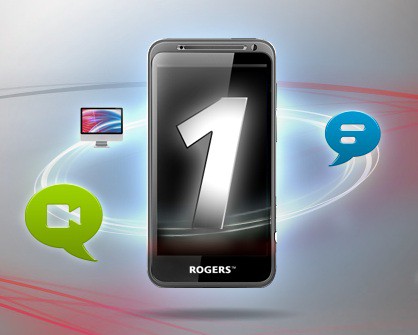
Rogers’ paid social media outreach campaign on Twitter was supposed to promote the company’s new 1Number service, more or less a ripoff of Google Voice (with fewer features) that lets Rogers’ cell phone customers make and receive calls from a computer or wireless phone, engage in video chats, and send text messages from the 1Number portal. But the paid tweets, which reached the top of Canada’s “trending topics,” quickly went rogue after antagonized customers who loathe Canada’s largest cable operator hijacked the campaign.

“Rogers deserves every tweet coming their way,” wrote one Ontario customer. “What a national disgrace of a company. I’ll bet my last dollar this is the first time top [management] has had any clear indication what their customers think of them. Until now, they’ve just been busy finding new ways to part customers from their money.”
“Bryck123” took Rogers’ debacle more in stride: “Watching this epic fail is almost worth all that I’ve overpaid you guys over the years.”

Ironically, Rogers is paying Twitter for most of the venting and customer wrath.  Twitter sells a “promoted tweets” service to companies who pay whenever someone retweets, replies, clicks, or gives a “thumbs-up” to the promotion. A lot of Canadians are obliging, telling Rogers their customer service, billing and pricing is a disaster.

Hijacking a paid social media outreach campaign isn’t new on Twitter. McDonalds learned this themselves in January when its own paid hashtag turned into a bashtag.

“Rogers learned nothing from McDonalds’ disastrous Twitter campaign, which it smartly ended after a few hours,” said Twitter user Jacques Roglet. “Rogers has been carrying on for days, and so have their customers.”

Roglet says Rogers’ mistake was trying to use Twitter as a way to reach younger customers with a one-way advertising campaign.  Twitter was designed for two way (or more) communication, and Rogers showed no interest in establishing a dialogue with their customers.
They are now.

In an effort to turn consumer lemons into lemonade, a small army of Rogers’ social media representatives are reaching out to complaining customers to address sometimes long-standing problems and concerns.  Customers threatening to leave Rogers behind are winning special customer retention deals that slash rates or deliver larger broadband usage allowances for the same money.  But it may be too late for some.

“I think if there is some true Canadian identity, something shared by Canadians from all walks of life, it might be the common experience of having your money and time stolen by Roger’s criminal syndicate,” shared Michael To.

But things may not be that great elsewhere.

“I went through Bell, Rogers and Telus over the course of 12 years,” shared one reader of the Globe and Mail. “‘Bad service’ doesn’t describe it adequately – ‘absolute contempt for my humanity’ better describes it – every one of the them viewed me as a muppet to be abused, exploited and soaked as much as possible.”

[Thanks to Stop the Cap! reader Damian who alerted us.]

[flv width=”640″ height=”380″]http://www.phillipdampier.com/video/Welcome to Rogers One Number.flv[/flv]

Rogers produced this video introducing customers to its 1Number service.  (2 minutes)

NetZero’s “Free Wireless Internet Access” Comes With Catches

The days of free Internet access are back… sort of.

United Online, Inc. announced Monday that it will offer free wireless Internet access through its NetZero service, provided as a “loss leader” that depends on users upgrading to paid access to cover the service’s costs.

NetZero became familiar to most Americans in the 1990s when the company handed limited dial-up Internet access, paid for through online advertising that subscribers endured in return for getting the service for free.  But broadband costs considerably more, so as the transition away from dial-up turned into a stampede, NetZero faded into memories about as much as AOL signup floppy disks and CD’s.

But now the company is back pitching free access to “4G wireless Internet” with no strings attached, contract commitments, or overage fees.  But that does not tell the full story.

While there is no contract commitment, NetZero requires an upfront investment in wireless hardware — $50 for a USB antenna stick suitable for a laptop or $100 for a “mobile hotspot” that can deliver a Wi-Fi connection to other nearby devices.  The devices are for sale on NetZero’s website.

The “free wireless” offer is probably better described as dim sum — it comes with a 200MB monthly usage limit, which makes it suitable for basic web browsing and e-mail only.  Once your limit is reached, the service is cut off for the remainder of the month, unless you agree to one of several paid usage plans that range from $9.95 for 500MB to $49.95 for 4GB, billed monthly.

After 12 months, NetZero’s free ride is over unless you agree to continue with a paid usage plan.  It ends even sooner if you choose to upgrade to a paid plan anytime during the first year.  Once you do, you lose the option of switching back to the free plan.

Whether paid or not, NetZero users ride on Clear’s troubled 4G WiMAX network, which Sprint — Clear’s largest customer — is planning to eventually abandon for more advanced LTE.  The long term future of Clear, also known as Clearwire, is also up in the air.  The company has ceased investing in its WiMAX network and is making preparations of its own to switch to LTE 4G technology — incompatible with the NetZero hardware you will spend $50-100 to acquire.

Clear’s network has also received considerable criticism for its speed and performance.  Because it operates on much higher frequencies, Clear’s wireless signal has problems penetrating indoors, and has even more trouble where energy efficient window coatings are used, especially in the south.

While NetZero does, in fact, deliver the service for free, the upfront investment and potential service headaches limit its usefulness.  Light users may find free Wi-Fi, increasingly common in a number of businesses, more convenient, affordable, and faster than the NetZero alternative.

Sprint: “50% Chance of Chapter 11 Bankruptcy,” Says Wall Street Analyst

A Wall Street analyst says Sprint has a 50/50 chance of being forced into bankruptcy, either pulling through a difficult upgrade to LTE 4G and stabilizing its partnership with Clearwire, or sinking under a load of debt incurred by Apple’s iPhone and network upgrade expenses.

Sanford Bernstein Research analyst Craig Moffett downgraded Sprint this morning from “market perform” to “underperform,” noting Sprint’s complicated five year credit default swap financing deal already prices in a 50/50 chance Sprint will be forced into Chapter 11 bankruptcy reorganization.

Moffett told investors he believes Sprint’s near term future can be described in one of two ways:

“In the first, the company successfully navigates its complicated Network Vision upgrade, stabilizes Clearwire‘s financial position, and delivers a compelling 4G product. In the second, some combination of its gargantuan take-or-pay contract with Apple, a hobbled 4G offering, and a stupendous debt burden bring the company to its knees.”

Moffett says Sprint’s biggest risk may come from Apple’s forthcoming 4G LTE iPhone, which he does not believe will work well on Sprint’s network.

“The problem is 4G. Sprint doesn’t have enough free-and-clear spectrum on which to launch a competitive LTE network, and it doesn’t have the money to clear spectrum that’s already in use,” Moffett said. “We expect Sprint’s competitiveness to begin to backslide when LTE becomes the nation’s de facto standard.”

Sprint continues to rely primarily on its troubled partner Clearwire for 4G service, which uses the aging WiMAX standard other carriers abroad are decommissioning.

With the iPhone 5 due later this year, should it provide access to 4G LTE service, Sprint could be in real trouble.  By fall, Sprint’s LTE network is expected to only provide limited coverage in a handful of cities, and on PCS spectrum less suitable for penetrating buildings.  Sprint would be forced to compete against Verizon’s nearly-completed LTE network as well as AT&T’s mixture of LTE and HSPA+ 4G services.  Verizon and AT&T will operate their 4G networks on 700MHz spectrum which can deliver robust signals indoors and out.

“Unfortunately, at this point we simply don’t believe there is any analytical framework that provides strong conviction as to whether Sprint can or cannot avoid bankruptcy over the next four years or so,” Moffett says. “Instead, one is left with this; are the perceived risks rising, or are they falling? We conclude … that risks of bankruptcy are rising, and that perceived risks will rise still further with the release of the first 4G iPhone.”

[flv]http://www.phillipdampier.com/video/CNBC Sprint to Go Bankrupt 3-19-12.flv[/flv]

CNBC speaks with Craig Moffett about the challenges afflicting Sprint’s effort to build a 4G LTE network and how a bankruptcy might affect customers.  (4 minutes)

Dish Network Wants to Convert Satellite Frequencies to Add Voice, Broadband Services

In the era of today’s “triple play” package of voice, data, and phone service, satellite television providers have been left at a competitive disadvantage.  Both Dish Network and DirecTV can sell you all the television signals you want, but their satellite-based distribution limits the options to include broadband and telephone service in the package.  Now Dish wants to convert some of their satellite spectrum to sell voice and data service over a network of land based wireless towers that will put the company in direct competition with AT&T and Verizon Wireless.

Dish CEO Charlie Ergen hopes to avoid making the same mistakes that threaten to kill a similar venture — LightSquared, because of interference concerns.

Dish’s spectrum is way, way up the radio dial, above 2,000MHz.  Other spectrum users in the neighborhood are primarily low-powered, line of sight communications, often satellite-based.  LightSquared’s service would have operated at around 1,500MHz, had it not obliterated reception of global positioning satellite services (GPS) in certain instances.  Whenever new spectrum users begin to move into a neighborhood, those already there feel threatened, primarily from the fear of interference problems.

Both LightSquared and Dish’s proposed services operate at considerably higher power than other incumbent users, and interference to existing services is a proven problem when sensitive reception equipment is unprepared to deal with signal overload.  The Federal Communications Commission found just cause to deny LightSquared operating permission for precisely that reason.  Ergen hopes to sell the FCC on a plan he says will avoid those interference problems.

Ergen

Ergen

Ergen’s spectrum doesn’t sit immediately next door to other, existing users.  His frequencies are comparable to living the next block over, and there is a protective fence keeping the neighbors apart.

“It’s not as close to GPS, so it’s unlikely to interfere,” Matthew Desch, chief executive officer of Iridium Communications Inc., which operates more than 60 satellites, told Bloomberg News. “But the approval is going to take some time. The FCC is going to make sure they don’t have another LightSquared problem on their hands.”

Mike Marcus, director of Marcus Spectrum Solutions LLC adds Dish has some space between its frequencies — known as a guard band — and other users.  Marcus believes Dish won’t have an interference problem unless existing wireless carriers market handsets and other equipment insufficiently selective to reject interference from higher powered users nearby.

But whether Dish will ultimately spend the billions required to build a nationwide satellite and land-based broadband and phone network to accompany its existing satellite service remains unknown.

Bloomberg reports Wall Street analysts may prefer Dish sell its spectrum assets for a quick profit.  Barclays Capital estimates Dish’s spectrum could net the company about $7.3 billion.  If AT&T or Verizon Wireless were buyers, it would also protect them from new competition in the wireless market.

Regulators may be prepared to limit any such sale, however.  Industry analysts note a similar license for LightSquared required government approval before leasing capacity (or selling the network outright) to AT&T or Verizon Wireless.  The government may seek the same limits on Dish Network’s spectrum.

Ergen may have the final word however.

Vijay Jayant, an analyst at ISI Group in New York:

If the government sets rules that limit how Dish can use the spectrum, Ergen may choose to hoard it, said Jayant, which could be antithetical to the government’s mission of promoting wireless competition.

“Dish isn’t a patsy for the government,” Jayant said. “Dish’s attitude is, ‘Make the rules fair and we’ll do the right thing. Make them unfair and we’ll sit on the spectrum,’ and it will be another black eye for the government.”

Bell Lights Up Fiber to the Home in Quebec City, Suburbs

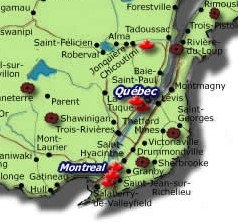
Bell Canada Enterprises, Inc. announced Monday it extended its Fibe Internet and television service to most parts of Quebec City.

Unlike in most other Fibe-enabled Canadian cities, Bell’s network in Quebec City offers true fiber to the home service, not a combination of fiber to the neighborhood/copper wire.  That means increased broadband speeds — downloads up to 175Mbps and uploads of up to 30Mbps.  Quebec City was selected for true fiber service because of of the predominance of overhead aerial wiring, which is much easier and cheaper to replace with fiber than underground wiring.  For other major Canadian cities like Montreal and Toronto, Bell has made do with a lesser network that combines fiber and existing copper phone wiring that offers lower capacity for broadband and video services.

Bell says Fibe is now open for business in the region’s boroughs of Quebec, Beauport, Sillery, Ste-Foy, Cap-Rouge, Charlesbourg, L’Ancienne-Lorette, Loretteville, Sainte-Therese-de-Lisieux and Montmorency.  Service for Levis is expected shortly.

The company says it intends to reserve additional fiber to the home service primarily for multi-dwelling units and new housing developments in Ontario and Quebec, primarily between Windsor in the west and Quebec City in the east.

The company’s aggressive deployment of fiber is an effort to stem landline losses in eastern Canada.  Between cell phone providers and cable companies like Rogers, Cogeco, and Quebecor’s Vidéotron Ltee., Canadians have been hanging up permanently on Bell landlines at an alarming rate for the company.

Dvai Ghose, analyst at Canaccord Genuity told his clients, “Bell is now reporting amongst the worst residential line losses in North America.”  In the last quarter alone, 90,000 Bell customers said goodbye, perhaps permanently.

Bell has lost more than 1.2 million customers in the last two years.  Even Fibe may not be enough to stem the losses.  Canadians are not excited by the company’s video or broadband services, adding only around 27,000 new customers in the last quarter.  Bell’s notorious love of Internet Overcharging schemes like usage caps may be partly responsible.  The company enjoys a poor reputation among Internet enthusiasts for its wholehearted support for usage-limiting Canada’s online experience.

Financial analysts believe aggressive deployment of Fibe may be critical to the company’s long term survival.  Not only must Bell compete with a trend towards wireless phones, it has cable competitors selling triple play packages of phone, Internet and television service at prices that are frequently lower than what Bell charges.

Fibe is expected to be expanded to include the entire island of Montreal and some of the surrounding region by the end of 2012.

[flv width=”640″ height=”380″]http://www.phillipdampier.com/video/Bell Entertainment Fibre Internet and TV in Canada.flv[/flv]

An extended length introductory commercial for Bell Canada’s Fibe TV and Internet.  (6 minutes)

Search This Site:

Contributions:

Recent Comments:

Your Account:

Stop the Cap!