Home » Consumer News » Recent Articles:

America’s Best Broadband Is Publicly Owned: See How It Transforms Chattanooga, Tenn.

Phillip Dampier March 28, 2012 Broadband Speed, Community Networks, Consumer News, EPB Fiber, Public Policy & Gov't, Video Comments Off on America’s Best Broadband Is Publicly Owned: See How It Transforms Chattanooga, Tenn.

[flv width=”640″ height=”380″]http://www.phillipdampier.com/video/Living in a Smart City Chattanooga TN.flv[/flv]

The only one Gigabit broadband service currently available in the United States for residential and business customers is in Chattanooga, Tennessee. Meet people who live and work in one of the smartest cities in the country: what services do they embrace today, what is their vision for the future, and what kind of culture do they think makes this all possible.  New jobs are moving into Chattanooga every day, and existing companies are learning to take advantage of the new business opportunities gigabit broadband delivers.  You may be surprised to learn America’s best Internet access comes from a publicly-owned utility that works hard every day for its customers, not investors and banks living a thousand miles away.  (6 minutes)


Call to Action: Thank Cox for Calling Overlimit Fees “An Error,” But Demand Caps Come Off

Our good friends at Broadband Reports reported they discovered a new usage meter for Cox Cable customers that implied overlimit fees were on the way for those who exceeded the company’s arbitrary usage caps.

Now Cox Cable’s director of media relations is calling the appearance of the new glitzy usage gauge, and references to “overages” all a ‘big mistake‘:

“Thanks for bringing this to our attention,” Cox Director of Media Relations Todd Smith tells Broadband Reports. “This is an error and the language is being removed from the site. Our policy remains the same, we do not currently charge customers for exceeding bandwidth allowances.”

Cox did not make it clear how exactly the language was included in the meter by accident, and their statement does not preclude the possibility that they’re interested in moving this direction eventually.
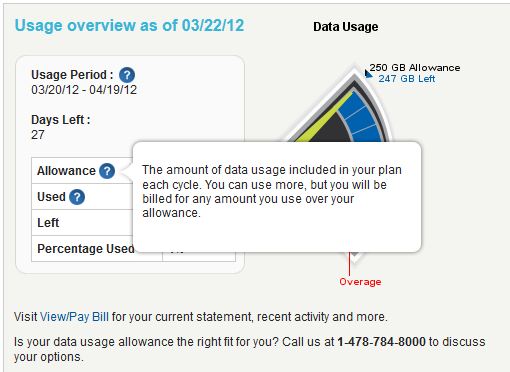
Cox's New Meter (Courtesy: Broadband Reports)

Cox Cable customers upset the cable company has a usage meter and caps should first thank them for backing down on charging broadband users overlimit fees for “excessive use.”

After that, it is time to take Cox on and tell them you don’t want your broadband usage metered at all, especially at the prices they are charging for broadband service.

Just last June, Cox Communications President Pat Esser told an audience at the National Cable & Telecommunications Association Cable Show that the industry must keep asking customers what they want and find ways to satisfy those demands.

‘Cable must accept that fact that a robust broadband platform means the ‘industry won’t control everything,’ Esser told fellow cable executives.

Stop the Cap! thinks Esser needs help understanding Cox Cable customers do not want their Internet access limited with caps and additional fees.

You don’t want to check a usage meter and cannot understand why a company that earns incredible profits from broadband that costs less and less to deliver needs to cap your access.

Cable operators don’t unveil new usage meters and mentions of overlimit fees by mistake. It is likely their new usage meter “jumped the gun” and the company temporarily withdrew it.

This is your opportunity to deliver a death blow to Cox Cable’s Internet Overcharging.

Get Involved and Send Cox Executives the Message!

Call Cox Corporate Relations at (888) 566-7751 or e-mail them at [email protected]

Better yet, you can write directly to Cox’s top executive.  We have provided a sample, but you can be most effective writing it in your own words:

Mr. Pat Esser
President, Cox Communications
1400 Lake Hearn Drive
Atlanta, GA 30319

Dear Mr. Esser,

Last June, you told attendees at the National Cable & Telecommunications Association annual meeting that the cable industry needs to keep asking customers what they want and then find ways to satisfy those demands.  As a loyal Cox customer, I am taking advantage of that opportunity to write and express my profound concern Cox Cable has started to limit my Internet usage.  I cannot understand why Cox needs usage caps at a time when broadband revenue is skyrocketing and the costs to deliver the service are actually in decline. There is simply no justification for these limits, particularly after Cox upgraded its network to DOCSIS 3, which supports a considerably larger data pipeline.

Cox and other cable operators are introducing new, faster speeds for customers to earn more revenue.  But with usage caps, there is little incentive to pay more for faster service that remains constrained with a usage limit.  Would you buy a race car you could only drive around the block?

As competition for my telecommunications dollar continues to increase, I am willing to cancel my Cox service over this issue and take my business to another provider.  Some have shown a willingness to waive usage caps in order to win my  business, and I am happy to oblige. I’d prefer to stay with Cox, but not if your company keeps refusing to listen to its customers on this issue.

If you were serious in your remarks last summer in Chicago, then you should follow the lead of companies like Verizon, Cablevision, and Time Warner Cable which have all avoided imposing usage limits on customers. Time Warner Cable believes unlimited broadband should always be available to customers. Cox has imposed limits on everyone, and that has to change.

Very truly yours,

// Your signature here

Time Warner Cable Adds $2.50 Monthly Modem Rental Fee for New Customers; Buy Your Own

Phillip Dampier March 27, 2012 Consumer News 20 Comments

[Update 10/2/2012: If you are visiting here to explore Time Warner Cable’s new $3.95 modem rental fee, please visit this article for the latest information and reviews, should you wish to purchase your own modem to replace the one you currently rent from the cable company.]

In mid-March, Time Warner Cable added a $2.50 monthly modem rental fee for all new broadband customers, but existing customers not already subject to modem fees will be exempt from paying it.

The new equipment fee applies even in areas where cable modems have always come free with the cable company’s broadband service.  Until this month, customers in some areas including Rochester, N.Y., could not purchase their own cable modem equipment, but that restriction has now been dropped.  In areas where modems always came free with service, some customers have told Stop the Cap! the cable operator cannot provision their new modems until after April 1st.  Call your local Time Warner Cable office for exact information applying in your local area.

At $30/yr, consumers are advised it may be more affordable to purchase your own cable modem, especially if you are comfortable installing it yourself.  Cable modems are at least as reliable as wireless routers, and even easier to configure.

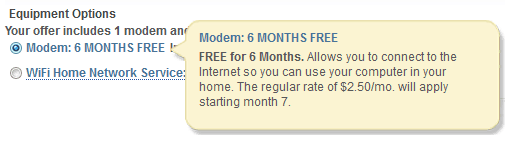
Time Warner Cable’s current promotion page offers six months of free modem rental to new customers, with fees starting the seventh month.  The cable operator supports a large number of different modems.  In the northeastern United States, Time Warner will provision any of these units (you can find your area’s list of approved equipment on Time Warner’s Internet Support page):

Vendor Model

 DOCSIS 3.0

ARRIS TM402G N
ARRIS TM402P N
ARRIS TM502A N
ARRIS TM502G N
ARRIS TM508A N
ARRIS TM512A N
ARRIS TM602G N
ARRIS TM604G N
ARRIS TM608G N
Cisco DPC2100 N
Motorola SB5101 N
Motorola SB5101N N
Motorola SB5101U N
Motorola SB6141 Y
Motorola SBG6580 Y
Motorola SBG900 N
Motorola SBG901 N
Motorola SBG940 N
Motorola SBG941 N
Motorola SBV5121 N
Motorola SBV5222 N
Motorola SBV5322 N
Netgear CGD24G-100NAS N
SA DPC2100r1/2 N
SA DPC2203 N
SA DPC2203C2 N
SA DPX2203 N
SMC 8014CPR N
SMC 8014WG N
SMC 8014WG-SI N
Thomson DCM425 N
Thomson DCW725 N
Thomson DWG855 N
Ubee (formerly Ambit) DDC2700 N
Ubee (formerly Ambit) DDW2600 N
Ubee (formerly Ambit) U10C018 N
Ubee (formerly Ambit) U10C019 N
Ubee (formerly Ambit) U10C020 N
Ubee (formerly Ambit) U10C022 N
ZyXEL 974H N
ZyXEL 974HW N

Prices range from under $50 for the DOCSIS 2 Motorola Surfboard SB5101, to north of $130 for Motorola’s DOCSIS 3 SURFboard Gateway SBG6580 on Amazon.com.

We called Time Warner customer service in Rochester for information about the modem rental vs. purchase option and learned:

  • The modem rental fee only applies to DOCSIS 2.0 equipment suitable for Road Runner Lite, Standard or Turbo service (1-20Mbps);
  • Road Runner Extreme (30/5Mbps) and Wideband (50/5Mbps) still includes free rental of the DOCSIS 3 cable modem and the company does not currently support customer-owned DOCSIS 3 modems in this area;
  • Support options for customer-owned equipment are obviously more limited, but should your cable modem fail, you can quickly rent a replacement and pick it up at your local cable store to get back online fast;

We also learned Time Warner is running promotions in many areas pitching existing Standard and Turbo Service customers six months of Road Runner Extreme for just $10 more a month for six months. If you need 50/5Mbps Wideband service, signing up for Signature Home at $199 a month is often the best value when combining phone, Internet, and cable TV service.

Because different regions handle cable modem equipment and promotions differently, it is important to call your local office prior to ordering any equipment to verify it can be provisioned and to obtain correct information about any promotions or pricing.

Verizilla: Bad for Competition, Bad for Consumers, Bad for You, Says CWA

Phillip Dampier March 27, 2012 Broadband Speed, Competition, Consumer News, Public Policy & Gov't, Verizon, Video, Wireless Broadband Comments Off on Verizilla: Bad for Competition, Bad for Consumers, Bad for You, Says CWA

Verizilla

The Communications Workers of America has a new, decidedly low-budget video decrying a spectrum swap between America’s largest cable companies and Verizon Communications that will leave Verizon Wireless stores pitching cable television service from one of Verizon’s cable company competitors.

To the CWA, this is nothing less than the birth of Verizilla, a new monster of a telecommunications company that has capitulated on competing with Big Cable and will instead devour the wireless communications marketplace for itself.  The CWA interest is obvious: many of its employees are responsible for constructing and maintaining Verizon’s now-stalled FiOS fiber to the home network.

From the CWA:

The deal, struck behind the closed doors of America’s corporate boardrooms, poses a threat to consumers and workers. If it goes through, it will be the death knell for competition between cable and telecom companies. Verizon Wireless, Time Warner, Comcast, and other cable companies will become a giant, unregulated quasi-monopoly. Verizon will have no incentive to challenge cable by building FiOS into new areas — meaning less competition, consumer choice, and higher prices for consumers.

Less FiOS also means fewer jobs building, maintaining, servicing, and installing the network. This deal will create a corporate behemoth that will use exclusive quad-play market power to shrink its future workforce.

Worst of all, Verizon Wireless and the cable companies are refusing to come clean about the details of the deal. Even as the FCC and Department of Justice review it, we still don’t know what it means for consumers or workers.

The CWA has so far collected more than 135,000 signatures on its petition opposing the current form of the deal. 

[flv width=”640″ height=”380″]http://www.phillipdampier.com/video/Verizilla.flv[/flv]

America, say hello to Verizilla, wreaking reduced investment havoc on Verizon service areas across the northeastern United States.  (2 minutes)

Would You Give Up Sex, Chocolate, or a Daily Shower For the Internet?

Phillip Dampier March 26, 2012 Consumer News, Video Comments Off on Would You Give Up Sex, Chocolate, or a Daily Shower For the Internet?

[flv width=”360″ height=”290″]http://www.phillipdampier.com/video/WPRI Providence What Would You Give Up for the Internet 3-22-12.mp4[/flv]

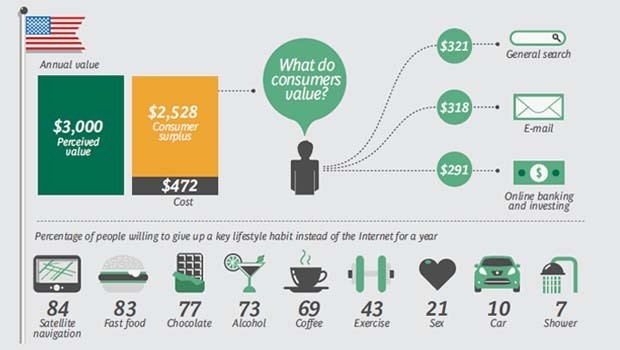
What would you give up to keep the Internet?  WPRI in Providence ponders what people would be willing to sacrifice if it meant they could keep broadband service.  A new study from a Boston consulting group proves that Americans increasingly depend on immediate, fast, and affordable access to the Internet.  Providers aren’t asking for you to stop showering, give up sex, or throw in the towel on family vacations.  Some just want you to pay more for less service at a time when a lot of people treat the Internet as their primary means of communication.  (Loud Volume Alert!)  (6 minutes)

Search This Site:

Contributions:

Recent Comments:

Your Account:

Stop the Cap!