Home » Consumer News » Recent Articles:

Rogers Communications Set to Layoff 300 Workers

Phillip Dampier March 29, 2012 Canada, Consumer News, Rogers Comments Off on Rogers Communications Set to Layoff 300 Workers

Rogers Communications is preparing to lay off up to 300 employees, and began notifying affected workers Wednesday.

Rogers is Canada’s largest telecommunications company, providing service to more than 9 million mobile phone customers, millions of cable and broadband subscribers, and has ownership stakes in some of the country’s largest broadcast outlets and print publications.

“This is a very difficult decision, obviously,” Patricia Trott, Rogers’ director of public affairs, told the Toronto Star. “We don’t make these decisions lightly but we really feel we’re positioning ourselves well to maintain our leadership going forward.

Trott confirmed most of the layoffs would come from management and head office positions.  The company has been studying ways to increase operating efficiency.

FreedomPop Threatens to Tear Up Wireless Data Business Model With Free GB of 4G

Phillip Dampier March 29, 2012 Competition, Consumer News, FreedomPop, NetZero, Video, Wireless Broadband Comments Off on FreedomPop Threatens to Tear Up Wireless Data Business Model With Free GB of 4G

“Disruptive” is perhaps too timid a word to use for Skype co-founder Niklas Zennstrom, the man who brought Excedrin-strength headaches to the music industry with file-swapping software Kazaa and streamed video across the net for free with Joost.  Now he wants to blow up America’s business model for expensive wireless data by literally giving it away to wireless phone users.

FreedomPop has a “freemium” business model of its very own — give away 1GB of 4G data through Clearwire to iPhone owners willing to use FreedomPop’s WiMAX-fitted phone case with the hope users will throw more business their way for around $10/GB after the first gigabyte is gone.

Zennstrom

Clearwire has been in the mood to make deals with all-comers to leverage its WiMAX network that carriers like Sprint plan to abandon for LTE 4G service in the not-too-distant future.  By giving away 1GB of free usage (and it remains unclear whether this is a “one-off” deal or if the meter resets to zero every month), the company is set to draw plenty of free press.

FreedomPop is likely to appeal to price-sensitive customers who don’t want to pay providers $30 a month for 2-3GB of usage when a much smaller, cheaper data plan combined with the free service will do.

The WiMAX case, which will fit over Apple’s iPhone, also acts as a mobile hotspot, supporting up to eight concurrently-connected devices.  No change of phone is required as users can connect to the service through Wi-Fi.

Customers will have to place a deposit on the case, likely less than $100, refundable when returned in good condition.

With most people not exceeding 1GB of usage per month, the only cost will be the “bare minimum” data plan customers are required to take with AT&T, Verizon Wireless, or Sprint, which currently runs $15-20 for a few hundred megabytes.

Clearwire’s WiMAX doesn’t deliver coverage to all points in the United States, and its speeds are considerably lower than 4G LTE service.  But free is free – a concept NetZero hopes to use to pitch a similar free 4G Clearwire WiMAX service.  The primary difference is your granted usage allowance.  FreedomPop will provide 1GB — NetZero 200MB.

[flv width=”512″ height=”308″]http://www.phillipdampier.com/video/WSJ How Skype Co-Founder Hopes to Make Money Giving Away Mobile Broadband on FreedomPop 3-23-12.flv[/flv]

The Wall Street Journal explores the business model of FreedomPop.  How can giving away 4G data succeed financially?  (4 minutes)

Cox Cable Raises Rates 18% in Virginia – Local TV Fees Blamed for 2nd Hike in 10 Months

Phillip Dampier March 29, 2012 Consumer News, Cox, Video Comments Off on Cox Cable Raises Rates 18% in Virginia – Local TV Fees Blamed for 2nd Hike in 10 Months

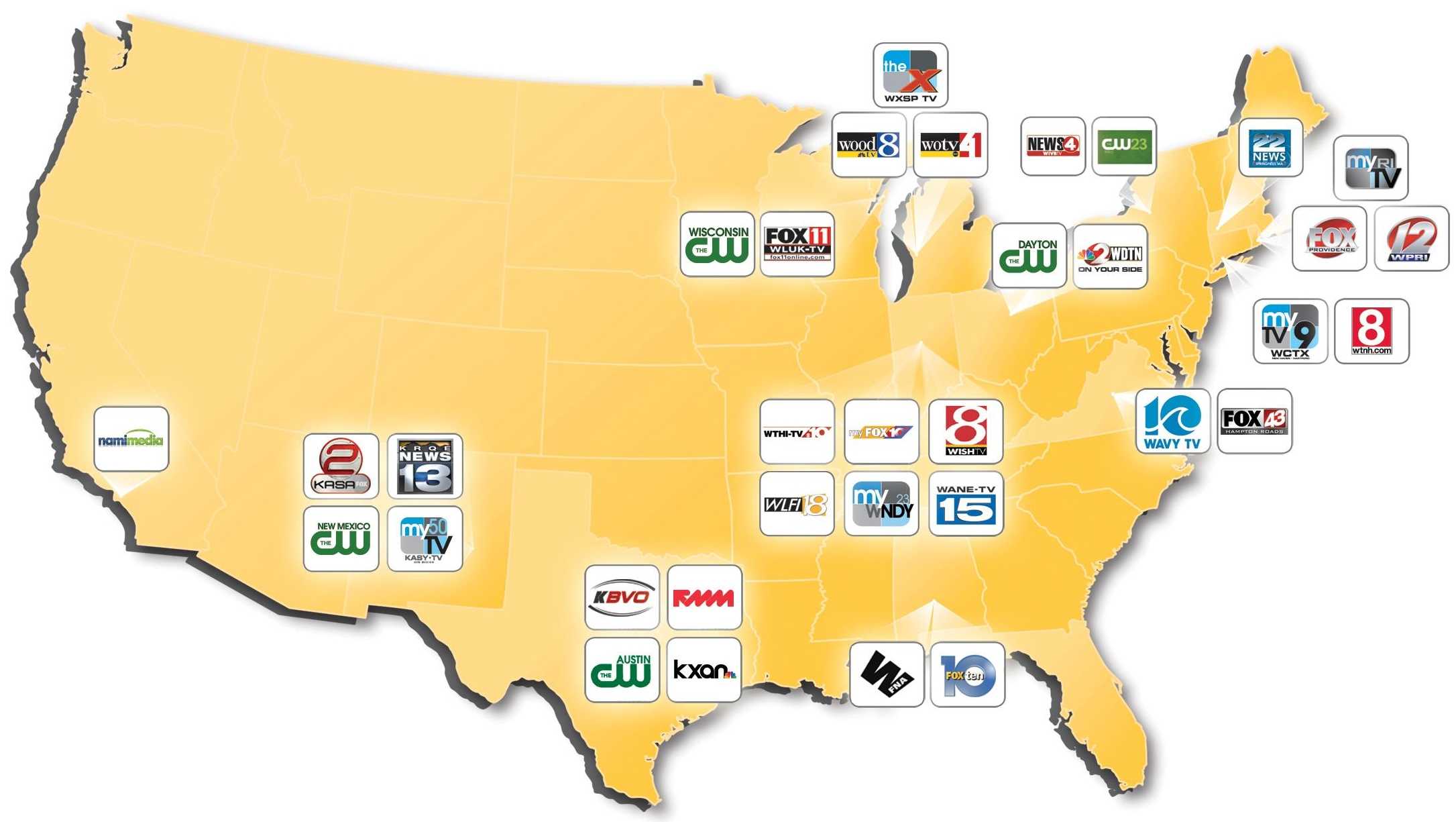
In late February, LIN Television, owner of Norfolk’s NBC affiliate WAVY and Hampton Roads’ Fox station WVBT was engaged in a high profile battle with Cox Cable over retransmission consent fees — the price the cable company pays to put over the air broadcast stations on the cable dial.  While neither side would say exactly how much money was involved, Cox Cable customers will foot the bill starting April 2nd, when the Virginia cable operator raises rates up to 18.3% for basic cable — the fourth rate hike since 2009 and the second in 10 months.

A breakdown:

  • TV Starter (broadcast basic + a handful of basic cable networks) up 18.3% — was $18, now $21.30
  • TV Essential (local stations + 40 popular basic cable networks) up 5.5% — was $59.99, now $63.29
  • Digital set top box rental up $1 to $6.99
  • Cox Internet Essential (3Mbps) up 16% — was $24.99, now $28.99

LIN Media owns local stations around the country.

Cox officials blamed the rate increases on the cost of programming, notably for local stations.

“Programming costs are rising much faster than the rate of inflation,” Felicia Blow, a Cox spokeswoman, wrote in an email to the Virginian Pilot. “While we absorb much of the increase incurred […] we must pass on a portion of the increases to our customers.”

Local broadcasters across the country are aggressively pursuing retransmission consent fees as the traditional advertising model for free, over the air television, has been challenged by the soft economy and poor ad sales.  Parent companies that own clusters of local stations also see the fees as a lucrative new revenue stream for themselves and their investors.

Over the past decade, Cox generally has raised its prices about once a year, notes the Virginian Pilot. The company began speeding up the timetable in 2010. With the latest change coming in April, Cox will have boosted rates for at least some parts of its service – particularly the cost of its most popular package – four times since November 2009.  Approximately 90 percent of 416,000 Hampton Roads-area Cox customers will be paying more for cable service this spring as a result.

[flv width=”360″ height=”290″]http://www.phillipdampier.com/video/WAVY Norfolk Attention COX Communications Subscribers 2-29-12.mp4[/flv]

WAVY in February reported on its parent company’s battle with Cox Cable in this self-serving story aired on its evening newscast.  (3 minutes)

New York’s Digital Phone Legislative Silliness: Deregulated Providers Want… Deregulation

Phillip Dampier March 28, 2012 Competition, Consumer News, Frontier, Public Policy & Gov't, Rural Broadband, Verizon Comments Off on New York’s Digital Phone Legislative Silliness: Deregulated Providers Want… Deregulation

Cuomo

New York’s telecommunications providers are up in arms over Gov. Andrew Cuomo’s decision to yank permanent deregulation for the “digital phone” industry (otherwise known as “Voice Over IP/VoIP”) from his budget, even though the phone service is already deregulated in New York.

Now Verizon Communications and Time Warner Cable are claiming that without the deregulation they already enjoy, innovation, investment, and competition will be stifled.

“Verizon is very disappointed that New York’s lawmakers, who want the public to believe that New York is open for business, will not be acting on this important measure to modernize the state’s outdated telecommunications laws in this year’s budget,” Verizon spokesman John Bonomo told the Albany Times-Union.

“It’s about new technologies, it’s about new services,” echoed Rory Whelan, regional vice president of government relations for Time Warner Cable. “We want New York to be at the forefront of where we roll out our new products and services.”

That notion has left consumer groups and telecommunications unions scratching their heads.

“They are saying that this is going to open the flood gates to more investment,” said Bob Master, political director for one chapter of the Communications Workers of America, which represents Verizon workers. “It’s ridiculous.”

Master says Verizon has been abandoning and ignoring their landline network for years, preferring to invest in Verizon Wireless and its limited FiOS fiber-to-the-home service which is available in only selected areas of the state.

New York’s Public Service Commission has largely not regulated competing phone service since Time Warner Cable first introduced the service as an experiment in Rochester.  As part of then-Rochester Telephone Corporation’s (now Frontier Communications) “Open Market” Plan, competing telephone companies could offer landline service in the company’s service area, so long as Rochester Telephone received the same deregulation benefits.  Only the cable company showed serious interest in providing home phone service, which it first delivered using traditional digital phone switches phone companies like Verizon and Rochester Telephone use.  Time Warner later abandoned that service for a VoIP alternative it branded as “digital phone.”

Time Warner’s “digital phone,” as well as Verizon’s own VoIP service sold with FiOS, have co-existed regulation-free.  Consumer advocates suspect the push to deregulate could eventually benefit Verizon more than cable operators, because it gives the phone company the right to question why any of its telephone services are regulated.  Verizon’s FiOS fiber-based phone lines do not operate on the same network its still-regulated landlines do.  Verizon, along with all traditional phone companies in New York, are subject to “universal service” guidelines which assure even the most rural New Yorkers have access to reliable telephone service.

But Verizon, like most traditional phone companies, sees substantial investment in “modernizing” legacy copper-based networks as an anachronism, especially as they continue to lose customers switching to cheaper cable providers or wireless phones.  The company recently declared its fiber optic replacement network, FiOS, at the end of its expansion phase.  That leaves the majority of New Yorkers with a copper-based telephone network companies only invest enough in to keep functioning.
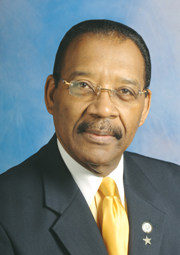
Diaz

Bronx Borough President Ruben Diaz, Jr., joined many New York Assembly Democrats in strong opposition to the bill, which Diaz thinks undercuts New York consumers:

If this proposal were to become law, all consumers would lose out. For starters, customers would not be able to bring service complaints to the Public Service Commission, as they currently can with traditional service. Additionally, there would be no way for the state to set standards for quality or for service in underserved regions — meaning that customers could get stuck with exorbitantly high rates or be unable to obtain service at all in some areas of the state.

Verizon FiOS, one of the main options for VoIP coverage, has now been installed in many regions of the state, including most of downstate. However, Verizon has chosen not offer the service in upstate cities like Albany, Binghamton, Buffalo, Rochester, Syracuse and Utica. The result is both a virtual monopoly for the cable companies in those areas and another blow to lower-income working families who live in cities. That’s precisely why the state should be able to guarantee common sense regulations for VoIP service.

The problems with deregulating VoIP service are multifold. While traditional phone companies pay into a fund that supports “lifeline” phone access for elderly and disadvantaged New Yorkers, VoIP providers would not have to. We do not have to guess at how things would look if the state gives up its right to regulate internet phone service — we can just look at the states where traditional land line service has been deregulated. According to a recent survey of 20 states that have seen land line deregulation, 17 of those states have seen rate increases. We simply cannot afford that, particularly when our fragile national recovery is just beginning to take hold.

Verizon appears undeterred by the governor’s decision to pull the deregulation measure from consideration in his budget measure.  Bills to deregulate continue to float through the Republican-controlled Senate and Democratic-controlled Assembly, but New York’s legislature is notoriously indecisive and slow to act.  Time Warner’s Whelan believes the best chances for the deregulatory measure will be in the GOP-controlled Senate where a similar bill passed last year.  Verizon says it will continue to push for the bill in both chambers.

“We intend to continue pushing for this important measure, and for other measures that will benefit the state’s consumers and businesses to keep up with technological change and help the state thrive and succeed,” Bonomo said.

HBO No Go for Time Warner Cable/Comcast Customers With Xbox

Phillip Dampier March 28, 2012 Comcast/Xfinity, Consumer News, Online Video 5 Comments

While Comcast is generously taking the caps off for Xbox customers looking for Comcast Xfinity On Demand content, those looking for HBO Go will not find it available period. Time Warner Cable doesn’t cap their customers, but they are not offering HBO Go for Xbox users either (as well as those with set top streaming boxes like Roku).

Microsoft announced this morning Comcast Xfinity, HBO Go, and MLB.tv apps for Xbox Live were now available, but both cable operators have decided HBO Go on the Xbox is not right for them, at least for now.

Microsoft updated their website to confirm neither cable operator, serving tens of millions of customers, were among the providers supporting HBO Go on the gaming console. The service is available to customers of AT&T, Bend Broadband, Blue Ridge Communications, Cablevision, Charter, Cox, DirecTV, Dish, Grande Communications, HTC Digital Cable, Massillon Cable/Clear Picture, Mediacom, Midcontinent Communications, RCN, Suddenlink, Verizon, and Wow!

Oddly, Stop the Cap! readers tell us they can access HBO Go on Comcast’s iPad and iPhone apps, which hold some hope HBO Go will show up eventually on the gaming console.

Time Warner Cable is another story.  We’ve previously noted they’ve shown no interest in allowing streaming video and game consoles access to premium movie channel content, although they do support some access through phone and iPad apps.

Search This Site:

Contributions:

Recent Comments:

Your Account:

Stop the Cap!