Home » Consumer News » Recent Articles:

Comcast Cleans Up Its Act in Savannah; New 11-Pt Plan to Deliver Improved Service Unveiled

Phillip Dampier April 11, 2012 Comcast/Xfinity, Consumer News, Public Policy & Gov't, Video Comments Off on Comcast Cleans Up Its Act in Savannah; New 11-Pt Plan to Deliver Improved Service Unveiled

Comcast's shoddy installation work in one Savannah resident's home.

Savannah residents fed up with Comcast Cable’s performance in the Georgia city should see major service improvements soon, the company promised residents and city officials on Thursday.

City officials began investigating Comcast back in January as residents flooded city hall with complaints about the company’s service, billing problems, and treatment of customers.  At least 350 formal complaints led Alderman Tony Thomas to suggest Comcast had failed Savannah.

A series of town hall meetings held across the city brought scores of complaints about incompetent service technicians, endless billing errors, and deteriorating service.  When the city threatened to consider not renewing Comcast’s franchise, which permits it to operate within city limits, the company quickly began resolving complaints.

Last week, Comcast formally introduced an 11-Point Plan for improved service for Savannah, although many of the promised improvements come with some caveats.

Some of the key components gleaned from the Savannah Morning News:

  • Re-introduce the Comcast Guarantee, which gives a 30-day, money-back guarantee; a 24-hour service line; a $20 credit for a late or missed appointments; an easily understood bill and a promise to resolve a problem in one visit or offer a complimentary service. However, this nationwide guarantee was already in place in Savannah and other Comcast service areas, and requires consumers both to be aware it exists and specifically request the company deliver on its promises. Comcast does not volunteer service credits or provide money back or free service unless specifically requested;
  • Provide 6,000 hours of training to Comcast technicians over the next year. Contractors cannot participate because of federal regulations regarding non-employees, said Andy Macke, a Comcast vice president.  However, many of Comcast’s installers across the country are contractors, and they committed some of the worst offenses for Savannah residents complaining about shoddy installation work. They are exempt from the required training Comcast promises to deliver;
  • See whether bus service can be extended to Comcast’s Chatham Parkway office or see whether another local office can be opened. Comcast only operates one walk-in location for the entire city of Savannah.  However, Comcast has no authority to require public transportation officials to extend bus service to their cable office and the company has made no concrete commitment to actually another one;
  • Quarterly town hall meetings and a city of Savannah hot line to get feedback. Comcast will hold three meetings over the next year, but will use them to promote new products and initiatives. This alters the original intent of the town hall meetings — to provide an opportunity for residents to air grievances, recreating them as marketing and sales events;
  • By mid-year, Comcast will extend broadband services to 111 businesses downtown, which will cost about $150,000.  However, Macke says only those businesses that express “interest” and fall within the company’s “Return On Investment” formula will qualify for service. Unless Comcast loosens its payback formula, most businesses that couldn’t get Comcast to install service before will remain unqualified to receive it going forward.

Despite these caveats, most city officials seem relieved the company is now addressing the complaints which turned Comcast’s performance into a political issue earlier this year.

Mayor Edna Jackson told Comcast she was pleased with the company’s improved level of service.

“It seems as if you heard us and the message went out very well,” Jackson said. “You have worked very hard and very diligently.”

Comcast also promises to expand its low-income Internet Essentials broadband service into more parts of its service area.  The company reported that out of 18.1 million homes that purchase broadband service from the cable operator, just 41,000 qualified for the Internet Essentials program, which sells low speed Internet access for $10 a month.

[flv width=”640″ height=”500″]http://www.phillipdampier.com/video/WTOC Savannah Comcast Resolving Complaints 4-8-12.mp4[/flv]

WTOC in Savannah covered the city council’s reaction to Comcast’s promises of improved performance for the city’s cable subscribers.  (4 minutes)

[flv width=”480″ height=”290″]http://www.phillipdampier.com/video/WJCL Savannah Comcast Promises Improvements 4-8-12.mp4[/flv]

WJCL, which apparently anchors their newscast outdoors, got into the specifics of Comcast’s 11 point plan for better cable service in Savannah  (2 minutes)

[flv width=”640″ height=”380″]http://www.phillipdampier.com/video/WSAV Savannah City Council and Comcast Reach Solution 4-8-12.flv[/flv]

WSAV, also in Savannah, called the agreement with city officials and Comcast “a compromise.”  (2 minutes)

Verizon Sued for Selling Faster Speed DSL Services They Can’t Deliver

Phillip Dampier April 11, 2012 Broadband Speed, Consumer News, Data Caps, Public Policy & Gov't, Rural Broadband, Verizon Comments Off on Verizon Sued for Selling Faster Speed DSL Services They Can’t Deliver

A California woman is suing Verizon Communications for selling her faster Internet service, at a higher price, the company cannot actually deliver.

Patricia Allen of Santa Monica filed suit in Los Angeles after Verizon sold her an upgrade to her current DSL plan that turned out to be anything but.  Allen was paying $23.99 a month for 768kbps service, but in March, 2011 Verizon promised they could give her a speed upgrade to 1.5Mbps for $11 more per month.

Exactly one year later, Allen learned her “upgraded service” performed no better than her original Internet plan, which itself only managed around 500kbps, and called Verizon to complain.

Verizon technicians quickly responded Allen could never get the benefits of a faster speed plan because she lived at least two miles from her local Verizon central office.  DSL speeds degrade with distance and can also be impacted by the quality of the landline network Verizon maintains in southern California.  Because Allen lives too far away to receive anything better than 700kbps service, she was advised to downgrade her $34.99 DSL plan back to the one she started with.

Allen requested a refund for the extra $11 a month she was paying for the last year for promised speed improvements Verizon never delivered, but the company flatly refused her request.  Allen is now taking her case to the California courts, and her legal representatives are seeking to have the case designated a class action covering all Verizon landline customers in California who, like Allen, are paying for Verizon-marketed speed upgrades they actually cannot receive.

The suit claims Verizon is well aware it is selling speed upgrades to customers who live too far away from the company’s facilities to actually benefit from the enhanced service, and pockets the proceeds without delivering improved service.  The suit alleges Verizon is engaged in unethical, unscrupulous, immoral, and oppressive business conduct in violation of California state law.

Verizon’s spokesman Rich Young called the lawsuit “baseless and without merit.”

Verizon Class Action Copy

Your Cable TV Bill in 2020: $200/Month — Just for Television Shows, Says New Report

Phillip Dampier April 10, 2012 Competition, Consumer News, Online Video Comments Off on Your Cable TV Bill in 2020: $200/Month — Just for Television Shows, Says New Report

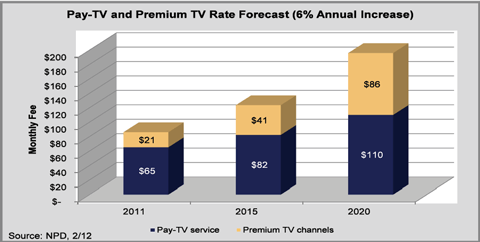
If you thought paying an average of $86 a month for basic pay television and premium movie channels in 2011 was out of line, just wait.  A new report predicts you could pay $123 by the year 2015 and $200 by 2020 — and that only includes the TV portion of your bill.

That is in keeping with typical annual rate increases, typically blamed on “increased programming costs,” which currently run an average of six percent a year.

The NPD Group, who published the findings, predicts consumers may not sit still for that kind of monthly cable television bill, especially as household incomes for the middle class continue to remain stagnant, even as high fuel and health care prices continue to march higher.

The pay television industry isn’t entirely responsible for the annual rate hikes that nearly always outpace the rate of inflation.  The real money is in programming production and distribution, which is why giant companies like Comcast, Bell, Rogers, and Viacom are buying up programming studios, distributors, and networks at a rapid pace.

With new players like Netflix, Amazon, and Redbox joining traditional pay television and broadcast network bidders, auctions for exclusive licensing agreements bring higher and higher bids.  Ultimately, consumers pay the price in the form of higher bills.  Even cable networks, sensing an increase in the value of their programming, are extracting higher monthly fees at contract renewal time.

The last to arrive at the programming money party?  Local over-the-air broadcasters that used to beg cable companies to carry their channels on the local lineup.  Now some are demanding as much as $5 or more per month per subscriber to allow the cable operator to keep carrying the stations.

“As pay-TV costs rise and consumers’ spending power stays flat, the traditional affiliate-fee business model for pay-TV companies appears to be unsustainable in the long term,” said Keith Nissen, research director for The NPD Group. “Much needed structural changes to the pay-TV industry will not happen quickly or easily; however, the emerging competition between video on demand and premium-TV suppliers might be the spark that ignites the necessary business-model transformation of the pay-TV industry.”

In other words, the more consumers cut cable’s cord and go find other ways to watch their favorite shows, the more unsustainable the traditional pay television business model will become.  Some industry watchers believe cord-cutting is not a major issue.  Others believe continued rate increases will drive customers to cancel service, particularly when alternatives are available. But NPD believes economic factors are the biggest reason for cable cord-cutting.  Those ex-customers are switching back to free “over the air” television, which now delivers better picture quality and often includes additional channels that increase the number of viewing options.

NPD Group research shows most consumers don’t want to exert too much effort to hunt down online programming. Most will put up with their current provider as long as they deliver the shows they want at a price they can afford.  What could change that?  Easy-to-access to a-la-carte programming, perhaps available from services that may soon come built-in with the newest television sets.

“Pay-TV providers offer a convenient, one-stop shop for subscribers, and the majority of customers like it that way,” said Russ Crupnick, senior vice president of industry analysis for The NPD Group. “There is an open window for the industry to meet consumer needs and become to television what iTunes is to music; however, there is also a definite risk if pay-TV providers don’t capitalize on the opportunity — and soon.”

Bizarre Political Fight Threatens Community Wi-Fi System in Tornillo, Texas

Phillip Dampier April 9, 2012 Consumer News, Public Policy & Gov't, Rural Broadband, Video, Wireless Broadband Comments Off on Bizarre Political Fight Threatens Community Wi-Fi System in Tornillo, Texas

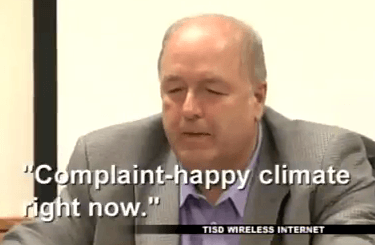
Vranish says the community's free Wi-Fi has to go because of a "complaint-happy climate." (Image: KVIA-TV)

A bizarre political dispute involving board members of the Tornillo, Tex. Independent School District threatens to shut off community-owned Wi-Fi service for more than 500 subscribers.

The Tornillo school board is no stranger to controversy, and evenly divided factions often create at atmosphere some local residents describe as the best political theater in town.

Unfortunately, the town’s Internet access may be a casualty of the school board’s latest dispute.

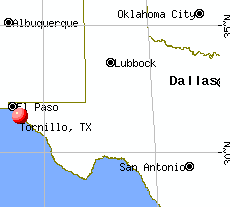
Tornillo, a small community of 1,600 in southeast El Paso County, needs Internet access.  With 36.8% of the population below the poverty line, commercial providers have shown little interest in selling broadband to the community, more than 99% of which are Latino-American.

Since 2004, the local school district has provided free wireless access for a one-time setup fee of $275.

Now school Superintendant Paul Vranish has said he will shut off the service because a majority of the school board failed to vote for a resolution that would pay for any legal fees incurred by school district employees respecting any potential complaints about the service.

Vranish blamed a local “complaint-happy climate” for necessitating legal protection, but some local residents suspect the real issue is a political dispute between Vranish, the rest of the school board, and Tornillo resident Ricardo Hernandez, who separately filed an unrelated complaint against Vranish with the Texas Education Agency.  Two state agencies are presently conducting investigations into allegations Vranish misused district funds for personal gain.

Hernandez, according to the resolution, has “questioned a former employee as to the legality” of the Wi-Fi service. Vranish apparently is unwilling to find out whether the service is legal or not, declaring he would simply terminate the service at an unspecified future date.

“It’s a simple personal and political dispute that may well cost Tornillo its Internet access and leave 500 residents in the dark, all because Mr. Vranish thinks the community will turn against Mr. Hernandez if the service does close down,” writes Maria, a local Tornillo resident. “What are these people hiding because this is certainly not about Wi-Fi.”

[flv width=”480″ height=”290″]http://www.phillipdampier.com/video/KVIA El Paso Tornillo ISD To Discontinue Free Community Wireless Internet 4-4-12.mp4[/flv]

El Paso’s KVIA sought answers to the Wi-Fi dispute, but found themselves chasing the school district superintendent down a hallway, unwilling to address questions about the matter.  (3 minutes)

Verizon Will Cease Selling Standalone DSL Service May 6th; Voice With DSL Only, Please

Verizon Communications will stop selling DSL broadband-only service to its customers May 6th in what the company is calling an effort to control costs “enabling us to continue providing competitively priced services to existing and new customers.”

Broadband Reports readers first reported receiving written notice of Verizon’s plans to discard “naked DSL” service, although existing customers who don’t move or make any changes to their account will be able to keep the broadband-only service for now.

Verizon provides the details:

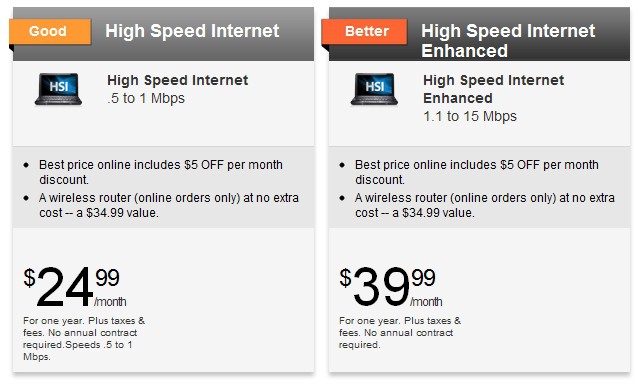
Beginning May 6, 2012, we will no longer offer High Speed Internet without local voice service on the same account.

What does this mean for you?

  • If you currently have High Speed Internet without local voice service on the same account, there is no action required on your part to continue enjoying your internet service. You will not experience any disruption of service.
  • Prior to May 6, 2012, you can still make speed upgrades or downgrades to your existing service.
  • Prior to May 6, 2012, you can receive bundle discounts by adding DIRECTV service or Verizon Wireless service to your current internet service.

What this means if you change or disconnect your High Speed Internet Service as of May 6, 2012 or after:

  • You can make changes to and retain your Verizon High Speed Internet Service on or after the above date, by adding Verizon’s local voice service to the same account.
  • If you are moving your service from one location to another on or after the above date, you may subscribe to internet service at your new location if you also subscribe to Verizon’s local voice service on the same account.
  • If you choose to subscribe to additional Verizon services you could be eligible for a bundled discount when you also subscribe to Verizon’s local voice service on the same account.

There is speculation Verizon is eliminating its DSL-only service in an effort to boost revenue and push subscribers in FiOS-enabled areas to Verizon’s fiber optic network.  A decade earlier, many phone companies fought to avoid selling “broadband-only” DSL service without a voice landline because of revenue losses.  Landline customers continue to drop voice service from traditional phone companies at an alarming rate — choosing competing cable or Voice over IP service or a cell phone.  By requiring voice service, Verizon can boost average revenue from each customer, whether those customers want the service or not.

Customers who currently subscribe to broadband-only DSL service from Verizon are advised that virtually any account change of significance can disqualify them from continuing with the service.  That includes address changes and speed adjustments.  Stop the Cap! recommends customers make any changes prior to May 6th.

Large sections of Verizon’s service area are not FiOS-eligible,  so current DSL customers with no other broadband choices may find themselves stuck with adding voice service. Verizon sells Basic Home Telephone Service with no local calling allowance at prices ranging from $7 in some communities to $16 or higher in others, excluding the FCC-mandated line fee, which runs an extra $6.50 a month.

One thing Verizon’s higher bills will accomplish is making Verizon Wireless’ new 4G LTE Home Fusion wireless broadband service look slightly more price competitive.  If a Verizon landline customer has to pay for both voice and data service, paying $60 a month for 10GB of wireless broadband may not seem that expensive in comparison.

Search This Site:

Contributions:

Recent Comments:

Your Account:

Stop the Cap!