Home » Consumer News » Recent Articles:

Utah TV News Crew Confronts AT&T Over Thief-Friendly Reactivation Policies

Phillip Dampier May 3, 2012 AT&T, Consumer News, Video, Wireless Broadband 1 Comment

A TV news crew from Salt Lake City that sent undercover reporters into an AT&T store, successfully reactivating a smartphone reported lost or stolen, returned Tuesday with cameras running looking for answers.

KTVX News found AT&T stores maintain activation policies that are exceptionally friendly to smartphone thieves, who can reactivate lost or stolen phones with no questions asked.

Stop the Cap! shared video from the station earlier this week showing AT&T employees making life difficult for victims of cell phone theft, but enthusiastically willing to collect money from new customers who received or purchased the stolen property.

A California class action lawsuit has been filed against AT&T over how it handles stolen cell phones.

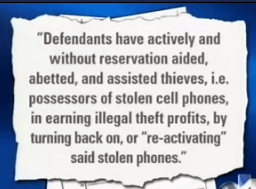
According to the suit AT&T is, “forcing legitimate customers…to buy new cell phones, and buy new cell phone plans, while the criminals who stole the phone are able to simply walk into AT&T store and re-activate the devices using different, cheap, readily available SIM cards.”

KTVX originally sought to check whether AT&T had the same thief-friendly policies in place in Utah.  It turned out the answer was yes — AT&T will turn back on any phone as long as you “put money on it.”

Text from a California class action lawsuit against AT&T

“All you would have to do is pay for the plan,” said an unnamed AT&T store employee. “We’ll set up your account with your ID, and then put the new SIM card in there and put money on it.”

A day after the undercover operation, the TV station confronted the manager at the AT&T store just outside Valley Fair Mall, in West Valley City. He refused to answer questions.

“You can’t tell us anything about whether you know employees are doing that here?” asked reporter Brian Carlson.

“I’m not going to give you any comment on that,” he said.

The store manager referred questions to a regional AT&T representative, but the station could only reach his voicemail.

AT&T’s reactivation policies are not shared by Verizon Wireless, which claims it will not reactivate a phone reported lost or stolen on its network for any reason, except if the request comes from the original phone owner.  AT&T’s policies, according to the lawsuit, help fuel cell phone theft by making it easy for thieves to sell stolen equipment to buyers confident they can reactivate and use the equipment immediately after purchase.

AT&T says they’re working on a new plan with the Federal Communications Commission and other cell phone providers to create a centralized database of stolen phones that would keep them from being activated by any wireless carrier.  That plan could be in place by the end of this year.

[flv width=”360″ height=”290″]http://www.phillipdampier.com/video/KTVX Salt Lake City ABC 4 confronts ATT store 5-1-12.mp4[/flv]

ABC4 reporters return, with cameras running, to the same AT&T store that a day earlier helpfully reactivated a phone that could have been lost or stolen, no questions asked.  (2 minutes)

Verizon’s Heavily Capped Wireless Replacement for Rural DSL Goes Nationwide

Phillip Dampier May 3, 2012 Broadband Speed, Competition, Consumer News, Data Caps, Rural Broadband, Verizon, Wireless Broadband Comments Off on Verizon’s Heavily Capped Wireless Replacement for Rural DSL Goes Nationwide

Verizon Wireless’ answer for rural America’s broadband troubles goes live across the country today, offering the broadband deprived the opportunity of getting wireless service at almost twice the price of conventional DSL, with a 10GB monthly usage allowance.

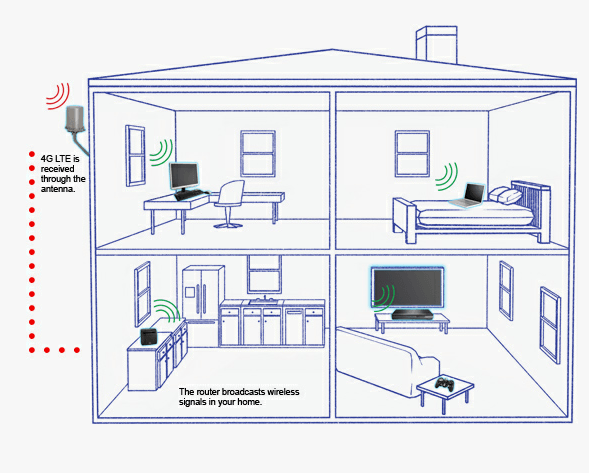
HomeFusion Broadband uses Verizon’s LTE network to deliver service to homes and businesses within range of Verizon’s 4G network.  For rural America, the speeds Verizon is capable of delivering offer a significant improvement over rural DSL.  Verizon promises 5-12Mbps down and 2-5Mbps up, depending on how many users are sharing the cell tower and how strong a signal one receives.

“HomeFusion Broadband is another example of Verizon Wireless’ commitment to providing our customers with the most innovative products and services,” said Tami Erwin, vice president and chief marketing officer, Verizon Wireless. “With HomeFusion Broadband, customers across the United States, in towns large and small, will have the chance to link devices to the Internet and take advantage of the speed, coverage and connectivity offered by our 4G LTE network.”

Whether they can afford it may be another matter.

Verizon Wireless charges a one-time equipment fee of $199.99, which includes professional installation of the required cylindrical outdoor antenna and router that allows customers to share the wireless connection with other devices inside the home.

Monthly service fees start at $60 a month and include 10GB of monthly usage. If you need more data, you will pay a significant amount to get it — up to $120 a month for 30GB of usage.  As a tease, customers get 50 percent more data allowance for the first two full billing cycles of service.  If you become accustomed to using that extra allowance, it could be very costly once the first two months are up.  Overlimit fees run $10/GB.

Verizon claims two-thirds of the country is now covered by their 4G LTE network, including the regions Verizon sold off to companies like FairPoint and Frontier Communications.  Those independent phone companies will soon have Verizon as a broadband competitor in states like West Virginia, Vermont, Ohio, and Maine. If customers value speed over everything else, Verizon could be a formidable competitor over traditional rural DSL, which often operates at speeds of 1-3Mbps, as long as customers steer clear of allowance-eating online video.

Verizon has positioned HomeFusion as a rural broadband solution, and earlier pricing and policy changes make it clear Verizon is downplaying its traditional DSL service.  In April, Verizon announced it would no longer sell standalone DSL service to customers without voice phone lines, or to those who live in areas also wired for the company’s fiber optic network FiOS.

Broadband Fantasies: Connect South Carolina’s Broadband Map is Wishful Thinking

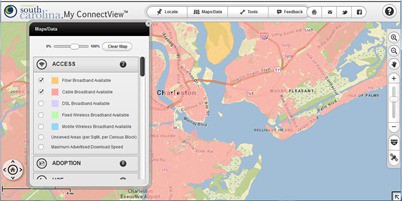
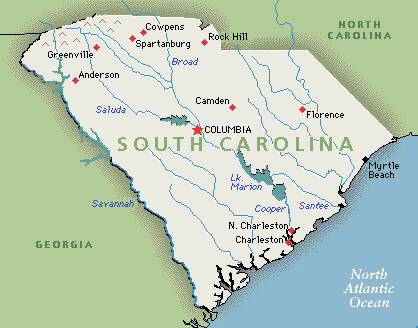
Joe Roget has one word for South Carolina’s Broadband Availability Map: “nuts.”

The 72 year old resident of a small town in South Carolina was excited to read a new statewide broadband availability map showed his street was currently getting DSL service from one of South Carolina’s largest phone companies.  But that was news to AT&T, who provides landline phone service.

“They said they had no idea what I was talking about and that whatever map data I was looking at was totally wrong,” Roget reports to Stop the Cap! “The operator was frank with me, saying it was highly unlikely I would ever receive DSL from AT&T and the company was really not expanding DSL access any longer.”

Karen, a Stop the Cap! reader near Denmark, S.C., reported a similar story.

“The broadband map Connect South Carolina has gotten a government grant to produce is total fiction in my area and is little more than cable and phone company wishful thinking,” Karen reports.

Karen says not only does her street show DSL as readily available, but cable broadband as well.  Karen and her neighbors can get neither.

“‘Never have, never will’ seems to be the attitude unless we pay $20,000 to the cable company to extend wiring down the street,” Karen says. “The phone company doesn’t have time to even consider that, but their call center is nowhere near South Carolina so those people don’t care.”

Roget wonders exactly how Connect South Carolina, a chapter of the industry-connected Connected Nation group, got their data.

The answer: it largely collects it from the data providers volunteer themselves.

“Did anyone ever bother to use some of the millions of taxpayer dollars this group got to actually verify what the cable and phone companies handed out to make sure it was real?” Roget asks.

Darryl Coffey, an engineering consultant for the group, says he spends countless hours trying to verify the data providers submit to the group.

In South Carolina, I verify each of these platforms by going out into the field with tools, test equipment and data.  We refer to this process as “provider validation.”

Provider validation involves driving hundreds of miles following telephone and cable lines, or testing wireless signals in neighborhoods as well as in remote areas.

“I have basic phone service at my home, and I don’t know how Mr. Coffey can follow a phone line to determine if it also can provide me with DSL,” Roget says. “I could tell him, or anyone else at Connected South Carolina, it most certainly does not — had they asked.”

Roget is also upset that South Carolina’s legislature is interested in preventing local communities from deploying their own broadband networks to fill in the gaps where large telecommunications companies refuse to provide service. Only he wonders exactly how legislators will know there is a broadband gap if the group drawing the maps, based on what providers tell them, shows there isn’t a problem.

“What a scam,” Roget concludes. “An industry-backed group draws maps of data volunteered by the providers themselves that legislators use to prove there is no broadband problem in South Carolina and no need for towns and cities to build their own service.”

Karen has virtually given up on South Carolina officials representing the interests of South Carolina’s citizens.

“They look out for the companies, not the people,” Karen says. “It seems if we want better broadband, we will have to move somewhere else, preferably someplace that isn’t dumb or corrupt enough to let the broadband industry control our broadband future.”

New York Accuses Verizon of Abandoning Quality Landline Service; “It’s a Duopoly”

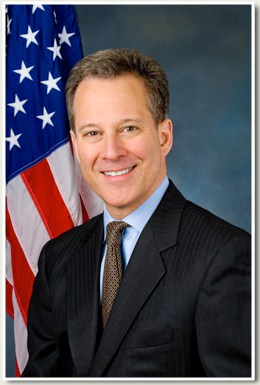
New York State Attorney General Eric Schneiderman is convinced Verizon Communications is abandoning quality landline service for millions of New Yorkers while diverting money and resources to its more profitable cell service Verizon Wireless.

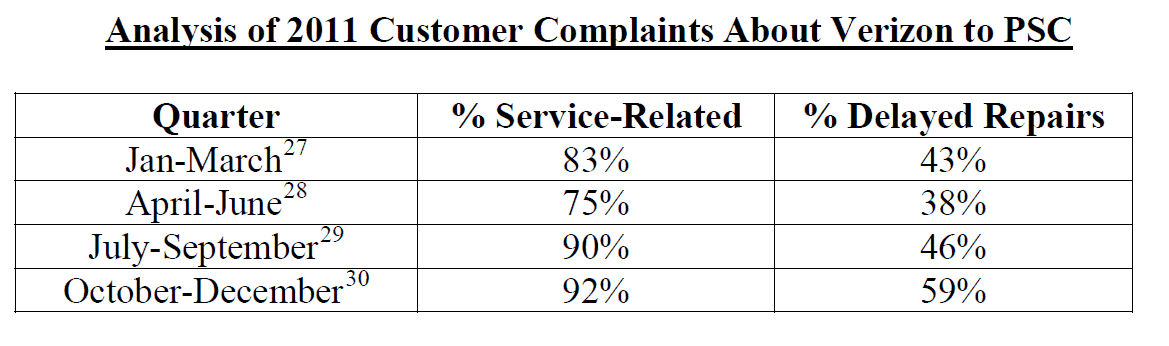
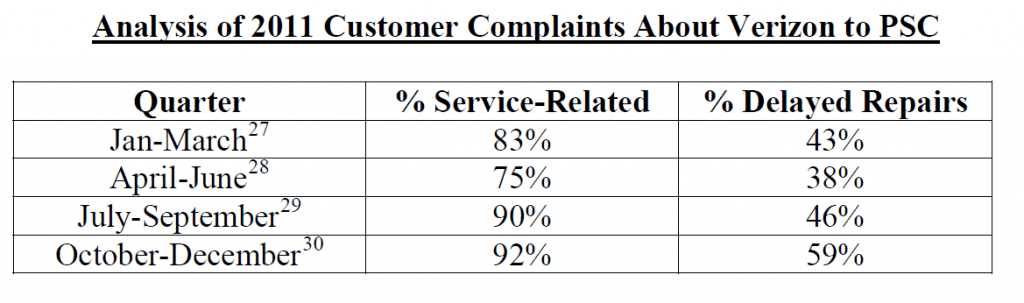
Last week, Schneiderman blasted the state’s largest landline provider for mounting complaints about poor service that now impact 92 percent of its customers, calling deregulation a failure for consumers and businesses in New York.

“Verizon customers deserve the high-quality service they’ve been promised,” Schneiderman told The Associated Press.

The attorney general reports that the number of customers enduring service outages for more than 24 hours has increased, while landline infrastructure — particularly wiring — is allowed to deteriorate.

Schneiderman suspects Verizon is shortchanging landline service as an increasing number of wired phone customers disconnect service, often in favor of Verizon’s more lucrative cell phone service.  The state Public Service Commission (PSC) fined Verizon $400,000 in March for similar concerns, pointing to the company’s intentional workforce reductions lengthening repair windows and creating repair backlogs in some regions.

Schneiderman’s office filed comments with the PSC requesting changes to Verizon’s Service Quality Improvement Plan, which was originally launched in 2010:

At best, New York’s telephone service market is a duopoly, and contrary to theoretical expectations of market controls, the presence of a single competitor has not in fact prevented Verizon from allowing customer service to continue to degrade. Rather than meet its obligations to provide wireline telephone customers with minimally adequate telephone service, Verizon is continuing to drastically reduce its workforce with the result that the company cannot meet its customers’ repair needs in a timely manner.

Verizon’s management has demonstrated that it is unwilling to compete to retain its wireline customer base, and instead is entirely focused on expanding its wireless business affiliate. It is incumbent on the Commission to take appropriate regulatory action to ensure that customers receive reliable telephone service with adequate repair performance. Therefore, the Commission should modify Verizon’s service plan to ensure customers receive adequate service quality in the future.

Verizon defended its service in New York pointing out the company has invested $1.5 billion in the state for infrastructure, including its FiOS fiber to the home network.  Verizon spokesman John Bonomo questioned Schneiderman’s claim that 92 percent of Verizon New York customers had poor service, noting 98 percent of its landline customers don’t have service problems.

Schneiderman’s highlighting of a $400,000 service fine imposed by the PSC did not account for unprecedented damage from both Hurricane Irene and Tropical Storm Lee late last summer, Bonomo added.

But the state’s attorney general notes Verizon’s service problems in New York have been ongoing well before last summer.
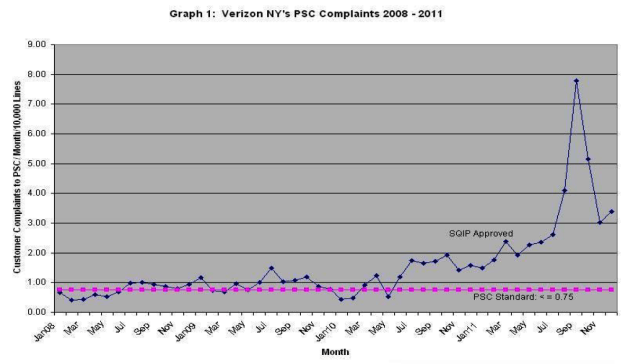
Service complaints, charted here from 2008-2011, show a major spike last summer and fall and remain higher than normal.
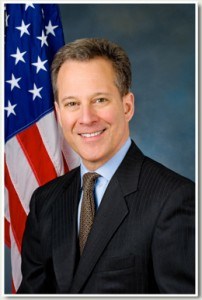
Schneiderman

“Since at least 2008, Verizon has frequently failed to meet these PSC telephone service standards essential to safe and reliable telephone service,” Schneiderman says. “Even as the number of telephone lines needing to be maintained has dwindled to half those of a decade ago (as customers choose to rely instead on wireless and/or cable telephony), Verizon’s continues to fail to meet the PSC’s service standard.”

Customers on the upper west side of New York City don’t need to be reminded of Verizon’s service failures.  Hundreds of Verizon landline customers in New York’s largest city were left without basic phone service for more than a week, only made worse by the fact Verizon told many of them they’d be without service for at least one additional week while the company worked on repairs.

Phone and Internet service went dead in multiple buildings along Central Park West April 10, but customers wanted to kill when they learned the phone company wanted more than two weeks to get service restored.

“I was like, excuse me, are you serious? Two weeks?” Iram Rivera, a concierge at 262 Central Park West, told DNAinfo.  His building was hard hit by the service outage — 80 percent of the building’s 80 apartments were affected.

“I just don’t get the feeling that there’s much of an appreciation on Verizon’s part that this is a hardship for people,” said Ken Coughlin, who lives on West 87th Street and Central Park West. “There’s no communication, there’s no updates, it’s infuriating.”

The outage only affected traditional landline service and DSL broadband over copper phone wiring. The more modern fiber-optic FiOS network that provides TV, Internet and voice service wasn’t affected, Bonomo said.

Schneiderman notes landline outages have an especially hard impact on small businesses:

In the current recession, the fragile economic condition of many small businesses puts them at risk of financial disaster if they suddenly lose telephone service, and their provider is unable to restore service promptly. Each day that these businesses are without service they lose significant revenues that many simply cannot survive without.

Small businesses depend on functional telephone service to meet the needs of their customers in numerous ways. When customers are unable to reach a business by telephone, they may assume the business is closed and purchase the goods or services they want elsewhere. Restaurants are prevented from giving reservations to prospective customers who call. Many types of businesses depend on working telephone lines for processing credit card charges, and may lose substantial sales by limiting transactions to cash or checks. Professional offices can be prevented from providing medical, legal or accounting services to their clients without working telephone service.

In Schneiderman’s view, the deregulation policies now in place in New York have failed consumers, leaving them with a duopoly of phone providers with insufficient oversight.

For competition to benefit customers with improved service, lower prices, and more innovation, there has to first be a willingness to compete, which is significantly absent from Verizon-New York’s policies and practices.

Rather than robust competition, New York’s telephone market is at best a duopoly, with as many indicators of cooperation between the two providers as robust contest for customers. Furthermore, the actual behavior of consumers in the real world is markedly different from the PSC’s theoretical assumptions about the telephone market.

When a Verizon customer experiences a prolonged service outage or installation delay, the option to switch carriers to a cable provider is of no immediate use. Finally, even if consumers wanted to compare Verizon’s service performance with cable provider alternatives, the lack of available information prevents consumers from making educated choices.

In New York, most customers are served by Verizon Communications, Time Warner Cable, or Cablevision.  Time Warner Cable and Verizon recently agreed to cross-market the other’s products and services as part of a wireless spectrum transfer.


AT&T Sued for Helping Criminals Make Easy Profits from Stolen Smartphones

Phillip Dampier May 1, 2012 AT&T, Consumer News, Video, Wireless Broadband Comments Off on AT&T Sued for Helping Criminals Make Easy Profits from Stolen Smartphones

AT&T is facing a class action lawsuit from customers who allege the wireless giant is profiting handsomely from the stolen smartphone trade.

The suit, filed in California, claims AT&T makes customers purchase new cell phones to replace stolen ones, while allowing the thieves to sell phones to buyers who can walk into any AT&T store and reactivate them with a new SIM card, helpfully supplied by AT&T.

In effect, the lawsuit argues, AT&T is earning new revenue from victims forced to purchase a new phone as well as from the buyers of stolen phones who reactivate as new paying AT&T customers.

A Salt Lake City television station couldn’t believe AT&T was looking the other way when dealing with the pervasive problem of cell phone theft, so they sent reporters undercover with a deactivated iPhone that was reported stolen, and found AT&T employees ready and willing to reactivate the dead phone.

“All you would have to do is pay for the plan, said the unnamed AT&T agent. “We’ll set up your account with your ID and then put the new SIM card in there and put money on it.”

Those victimized by smartphone theft found AT&T agents less helpful, as KTVX reports:

At a second store I tell an agent “I think my phone has been stolen.” Unlike the claims in the lawsuit, this agent at a second store tells me he can suspend the service, but there’s no way to shut the phone down.

The agent said, “If they tried to activate it, we don’t have a way to flag serial numbers on the phone unfortunately.”

So the thief has an activated phone and the victim is left buying a new one for several hundred bucks.

AT&T claims the suit is without merit.  The company also claims it is working with other cell phone providers and Sen. Chuck Schumer (D-NY), to establish a new database of stolen cell phones.  When a smartphone is reported stolen, the forthcoming policy would guarantee the phone could not be reactivated with any participating carrier.

[flv width=”480″ height=”380″]http://www.phillipdampier.com/video/KTVX Salt Lake City Class action lawsuit claims ATT helps cell phones thieves for profit 4-30-12.mp4[/flv]

KTVX reporters go undercover and visit a few Salt Lake City AT&T stores to learn if the phone company is aiding and abetting smartphone thieves.  (2 minutes)

Search This Site:

Contributions:

Recent Comments:

Your Account:

Stop the Cap!