Home » Consumer News » Recent Articles:

Cox Slams DSL in New Ads, But Cox Cable Customers Stuck With Usage Caps

[flv width=”640″ height=”380″]http://www.phillipdampier.com/video/Cox Ads 5-2012.flv[/flv]

Cox Cable has slammed its phone company competition in a series of new TV commercials that call out antiquated and slow DSL. But customers switching to Cox have to endure that company’s unjustified Internet Overcharging schemes.  Cox arbitrarily limits your Internet usage in an effort to maximize profits and reduce costs.  Watching the online video Cox advertises could put you perilously close to your monthly allowance. Exceed it once too often and you may find your account shut off.

Cox executives promise they’ll listen to customers and what they want. Stop the Cap! urges you to participate in our pushback against Cox usage caps. Tell the cable company it does no good selling their broadband service for online video when the company threatens to shut it down if you watch “too much.”  (2 minutes)

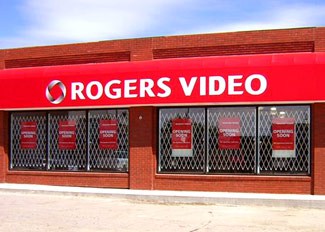
Updated: Rogers Closes Last of Video Rental Stores; Pushes Customers to PPV Instead

Phillip Dampier May 10, 2012 Canada, Consumer News, Rogers 1 Comment

Rogers Video closed for business, watch pay-per-view instead.

Rogers Communications closed the last of its remaining video stores nationwide this week, eliminating around 300 jobs.

The last of 93 stores still renting videos have been in “liquidation mode” since April, clearing rental DVDs and other videos, selling them to customers on an as-is basis.  This week, the last of that inventory was sold (or thrown out), and Canada has lost its last national video rental chain.

In 2011, Blockbuster Canada closed hundreds of its own stores, leaving some communities with no video rental retail outlets at all.

That suits Canada’s cable and phone companies just fine, as they bolster their own pay-per-view offerings, which typically come at higher rental prices.

The video rental business has done poorly in the United States as well, at least until Redbox arrived with its omnipresent video rental kiosks found outside of coffee shops, drugstores, grocers, and other retailers. Redbox charges discount rental rates from its automated vending machines, keeping the price much lower than pay-per-view offerings from cable and phone companies. That has kept earnings for traditional pay-per-view depressed in the United States.  Canadians are only now being introduced to video rental kiosks, starting in Ontario.

Rogers says it intends to keep its retail outlets open, but refocus them on selling the company’s wireless and cable television products.

[Updated: 5:24pm EDT — A Rogers spokesperson has clarified its position on video rental stores, saying in part, “While we’re no longer offering DVD and game rentals at our retail locations we’re not closing any stores. We’re not laying off any employees at these stores. We’re repurposing all locations to better serve our customers. This will include offering wireless sales and service in all locations as well as cable sales and service in many of those locations.”

The “300 jobs” statistic noted above was part of an earlier, unrelated layoff announcement. — pd]

Bulldozing Wireless Net Neutrality: Carriers Want “Toll-Free” Data for Their Partners

After intense lobbying, wireless phone companies won a significant reprieve from the watered-down 2010 Net Neutrality policies introduced by Federal Communications Commission chairman Julius Genachowski.

Now some of America’s largest cell phone companies are considering plans that would offer special “toll-free” access to favored partners’ content, while leaving everyone else subject to the companies’ usage capped data plans.

Much of the discussion about exempting certain content from data allowances is taking place at this week’s CTIA Wireless trade show in New Orleans.

Some highlights:

  • T-Mobile USA is planning to expand video streaming services offered to subscribers, but with a twist. Content creators could pay to have their shows streamed to customers, and in turn, T-Mobile would not charge that traffic against the customer’s monthly usage allowance. Whether T-Mobile would maintain an ownership interest in the content is unknown, but “preferred partners” would receive exceptional visibility through aggressive promotional campaigns T-Mobile would launch.  So would T-Mobile, which plans advertising and promotional messages inside that content;
  • Verizon Wireless said it was looking to create “toll-free” data services that would be subsidized by content providers. Video, games, and even apps could be promoted to consumers as “data usage”-free, meaning it won’t count against your monthly usage allowance. But Verizon recognizes the concept would be controversial and run afoul of Net Neutrality concerns.
  • AT&T has already signaled its interest in creating a “content-provider-pays” model where users get free access to content if content providers pay AT&T’s traffic charges.

All three carriers earlier abandoned all-you-can-eat flat rate data plans, and Net Neutrality proponents claim these latest moves are attempts by wireless phone companies to further monetize data traffic.

The Wall Street Journal reports the plans, in some cases, fly in the face of rhetoric about spectrum shortages and a wireless data traffic crisis (underlining ours):

T-Mobile’s Mr. Duea said the goal of new video offerings that don’t count against data plans would be to get customers interested in consuming more data, and set T-Mobile’s plans apart from those of other carriers.

"Data floods" and "spectrum shortages" don't stop T-Mobile.

Current FCC Net Neutrality rules require wireless carriers to not block competing services from companies like Skype and Google, nor censor content. Both Verizon and MetroPCS are challenging those rules in federal court. But wireless carriers are already exempt from giving preferential treatment to certain types of data or traffic, which opens the door to “toll-free” data services.

Net Neutrality supporters believe these practices will uneven the playing field for content creators and innovative new online start-ups, who may not be able to afford the prices carriers charge for first class treatment. It also influences consumer decision-making by encouraging customers to use the “toll-free” services to preserve their monthly data allowance.

Companies like Ericsson and Cisco have plans to market technology that will allow carriers to divide up data traffic into different traffic lanes, some fast and free to use, others subject to a customer’s monthly data allowance, and certain undesirable traffic shunted to low priority slow lanes.

A Verizon Wireless executive ironically blamed the need for “toll-free” pricing partly on the wireless industry itself, which has almost universally abandoned unlimited data plans.

“As we move away from flat rate pricing, there is room for an 1-800-type of service where certain destinations could offset the cost of the network to get customers to those destinations,” said Verizon’s chief technology officer Tony Melone. “There are Net Neutrality issues that have to be addressed, too.”

Melone added the company wasn’t quite ready to launch the “toll-free” traffic lanes just yet, but claimed certain content providers were discussing deals with the company to participate if and when the new toll booths are opened for traffic.


Breaking News: T-Mobile in Talks to Acquire MetroPCS

Phillip Dampier May 9, 2012 Competition, Consumer News, MetroPCS, T-Mobile, Wireless Broadband Comments Off on Breaking News: T-Mobile in Talks to Acquire MetroPCS

Deutsche Telekom AG is in talks to acquire MetroPCS in a stock-swap transaction that would give T-Mobile USA control over the upstart regional carrier.

MetroPCS shares jumped nearly 30 percent on the news, reported by Bloomberg.

MetroPCS operates a CDMA and LTE 4G network incompatible with T-Mobile USA’s GSM service, but would be an asset to T-Mobile’s prepaid phone unit, which could co-exist with T-Mobile’s existing network. MetroPCS primarily operates in the Boston-New York-Washington corridor, Southern California, Florida, southern Michigan, northern Georgia, and northeastern Texas. It is best known for delivering aggressive pricing on no-contract service plans, much like Leap Wireless’ Cricket.

Analysts predict T-Mobile would have little trouble winning approval for a merger between the two carriers. MetroPCS maintains an inconsequential 2.7% market share in the wireless industry. Speculation immediately increased that Leap Wireless’ Cricket unit could be the next target for a merger, potentially with Sprint or T-Mobile.

If T-Mobile sought to assume control of MetroPCS’ spectrum for its own operations, it would have to supply existing MetroPCS customers with new phones that operate on T-Mobile’s network standard.


Comcast Customers in Mich. Knocked Out Over $60 PPV Fight; Where’s the Refund?

Phillip Dampier May 9, 2012 Comcast/Xfinity, Consumer News, Video Comments Off on Comcast Customers in Mich. Knocked Out Over $60 PPV Fight; Where’s the Refund?

Mayweather

Stop the Cap! reader Nick in Grand Rapids dropped us a line to share yet another Comcast customer service bungle.

Last Saturday, several Comcast customers who paid an incredible $60 to watch the pay-per-view Floyd Mayweather Jr.’s fight against Miguel Cotto were themselves knocked out when their screens went dark with six rounds yet to be fought.

Mayweather is a Grand Rapids native.

Outraged, customers called Comcast late Saturday night looking for an explanation and a refund (after they called friends to find out who won).

Comcast couldn’t be bothered.

‘Call back Monday,’ came the response from Comcast customer service reports Shaun DeWolf.

Monday came and went and Comcast still had not refunded his money.  He called WOOD-TV 8 looking for some justice.

“It’s done and over with now,” DeWolf told 24 Hour News 8. “But at least [give me a] refund and a reason why it went out.”

The newsroom called Comcast.

A Comcast spokesperson told WOOD-TV the cable system had no major outages Saturday.  DeWolf assumed that might be the response and took snapshots of the TV screen showing Comcast’s general pay-per-view information… and no fight.

Other viewers reported similar problems.

Comcast said it is looking into the matter, but there has been no definitive decision about whether DeWolf will get his $60 back. That is ultimately all he cares about, DeWolf told the station.

If this happened to you, Comcast recommends calling customer service at 1-800-COMCAST or go online to file a complaint.

[flv width=”360″ height=”290″]http://www.phillipdampier.com/video/WOOD Grand Rapids Comcast users Mayweather fight cut out 5-7-12.mp4[/flv]

WOOD-TV in Grand Rapids intervened to help get a Comcast customer a refund for an expensive pay per view event he never got to watch.  (2 minutes)

Search This Site:

Contributions:

Recent Comments:

Your Account:

Stop the Cap!