Home » Consumer News » Recent Articles:

Canadians Still Stuck on Dial-Up: Hundreds of Thousands Go Without Broadband

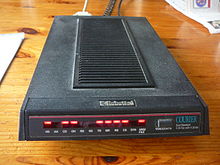
U.S. Robotics Courier dial-up modem

From the “It Could Be Worse”-Department, the Canadian Press reports hundreds of thousands of Canadians are still stuck in the dial-up world, either because they live too far away from a cable company, their local phone company will not extend DSL service to their home, or they cannot afford the high prices Internet Service Providers charge for the service.

The National Capital Free-Net, one of the oldest Free-Net dial-up networks, still has 3,600 users in the Ottawa area looking for low-cost or free access.

The broadband-less account for up to 366,000 Canadians still stuck in the Internet slow lane, with large concentrations in rural areas creating problems for a country that increasingly turns online for information, entertainment, and education.

While many consumers can recall the dial-up experience of a decade ago, today’s online world is replete with multimedia-rich advertising, complicated web pages, and other content that was never designed for anything less than a broadband connection.

CP found the Toronto Blue Jays’ official website features more than four megabytes of content, including pre-loading embedded video and graphics.  In all, nearly ten minutes passed before the website gradually loaded to completion.  Other comparatively “small” websites with a megabyte of content still took 4-5 minutes to finish, enough time to grab a cup of coffee.

As web pages become even more complex, dial-up users are now starting to avoid the web altogether, preferring to focus on e-mail and only the most essential online services. Some more tech-savvy users use content filtering software to block ads or shut off graphics, but that only goes so far. Today’s online banking and commerce sites often use plug-ins to handle transactions, which further complicates checking bank balances or paying bills online.

While users familiar with the time it takes to send complex images or sound files across a dial-up connection avoid including them in e-mail messages, broadband users don’t think twice.

That forces some dial-up users to discriminate.

[Ross Kouhi, executive director for the National Capital FreeNet] has a sister who lives in a rural area and until recently only had dial-up access. His family learned to leave her out of group emails when it came to sharing photos, he says.

“You always have to remember to not send the big pictures to the one sister, to save her the grief, because she would say it would take her all night to download a big pile of photographs,” Kouhi says.

“And she’d come back in the morning and they weren’t anything she wanted to see anyways.”

The problem will not get resolved until phone and cable companies broaden access to the Internet in more rural communities and lower the price for income-challenged consumers that cannot afford an extra $30 a month for broadband access. Without reform, a cross-section of Canada will continue to endure a digital divide.


Time Warner Cable & Comcast Sued for Violating Ex-Customers’ Privacy

Phillip Dampier June 7, 2012 Comcast/Xfinity, Consumer News, GCI (Alaska), Public Policy & Gov't, Video Comments Off on Time Warner Cable & Comcast Sued for Violating Ex-Customers’ Privacy

Time Warner Cable and Comcast are facing class action lawsuits filed in California federal court alleging both cable operators retain Social Security numbers, credit card information and contact information after customers stop doing business with the companies.

The two lawsuits claim Comcast and Time Warner Cable are in violation of the 1984 Cable Communications Policy Act which, among other things, requires cable operators to “destroy personal information when it is no longer needed for the purposes for which it was collected (and there are no pending requests for access).”

According to the plaintiffs, both companies are retaining personal information about their ex-customers indefinitely, and are not sending required annual privacy notices to former customers disclosing this fact.

The CCPA allows individuals to collect $100 for each day the cable company is in violation of the law.

The lawsuit argues that this non-essential information exposes former customers to possible identity theft or illicit action by company employees that could potentially lead to unauthorized charges or account withdrawals.

That fear is not far-fetched. Just two weeks ago, GCI — a cable company in Alaska, found itself contacting at least 400 customers who had their personal financial information stolen by an employee.  Some customers were also contacted by their credit card issuers over incidents of unauthorized credit card charges.

[flv width=”512″ height=”308″]http://www.phillipdampier.com/video/KTUU Anchorage GCI Warns Customers of Fraud 5-24-12.mp4[/flv]

KTUU in Anchorage reports a GCI employee accessed cable customer account information to commit identity theft and credit card fraud.  (3 minutes)

Cell Phone Industry Considers Imposing Expensive ‘Unlimited Voice Calling’ Plans

Phillip Dampier June 6, 2012 AT&T, Competition, Consumer News, Sprint, T-Mobile, Verizon, Wireless Broadband Comments Off on Cell Phone Industry Considers Imposing Expensive ‘Unlimited Voice Calling’ Plans

While cell phone companies tell you the only fair way to price wireless data is to charge you for what you use, these same companies are now considering how to reverse that argument and force you to buy more expensive “unlimited voice calling” plans you may not want or need.

The Wall Street Journal reports that AT&T is the most vocal proponent of ditching “tiered minute plans” for voice calls, which let consumers pick cheaper plans with fewer calling minutes. With Americans talking less and less on their cell phones, customers have been downgrading voice plans to less expensive options.

Industry trade group CTIA-The Wireless Association notes the average cell phone call dropped from 3.03 minutes in 2006 to just 1.78 minutes in 2011. Customers who rely entirely on their cell phone and no longer have a landline used to talk an average of 826 minutes per month in 2007.  Last year, that number dropped to 681 minutes, according to CTIA.

Verizon Wireless Allowance Monthly Access Overage
450 $39.99 45¢/Minute
900 $59.99 40¢/Minute
Unlimited $69.99

Verizon Wireless sells customers 900 minutes for $59.99. But the company does not count minutes used during nights and weekends or when placing/receiving calls to or from other Verizon Wireless phones. If a customer now talking less still pays $60 for a 900 minute plan, they could shave $20 a month off their monthly bill if they kept their daytime calling to 450 minutes a month. Many do. In fact, younger customers use their smartphones for talking even less, with some not even reaching one hour of voice calling a month.

Verizon's cattle call? Will the company herd all of its wireless customers to unlimited voice calling at a higher price?

Given the option to downgrade, customers are jumping at the chance. With voice revenue declining 2-4% in the first quarter, Wall Street has been pressuring carriers to act.

The answer that works for them, although probably not for you, is forcing all customers to purchase an unlimited voice calling plan at contract renewal time. At today’s prices, that could add an extra $30 a month for customers used to paying $40 for a basic 450-minute calling plan.

“The industry’s definitely moving towards unlimited,” AT&T Mobility Chief Executive Ralph de la Vega said in a recent interview. “Especially as more people adopt smartphones that have voice capabilities over the Internet, segmented voice plans will become less relevant.”

Ironically, cell phone companies that have spent the last year or two defending the end of unlimited mobile data as “fair” because customers can “choose exactly the plan they need,” are adopting a completely different strategy to push for unlimited voice calling.

“It’s more important to offer a complete solution to consumers which is really, truly unlimited,” said T-Mobile USA Chief Executive Philipp Humm in a recent interview. “The new world is a completely unlimited, worry-free world.”

Sprint agrees, although its insistence on preserving an unlimited data experience for its customers protects the company from charges of hypocrisy.

Fared Adib, head of product development for Sprint, told the Journal eliminating tiered voice options makes sense because it simplifies choices for customers. “People like the freedom of not having to worry about either data or voice,” he said.

No cell phone company would go on the record as the first to discard tiered voice plans, but AT&T led the way to ending unlimited data, and the company is increasingly vocal about ending tiered voice calling as well.

At current prices, consumers could pay substantially higher cell phone bills as a result.

Both AT&T and Verizon Wireless currently charge $70 a month for unlimited calling. Sprint charges $99.99 for its combined unlimited calling and data plan. T-Mobile charges $60 for unlimited talking and texting. Compelling customers to adopt unlimited calling plans will likely bring smartphone monthly charges well above $100 a month when factoring mandatory data plan add-ons, taxes, surcharges, and fees.

Customers who find this pricing intolerable will likely gravitate to prepaid calling plans, which is where an increasing number of occasional and light cell phone users have already ended up.

[flv width=”512″ height=”308″]http://www.phillipdampier.com/video/WSJ Voice Calling Plan Changes 6-5-12.flv[/flv]

The Wall Street Journal explores why cell phone companies want to compel customers to choose unlimited voice calling plans.  (4 minutes)

Rogers to Customer: We Are “Not Required to Honor What An Agent Says”

Phillip Dampier June 5, 2012 Canada, Consumer News, Rogers 2 Comments

Adam, a Rogers Wireless customer in Saint-Laurent, Quebec, got the customer service shock of his life when he called the telecommunications company after noticing a previously promised promotion on his wireless account was suddenly set to expire.

“Last year I was promised 100 long distance minutes for free, so long as I keep renewing my contract,” Adam told the Rogers forum on Broadband Reports. “The value was $5, balanced by a $5 credit. Last month an expiry date magically appeared next to the credit, so I called today to find out why.”

That was his first mistake, immediately apparent after the conversation with a Rogers manager quickly degenerated into petulant obstinance.

Some of the shocking things I was told include:

  • “This wasn’t documented last year.”
  • “According to the terms of service, Rogers is not required to honor what an agent says.”
  • “Recordings are not valid in a court of law for this circumstance.”
  • “We will not look at the terms of service to support our statements.”
  • “We will not listen to your recording of the original call because it doesn’t have an interaction ID.”

A follow-up with Rogers’ Office of the President brought no relief, instead provoking more testy replies from the company’s customer service agents starting with an accusation the customer was lying about the ongoing credit he was promised. Adam helpfully offered to play the original recording of the phone call where the agent made the promise, but Rogers’ executive customer service was having none of it.

“I can’t listen to the call because I’m uncertain of the legality of it,” the Rogers representative replied.

A request to clarify the situation with Rogers’ legal department left Adam on hold for several minutes followed by a frank declaration when the representative returned to the line.

“We’re not going to honor the credit, regardless of what the agent offered you,” said the Rogers senior customer service representative.

Adam was a Rogers wireless customer for 11 years, and remains shocked the company would adopt a “take no prisoners” stance over a $5 monthly credit for calling minutes. But Rogers’ reputation has been questioned by many Canadians for years. One Broadband Reports reader offered:

“Rogers reputation is so bad that it is already 50 miles below the earth’s surface. I guess they want to make it 500.”

AT&T Introduces Online Bill Analysis: A Customized Video Explains Your Charges

Phillip Dampier June 5, 2012 AT&T, Consumer News, Video Comments Off on AT&T Introduces Online Bill Analysis: A Customized Video Explains Your Charges

AT&T customers with questions about their latest bill may get personalized answers through an innovative new “SimpleView” video bill explanation service the company is unveiling to their U-verse customers.

Using SundaySky’s SmartVideo technology, AT&T can generate an on-demand, customized analysis of a customer’s latest bill in a professionally produced video presentation.

“SundaySky has a pretty basic technology that is doing amazing things for us in the cost side of our business and caring for customers,” said John Donovan, chief technology officer for AT&T. “When we get new customers and they look at bills, if they have any confusion, SundaySky gives them the ability to press a link. The link dynamically builds a custom video that walks through their own bill. The impact for our company is fewer calls into customer care, shorter calls of those that come in and enormous satisfaction of the customers.”

The video accounts for new services recently added and shows how many days a customer was billed for a service. It also explains miscellaneous charges and fees that may have been added, and even thanks customers for their last payment.

[flv width=”640″ height=”380″]http://www.phillipdampier.com/video/ATT SimpleView U-verse bill demo 6-5-12.flv[/flv]

Watch this demonstration of AT&T’s new SimpleView video bill explanation, now rolling out to U-verse customers.  (3 minutes)

Search This Site:

Contributions:

Recent Comments:

Your Account:

Stop the Cap!