Home » Consumer News » Recent Articles:

AT&T Admits It Tracks Cell Phone Customers in Quest for Additional Profits

AT&T is tracking some of their customers in a data mining experiment few know about.

AT&T is watching you.

America’s second largest cell phone company admitted Sunday it is quietly tracking the habits of customers using their AT&T cell phones to learn what they do with their time, where they work and play, how long they spend in traffic, what pubs they visit, and how long they stay.

The industry calls it “data mining,” and the treasure trove of information companies clandestinely collect about their customers could eventually become a major profit center when packaged and resold to third parties. AT&T researchers are experimenting with “big data,” according to a weekend report in the Star Ledger, sifting through vast amounts of location information customers unknowingly provide the phone company that could fetch a high price on the open market.

The newspaper reports AT&T Labs has been quietly following its customers in Morristown, N.J. in an experiment to prove its “big data” concept.

AT&T researchers mapped the movement of workers in and out of the city each day, following customers from their home to the office and beyond to favored nightspots such as bars and restaurants — all by tracking where customers’ cell phones were at different times of the week.

The result was a highly-detailed “snapshot” of daily life in Morristown. Plotted on a map, AT&T knows that workers commute from as far east as Queens, N.Y., and the city’s nightlife attracts people from northern New Jersey and Brooklyn.
Company researchers tracked customers as they moved from cell tower to cell tower as they traveled, and from that the company was able to predict patterns of behavior from local residents. For example, AT&T knows your commuting shortcuts, and can deduce (and share with urban planners) problem intersections or likely workarounds residents will typically use when traffic snarls.

Such sophisticated tracking alarms privacy advocates despite company claims personally identifiable information is scrubbed before accessed by third parties. AT&T customers are automatically opted-in for data mining when they sign up for AT&T cell service. It is included in the company’s terms of service, AT&T says.

The Morristown project was considered experimental, but AT&T has high hopes it can eventually use its “big data” concept to create a new source of revenue for the company.

AT&T is not alone using tracking capabilities to monitor its customers. Verizon is not far behind, the newspaper reports. Google itself tracks smartphone owners to help spot traffic jams for the company’s “live traffic” maps.

Privacy advocates question how informed customers are about location tracking and data mining, and what companies can ultimately do with the data.

Lee Tien, senior staff attorney with the Electronic Frontier Foundation, a San Francisco-based nonprofit organization specializing in free speech, privacy and consumer rights, told the newspaper consumers have a right to be concerned.

“One of the things you learn in kindergarten is that if you want to play with somebody else’s toys, you ask them,” Tien said. “What is distressing, and I think sad, about the big data appetite is so often it is essentially saying, ‘Hey, we don’t have to ask.’ ”

Call to Action: AT&T and ALEC Still Pushing to Banish Community Broadband in S.C.

Broadband Backwater: Don't let AT&T and ALEC keep South Carolina broadband down.

AT&T and the corporate-funded front group American Legislative Exchange Council (ALEC) are making progress banning community broadband in South Carolina with the second reading of H.3508, the AT&T Profit Protection Act.

This bill has been debated in the state legislature since early last year, and despite protestations from local community leaders in broadband-impoverished areas of the state, AT&T’s money and lobbyists can buy a lot of support.  South Carolina cannot afford to have its broadband options limited. It remains among the worst states in the country for broadband adoption, with just a tad over half of all households hooked up to the Internet. The rest either cannot afford the prices incumbent providers charge, or in many cases, nobody is willing to provide the service.

With the passage of H.3508, South Carolina’s broadband future will effectively be left in the hands of Time Warner Cable, which has some presence in larger cities, and the former BellSouth, which is now AT&T. But unless you live in greater Charleston, Columbia, or Greenville, AT&T’s investment in your future has been limited to smatterings of slow speed DSL.

Despite claims that the “private sector” will provide, South Carolina remains a broadband afterthought for telecommunications companies in the state, especially outside of major cities. H.3508 stops communities from electing to drain the broadband backwater they are forced to endure and build better service other companies simply won’t provide.

You can’t discourage investment from providers who won’t invest in South Carolina’s broadband in the first place.

Use this tool to find your state senator and take a few minutes to call their office and let them know you oppose H.3508 and what it represents — broadband stagnation and corporate protectionism. Let them know you want broadband decisions for your community made in your community, not by a lobbyist for AT&T or the cable industry. Ask why any legislator would want to support a measure that would allow an out of state corporation to dictate what South Carolina can do about its own telecommunications future.

Ask them to stand up for you as a constituent and do the right thing.  AT&T, a multi-billion dollar corporation does not need their help. Broadband in South Carolina does!

Comcast Fees to Skyrocket in California; ‘Think of Them Like a List Price on a Car’

Phillip Dampier June 7, 2012 Comcast/Xfinity, Consumer News Comments Off on Comcast Fees to Skyrocket in California; ‘Think of Them Like a List Price on a Car’

Comcast has a real deal for you.

The maximum fees Comcast can charge California customers are about to skyrocket as part of a general rate increase Comcast has announced for some areas effective July 1.

Comcast’s official notice of rate increases for certain cities in northern California show some fees up double, even triple, what customers used to pay for service.

The average Comcast California TV customer will pay 11 cents more a day for the company’s “Digital Starter” package. Xfinity’s “Performance” package, now $1.51 a day, will rise to $1.61 a day according to the Times-Herald newspaper.

The largest fee hikes come when customers arrange for a service call. Comcast will now charge $50 an hour for custom installation work (up from $33.75). Activating a pre-existing outlet for cable service during an installation increases from $7.75 to $25. If you call to activate an outlet after your service is installed, the price doubles that at $50.

Other increases will cover converter boxes, inside wiring, remote controls, and general service fees.

But Comcast spokesman Andrew Johnson tells the newspaper customers should ignore the rate increases, which he says can be avoided by shopping for a Comcast sale or promotional offer.

“You should look at it like an auto dealership’s list price on a car,” Johnson said. “No one pays that price.”

Comcast also urges customers to consider doing installation themselves, which often means no service fees. Johnson still calls Comcast Cable a bargain, even with the average 5.2% rate increase Comcast customers will pay for their ongoing service in the coming year.

AT&T Discovers It Has Rural Customers Who Need Better DSL; Company Mulls Providing It

AT&T seems to have suddenly discovered it has millions of rural customers who are making due with the company’s poorly-rated, slow speed DSL service AT&T pondered selling off to somebody else.

In a sudden turnaround, CEO Randall Stephenson has decided it might be better to upgrade the company’s service instead of ditching it altogether.

Stephenson’s apparent decision not to jettison rural AT&T landlines on the open market may have more to do with the current regulatory climate than what’s best for shareholders in the short term. AT&T may also find few buyers for the millions of rural landlines the company has no plans to upgrade to its U-verse fiber to the neighborhood platform. The most likely would-be buyers are preoccupied with their current operations:

  • Frontier Communications, which purchased rural assets from Verizon Communications, is facing an enormous debt payment in 2013 and a declining stock price;
  • FairPoint Communications, which owns former Verizon landlines in northern New England, is still trying to make its business plan work after an earlier bankruptcy filing;
  • CenturyLink is still attempting to absorb former-Baby Bell Qwest into its network;
  • Windstream may be too small to buy the millions of customers in multiple states AT&T seemed to no longer want until recently.

Stephenson told investors at a Sanford C. Bernstein conference that the company is now considering keeping its rural customers and upgrading DSL technology to better serve them.

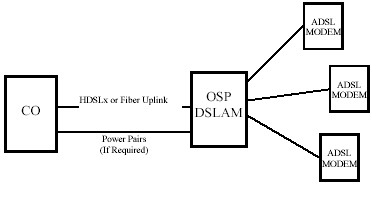
A DSLAM reduces the amount of speed-slowing traditional copper phone wiring between the telephone company's "central office" (CO) and your home's DSL modem.

With 15 million AT&T customers having no prospect of getting AT&T’s U-verse service, and 5 million without any AT&T broadband options at all, Stephenson says investment in Internet Protocol Digital Subscriber Line Access Multiplexers, better-known as IP DSLAMs, could extend service and also improve speeds for existing DSL customers, and not cost the company a fortune.

Stephenson noted the cost of the equipment needed to extend service has dropped considerably, in part because demand for DSL has been in decline as customers seek faster broadband, often from cable operators. The two largest phone companies in the country — AT&T and Verizon — had also shown little interest in further expanding their DSL networks.

For a reasonable investment on service upgrades, AT&T could bring speeds of 10Mbps or more to certain customers who now live with 6Mbps or less.

The challenge AT&T faces is reducing the amount of legacy copper telephone wiring between the phone company’s switching office and the customer. Customers who live more than 10,000 feet from a central office make due with very slow DSL speeds. Replacing some of that copper wiring with fiber optics can dramatically increase speeds.

AT&T U-verse works on a similar concept, except AT&T’s most advanced service needs as little copper phone wiring as possible. AT&T’s newest proposal for its rural customers would represent a middle ground — extending fiber to a handful of DSLAMs at distant points from the central exchange, with copper phone wiring carrying the signal the rest of the way to the subscriber’s home. This would open the door to DSL for customers who could not purchase the service before. It would also boost speeds for existing customers.

The decision marks a departure from AT&T’s interest in “solving” the rural broadband problem with heavily usage-limited wireless Internet access over its 4G network. Verizon Wireless is currently testing its own wireless broadband service designed for home users, but it costs $60 and only provides 10GB per month of usage.

While Stephenson has not backed away completely from selling off rural customers outside of U-verse service areas, he told investors he now has a more optimistic view of AT&T’s rural folk in light of marketplace changes.

“We are giving this a hard look,” Stephenson told investors on a recent JPMorgan conference call. Already-available DSLAM technology “brings broadband capability in a more cost-effective manner, with a better revenue profile than perhaps we would have thought two years ago.”

Oceanic Cable Launching New 24-Hour Channel for Republican Senate Candidate

Lingle

Oceanic Cable, a division of Time Warner Cable, will soon be devoting some prime channel real estate to former Republican governor Linda Lingle. Lingle is getting her own cable channel that will feature nothing but on-demand programming produced by the Senate candidate’s campaign.

While neither the campaign or Oceanic Cable will currently disclose how much Lingle is spending to rent the channel space, Oceanic viewers will have yet one more channel on their cable lineup they did not ask for or necessarily want.

The new Lingle Channel has been granted a prominent position on the cable company’s digital lineup on channel 110, right between Fox News Channel and Headline News.

The other candidates in the election admit they can’t afford to launch their own 24-hour cable channel or prefer to take issues direct to voters and not “filter them” through a carefully coordinated cable message produced by the campaign.

Lingle has raised $3.1 million for her campaign. She leads over John Carroll who has $23,000 on hand; Rep. Mazie Hirono, $2.3 million; and Ed Case, $615,000.

[flv width=”360″ height=”290″]http://www.phillipdampier.com/video/KHON Lingle Gets 24 Hour Cable Channel 6-6-12.mp4[/flv]

KHON in Honolulu reports Oceanic Cable customers are about to get a new channel on their lineup, whether they want it or not.  (3 minutes)

Search This Site:

Contributions:

Recent Comments:

Your Account:

Stop the Cap!