Home » Consumer News » Recent Articles:

Comcast Told to Pull False Ad Claims It Has “Fastest” Broadband in the Nation

Phillip Dampier June 12, 2012 Broadband Speed, Comcast/Xfinity, Competition, Consumer News Comments Off on Comcast Told to Pull False Ad Claims It Has “Fastest” Broadband in the Nation

Comcast’s claim that its Xfinity Internet is the “fastest in the nation” is demonstrably false and has led to a request by the National Advertising Division, a self-regulating industry group, that Comcast pull the ads.

The NAD found Comcast was basing its claim on this 2011 PC Magazine article that gave high ranks to Comcast, along with Cox and Charter, for fast download speeds. But PC Magazine‘s study failed to account for Verizon FiOS and other fiber broadband providers, who routinely deliver upload and download speeds far in excess of what Comcast can offer.

The report (Case #5463 — available only to subscribers), recommends that Comcast stop making the claims in markets where fiber networks like FiOS are available. Where the company does choose to run the ads, they should disclose the PC Magazine report as its source.

Comcast’s cable broadband can deliver faster speeds than traditional telephone company DSL, but fiber broadband can deliver much faster service with equal upstream and downstream speeds of up to 1Gbps.

Comcast said it would consider the NAD’s recommendations.

Verizon’s New “Share Everything” Plans Will Bring Many Higher Cell Bills

Verizon Wireless unveiled their new “Share Everything” Plans this morning, claiming consumers wanted “simpler, easier-to-understand” plans that let them share their data plan across multiple devices:

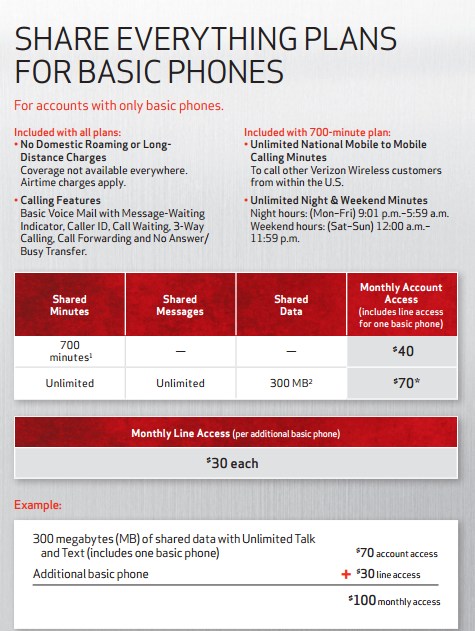
But a closer examination of the plans, to be introduced June 28, shows many Verizon customers will face substantially higher cell phone bills if they choose one of Verizon’s newest plans. Perhaps more importantly, customers upgrading to a new subsidized phone/contract renewal on or after that date will be forced to forfeit any grandfathered unlimited data plans they still have with Verizon.

“It is an effort to move ARPU up,” Walt Piecyk, an analyst with BTIG LLC in New York told Bloomberg News, referring to average revenue per user, a measure of how much each customer spends each month.

Obviously acknowledging that customers are using fewer voice minutes and are increasingly finding ways around text messaging charges, Verizon’s new plans sell customers on the idea they can now talk and text as much as they want, but as far as data is concerned, customers will potentially pay much more for less service.

Those light on talking and texting are most likely to be hit hardest by the new cell phone plans.

Verizon formerly charged $50 a month for a basic Nationwide Talk Share plan that included 700 shared voice minutes. Smartphone users also paid $29.99 a month for unlimited data. Together, that amounts to $80 a month. Under Verizon’s $40 “Share Everything” Plan, customers can talk and text all they want, but their unlimited data plan is gone, replaced with a 1GB basic plan for $50. That costs $10 more than customers used to pay on Verizon’s 700 minute plan with an unlimited use data plan. Need 2GB a month? Add an extra $10, bringing you a Verizon phone bill of at least $100 a month for the first line on your account, before taxes and fees.

Other family member lines may also be hit. Verizon used to charge $9.99 a month for extra lines on a shared account. The new price is $30 for a basic phone, $40 for a smartphone. Those family members with smartphones on an older Verizon account each would also incur $29.99 a month for their own individual data plan, which was also unlimited.

Although the base fee for the additional line with a data plan still remains around $40 a month, family members will be forced to share the primary line’s data bucket. Customers will quickly find a 1GB data plan is not going to last long on an account with two or three smartphones. That means expensive upgrades, which start at $10/GB.

Accounts with a mix of smartphones and basic phones face an even stiffer price hike. The $9.99 a month customers used to pay for a basic phone for grandma will now run $30 a month. She won’t be talking or texting much, so the extra features built into Verizon’s new plan will represent a pointless $20 monthly rate increase and an invitation to set grandma up with her own prepaid cell phone instead.

Verizon’s new “Share Everything” concept clearly builds major profits into Verizon’s future:

  • Customers are forced to pay for unlimited voice and texting services, even as those services lose popularity, costing Verizon little to nothing;
  • Data customers are encouraged to add additional devices to their account, but as more data gets used, ongoing upgrades to your data plan at an increment of $10/GB or more will be required;
  • Customers considering a new Apple iPhone or other smartphone will be forced to forfeit any existing unlimited data plan to upgrade, which guarantees future profits from customers consuming increasing amounts of data.
For Verizon’s most premium customers, the new plans may deliver temporary savings, as long as data usage is tempered:
  • Customers paying for expensive texting plans will save the cost of those add-ons;
  • Talk time is now unlimited on most plans, putting an end to overages;
  • Verizon’s Mobile Hotspot feature will now be turned on for all customers on the Share Everything plan (to encourage additional data usage no doubt), which will eliminate at least $20 a month for the feature under existing plans;
  • Customers who own multiple wireless devices configured to work with Verizon, but only use them occasionally, will likely save sharing a single data plan instead of paying for one plan for each device.
All in all, customers who spend the most with Verizon will probably find some savings from Verizon’s newest plans, but legacy customers grandfathered on unlimited data and calling plans probably will not, and lighter users who want fewer features will find substantially higher prices staying with Big Red. For them, a switch to a different carrier or even prepaid service will increasingly appear attractive as monthly phone bills now soar above $100 a month.

[flv width=”640″ height=”380″]http://www.phillipdampier.com/video/Verizon Share Everything Plan 6-12-12.mp4[/flv]

Verizon’s introductory video for its new Share Everything plans.  (1 minute)

AARP Decries Idaho’s Telecom-Friendly Posture As It Considers Relaxing Outage Rules

Phillip Dampier June 11, 2012 CenturyLink, Consumer News, Frontier, Public Policy & Gov't, Rural Broadband Comments Off on AARP Decries Idaho’s Telecom-Friendly Posture As It Considers Relaxing Outage Rules

The AARP was surprised to learn Idaho was considering loosening the rules imposed on the state’s phone companies to complete repairs on out of service landlines within 24 hours. The organization, which represents the elderly, says the new rules are a serious threat to older Idahoans who are the least likely to have a cell phone and require landlines in case of an emergency.

The Idaho Public Utilities Commission is considering relaxing regulations governing service outages at the behest of CenturyLink and Frontier Communications, two of the state’s largest phone companies. Both phone companies argue that consumers have cell phone alternatives and do not need rapid repair of landline service. The companies also do not want to face penalties from regulators over incomplete or delayed repairs to out of service landlines.

CenturyLink claims the declining number of landline customers justifies the reduced regulations on the state’s phone companies.

But the AARP argued otherwise in opposing comments filed last week:

  • Give telephone companies twice as long to repair outages (from 24 hours to 48 hours), and even more time if they occur over the weekend.  Opposing the change, AARP reminds the PUC of the importance of landlines to the elderly, and the fact that home and health emergencies also occur over the weekend.
  • Remove any penalties to telephone companies for not restoring service within the allotted period of time.  Currently if service is not restored within the repair interval, customers can receive a one month service credit.  AARP says removing the penalty leaves little incentive for timely repairs and erodes consumer protections.
  • Lower benchmark for fixing outages. Currently, at least 90% of service outage reports must be fixed, the proposed changes would lower that to 80%.  AARP says the lower benchmark could mean more consumers going without crucial service for a longer period of time.

Other claims made by CenturyLink – such as the assertion that its ability to deploy broadband suffers because its personnel are unreasonably diverted to repair work – are unproven and largely irrelevant to its obligation to maintain reliable telephone services, says AARP.

The elderly advocacy group argues the little known case is one more example of the need for Idaho to establish a Utility Consumer Advocate Office to ensure residential consumers are represented in complex regulatory matters.  Idaho is the only state in the West without such an office and one of a handful nationwide.

West Virginia Frontier Customers Frustrated Over Long Service Outages

Phillip Dampier June 11, 2012 Consumer News, Frontier, Public Policy & Gov't, Rural Broadband, Video Comments Off on West Virginia Frontier Customers Frustrated Over Long Service Outages

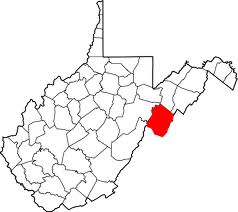
Pendleton County, W.V.

Pendleton County, W.V. residents are frustrated by another landline service outage afflicting Frontier Communications in the eastern panhandle region of the state.

The latest disruption began early Friday morning, leaving limited phone service throughout the county, with customers unable to dial any number that was not within the local 249 exchange.

Customers found cell phone service spotty, as it traditionally always is in the county, leaving some with no way to communicate and frayed nerves.

WHSV-TV reports Rosa Propst was extremely upset by the outage which dragged on for nearly two days. Propst’s father was hospitalized in another county and medical personnel could not reach her to report her father’s deteriorating medical condition.

Her ill father was also upset because he could not reach his daughter — or just about anyone else in Pendleton County over the weekend.

“I would have held Frontier responsible for not giving us an emergency services line where we could get to a hospital or call the hospital,” Propst told the station.

Frontier eventually found the problem — a series of fiber cuts over the length of 1,000 feet of cable. A Frontier spokesperson said the company had to replace about 7,000 feet of cable and had to find workers willing to climb 40 foot telephone poles in what was characterized as a rugged area.

Customers complained this was not the first significant outage for Frontier customers in the area.

The company eventually repaired service early Sunday morning.

Frontier has been accused of lacking network redundancy, letting phone companies bypass damaged lines by switching to backup infrastructure.

[flv width=”640″ height=”380″]http://www.phillipdampier.com/video/WHSV Harrisonburg Customers in Pendleton County Frustrated Over Limited Phone Service 6-10-12.flv[/flv]

WHSV first reported the major service outage to viewers during the weekend local news, noting customers between Brandywine and Sugar Grove had lost landline service. (2 minutes)

[flv width=”640″ height=”380″]http://www.phillipdampier.com/video/WHSV Harrisonburg Family in Pendleton County Frustrated Over Phone Service 6-12-12.flv[/flv]

 In this second report, WHSV talks with the Propst family about the human impact extended service outages can have on customers.  (2 minutes)

Broken Promises: The Telecommunications Trust That Doesn’t Deliver

Phillip Dampier June 11, 2012 AT&T, Broadband Speed, Comcast/Xfinity, Competition, Consumer News, Public Policy & Gov't, Verizon Comments Off on Broken Promises: The Telecommunications Trust That Doesn’t Deliver

AT&T, Verizon, and cable companies like Comcast have quietly created the 21st century equivalent of the railroad monopoly, and are using their market power to raise rates, block competition, and supply inferior service to customers.

That conclusion comes courtesy of former telecom industry analyst Bruce Kushnick, who today serves as a consumer watchdog for the telecommunications industry’s broken promises and bad service.

Kushnick is chairman of New York-based Teletruth, a customer advocacy group that is spending a lot of time demanding Verizon finish the fiber optics network it promised would be available throughout states like New Jersey.

Kushnick has just completed a new e-book, the “$200 Billion Broadband Scandal” chronicling how the telecommunications industry has used power and influence to outmaneuver regulators and make promises they cannot or will not keep, for which they are never held accountable.

Kushnick’s view of the current state of broadband and telecommunications in the United States:

  • For the last 20 years, the nation’s major telecom companies have played the public and regulatory officials for fools – wrangling dramatic rate increases while making promises about fiber-optic cable they haven’t delivered.
  • The communications infrastructure is the most important thing to build back the nation’s economy.
  • The caretakers of America’s essential infrastructure have scammed us, big time, and it’s going to get worse.
  • The Federal Communications Commission is in the pocket of the phone companies.

Kushnick

Kushnick scowls over news Verizon, Comcast, and Time Warner Cable are about to cross-market cable and wireless phone service, calling it a textbook case of “Antitrust 101.”

Despite promises that the phone companies would bring extensive competition to America’s cable monopoly, the two competitors have effectively declared a truce.

In Kushnick’s view, phone companies like AT&T and Verizon are breaking their promises to regulators and consumers.

“Illinois Bell was supposed to rewire the state (with fiber-optic cable), starting in 1993 at an initial cost of $4 billion,” Kushnick said.

Instead, AT&T moved in and bought out the phone company and has dragged its feet on fiber deployment, along with most other big phone companies.

Kushnick told the Journal Star phone companies are going cheap avoiding fiber optic infrastructure while still ringing up huge profits.

“Every state is different. Pacific Bell stated they would spend $16 billion by 2000 on 5.5 million homes. Bell Atlantic claimed it would spend $11 billion on 8.75 million homes,” he said.

Verizon New Jersey said it would wire 100 percent of that state by 2010. Now there’s political action in New Jersey to hold the telecom accountable for failing to meet that goal, said Kushnick.

How do the companies get away with missing deadlines? “The phone companies have control of the regulators and a strong PR machine. The public is often unaware of what claims were made five or 10 years ago,” he said.

Kushnick is very aware. Take AT&T’s U-Verse service, so heavily advertised during NBA playoff games, for example. “(U-Verse) isn’t even fiber optic to the home but uses the old copper wiring,” he said.

While Kushnick puts a spotlight on the problem, the public would do well to bone up on what’s going on when it comes to the broadband services they pay so dearly for.

Search This Site:

Contributions:

Recent Comments:

Your Account:

Stop the Cap!