Home » Competition » Recent Articles:

FCC Gives Quick Approval of TV Station Sale That Could Speed AT&T-Time Warner Merger

Phillip Dampier April 20, 2017 AT&T, Canada, Competition, Consumer News, Public Policy & Gov't, Reuters Comments Off on FCC Gives Quick Approval of TV Station Sale That Could Speed AT&T-Time Warner Merger

REUTERS/Brendan McDermid

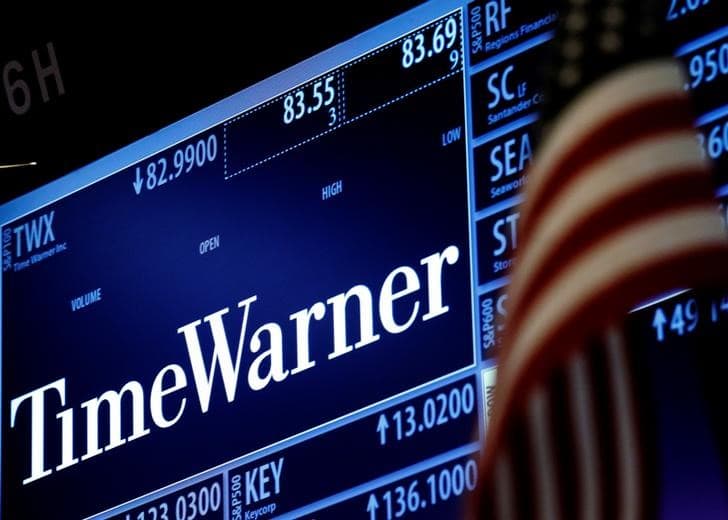
WASHINGTON (Reuters) – The U.S. Federal Communications Commission said on Monday it approved Time Warner Inc’s sale of a broadcast station in Atlanta to Meredith Corp, a transaction that could help speed Time Warner’s planned merger with AT&T Inc.

In January, AT&T said it expected to be able to bypass the FCC in its planned $85.4 billion acquisition of Time Warner because it would not seek to transfer any significant Time Warner licenses.

FCC Chairman Ajit Pai said previously he did not plan to use the proposed TV station license transfer as a way to examine the AT&T-Time Warner merger. About a dozen senators had urged him to review the deal.

The station that Time Warner is selling, WPCH-TV, for $70 million, is its only FCC-regulated broadcast station. It has other, more minor FCC licenses.

Meredith has operated WPCH-TV for Time Warner since 2011. It was previously known as WTBS. The station is no longer considered a superstation in the United States, after Turner Broadcasting System created a new national network it dubbed TBS. WTBS changed its over-the-air call letters to WPCH, rebranded as “Peachtree TV,” and is considered an independent television station airing off-network sitcoms and dramas. However, WPCH is still widely seen across Canada, where it remains a “superstation” after Canadian regulators refused to allow Canadian providers to carry Turner’s TBS network.

WPCH-TV, an independent TV station in Atlanta, dubs itself as “Peachtree TV.”

In a statement on Monday, Meredith said it was pleased the FCC approved the application and that it anticipated “moving forward expeditiously to close this deal.”

The company said in February it expected to close on the sale by June 30 and that the deal would not have a material impact on its results.

Time Warner did not immediately comment on the FCC approval.

The Justice Department has to prove a proposed deal harms competition in order to block it. The FCC has broad leeway to block a merger it deems is not in the “public interest” and can impose additional conditions.

AT&T Chief Executive Randall Stephenson told CNBC in February the Justice Department review was ongoing and he thought the deal would close by the end of the year.

“It’s a clean transaction,” he said.

(Reporting by David Shepardson; Additional reporting by Stop the Cap!/Phillip Dampier.)
Netherlands, Luxembourg and Belgium Now Tops in European Broadband Connectivity Index

Phillip Dampier April 19, 2017 Broadband Speed, Competition, Consumer News, Public Policy & Gov't, Rural Broadband Comments Off on Netherlands, Luxembourg and Belgium Now Tops in European Broadband Connectivity Index

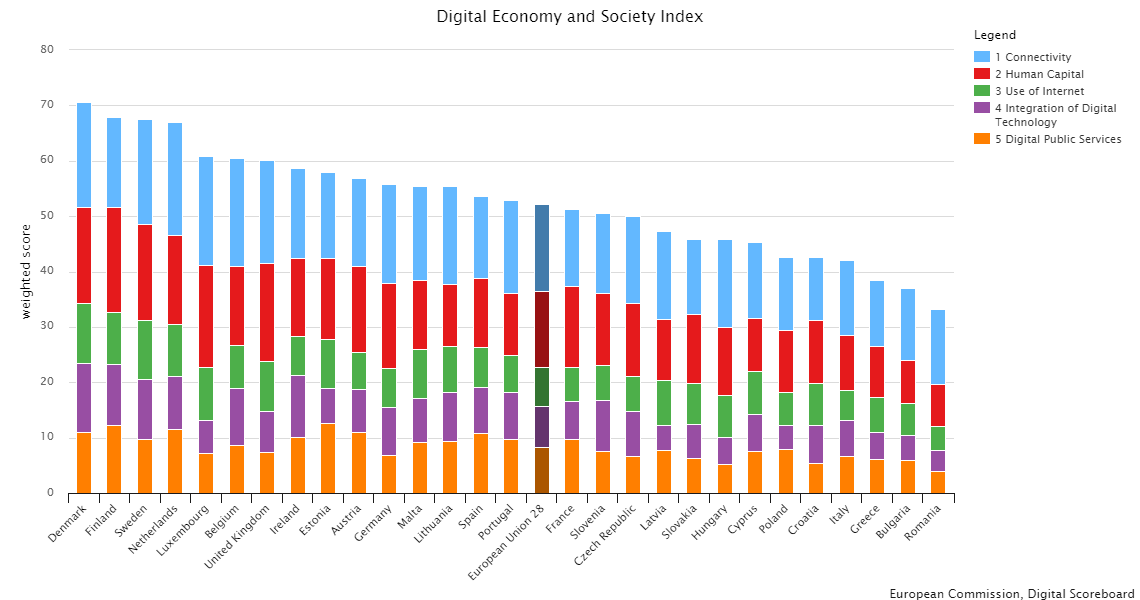
Denmark, Finland, Sweden and the Netherlands have the most advanced digital economies in the EU followed by Luxembourg, Belgium, the UK and Ireland, while Romania, Bulgaria, Greece and Italy are at the bottom of the latest European Digital Economy and Society Index (DESI).

DESI is a composite index that summarizes how well European states are performing in the 21st century digital/knowledge economy and how well they are evolving in digital competitiveness. The index helps countries track the likelihood of their success in the global market, and gives countries relative goals they should achieve to be ready to compete with North America and Asia.

In 2016, every EU Member State improved on the DESI, with Slovakia and Slovenia turning it the biggest growth. However, growth was so slight in Portugal, Latvia, and Germany it appeared almost static.

In general, the best scoring nations also scored highly in all the categories measured in the DESI: Connectivity, Human Capital/Digital Skills, Citizen Use of the Internet, Business Digital Technology Integration, and Digital Public Services.

In terms of internet connectivity scores which track broadband deployment and quality, the Netherlands scored highest in 2016 followed by Luxembourg and Belgium. The weakest EU performers were Croatia, Bulgaria, and Poland. Europe has made better inroads in guaranteeing access to broadband, with 98% of Europeans able to access at least one provider. About 76% of Europeans can today choose high-speed broadband at speeds of at least 30Mbps.

Wireless 4G mobile networks cover on average 84% of the EU’s population (measured as the average of each mobile telecom operator’s coverage within each country). At least 74% of European homes subscribe to wired broadband, and over one-third of these connections are high-speed. The number of high-speed connections went up by 74% in two years.

Having a skilled population comfortable with the digital economy and knowledgeable enough to navigate it are also important for commerce, education, and employment. Denmark, Luxembourg, Finland, Sweden, and the Netherlands scored the highest in 2016, while Romania, Bulgaria, Greece and Italy got the lowest scores.

Europeans still do not spend as much time on the internet as their American and Asian counterparts. Last year, 79% of Europeans went online at least once a week, up 3 points compared to 2015. But 44% of Europeans still lack basic digital skills. The most popular online activity in Europe is reading news online (70%), followed by online shopping (66%), social media (63%), and online banking (59%).

Wall Street Analyst: Cable Monopoly Will Double Your Broadband Bill

Thought paying $65 a month for broadband service is too much? Just wait a few years when one Wall Street analyst predicts you will be paying twice that rate for internet access, all because the cable industry is gradually achieving a high-speed broadband monopoly.

Jonathan Chaplin, New Street Research analyst, predicts as a result of cord-cutting and the retreat of phone companies from offering high-speed internet service competition, the cable industry will win as much as 72.2% of the broadband market by the year 2020. With it, they also win the power to raise prices both fast and furiously.

In a note to investors, Chapin wrote the number of Americans left to sign up for broadband service for the first time has dwindled, and most of the rest of new customer additions will come at the expense of phone companies, especially those still selling nothing better than DSL.

“Our long-term penetration forecast is predicated on cable increasing its market share, given a strong network advantage in 70% of the country (this assumes that telco fiber deployment increases from 16% of the country today to close to 30% five years from now),” Chaplin wrote.

Cable companies already control 65% of the U.S. broadband market as of late last year. Chaplin points out large cable operators have largely given up on slapping usage caps and usage pricing on broadband service to replace revenue lost from TV cord-cutting, so now they are likely going to raise general broadband pricing on everyone.

“Comcast and Charter have given up on usage-based pricing for now; however, we expect them to continue annual price increases,” Chaplin said. “As the primary source of value to households shifts increasingly from pay-TV to broadband, we would expect the cable companies to reflect more of the annual rate increases they push through on their bundles to be reflected in broadband than in the past. Interestingly, Comcast is now pricing standalone broadband at $85 for their flagship product, which is a $20 premium to the rack rate bundled price.”

Chaplin himself regularly cheerleads cable operators to do exactly as he predicts: raise prices. Back in late 2015, Chaplin pestered then CEO Robert Marcus of Time Warner Cable about why TWC was avoiding data caps, and in June of that year, Chaplin sent a note to investors claiming broadband was too cheap.

“Our analysis suggests that broadband as a product is underpriced,” Chaplin wrote. new street research“Our work suggests that cable companies have room to take up broadband pricing significantly and we believe regulators should not oppose the re-pricing (it is good for competition & investment).”
“The companies will undoubtedly have to take pay-TV pricing down to help ‘fund’ the price increase for broadband, but this is a good thing for the business,” Chaplin added. “Post re-pricing, [online video] competition would cease to be a threat and the companies would grow revenue and free cash flow at a far faster rate than they would otherwise.”

Will the FCC’s Spectrum Auction Improve Your Service? Let’s Look at the Coverage Maps

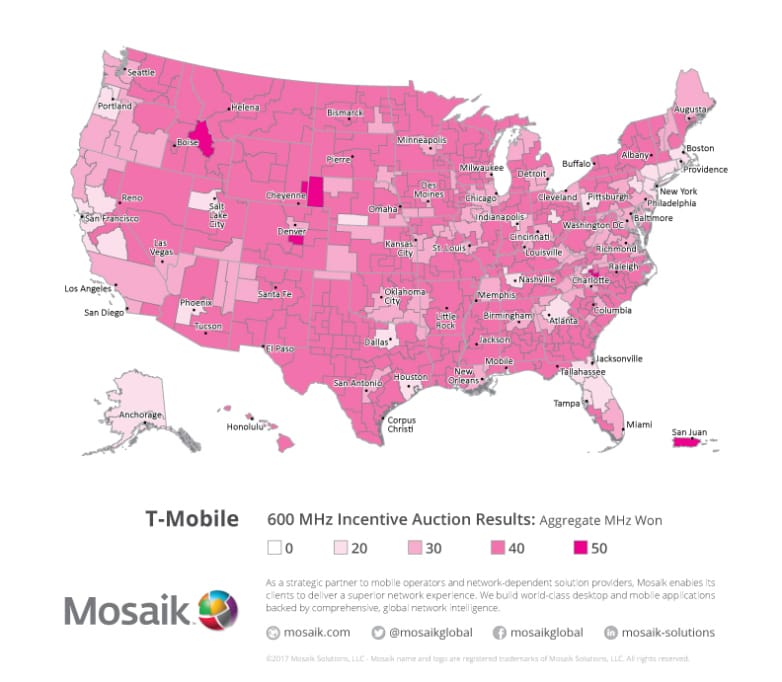
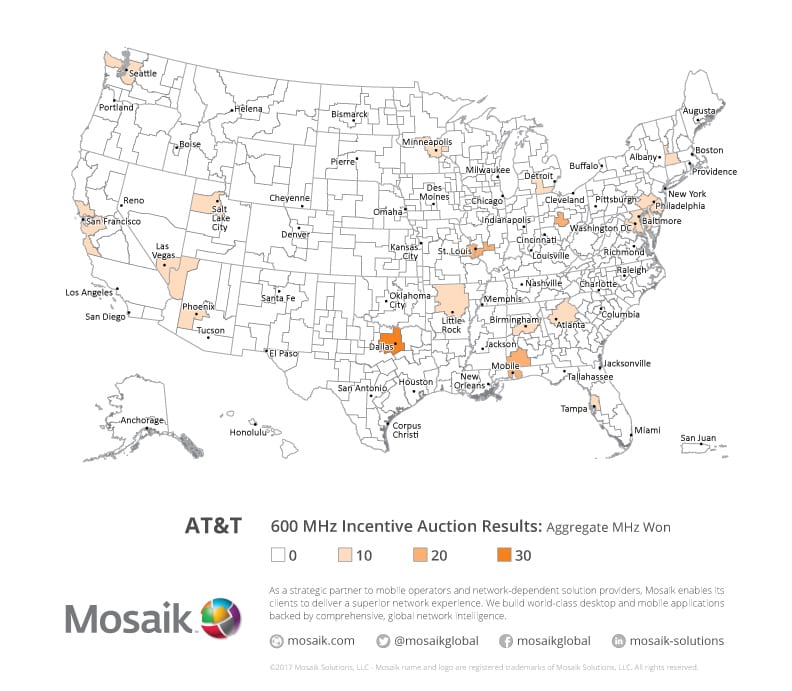
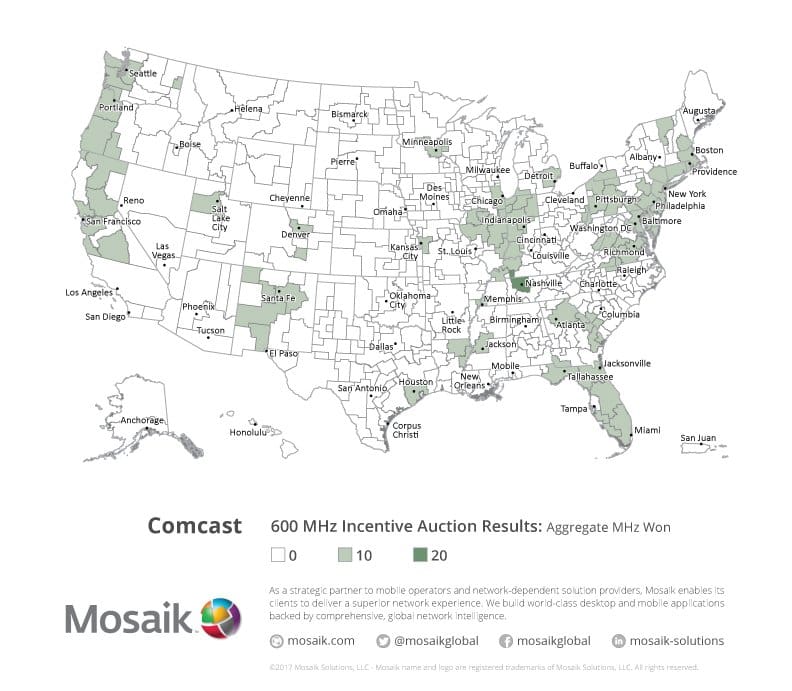
Four large telecom companies won the bulk of the available licenses to operate their wireless services on the upcoming 600MHz band, once UHF TV channels occupying part of it vacate. But what exactly did AT&T, Comcast, Dish, and T-Mobile buy and where? Mosaik, a mapping firm, produced maps (courtesy Fierce Wireless) showing exactly where the four companies won 600MHz spectrum in the recent auction. The differences are striking. T-Mobile effectively won the right to launch new service almost everywhere in the country, in part because it acquired a huge number of cheap, low-demand licenses in largely rural areas.

Dish’s plans for its spectrum remain a complete mystery, while Comcast’s winning bids are entirely within areas where it provides cable service. AT&T, although already holding a large supply of low band frequencies, apparently needs more capacity in larger cities, and paid handsomely to get it.

AT&T

Most of AT&T’s winning bids cover larger cities where it already operates an extensive cellular network. Among the areas where AT&T can expand service: Philadelphia, Washington, Baltimore, St. Louis, Birmingham, Mobile, Tampa, Atlanta, Dallas, Phoenix, Las Vegas, San Francisco, Salt Lake City, Seattle, Minneapolis and Little Rock. But AT&T also grabbed licenses for rural western Massachusetts, central Ohio, and southern Michigan.

Comcast

Comcast’s winning bids consisted of 10MHz of spectrum, except in Nashville where it nabbed 20MHz. Comcast grabbed enough spectrum to cover every city in Florida except Tampa (where Charter provides cable service). The cable company focused heavily on east and west coast bids, winning spectrum across much of the Pacific Northwest, the Boston-NYC-DC corridor, and Illinois and Indiana. The only downside is that 10MHz is not a lot of spectrum to support a large wireless service, but then Comcast does not require that at this time, because it will rely primarily on a shared arrangement with Verizon Wireless to power Xfinity Mobile.

Dish Network

What Dish intends to do with its spectrum remains a complete mystery, but it grabbed a significant amount of it in New York City and its nearby suburbs, including Connecticut. It also won respectable quantities of frequencies in Alaska, California, Florida, Puerto Rico, Seattle and Portland, and several midwestern and south-central cities.

T-Mobile USA

T-Mobile published a similar map as part of its press package claiming victory in the spectrum auction. This map better highlights T-Mobile’s extensive spectrum wins in all 50 states and Puerto Rico. If T-Mobile uses it all, it will command similar coverage areas comparable to Verizon and AT&T. T-Mobile will manage this without any need to merge with anyone else, as AT&T and Sprint have historically argued in their past failed efforts to acquire T-Mobile.

Verizon Commits to Spend $1 Billion on New Fiber Buildout for Its 5G Network

Phillip Dampier April 18, 2017 Broadband Speed, Competition, Consumer News, Verizon, Video, Wireless Broadband Comments Off on Verizon Commits to Spend $1 Billion on New Fiber Buildout for Its 5G Network

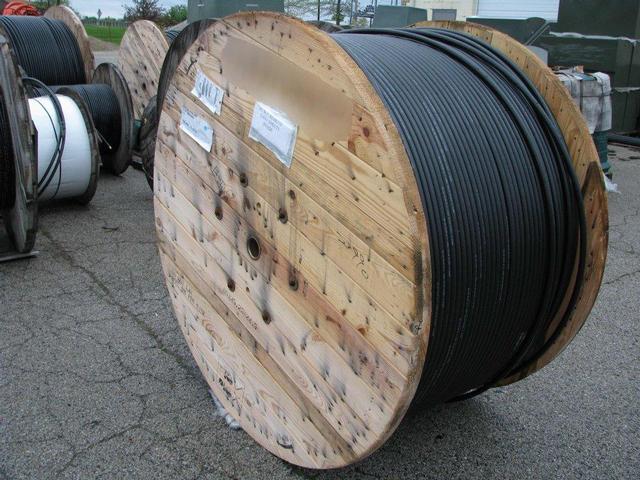
Verizon Communications announced a deal Tuesday with a leading optical fiber manufacturer to supply up to 12.4 million miles of fiber cable annually for a large buildout of Verizon’s fiber network to power its forthcoming 5G wireless service.

Verizon’s $1.05 billion agreement with Corning, Inc., of Corning N.Y., will guarantee Verizon will have an ample supply of optical fiber available from 2018-2020 at a time when the company noticed a fiber cable shortage was causing problems for its current FiOS/5G fiber buildout now underway in Boston.

“This new architecture is designed to improve Verizon’s 4G LTE coverage, speed the deployment of 5G, and deliver high-speed broadband to homes and businesses of all sizes,” Verizon said in a statement. But Verizon did not make it very clear the expansion will primarily benefit Verizon Wireless, not Verizon Communications’ FiOS fiber to the home service.

Verizon CEO Lowell McAdam, appearing exclusively on CNBC this morning, rejected the notion that the fiber buildout would represent a restart of Verizon’s long-suspended expansion of its FiOS fiber to the home service.

“When we deployed FiOS we would run a fiber cable into a neighborhood with six or eight strands in it,” McAdam said. “Now we’re going to drop off six or eight strands to every street light in every neighborhood so that allows you to deliver a gigabit of thruput into the home and allows you to do things like intelligent transportation, electric grid management, and water system management. You hear a lot about autonomous cars and things like that today that don’t work without 5G.”

Verizon’s Boston project represents the current CEO’s vision: a wireless-based network supported by an extensive fiber network. But instead of connecting fiber to homes, McAdam’s network connects fiber to tens of thousands of palm-sized “small cells” and other wireless infrastructure that will deliver services to individual neighborhoods instead of individual homes.

Critics still question whether Verizon’s 5G network will be able to sustain its speed and capacity claims outside of testing labs, especially as shared wireless network infrastructure faces future usage demands. Fiber to the home service does not require customers to share bandwidth the same way a wireless connection would and can manage much higher capacity.

Verizon CEO Lowell McAdam and Corning chairman and CEO Wendel Weeks appeared jointly on CNBC to discuss Verizon’s $1.05 billion agreement with Corning to guarantee up to 12.4 million miles of optical fiber a year from 2018-2020. (11:24)

Search This Site:

Contributions:

Recent Comments:

Your Account:

Stop the Cap!