Home » Competition » Recent Articles:

Nine Upstate NY Mayors Accuse Verizon of Avoiding Urban Poor In Fiber Upgrades

Verizon has a moratorium on further expansion of its fiber to the home service except in areas where it has existing agreements to deliver service.

Virtually every mayor in the urban centers of upstate New York is accusing Verizon Communications of redlining poor and minority communities when deciding where to provide its fiber-to-the-home service FiOS.

Now they are telling the Federal Communications Commission and Department of Justice to become more closely involved in reviewing a proposed anti-competitive marketing partnership between the phone company and some of the nation’s largest cable operators.

The mayors are upset that Verizon has chosen to target its limited FiOS network primarily on affluent suburbs surrounding upstate New York city centers.

“Verizon has not built its all-fiber FiOS network in any of our densely-populated cities. Not in Albany, Buffalo, Syracuse, Binghamton, Kingston, Elmira or Troy,” the mayors say. “Yet, Verizon has expanded its FiOS network to the suburbs ringing Buffalo, Albany, Troy, and Syracuse, as well as many places in the Hudson Valley, and most of downstate New York. As a result, the residents and businesses in our cities are disadvantaged relative to their more affluent suburban neighbors who have access to Verizon’s FiOS, providing competitive choice in high-speed broadband and video services.”

The mayors fear the reduced competition that will come from the marketing partnership between the phone and cable industry will eliminate any pressure on Verizon to expand its fiber optic network into more New York cities. The agreement allows Verizon Wireless customers to received significant bundled discounts when they sign up for cell phone service and a cable package from Comcast, Time Warner Cable, Cox, or Bright House Networks. No corresponding discount is available to a Verizon Wireless customer choosing to bundle Verizon FiOS, putting the fiber service at a competitive disadvantage.

“These commercial agreements appear to eliminate any incentive that Verizon might have had to expand its all-fiber network to our high-density urban centers,” the mayors say. “After all, Verizon Wireless, a subsidiary of Verizon Communications, will now be able to sell Time Warner’s video and broadband service as part of their bundled package in our communities.”

That leaves most with Verizon’s DSL service, a product Verizon has been marketing less and less to its customers. The company recently announced it would no longer sell standalone DSL broadband, another point of contention for the mayors.

The mayors are concerned that Verizon’s deteriorating landline network will have profound implications for city centers, where tele-medicine, education, business, and entertainment services will all be left lacking if the fiber network is not extended.

“As you are well aware, high-speed broadband is critical to economic development and job creation, as well as improvements in health care, education, public safety, and civic discourse which is so essential to communal life,” say the mayors. “The economic health of our cities and our upstate region depends upon access to the same first-rate communications infrastructure available to the New York City metropolitan region and the suburban communities that ring our cities.”

The nine mayors are also questioning whether Verizon executives misled them when they claimed Verizon’s strong financial performance would allow the company to reinvest profits into further expansion of its FiOS network. Verizon executives have since admitted the company is indefinitely finished with FiOS expansion, except in areas where it already committed to build the fiber network.

Signing the letter were:

  • Byron W. Brown – Mayor, City of Buffalo
  • Stephanie A. Miner – Mayor, City of Syracuse
  • Gerald D. Jennings – Mayor, City of Albany
  • Matthew T. Ryan – Mayor, City of Binghamton
  • Shayne R. Gallo – Mayor, City of Kingston
  • Susan Skidmore – Mayor, City of Elmira
  • Brian Tobin – Mayor, City of Cortland
  • Robert Palmieri – Mayor, City of Utica
  • Lou Rosamilla – Mayor, City of Troy

(The city of Rochester is served by Frontier Communications, which has no plans to deliver a fiber to the home network within its local service area.)

Elmira Spins Its Wheels Negotiating for a Better Deal from Time Warner Cable

Phillip Dampier May 22, 2012 Competition, Consumer News, Public Policy & Gov't, Rural Broadband, Video Comments Off on Elmira Spins Its Wheels Negotiating for a Better Deal from Time Warner Cable

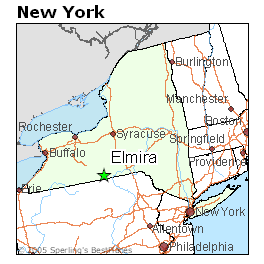
The southern tier city of Elmira, N.Y. is not too happy with Time Warner Cable’s lock on the local cable market.

“There’s no competition so their prices continue to go up, their offers continue to go down, and the people here with no other competition are just paying and paying and paying,” Elmira mayor Sue Skidmore told WETM News.

Skidmore and the city council intend to hold public hearings on the cable operator’s franchise renewal before they attempt to negotiate the next 10-year agreement with the cable company.

“This gives the public an opportunity to come and say anything good or bad pertaining to the cable franchise,” said city manager John Burin. The public meeting is scheduled for 7pm, June 4, on the second floor of Elmira City Hall.

Skidmore

The city’s ability to press Time Warner Cable for lower rates or service changes are extremely limited, however. Wholesale deregulation of the cable television industry has allowed most cable operators to manage their systems as they see fit, with no obligation to accept the recommendations of local government.

This fact of life was underscored when Time Warner mailed its own vision of what a renewal agreement with the city should look like, prior to any public discussion.

The city’s lawyer, John Ryan Jr., told the Ithaca Journal the company deleted several provisions in the proposed renewal agreement that are part of the current agreement. Ryan intends to speak with the operator about those changes, and wants to see changes in the city’s favor.

In most franchise renewal agreements, the only leverage a city typically has is to threaten not to renew a cable franchise. That is a very rare occurrence, however, because it is exceptionally rare for another major cable provider to agree to service a city that cancels a franchise renewal with another company. In the end, most renewal agreements come down to handshake agreements to correct any long-standing service issues, agree to wire certain unserved areas, and negotiate over public, educational, and government access channels and franchise fees payable to the city.

The local telephone company, Verizon Communications, has no plans to provide its FiOS fiber optic service in the city, leaving customers with the competitive option of landline phone service, DSL, and a contract with Verizon’s satellite TV partner, DirecTV.

[flv width=”360″ height=”290″]http://www.phillipdampier.com/video/WETM Elmira City Of Elmira To Negotiate With Time Warner Cable 5-21-12.mp4[/flv]

WETM in Elmira reports city officials are preparing for franchise renewal discussions with Time Warner Cable. The cable company is already on that, preemptively sending the city a franchise renewal agreement it wrote itself. (1 minute)

Consumer Groups Question FCC Chairman’s Endorsement of Internet Overcharging Schemes

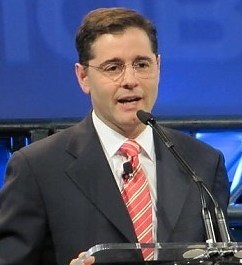
Genachowski

On Tuesday, Federal Communications Commission Chairman Julius Genachowski said that he generally supports data caps and tiered broadband pricing plans. The chairman’s comments came during an interview at the Cable Show with former FCC Chairman Michael Powell, now the top lobbyist with the National Cable and Telecommunications Association.

Genachowski has remained consistent in his cautious support for “industry innovation” that includes usage-based pricing, with a caveat providers should not exploit that at the expense of consumers.  But consumer groups like Free Press already believe usage caps, particularly on wired broadband services, are already bad for consumers, exploit a marketplace duopoly, and are worthy of investigation by the agency.

“All the evidence shows that caps on wired broadband platforms like cable make no sense. They don’t affect network congestion, even in the rare instances where congestion actually exists on these systems,” says Free Press policy director Matt Wood. “Cable companies use them to penalize their subscribers and discourage them from using innovative services that compete with cable TV.”

Free Press reminded Genachowski of Comcast’s recent actions which exempted its own video content from usage caps, while leaving them in place for competitors.

“Comcast’s recent actions show both the harms of these caps and the lack of any legitimate reason for them,” noted Wood. “[Now] Comcast changed course and suspended caps temporarily in all but a few markets — but promised to start overcharging any users there who exceeded these arbitrary limits.”

“The FCC has turned a blind eye to this competition problem. If it wants to see experimentation in pricing that actually benefits consumers, we need a competition policy that creates more experimenters.”

T-Mobile Nixes Family Shared Data Plan; Thinks It Will Create More Problems Than It Solves

Phillip Dampier May 22, 2012 Competition, Data Caps, T-Mobile, Wireless Broadband 1 Comment

Foreshadowing Bill Shock?

T-Mobile is suspicious about the value of forthcoming family shared data plans likely to be introduced by its larger competitors AT&T and Verizon Wireless later this year.

Andrew Sherrard, senior vice president of marketing for T-Mobile announced the company would not jump on the family data bandwagon, preferring to leave the current model of individual data plans for each device in place:

Some of our competitors are backing away from simple, unlimited data and moving to family shared data plans. But would this approach actually deliver a better value to consumers?  Do families really want to keep track of each others’ data consumption? We don’t think so. Just imagine mom’s email is suddenly unavailable because her teenage son watched an HD movie on his phone, consuming the family’s data allotment.

T-Mobile believes that consumers today do not want a ‘one size fits all’ approach to shared family data plans, nor would they benefit from that model.  So, what is the right way to price data for customers who want affordable, unlimited access to what, unfortunately, is a limited resource?

Here’s how we see it:

Data plans should be flexible and affordable. At T-Mobile, customers have the option of only paying for the amount of data each member of the family believes they will need. Customers can choose affordable no-annual-contract data for tablets and other data-only products they share – paying every month or buying in daily or weekly installments.

Data should be worry-free. With our unlimited data plans, there is no surprise data cap or bill shock. Customers simply pay each month for the amount of high-speed data they select and (in contrast to our competitors) T-Mobile customers can continue to use mobile data on their device at reduced speeds after they reach their limit without incurring overage charges.

Customers who pay more, should get more. T-Mobile smartphone customers with 5GB or 10GB data plans also get our Smartphone Mobile Hotspot feature included. This means, with a capable T-Mobile smartphone (most are), customers can power up to five Wi-Fi enabled devices with fast, 4G data. So rather than needing to account for each device on a shared family data plan, customers can use their existing data plan to power multiple devices, while still saving hundreds of dollars annually.

T-Mobile has adopted a traditional usage cap model that provides a set usage allowance but imposes no overlimit fees. Subscribers who exceed their allowance have their wireless data speeds reduced to levels resembling dial-up for the remainder of their billing cycle.

Verizon Wireless’ recent announcement it would kick customers grandfathered on unlimited use wireless plans to tiered data plans with overlimit fees has created controversy and has angered some Verizon Wireless customers. T-Mobile’s marketing strategy could draw some disaffected customers from larger carriers.

T-Mobile ultimately believes a shared data plan can create havoc on families trying to control their shared allotment of data for each month. Without careful coordination, consumers may find substantial overlimit fees on their wireless phone bills when they exceed their allowance.

FCC Chairman Mouths Telecom Industry Talking Points on Usage Pricing, “Innovation”

Phillip Dampier May 22, 2012 Broadband Speed, Competition, Consumer News, Data Caps, Editorial & Site News, Net Neutrality, Online Video, Public Policy & Gov't, Video, Wireless Broadband Comments Off on FCC Chairman Mouths Telecom Industry Talking Points on Usage Pricing, “Innovation”

[flv]http://www.phillipdampier.com/video/CNBC FCC Chairman on Spectrum Crunch TV Everywhere 5-22-12.flv[/flv]

FCC Chariman Julius Genachowski spent the day hobnobbing with cable industry executives at the Boston Cable Show. In an interview with CNBC, Genachowski defended usage-based pricing, claiming it will bring lower prices to light users, spur “innovation” and enable consumer choice. Verizon Wireless customers on the cusp of being thrown off their grandfathered unlimited data plans may have a bone to pick with the FCC chairman about how innovative and enabling such policies have on them. Genachowski also suggests his controversial Net Neutrality policy is working, despite recent attempts by Comcast to exempt its content from the company’s usage cap and the wireless industry toying with toll-free data for preferred partners. Genachowski had little to offer consumers in the interview, instead suggesting his deregulatory stance on “innovation” will eventually benefit them.  (5 minutes)

Search This Site:

Contributions:

Recent Comments:

Your Account:

Stop the Cap!