Home » Competition » Recent Articles:

Broken Promises: The Telecommunications Trust That Doesn’t Deliver

Phillip Dampier June 11, 2012 AT&T, Broadband Speed, Comcast/Xfinity, Competition, Consumer News, Public Policy & Gov't, Verizon Comments Off on Broken Promises: The Telecommunications Trust That Doesn’t Deliver

AT&T, Verizon, and cable companies like Comcast have quietly created the 21st century equivalent of the railroad monopoly, and are using their market power to raise rates, block competition, and supply inferior service to customers.

That conclusion comes courtesy of former telecom industry analyst Bruce Kushnick, who today serves as a consumer watchdog for the telecommunications industry’s broken promises and bad service.

Kushnick is chairman of New York-based Teletruth, a customer advocacy group that is spending a lot of time demanding Verizon finish the fiber optics network it promised would be available throughout states like New Jersey.

Kushnick has just completed a new e-book, the “$200 Billion Broadband Scandal” chronicling how the telecommunications industry has used power and influence to outmaneuver regulators and make promises they cannot or will not keep, for which they are never held accountable.

Kushnick’s view of the current state of broadband and telecommunications in the United States:

  • For the last 20 years, the nation’s major telecom companies have played the public and regulatory officials for fools – wrangling dramatic rate increases while making promises about fiber-optic cable they haven’t delivered.
  • The communications infrastructure is the most important thing to build back the nation’s economy.
  • The caretakers of America’s essential infrastructure have scammed us, big time, and it’s going to get worse.
  • The Federal Communications Commission is in the pocket of the phone companies.

Kushnick

Kushnick scowls over news Verizon, Comcast, and Time Warner Cable are about to cross-market cable and wireless phone service, calling it a textbook case of “Antitrust 101.”

Despite promises that the phone companies would bring extensive competition to America’s cable monopoly, the two competitors have effectively declared a truce.

In Kushnick’s view, phone companies like AT&T and Verizon are breaking their promises to regulators and consumers.

“Illinois Bell was supposed to rewire the state (with fiber-optic cable), starting in 1993 at an initial cost of $4 billion,” Kushnick said.

Instead, AT&T moved in and bought out the phone company and has dragged its feet on fiber deployment, along with most other big phone companies.

Kushnick told the Journal Star phone companies are going cheap avoiding fiber optic infrastructure while still ringing up huge profits.

“Every state is different. Pacific Bell stated they would spend $16 billion by 2000 on 5.5 million homes. Bell Atlantic claimed it would spend $11 billion on 8.75 million homes,” he said.

Verizon New Jersey said it would wire 100 percent of that state by 2010. Now there’s political action in New Jersey to hold the telecom accountable for failing to meet that goal, said Kushnick.

How do the companies get away with missing deadlines? “The phone companies have control of the regulators and a strong PR machine. The public is often unaware of what claims were made five or 10 years ago,” he said.

Kushnick is very aware. Take AT&T’s U-Verse service, so heavily advertised during NBA playoff games, for example. “(U-Verse) isn’t even fiber optic to the home but uses the old copper wiring,” he said.

While Kushnick puts a spotlight on the problem, the public would do well to bone up on what’s going on when it comes to the broadband services they pay so dearly for.

Call to Action: AT&T and ALEC Still Pushing to Banish Community Broadband in S.C.

Broadband Backwater: Don't let AT&T and ALEC keep South Carolina broadband down.

AT&T and the corporate-funded front group American Legislative Exchange Council (ALEC) are making progress banning community broadband in South Carolina with the second reading of H.3508, the AT&T Profit Protection Act.

This bill has been debated in the state legislature since early last year, and despite protestations from local community leaders in broadband-impoverished areas of the state, AT&T’s money and lobbyists can buy a lot of support.  South Carolina cannot afford to have its broadband options limited. It remains among the worst states in the country for broadband adoption, with just a tad over half of all households hooked up to the Internet. The rest either cannot afford the prices incumbent providers charge, or in many cases, nobody is willing to provide the service.

With the passage of H.3508, South Carolina’s broadband future will effectively be left in the hands of Time Warner Cable, which has some presence in larger cities, and the former BellSouth, which is now AT&T. But unless you live in greater Charleston, Columbia, or Greenville, AT&T’s investment in your future has been limited to smatterings of slow speed DSL.

Despite claims that the “private sector” will provide, South Carolina remains a broadband afterthought for telecommunications companies in the state, especially outside of major cities. H.3508 stops communities from electing to drain the broadband backwater they are forced to endure and build better service other companies simply won’t provide.

You can’t discourage investment from providers who won’t invest in South Carolina’s broadband in the first place.

Use this tool to find your state senator and take a few minutes to call their office and let them know you oppose H.3508 and what it represents — broadband stagnation and corporate protectionism. Let them know you want broadband decisions for your community made in your community, not by a lobbyist for AT&T or the cable industry. Ask why any legislator would want to support a measure that would allow an out of state corporation to dictate what South Carolina can do about its own telecommunications future.

Ask them to stand up for you as a constituent and do the right thing.  AT&T, a multi-billion dollar corporation does not need their help. Broadband in South Carolina does!

Alaskan Wireless Competitors Join Forces to Fend Off Verizon Wireless and AT&T

Ordinarily, General Communication Inc., or GCI, and Alaska Communications Systems Group Inc. (ACS) compete with one-another for a share of Alaska’s television, broadband, phone, and wireless marketplace. But when Verizon Wireless unveiled plans to build and operate its own network in the state, GCI and ACS set aside some of that rivalry to pool resources for construction of what they claim will be Alaska’s fastest wireless network.

The two companies have agreed to form The Alaska Wireless Network LLC, a jointly-funded statewide wireless network to be used by customers of both companies. GCI will own two-thirds of the network and manage its daily operations, while ACS maintains a one-third interest.  The companies claim they needed to join forces because of the enormous construction costs required to build next generation wireless technology across Alaska.

Both companies will continue to market their own cell phone plans, but since both companies will share the same cell towers, coverage will be identical while accessing the new wireless network.

“By combining our respective wireless assets, GCI and Alaska Communications can provide a state-of-the-art Alaska wireless network owned and operated by Alaskans for Alaskans,” said Alaska Communications president and CEO Anand Vadapalli and GCI president and CEO Ron Duncan.  “We believe that The Alaska Wireless Network will provide the fastest, most geographically extensive, and most reasonably priced wireless services for Alaska subscribers, allowing us each to compete more effectively in the retail market.”

Verizon Wireless believes otherwise. Demian Voiles, vice president for Verizon Wireless Alaska, took a minor shot at the combined network stating Verizon planned to construct an Alaskan network that would rival the kind of coverage Verizon Wireless is recognized for in the lower 48 states.  Voiles said Verizon’s arrival in 2013 will provide Alaskans “the choice they need” in wireless phone companies.

The deal between GCS and ACS requires federal regulatory approval before it can proceed.

[flv width=”640″ height=”380″]http://www.phillipdampier.com/video/KTUU Anchorage Alaska Wireless Network 6-5-12.mp4[/flv]

KTUU in Anchorage investigates how GCI is teaming up with its biggest rival — Alaska Communications — to jointly construct a new statewide wireless network to compete with Verizon and AT&T.  (2 minutes)

Cell Phone Industry Considers Imposing Expensive ‘Unlimited Voice Calling’ Plans

Phillip Dampier June 6, 2012 AT&T, Competition, Consumer News, Sprint, T-Mobile, Verizon, Wireless Broadband Comments Off on Cell Phone Industry Considers Imposing Expensive ‘Unlimited Voice Calling’ Plans

While cell phone companies tell you the only fair way to price wireless data is to charge you for what you use, these same companies are now considering how to reverse that argument and force you to buy more expensive “unlimited voice calling” plans you may not want or need.

The Wall Street Journal reports that AT&T is the most vocal proponent of ditching “tiered minute plans” for voice calls, which let consumers pick cheaper plans with fewer calling minutes. With Americans talking less and less on their cell phones, customers have been downgrading voice plans to less expensive options.

Industry trade group CTIA-The Wireless Association notes the average cell phone call dropped from 3.03 minutes in 2006 to just 1.78 minutes in 2011. Customers who rely entirely on their cell phone and no longer have a landline used to talk an average of 826 minutes per month in 2007.  Last year, that number dropped to 681 minutes, according to CTIA.

Verizon Wireless Allowance Monthly Access Overage
450 $39.99 45¢/Minute
900 $59.99 40¢/Minute
Unlimited $69.99

Verizon Wireless sells customers 900 minutes for $59.99. But the company does not count minutes used during nights and weekends or when placing/receiving calls to or from other Verizon Wireless phones. If a customer now talking less still pays $60 for a 900 minute plan, they could shave $20 a month off their monthly bill if they kept their daytime calling to 450 minutes a month. Many do. In fact, younger customers use their smartphones for talking even less, with some not even reaching one hour of voice calling a month.

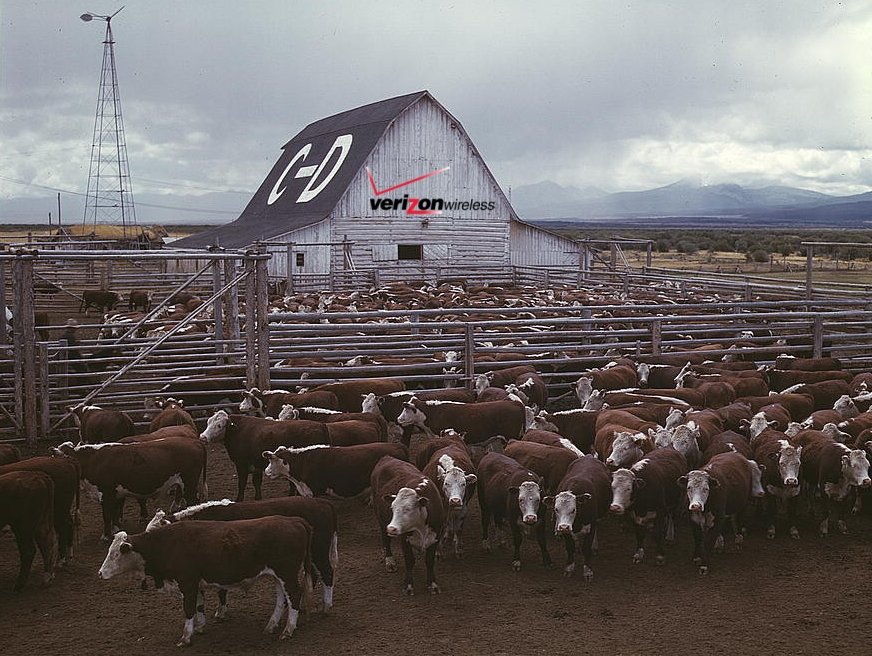
Verizon's cattle call? Will the company herd all of its wireless customers to unlimited voice calling at a higher price?

Given the option to downgrade, customers are jumping at the chance. With voice revenue declining 2-4% in the first quarter, Wall Street has been pressuring carriers to act.

The answer that works for them, although probably not for you, is forcing all customers to purchase an unlimited voice calling plan at contract renewal time. At today’s prices, that could add an extra $30 a month for customers used to paying $40 for a basic 450-minute calling plan.

“The industry’s definitely moving towards unlimited,” AT&T Mobility Chief Executive Ralph de la Vega said in a recent interview. “Especially as more people adopt smartphones that have voice capabilities over the Internet, segmented voice plans will become less relevant.”

Ironically, cell phone companies that have spent the last year or two defending the end of unlimited mobile data as “fair” because customers can “choose exactly the plan they need,” are adopting a completely different strategy to push for unlimited voice calling.

“It’s more important to offer a complete solution to consumers which is really, truly unlimited,” said T-Mobile USA Chief Executive Philipp Humm in a recent interview. “The new world is a completely unlimited, worry-free world.”

Sprint agrees, although its insistence on preserving an unlimited data experience for its customers protects the company from charges of hypocrisy.

Fared Adib, head of product development for Sprint, told the Journal eliminating tiered voice options makes sense because it simplifies choices for customers. “People like the freedom of not having to worry about either data or voice,” he said.

No cell phone company would go on the record as the first to discard tiered voice plans, but AT&T led the way to ending unlimited data, and the company is increasingly vocal about ending tiered voice calling as well.

At current prices, consumers could pay substantially higher cell phone bills as a result.

Both AT&T and Verizon Wireless currently charge $70 a month for unlimited calling. Sprint charges $99.99 for its combined unlimited calling and data plan. T-Mobile charges $60 for unlimited talking and texting. Compelling customers to adopt unlimited calling plans will likely bring smartphone monthly charges well above $100 a month when factoring mandatory data plan add-ons, taxes, surcharges, and fees.

Customers who find this pricing intolerable will likely gravitate to prepaid calling plans, which is where an increasing number of occasional and light cell phone users have already ended up.

[flv width=”512″ height=”308″]http://www.phillipdampier.com/video/WSJ Voice Calling Plan Changes 6-5-12.flv[/flv]

The Wall Street Journal explores why cell phone companies want to compel customers to choose unlimited voice calling plans.  (4 minutes)

Trouble Looms for Smaller Phone Companies As Cable Swipes Away Business Customers

Phillip Dampier June 6, 2012 AT&T, CenturyLink, Comcast/Xfinity, Competition, Earthlink, FairPoint, Frontier, Hawaiian Telcom, Verizon Comments Off on Trouble Looms for Smaller Phone Companies As Cable Swipes Away Business Customers

The cable industry is moving in on the phone companies' best customers: commercial enterprises

The growing competitiveness of the cable industry in the commercial services sector could spell trouble for some of the nation’s smaller telecommunications companies.

A new report from Moody’s Investor Service declares the cable industry is spoiling the business plans of telephone companies to grow revenue selling service to business customers.

With cable companies now investing in wiring office parks and downtown buildings to sell packages of voice and data services to corporate customers, traditional phone company revenue will suffer, declares Moody, which predicts traditional wireline revenue will be flat or decrease this year into next.

Cable Companies Quash Telecom Business-Revenue Rebound,” warns the companies at the greatest risk of revenue declines include EarthLink, Inc., Integra Telecom, Inc., U.S. TelePacific Corp., and CCGI Holding Corp. Among familiar independent phone companies, Frontier Communications, FairPoint Communications, and Hawaiian Telcom are at the biggest risk of losing customers, primarily because all three lack strong business products, according to the Moody’s report.

AT&T, CenturyLink, and Verizon are at a lower risk of losing customers, because all three focus investments on commercial services. CenturyLink’s acquisition of Qwest, a  former Baby Bell, strengthened its business services position, especially in the Pacific Northwest.

The cable companies best positioned to steal away telephone company customers are Comcast and Time Warner Cable, both of which have invested heavily in wiring commercial businesses for service. In the past, cable operators charged thousands (sometimes tens of thousands) of dollars to install service in unwired commercial buildings, but now that initial wiring investment is increasingly being covered by cable operators.

Moody’s declares the business service sector a growth industry for cable. The report notes business revenues only account for $5 billion — just six percent — of the cable industry’s total business in 2011. In contrast, phone companies earn 40 percent of their revenue from business customers.

The report also states individual cable companies are now collaborating to deliver business service to companies with multiple service locations, which used to present a problem when offices were located in territories served by different operators.

If the cable industry continues to erode traditional telephone company revenue, it could eventually threaten the viability of some companies, especially those heavily-laden with acquisition-related debt.

Search This Site:

Contributions:

Recent Comments:

Your Account:

Stop the Cap!