Home » Competition » Recent Articles:

Me Too Wireless: AT&T Follows Verizon, Shortening Returns to 14 Days

Phillip Dampier October 15, 2012 AT&T, Competition, Consumer News, Wireless Broadband 1 Comment

AT&T has finally gotten around to following Verizon Wireless’ footsteps to fewer customer returns as it joins Big Red cutting “no hassle” returns to just two weeks.

Starting this month, if you return a phone to AT&T within 14 days, the company will charge you a $35 restocking fee or 10% of the purchase price for accessories over $199. Return it after 14 days and you may not be hassled, but you will be out as much as $325.

Consumers (including Individual Responsibility Users) – Device/Accessory Returns

Days after activation Amount of refund Fees, except where prohibited
0-14 days Full refund less any applicable fees Restocking fee: up to $35 for devices. 10% of purchase price for accessories over $199Apple devices: No restocking fee if device returned unopened
15 days or more Return directly to manufacturer. Refund subject to manufacturer warranty policy as follows: Refurbished devices carry a warranty from the manufacturer of 90 days after purchase date. New devices carry a warranty of 1 year after purchase date.Apple devices: Refund subject to Apple warranty policy. New Apple branded equipment covered by Apple’s one-year Limited Warranty. Refurbished Apple branded equipment covered under Apple’s original Limited Warranty and will have at least 90 days or more remaining under warranty when sold. AT&T early termination fee: Smartphone: $325 minus $10 for each full month you complete under the service commitmentBasic Phone, Mobile Hotspot, USB Modem: $150 minus $4 for each full month you complete under the service commitmentGaming and other devices without a service commitment: None

Other fees: Subject to manufacturer warranty policy.

Cosmetic blemish items are considered closeout items and are not eligible for return or exchange. 

Wall Street Hates Softbank’s Acquisition of Sprint; “Competitive Headache” for Wireless Duopoly

Phillip Dampier October 15, 2012 Competition, Consumer News, Sprint, Video, Wireless Broadband Comments Off on Wall Street Hates Softbank’s Acquisition of Sprint; “Competitive Headache” for Wireless Duopoly

Sprint’s deal with Softbank is bad news for margin-obsessed Wall Street. More competition=lower profits.

Wall Street is turning a cold shoulder to today’s official announcement that Japan’s Softbank will acquire nearly 70% of Sprint-Nextel, giving effective control of the company to Japanese business magnet Masayoshi Son.

The $20.1 billion acquisition is the largest-ever foreign buyout by a Japanese company, made possible by the combination of a historically low U.S. dollar against the increasingly strong yen, giving Softbank even more value for money.

But outside of a handful of investment banks that stand to earn $200 million in fees for helping to advice the two companies about the deal, Wall Street is not happy.

“It’s a competitive headache,” said Christopher King, an analyst at Stifel Nicolaus & Co. The transaction is expected to infuse billions in new capital into perennially third-place Sprint, which is far behind its larger rivals AT&T and Verizon Wireless.

King and other Wall Street analysts fear a bolstered Sprint will spark new competition into the decreasingly competitive wireless marketplace. Softbank is well known in Japan for cut-throat pricing competition, something that could directly impact Verizon and AT&T’s increasingly expensive pricing for wireless service. Many on Wall Street fear an emboldened Sprint could overtake T-Mobile offering aggressively priced service plans.

[flv width=”360″ height=”290″]http://www.phillipdampier.com/video/Bloomberg King Says Sprint Deal Creates Competitive Headaches 10-15-12.mp4[/flv]

Stifel Nicolaus & Co., analyst Christopher King calls today’s announcement by Softbank and Sprint “a competitive headache” for the wireless industry, which may face more competition and lower prices.  (2 minutes)

Christopher King, an analyst for Stifel Nicolaus & Co., called the Sprint-Softbank deal a competitive headache.

Sprint is also expected to put Softbank’s investment to good use — acquiring additional spectrum and quickly upgrading its 4G LTE network, now under construction. The surprise investment could mean a more robust network for Sprint, an important objective for a company criticized for offering less coverage than its larger rivals.

Craig Moffett, an analyst with Sanford Bernstein, said Sprint’s aggressive upgrades are bad news because it means the company is going to spend a lot to improve service and presumably cut prices, which will hurt profit margins at Sprint and its competitors who may be forced to lower prices in turn to compete.

Consumers, especially existing Sprint customers, will likely celebrate a stronger Sprint, especially if it triggers a wireless price war.

The investment banks offering advice to both parties have little to complain about either. Citigroup and Raine Group LLC may earn as much as $200 million in direct fees from the deal. Softbank’s own advisers — Deutsche Bank and Mizuho Securities will earn $70-100 million. Sprint’s advisers — Citigroup, UBS, and Rothschild will likely earn an equal amount, according to Bloomberg News.

Investment bankers are hopeful the deal will help trigger another wave of wireless consolidation, which will bolster their fee earnings. In addition to Leap Wireless’ Cricket, there are at least a dozen independent regional carriers including C-Spire and US Cellular now ripe for acquisition by AT&T, Verizon Wireless, Sprint, or T-Mobile.

Softbank has been acquiring some of its own competitors back home in Japan, including eAccess, largely to gain additional spectrum to bolster its LTE 4G network build.

For now, the deal announced today does not include beleaguered Clearwire, but most Wall Street investors believe the Sprint-controlled company will eventually also be acquired.

[flv]http://www.phillipdampier.com/video/CNBC Sprinting Forward with Softbank 10-15-12.flv[/flv]

CNBC talks with Sanford Bernstein’s Craig Moffett, who is not thrilled with a deal that will leave Sprint on a spending spree to upgrade its network and potentially trigger a price war.  (4 minutes)

Sprint, Clearwire in Advanced Talks to Be Acquired By Japanese Cell Provider Softbank

Softbank’s marketing is baffling to Americans. The company has produced more than 150 different ads featuring a “typical Japanese family” that is anything but. The Otosan (father) is portrayed as a white dog, accompanied by a more familiar Japanese mother, a daughter played by a famous Japanese pop star, and her African-American brother.

Softbank, Japan’s third largest cell phone company, is said to be in advanced talks with both Sprint-Nextel and Clearwire to acquire a $12.8 billion majority ownership interest in both companies, according to a report from Bloomberg News.

Softbank’s primary motivation isn’t a sudden interest in serving American cell phone users. It wants bigger discounts for expensive smartphones and other mobile equipment for its Japanese customers, and volume discount opportunities are wide open if the company can pool Sprint, Clearwire, and Softbank together as a single buyer.

CNBC reports Softbank originally sought a blockbuster deal with Deutsche Telekom’s T-Mobile USA, Sprint, and Clearwire to form one super-sized carrier, but the German owners of T-Mobile got cold feet and pulled out, fearing the Obama Administration’s antitrust concerns could ultimately torpedo the deal. DT recently proposed an offer for MetroPCS instead, a deal much more likely to pass regulator review.

The deal could provide much-needed financial backing for Sprint, currently embarked on its costly Network Vision plan to upgrade to 4G LTE service. Softbank also sees synergy with Clearwire, because both companies share the same frequencies and TDD LTE network technology, meaning smartphones compatible on one network will work on the other.

Sprint is still said to be considering making a counteroffer for MetroPCS, potentially pulling that company away from T-Mobile, while Leap Wireless’ Cricket also remains a potential takeover target.

Wall Street thinks a foreign player entering the U.S. market will have a much easier time winning regulator approval, because Softbank has no other interests in the U.S. market. The Justice Department and the Federal Communications Commission both ultimately rejected a previous attempt to merge AT&T and T-Mobile, fearing a larger AT&T would reduce competition and stifle innovation.

Softbank is a disruptive competitor in the Japanese cell phone market. It aggressively competes with KDDI and market leader NTT Docomo. The company is perhaps best known for its oddball, often mystifying marketing which features a talking dog interacting with well-known Hollywood stars, including Brad Pitt, Quentin Tarantino, and Tommy Lee Jones.

Ads feature a typical Japanese family played by atypical actors — a strict father played by a talking dog, a more familiar Japanese mother, a daughter played by a famous Japanese pop star, and her African-American brother. The ads are almost incomprehensible to North American audiences used to a more direct marketing approach. But Japanese audiences love the ads they consider both funny and more importantly, unexpected.

That latter theme is particularly important to Softbank’s image in the Japanese cell phone market. With 98.6% of the country ethnically Japanese, the unexpected family underlines the company’s efforts to shake up conventional cell phone service. Softbank is known for introducing unique plans that target different groups of cell phone users often neglected by larger carriers. First to take a chance with the iPhone to appeal to youth, Softbank also sells plans targeting older users that emphasize unlimited calling to family members.

If Softbank brings this type of marketing to the United States, it could challenge T-Mobile as America’s most disruptive carrier. Just don’t expect a talking dog to close the sale.

[flv]http://www.phillipdampier.com/video/CNBC Softbank Said to Be in Talks to Buy Sprint Nextel 10-11-12.flv[/flv]

CNBC covers the deal between Sprint, Clearwire, and Softbank that originally also included T-Mobile USA.  (3 minutes)

 [flv width=”640″ height=”380″]http://www.phillipdampier.com/video/Softbank Tommy Lee Jones.flv[/flv]

Softbank’s legendary ads have been running since June, 2007 and are beyond prolific. More than 150 different ads featuring “the Shirato family” have been produced so far, often with blockbuster Hollywood talent playing along. But most prove baffling to English-speaking audiences, such as this one featuring Tommy Lee Jones as a threatening maid with a uni-brow. (1 minute)

[flv width=”640″ height=”500″]http://www.phillipdampier.com/video/SoftBank Quentin Tarantino.flv[/flv]

Quentin Tarantino hams it up in these two impenetrable ads for Softbank. The rough translation from Japanese does not help much. It starts with the older woman asking Otosan (the dog) if he’s going to a town called Tosa. Otosan says yes. Then, the younger woman asks if Tarantino is also going, and he replies: “I am Tara!” (In the longer version, Tarantino does his Samurai impression “Hai-ya! Samurai spirit! Get him with the Samurai sword! Ho-ha!”)  Otosan responds, “I’m determined to go to Tosa!” The older woman tells Tarantino to calm down. When the phone rings, the younger woman says, “It’s the phone,” and the older woman says, “It’s your wife.” Tarantino gasps. The wife asks for Tara. Tarantino responds, “I am Tara!” His wife yells, “Get home right now!” (1 minute)

[flv width=”640″ height=”380″]http://www.phillipdampier.com/video/SoftBank Brad Pitt.flv[/flv]

Not every ad features the Shirato family. A barely recognizable Brad Pitt helps out while showing off some creative ways to use his built-in cell phone camera. (1 minute)

Enabling Corporate Bullies: Big Cable Loves Fewer Rules, Weakened Oversight

“We know where you live, where your office is and who you owe money to. We are having your house watched and we are going to use this information to destroy you. You made a big mistake messing with TCI. We are the largest cable company around. We are going to see that you are ruined professionally.” — Paul Alden, TCI’s vice president and national director of franchising to an independent consultant hired to review competing cable operators for Jefferson City, Mo., in a historical example of cable industry abuse

The Federal Communications Commission last week voted unanimously to expire rules that required cable operators to make their programming available on fair and reasonable terms to competitors. Big mistake.

We have been here before. Let us turn back the clock to the days before the FCC and Congress mildly reined in the cable television industry with the types of pro-consumer regulations Chairman Genachowski and others have now let expire. Why were these rules introduced in the first place? Because years of industry abuse heaped on consumers and local communities took their toll, with high prices for poor service, outrageous corporate bullying tactics, and endless litigation to hamper or stop consumer relief.

How long will it take for the industry to resume the same abusive practices that forced the FCC and Congress to finally act once before?

The Central Telecommunications. v. Tele-Communications, Inc. (TCI): The Poster Child for Cable Industry Abuse
Tele-Communications, Inc. (TCI) was the nation’s largest cable operator. Later known as AT&T Cable, the company was eventually sold to Comcast.

Back in the 1980s, before the days of direct broadcast satellite competition like DirecTV and Dish, and years before telco-TV was allowed by law, the cable industry totally dominated the video marketplace. The only challenges came from incredibly rare competing cable TV providers or three million home satellite dish owners or wireless cable subscribers.

The industry’s only check on unhampered monopoly growth came from local authority over cable operations through the cable franchising process. If a cable company got out of control or did not offer the programming or service a community found adequate, it could offer a franchise to another company, effectively kicking bad actors out of town.

In Jefferson City, Mo., the local cable operator during the 1980s was Tele-Communications, Inc. (TCI). It had acquired the franchise in the city by buying out the original provider in the late 1970s. TCI had been buying a lot of smaller cable operators around the country under the direction of then CEO John Malone. By 1981, it had grown to the largest cable operator in the country, and few dared confront the well-heeled operator, which had a legal budget greater than the operating budgets of some communities TCI served. TCI was later acquired by AT&T Cable, which in turn sold its cable systems to Comcast, which continues to operate them to this day.

In 1980, Jefferson City officials decided it would be prudent to make sure they were getting the best cable service possible, so as TCI’s franchise agreement reached expiration, the city issued a “request for proposals” offering other cable companies a chance to bid for the right to serve the community of around 38,000. For TCI, this was tantamount to a declaration of war, and the cable company meant business. Malone equated anything threatening a permanent cable franchise for TCI as something like an act of government theft. In books later written about the events in Jefferson City, even some TCI executives admitted they were “horrified by the sleaziness” of the kind of hardball tactics involved, comparing them to a “B-movie.”

TCI revealed it would stop at nothing to keep competitors away from their territories and drag out years of litigation. Central Telecommunications, Inc., v. TCI Cablevision, Inc., revealed exactly how far TCI was willing to go:

From: Cutthroat: High Stakes & Killer Moves on the Electronic Frontier, By Stephen Keating

Cajole the mayor into canceling competitive bidding. In early 1980, after Jefferson City made it known TCI might get some competition, the company quickly met with the mayor hoping to persuade him to renew TCI’s franchise without a competitive bid process, so as to avoid a “frontal attack” by competitors.

Threaten the independent consultant. In December, 1980 the city hired Elmer Smalling, an industry consultant, to independently evaluate various bids from cable operators willing to serve Jefferson City. TCI immediately began publicly attacking his qualifications in a way the court later found to be defamatory. The court case documents Paul Alden, TCI’s vice president and national director of franchising, making personal threats against Smalling.  A sample:

“We know where you live, where your office is and who you owe money to. We are having your house watched and we are going to use this information to destroy you. You made a big mistake messing with T.C.I. We are the largest cable company around[.] We are going to see that you are ruined professionally.”

It got worse for Smalling. At this same time, Warner-Amex (another large cable company now known as Time Warner Cable) was a client of Smalling’s. Alden contacted Warner-Amex about Smalling. Following the threats, Smalling lost Warner-Amex as a client.

City Attorney Thomas Utterback later wrote a memo to the City Council in which he described TCI as a “relentless corporate bully.”

Threaten would-be competitors. On several occasions, from January of 1981 to the summer of 1981, Alden repeatedly telephoned Robert Brooks, chief operating officer of Teltran, a company which submitted a bid for the city’s franchise, and threatened him that unless Teltran withdrew from the bidding process, TCI would make trouble for Teltran in Columbia, Missouri, where it operated a cable television franchise. Teltran subsequently dropped out of the bidding process on the ground there was a “distasteful environment” in Jefferson City.

Another competitor, Central Telecommunications, became a defendant in a TCI lawsuit challenging the city’s right to request proposals from other cable companies. TCI argued it now had a 1st Amendment right of free speech to serve Jefferson City residents regardless of the wishes of city officials. In a wide ranging series of subpoenas, TCI demanded the bank handling Central’s financing turn over a “very wide range of potentially confidential records,” which according to Central was an effort to destroy its financing agreement with the bank.

Malone

Threaten customers. TCI warned customers that unless it won the cable franchise for Jefferson City, it would immediately shut off its cable system and leave customers without service, potentially for years, until Central built its own system from scratch. TCI officials said “it would not sell ‘one bolt’ of its system to whoever received the new franchise and that it would ‘rather have [its system] rot on the pole’ than sell it to a competitor at any cost.”

TCI’s system manager in Jefferson City told elderly residents of a senior citizens’ home that TCI would cut off service if denied a franchise, and the residents would be without television for two years pending construction of a new system because the concrete walls of their residence would not allow reception of over-the-air stations.

Lie, Lie, and Lie Some More. In one City Council meeting, Alden wildly claimed that TCI was the nation’s largest distributor of satellite dish antennas, with “an exclusive” right to sell in the state of Missouri. TCI promised that if the city renewed its franchise agreement, it would keep satellite dishes out of Jefferson City. If the franchise was not renewed, Alden promised to “flood the city with satellite dishes,” denying the city franchise fees. Alden later admitted both statements were untrue.

Threaten the mayor’s office. Although the mayor has never disclosed exactly what TCI threatened him with, the public record shows in March 1981, Alden called the mayor and threatened to turn the system off unless TCI’s franchise was renewed. TCI also filed an expensive lawsuit against Jefferson City regarding the way it handled its request for proposals.

By the fall of that year, TCI was meeting with city attorney Utterback in secret negotiations to renew its cable franchise, in direct violation of the city’s request for proposals  which required all negotiations to be open, as well as Missouri’s “sunshine laws.” By next spring, the mayor had privately notified council members he would veto any franchise renewal awarded to anyone other than TCI, which he later admitted was a condition imposed by TCI during its secret negotiations.

On January 25, 1982, the City Council provisionally awarded the franchise to… Central Telecommunications. TCI immediately refused to pay the city the prior year’s franchise fees, in excess of $60,000. It also reminded the mayor of his obligations to TCI as part of the secret franchise renewal negotiations held the prior fall. On April 20, 1982, the City Council passed the ordinance awarding a franchise to Central. The vote was six in favor and four against. The mayor vetoed the ordinance. The council then deadlocked five-to-five on awarding a franchise to TCI and the mayor cast the deciding vote in favor of that company. The next day, TCI dismissed its lawsuit against the city and paid the withheld franchise fees.

In the end, several courts upheld tens of millions in damages for Central Telecommunications, TCI’s lawsuit was dismissed at the company’s request, Mr. Alden was summarily dismissed by TCI after Malone referred to him as a “loose cannon,” and Jefferson City was stuck with several additional years of lousy service from TCI.

But TCI’s “bad corporate citizen” practices would come back to haunt the cable juggernaut, eventually failing to win assignments for two $800 million orbital slots for a direct broadcast satellite service the company proposed. After the Jefferson City experience, even the FCC could not, in good conscience, reward TCI with satellite slots it wanted for a “competing satellite service” it would sell through its own cable companies.

The memories of FCC officials are evidently short. Giving cable operators an inch has historically bought them a mile, paid for by consumers. Mandating easy to understand rules requiring cable operators sell programming to competitors on fair and reasonable terms is sound policy whether there is competition or not. Removing those rules or watering them down only promotes the kind of mischief that, when unchecked, leads to these kinds of horror stories. History need not repeat itself.


FCC to Competing Video Services: You’re On Your Own and Good Luck to You

Phillip Dampier October 9, 2012 Competition, Consumer News, Editorial & Site News, Online Video, Public Policy & Gov't Comments Off on FCC to Competing Video Services: You’re On Your Own and Good Luck to You

The Federal Cable-Protection Commission

Problem: Solved?

The Federal Communications Commission last Friday unanimously voted to free cable operators from their obligation to sell cable channels they own to rival satellite and phone companies.

In a bizarre justification, FCC chairman Julius Genachowski said ending the unambiguous rules would prevent anti-competitive activity in the market because the FCC would retain the right to review industry abuses on a case-by-case basis. Lawmakers called that an invitation for endless, time consuming litigation that will deprive consumers of competitive choice and favor the still-dominant cable television industry.

“The sunset of the program access rules could lead to a new dawn of less choice and higher prices for consumers,” said Rep. Ed Markey (D-Mass.), one of the original authors of the rules. “If we do not extend the program access rules, the largest cable companies could withhold popular sports and entertainment programming from their competitors, reducing the competition and choice that has benefited consumers. I urge Chairman Genachowski and the FCC commissioners to extend the program access rules that have helped to level the playing field in the paid television marketplace.”

The FCC’s decision could have profound implications on would-be competitors, particularly start-ups like Google Fiber that could find itself without access to popular cable networks at any price.

At a time when cable companies and programmers are constantly pitted against each other in contract/carriage disputes, the deregulatory spirit at the FCC is likely to irritate consumers even more.

Phillip “How nice of the FCC to think about poor cable companies” Dampier

The FCC claims it will continue to protect sports programming from exclusive carriage agreements — a potentially critical concession considering the history of “exclusive, only on cable” programming contracts was largely focused on regional sports channel PRISM.

Comcast successfully kept the popular Philadelphia-based network (today known as Comcast SportsNet Philadephia) off competing satellite services and cable operators by only distributing the network terrestrially. A controversial FCC rule (known as the “terrestrial exception”) states that a television channel does not have to make its shows available to satellite companies if it does not use satellites to transmit its programs. Cox Cable has its own implementation of that loophole running in San Diego.

Derek Chang, executive vice-president of DirecTV, says Comcast’s local market share dominance is a direct consequence of SportsNet. More importantly, Chang believes even if Comcast says it will sell the network to competitors, it is free to set prices for SportsNet as high as it wants.

“They win either way,” Chang said. “They’re either going to gouge our customers, or they’re going to withhold it from our customers.”

Verizon FiOS has secured the right to carry the channel on its system, but won’t say how much it pays.

The PRISM case is today’s best evidence that exclusive agreements do hamper competition — Philadelphia is hardly a hotbed of satellite dishes, with a 40-50% reduced satellite subscriber rate attributable to the lack of popular regional sports on satellite.

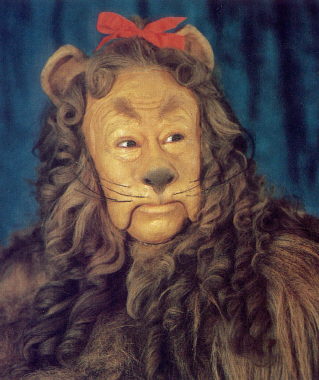
FCC Chairman Julius Genachowski’s cowardly lion act is back. Will anyone at the FCC stand up to Big Telecom companies while busy watering down pro-competitive policies?

Historically, satellite dish owners and wireless cable customers were the most likely victims of exclusive or predatory programming contracts, with some cable networks refusing to sell their programming to competing technologies at any price.  Others charged enormous, unjustified mark-ups that made the technology non-competitive. Today, wireless cable television is mostly defunct and home satellite dish service has largely been replaced with direct broadcast satellite providers DirecTV and Dish.

Today’s programming landscape is more complicated. The FCC would argue that unlike in the 1980s, most cable programmers are no longer directly controlled by yesteryear’s Tele-Communications, Inc. (TCI) and Time Warner (Time Warner Cable was spun off into an independent, unaffiliated entity in March, 2009), which collectively controlled dozens of popular cable networks. But programmers’ know their best customers remain cable operators which maintain a dominant market share in every major American city.

Friday’s ruling has implications for telco-TV providers and satellite dish companies that may find programming negotiations more complicated than ever. AT&T U-verse and Verizon FiOS may find access to cable-owned programming difficult or even impossible to obtain if cable operators decide their unwanted competition is harmful to their business interests.

But an even larger challenge looms for the next generation of video competition: Google Fiber TV and “over the top” online video.

Nobody is complaining about Google’s robust gigabit broadband offering, but Kansas City residents originally expressed concern about the company’s proposed television lineup. As originally announced, Google Fiber TV was missing HBO and ESPN.

A competing cable system without ESPN is dead in the water for sports enthusiasts.

Google has since managed to sign agreements that expand their channel lineup (although it is still missing HBO). But nothing prevents channel owners from dramatically raising the price at renewal. That is a concern for smaller cable operators as well, who want protection from discriminatory pricing that awards the best prices to giant multi-system operators like Comcast and Time Warner Cable.

The most important impact of the FCC’s decision may be for those waiting to launch virtual cable systems delivering online programming to customers who want to pick and choose from a list of networks.

The FCC’s “new rules” give programmers who depend on tens of millions of cable subscribers even more ammunition to kill competing distribution models like over the top video. Start-up providers who cannot obtain reasonable and fair access to cable programming will have to depend on the vague policies the FCC claims it will enforce to prevent egregious abuse. But the FCC is not known for its speed and start-up companies may face enormous legal fees fighting for fair access that is now open to subjective interpretation.

Search This Site:

Contributions:

Recent Comments:

Your Account:

Stop the Cap!