Subscribe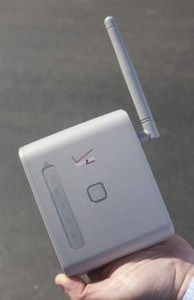
Verizon Voice Link
 The New York State Public Service Commission has announced it will hold public hearings in Ocean Beach in Suffolk County, N.Y. to hear from angry Fire Island residents and others about their evaluation of Verizon’s controversial wireless landline replacement Voice Link, which Verizon hopes to eventually install in rural areas across its operating territories.
“Verizon needs to stop lying,” said Fire Island resident Debi May who lost phone service last fall after Hurricane Sandy damaged the local network. “Don’t tell me you can’t fix my landline service. Tell me you won’t.”
She is one of hundreds of Fire Island residents spending the summer without landline service, relying on spotty cellular service, or using Verizon’s wireless landline alternative Voice Link, which many say simply does not work as advertised. In July, the CWA asserted Verizon is trying to introduce Voice Link in upstate New York, including in the Catskills and in and around Watertown and Buffalo.
“I’ve been on the phone with Verizon all day,” Jason Little, owner of the popular Fire Island haunt Bocce Beach tells The Village Voice. The restaurant’s phone line and DSL service is down again. Just like last week. And three weeks before that. Like always, Verizon’s customer service representatives engage in the futility of scheduling a service call that will never actually happen. Verizon doesn’t bother to show up in this section of Fire Island anymore, reports Little.
“They never come,” he says. So he sits and waits for the service to work its way back on its own — the result of damaged infrastructure Verizon refuses to repair any longer. Until it does, accepting credit cards is a big problem for Little.
It’s the same story down the street at the beachwear boutique A Summer Place. Instead of showing customers the latest summer fashions, owner Roberta Smith struggles her away around Verizon’s abandonment of landline service. She even purchased the recommended wireless credit card machine to process transactions, but that only works as well as Verizon Wireless’ service on the island, which can vary depending on location and traffic demands.
Smith tells the newspaper at least half the time, Verizon’s wireless network is so slow the machine stops working. If she can’t reach the credit card authorization center over a crackly, zero bar Verizon Wireless cell phone, the customer might walk, abandoning the sale.
National Public Radio reports Verizon’s efforts to abandon landline service on Fire Island and in certain New Jersey communities is just the first step towards retiring rural landline service in high cost areas. But does Verizon Voice Link actually work? Local residents say it doesn’t work well enough. NPR allows listeners to hear the sound quality of Voice Link for themselves. (5 minutes)
You must remain on this page to hear the clip, or you can download the clip and listen later.

Verizon’s decision is making life hard for Fire Island’s small businesses.
The Village Voice notes Verizon CEO Lowell McAdam didn’t make the decision to scrap rural copper wire landline service to improve things for customers. He did it for the company.
“The decision wasn’t motivated by customer demand so much as McAdam’s interest in increasing Verizon’s profit margins,” the Voice writes.
Tom Maguire, Verizon’s point man for Voice Link, has not endeared himself with local residents by suggesting Fire Island shoppers should get around the credit card problem by bringing cash.
“Remember what happened to Marie Antoinette when she said ‘let them eat cake’,” suggested one.
For some customers who appreciate the phone company’s cost arguments, Verizon’s wireless alternative wouldn’t be so bad if it didn’t work so bad.
“It has all the problems of a cellphone system, but none of the advantages,” Pat Briody, a homeowner on Fire Island for 40 years told NPR News.
“I don’t think there’s anyone who will tell you Voice Link is better than the copper wire,” says Steve Kunreuther, treasurer of the Saltaire Yacht Club.
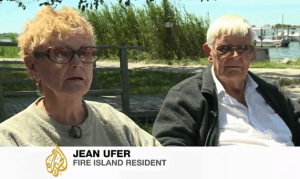
Jean Ufer says her husbands’ pacemaker depends on landline service to report in on his medical condition.
“Voice Link doesn’t work here,” reports resident Jean Ufer, whose husband depends on a pacemaker that must “check in” with medical staff over a landline the Ufer family no longer has. “It constantly breaks down. Everybody who has it hates it. You can’t do faxes. You can’t do the medical stuff you need. We need what we had back.”
Residents who depended on unlimited broadband access from Verizon’s DSL service are being bill-shocked by Verizon’s only broadband replacement option – expensive 4G wireless hotspot service from Verizon Wireless.
Small business owner Alessandro Anderes-Bologna used to have DSL service from Verizon until Hurricane Sandy obliterated Verizon’s infrastructure across parts of the western half of Fire Island. Today he relies on what he calls poor service from Verizon Wireless’ 4G LTE network, which he claims is hopelessly overloaded because of tourist traffic and insufficient capacity. But more impressive are Anderes-Bologna’s estimates of what Verizon Wireless wants to charge him for substandard wireless broadband.
“My bill with Verizon Wireless would probably be in the range of $700-800 a month,” Anderes-Bologna said. That is considerably higher than the $29.99 a month Verizon typically charges for its fastest unlimited DSL option on Fire Island.
Despite the enormous difference in price, Verizon’s Maguire has no problems with Verizon Wireless’ prices for its virtual broadband monopoly on the landline-less sections of the island.
“It’s a closed community,” he says. “It’s the quintessential marketplace where you get to charge what the market will bear, so all the shops get to charge whatever they want.” And that’s exactly what Verizon is doing.
WCBS Radio reports Verizon is introducing Voice Link in certain barrier island communities in New Jersey. But the service lacks important features landline users have been long accustomed to having. (1 minute)
You must remain on this page to hear the clip, or you can download the clip and listen later.
In nearby New Jersey, Verizon’s efforts to introduce Voice Link has met with resistance from consumer groups, the state’s utility regulator, and the Rate Counsel. Over 1,400 customers on barrier island communities like Bay Head, Brick, and Mantoloking cannot get Verizon DSL or landline service any longer because Verizon refuses to repair damaged landlines.

Tom Maguire
“The New Jersey coast has been battered enough,” said Douglas Johnston, AARP New Jersey’s manager of advocacy. “The last thing we need is second-class phone service at the Shore. We are concerned that approval of Verizon’s plans could further the gap between the telecommunications ‘haves’ and ‘have-nots’ and could create an incentive for Verizon to neglect the maintenance and repair of its landline phone network in New Jersey.”
In some cases, Verizon has told customers they can get landline phone service from Comcast, a competitor, instead.
State consumer advocates note that other utilities including cable operators have undertaken repair, replacement, and restoration of facilities in both New York and New Jersey without the challenges Verizon claims it has.
“Only Verizon, without evidentiary support, is seeking to jettison its obligations to provide safe, proper and adequate service to the public,” wrote the New Jersey Rate Counsel in a filing with the Federal Communications Commission.
New York Senator Phil Boyle, who represents Fire Island residents, is hosting a town hall meeting tonight to discuss the move by Verizon to replace copper-wire phone lines on Fire Island with Voice Link. The meeting will be held at the Ocean Beach Community House in Ocean Beach from 5-7pm.
The New York State Public Service Commission will be at the same location Saturday, Aug. 24 starting at noon for a public statement hearing to hear from customers about how Verizon Voice Link is working for them.
It is not necessary to make an appointment in advance or to present written material to speak at the public statement hearing. Anyone with a view about Voice Link, whether they live on the island or not are welcome to attend. Speakers will be called after completing a card requesting time to speak. Disabled persons requiring special accommodations may place a collect call to the Department of Public Service’s Human Resources Management Office at (518) 474-2520 as soon as possible. TDD users may request a sign language interpreter by placing a call through the New York Relay Service at 711 to reach the Department of Public Service’s Human Resource Office at the previously mentioned number.
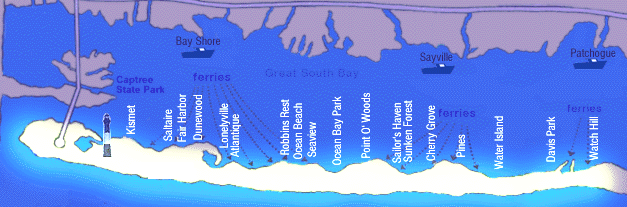
Fire Island
Those who cannot attend in person at the Community House, 157-164 Bay Walk, Ocean Beach can send comments about Voice Link to the PSC online, by phone, or through the mail.
- E:Mail: [email protected]
- U.S. Mail: Secretary, Public Service Commission, Three Empire State Plaza, Albany, New York 12223-1350
- 24 Hour Toll-Free Opinion Line (N.Y. residents only): 1-800-335-2120
Your comments should refer to “Case 13-C-0197 – Voice Link on Fire Island.” All comments are requested by Sept. 13, 2013. Comments will become part of the record considered by the Commission and will be published online and accessible by clicking on the “Public Comments” tab.
[flv width=”640″ height=”380″]http://www.phillipdampier.com/video/Al Jazeera US islanders battle telecom giant 8-13-13.flv[/flv]
Al Jazeera reports Fire Island residents are fighting to keep their landlines, especially after having bad experiences with Verizon Voice Link. (3 minutes)
 The average owner of a large home that wants an alarm system, the ability to observe everything indoors and out, and remotely control doors, thermostats and electric outlets will pay AT&T $1,740 in installation fees and a recurring monthly charge of $69.95 a month for deluxe peace of mind.
 TracFone customers signed up for NET10 Wireless prepaid service are getting word in e-mail the 1.5GB monthly data cap on AT&T-based SIM cards introduced in March has been removed and unlimited data has returned.