Home » Competition » Recent Articles:

Supreme Court Justice Samuel Alito’s Big Telecom Stock Holdings Affect Court Rulings

Alito

Alito

Justice Samuel Alito was forced to recuse himself from nearly six dozen cases brought to the Supreme Court in the last 10 months because the Alito family owns stock in many of the corporations involved in litigation.

When Alito’s wife Martha Ann’s father died last year, the Alito family inherited a wealth of stock worth up to $1.25 million in some of America’s largest companies, including AT&T and Verizon Communications.

The Associated Press reports Alito’s tardy financial disclosure for 2012 revealed the justice’s reasons for recusal: his sudden ownership of shares in large telecom, pharmaceutical, oil and gas, and tobacco companies.

Federal law requires justices to step away from cases where there is a financial conflict of interest. Alito’s inherited stock represents just such a conflict.

In one case, however, Alito found himself holding Comcast Corp. stock after hearing arguments in a massive class action antitrust case representing two million customers the plaintiffs argued were being overcharged by an illegitimate cable monopoly.

Alito’s Comcast stock was purchased and sold last December. The Court’s 5-4 decision, written by Justice Antonin Scalia, was announced March 27. Alito’s deciding vote fundamentally raised the bar on future lawsuits, making it much more difficult for class action cases to be brought before the courts.

The Comcast suit, in the courts since 2003, argued that cable subscribers in Pennsylvania, New Jersey and Delaware were overcharged at least $875 million because of Comcast’s efforts to monopolize cable service in the Philadelphia area. Comcast amassed its dominant position by buying or swapping cable systems in the region to create a single large cable provider serving the majority of southern New Jersey, Delaware, and southeastern Pennsylvania. By 2002, the lawsuit claimed, Comcast had achieved a 77.8 percent market share.

Big, Bigger, Biggest, Still Bigger

Comcast argued the lawsuit was too complicated and its proposed method of calculating damages was faulty. The Court’s conservative justices agreed with Comcast, finding the lawsuit fell “far short of establishing that damages are capable of measurement.”

  • Voting for Comcast’s position: Chief Justice John Roberts and Justices Antonin Scalia, Anthony Kennedy, Clarence Thomas and Samuel Alito.
  • Voting against Comcast: Justices Ruth Bader Ginsburg, Stephen Breyer, Sonia Sotomayor and Elena Kagan.

A study recently published in the Minnesota Law Review found the current Supreme Court is by far the most corporate-friendly of any court in at least 65 years, noting “the Roberts court is indeed highly pro-business — the conservatives extremely so and the liberals only moderately liberal.”

The top two most likely to vote in favor of big business among all justices seated since 1946 are Chief Justice Roberts and Justice Samuel A. Alito, Jr.

“There was a time when being ‘business-friendly’ meant giving corporations a leg-up and a level playing field because doing so creates jobs and bolsters the economy,” wrote Supreme Court reporter Jonathan Valania. “Today, ‘business-friendly’ means letting corporations socialize their costs while privatizing their profits. It means letting corporation literally write the laws that govern them. It means rolling back regulations and de-fanging oversight [….] What we are really talking about is corporatism.”

AT&T’s Next Generation U-verse Broadband Going to Selected Apartments in Atlanta, Austin, Orlando

att connected communitiesAT&T and Camden Property Trust have announced an agreement to offer broadband, television, and phone services over fiber to the premises technology beginning this fall, serving new high-end apartment homes owned by the developer in Atlanta, Austin, and Orlando.


AT&T’s suggestion it will build a competing fiber network that would rival Google appears to be, for now, limited to selected, luxury multi-dwelling units participating in a strategic marketing partnership that can guarantee enough customers to make the investment in fiber optics worthwhile.

AT&T’s Connected Communities Initiative is a special program offered to large single-family homebuilders, developers, real estate investment trusts, apartment owners, property management groups and large homeowners’ associations that can deliver AT&T a virtually captive customer base in return for better-than-average service and kickbacks in the form of lucrative commissions.

Camden's Gaines Ranch in Austin, Tex.

Camden’s Gaines Ranch in Austin, Tex.

With AT&T’s latest agreement, the new Camden-managed properties will receive the next generation of U-verse High Speed Internet, U-verse TV and U-verse Voice on an all-fiber network that will deliver a level of enhanced service unavailable to most U-verse customers. Most importantly, the fiber infrastructure will let AT&T to offer faster broadband to residents without limiting their television viewing.

Most AT&T U-verse customers receive service over a hybrid fiber-copper phone wire network using a more advanced form of DSL. Fiber from the nearest AT&T central office extends into each neighborhood, but existing copper phone wiring carries the service the last several blocks into individual customer homes. The presence of copper limits the available bandwidth, which has kept AT&T’s top U-verse speeds at around 24Mbps. The only way to increase speeds is to cut the amount of copper in the network. Eliminating it completely is even better.

AT&T has been reluctant to follow Verizon’s lead deploying an all-fiber network. The cost to wire each home with fiber was too prohibitive for AT&T, but providing fiber connectivity to large apartment buildings, condos, or other multi-dwelling units has met AT&T’s cost concerns, especially when the property owner signs over exclusive rights to the buildings’ existing telecommunications infrastructure.

AT&T’s program encourages the participation of property owners with a variety of paid commissions and other compensation, including:

Exclusive Marketing Agreements: Under an AT&T Exclusive Marketing Agreement, residents may still choose their communications and entertainment services provider, but the builder, developer or property owner agrees to exclusively promote AT&T services. In doing so, AT&T provides financial incentives in the form of commissions for property owners and multiple service options for residents. In most cases, renters may have the mistaken impression they can only get service from AT&T, and are informally discouraged from considering alternative providers.

camdenBulk Contracts: An AT&T Connected Communities bulk agreement offers greater earning potential. With a single, monthly recurring bulk bill for all contracted units, developers and HOAs get below-retail pricing, increased savings on equipment costs, and other rewarding financial incentives. In most cases, building owners include AT&T services either as part of the monthly rent or billed as a mandatory services surcharge. A resident can still sign up for satellite or cable television, but has zero incentive to do so because they would be effectively paying for service twice.

Exclusive Use of Wire:  Property owners grant AT&T exclusive use of the wiring, including coaxial cable, at the property. In addition, owners agree to promote AT&T products to residents. This deters would-be competitors from providing service at a property signed up with AT&T. A cable or satellite competitor would not have access to existing wiring and have to arrange an agreement with the property owner to provision a second cable inside the building. Neither the competing provider or the property owner would have any incentive to do this, regardless of the wishes of renters.

Large properties can also contract with AT&T to provision a site-wide Wi-Fi network for the benefit of residents both around the property and at amenities like clubhouses or poolside.

While such agreements can benefit residents with bulk pricing discounts beyond what they could have obtained from AT&T themselves, it also strongly deters other providers from delivering competitive services.

[flv width=”640″ height=”380″]http://www.phillipdampier.com/video/ATT Connected Communities 9-2012.flv[/flv]

Last fall, AT&T promoted its Connected Communities program with property developers, offering them commissions and other special deals if they sign exclusive marketing agreements with the phone company. In 2013, broadband speeds for certain U-verse Internet customers will be increasing, depending on the infrastructure available. (2 minutes)

[flv width=”640″ height=”380″]http://www.phillipdampier.com/video/Camden Online Communities 8-13.flv[/flv]

Camden Properties emphasizes the online services available to residents, particularly those that promote social interaction. In some cases, those services will now be powered by AT&T U-verse. (1 minute)

Sony Has Preliminary Agreement With Viacom to Offer Online Cable TV Alternative

Phillip Dampier August 15, 2013 Competition, Consumer News, Data Caps, Online Video, Sony 1 Comment

sony_logoSony’s bid to enter the “over-the-top” online video business has gotten a shot in the arm with news it has reached a preliminary agreement with Viacom, Inc., to carry its popular cable networks on the Japanese electronics giant’s planned online subscription TV service.

Sony wants to build its own virtual cable television service, offering live and on-demand programming delivered over broadband lines in direct competition with cable and phone companies Comcast, Time Warner Cable, AT&T and Verizon.

Getting agreements with traditional must-have cable networks like Comedy Central, ESPN, and USA have been difficult because the networks fear alienating their traditional customers — large cable, telco and satellite TV companies.

viacomThe Wall Street Journal reports Viacom’s agreement remains preliminary at the moment and the final details have yet to be worked out. If a final agreement is reached, it will be a breakthrough for so-called online cable systems which have gotten nowhere with other cable network owners, including Comcast-NBC, Walt Disney, Time Warner, and CBS.

Cable executives have repeatedly warned that a wider distribution of cable network programming would make them more reluctant to pay higher prices for the cable networks because of the loss of relative exclusivity. Many cable programming contracts restrict the ability of network owners to sell to would-be online competitors.

Viacom has had contentious relationships with cable and satellite companies in the past, so observers suggest it is no surprise Viacom would be among the first to break with tradition. Viacom’s CEO, Sumner Redstone, also controls CBS which is currently off Time Warner Cable systems in three major cities and has had its pay movie channels Showtime and The Movie Channel blacked out on Time Warner systems nationwide. If Sony’s service gets off the ground, CBS could ask Time Warner customers to sign up with Sony instead to get those networks back.

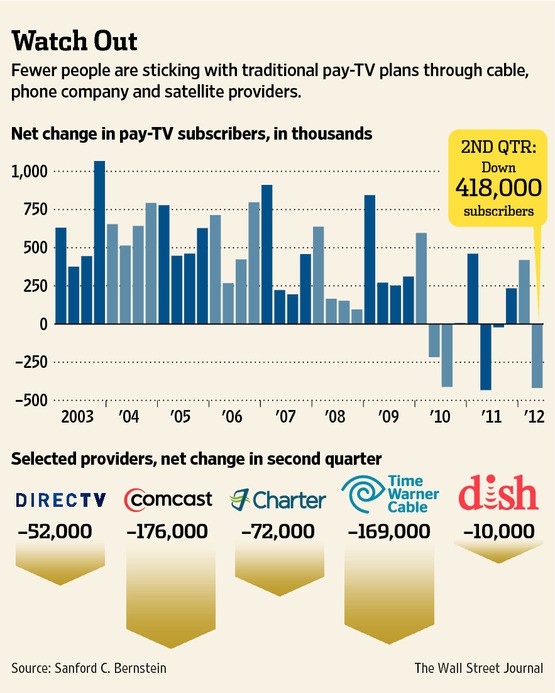
Cord Cutting is Real (Graphics: The Wall Street Journal)

Cord Cutting is Real (Graphics: The Wall Street Journal)

Competing online video services from Intel and Google have largely gone nowhere because of stalled programming negotiations. How Sony managed a breakthrough remains a mystery. To secure rights, Sony may have been asked to sign a lengthy contract with favorable financial terms for Viacom, or Sony might have agreed to carry the full roster of Viacom-owned cable networks, which include:

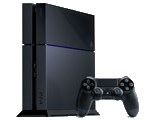
The next generation of the Sony PlayStation may be your next cable box.

The next generation of the Sony PlayStation may be your next cable box.

  • BET
  • CMT
  • Comedy Central
  • Logo
  • MTV
  • MTV2
  • Nick at Nite
  • Nick Jr.
  • Nickelodeon
  • Nicktoons
  • Palladia
  • Spike
  • TeenNick
  • Tr3s
  • TV Land
  • VH1

A source told the Journal Sony hopes to launch its new venture by the end of the year, perhaps on the next generation of Sony’s PlayStation gaming console due soon. Sony also could offer the service on its line of Bravia high-definition televisions, as well as tablets and smartphones.

The Journal:

People who have seen demonstrations of Sony’s system say it has some features that are appealing in comparison to traditional pay TV distributors, including one that recommends shows for users based on what they’ve previously watched. Content providers are allowed to supply some of those recommendations, so they can steer users to other episodes on their channels, according to the people familiar with the matter. Sony provides other content suggestions for viewers based on an algorithm.

The development of online cable television in direct competition with large cable and phone companies could spark a new wave of broadband usage restrictions including usage caps and metered billing. The same telecom companies that earn a substantial part of their revenue selling cable television service are likely to find it unsettling to discover Sony undercutting them on price and using “their” broadband lines to do it. Placing restrictions on the amount of broadband traffic a customer can use each month would deliver a significant deterrent to would-be cord cutters.

Germany Blocks John Malone’s Liberty Global Cable Consolidation Plans on Antitrust Grounds

Phillip Dampier August 15, 2013 Competition, Public Policy & Gov't Comments Off on Germany Blocks John Malone’s Liberty Global Cable Consolidation Plans on Antitrust Grounds

liberty globalA German court has blocked Liberty Global’s attempted $4.25 billion purchase of the country’s third largest cable company on antitrust and anti-competition grounds.


John Malone’s European cable conglomerate already owns UnityMedia, but has been turned away from acquiring Kabel Baden-Wuerttemberg on convincing evidence that the combination of the two cable operators would be grossly anti-competitive and violates German antitrust laws.

Liberty Global is hurrying to the German federal court to overturn the regional judge’s decision. If it cannot, it will have to unwind the merger between Kabel BW and UnityMedia.

The head complainant against Malone’s cable consolidation plan is the German telephone conglomerate Deutsche Telekom. Liberty Global’s investors hoped consolidating the German cable systems would lead to higher prices and revenue for the combined cable operation, as well as reduced costs. Liberty has similar plans to spark a renewed wave of cable consolidation in the American cable market.

Deutsche Telekom’s victory has emboldened the German phone company to consider filing a formal challenge to Vodafone’s separate $10.2 billion purchase of Germany’s largest cable company — Kabel Deutschland, on similar grounds.

AT&T Doesn’t Like T-Mobile’s Idea to Distribute Best Wireless Spectrum More Equitably

Phillip Dampier August 13, 2013 AT&T, Broadband "Shortage", Competition, Editorial & Site News, Public Policy & Gov't, Rural Broadband, Wireless Broadband Comments Off on AT&T Doesn’t Like T-Mobile’s Idea to Distribute Best Wireless Spectrum More Equitably
Phillip "Every other 2008 spectrum bidder except U.S. Cellular has since sold its winnings to AT&T or Verizon Wireless or has never provided competitive service" Dampier

Phillip “Every other 2008 spectrum bidder except U.S. Cellular has since sold its winnings to AT&T or Verizon Wireless or has never provided competitive service” Dampier

AT&T is unhappy with a proposal from a wireless competitor it originally tried to buy in 2011 that would offer smaller competitors a more realistic chance of winning favored 600MHz spectrum vacated by UHF television stations at a forthcoming FCC auction.

T-Mobile’s “Dynamic Market Rule” proposal would establish a cap on the amount of spectrum market leaders AT&T and Verizon Wireless, flush with financial resources for the auction, could win.

“Imposing modest constraints on excessive low-band spectrum aggregation will promote competition, increase consumer choice, encourage innovation, and accelerate broadband deployment,” T-Mobile offered in its proposal to the FCC.

Without some limits, wireless competitors Sprint and T-Mobile, among other smaller carriers, could find themselves outbid for the prime spectrum, well-suited for penetrating buildings and requiring a smaller network of cell towers to deliver blanket coverage.

In a public policy blog post today, AT&T argues T-Mobile is behind the times and its proposal is unfair and unworkable:

First, the purported advantage of low band spectrum – that it allows more coverage and better building penetration with fewer cell sites – has been overtaken by marketplace realities under which capacity not coverage drives network deployment.  Carriers deploying low band and high band spectrum alike must squeeze as many cell sites as they can into their networks to meet exploding demand for data services.  Second, to the extent this is less the case in rural areas, those areas are not spectrum-constrained and the lower cost of building out low band spectrum in such areas is offset by the higher cost of the spectrum itself.

[…] But this is not the only point that should concern policymakers.  Such caps will also suppress auction revenues, potentially to the point of auction failure, ultimately reducing the amount of spectrum freed up for mobile broadband use and undermining the auction’s ability to meet critical statutory goals.

[…] Even if T-Mobile’s proposal did not result in complete auction failure, its proposed caps would suppress auction revenues, reducing the amount of spectrum freed up for mobile broadband use as well as funds generated for FirstNet and to pay down the national debt.  That is because strict limits on participation by otherwise qualified bidders will make the auction less competitive and will yield less revenue.  Indeed, if T-Mobile’s proposed spectrum cap was strictly enforced, Verizon estimates it would be barred from bidding in 7 of the top 10 markets.  AT&T would face similar bidding limitations, as noted in our filing.

AT&T suggests the last major auction in 2008 attracted 214 qualified bidders and 101 bidders won licenses, including carriers of all sizes and new entrants.

But an analysis by Stop the Cap! shows the breakaway winners of the 2008 auction were none other than AT&T and Verizon Wireless, which paid a combined $16.3 billion of the total $19.592 billion raised. For that money, they acquired:

  • Block A – Verizon Wireless and U.S. Cellular both bought 25 licenses each. In this block, Verizon targeted urban areas, while U.S. Cellular bought licenses primarily in the northern part of the U.S., where it provides regional cellular service. Cavalier Telephone and CenturyTel also bought 23 and 21 licenses, respectively. Cavalier Telephone is now wholly owned by Windstream, which does not provide cell service and was selling its 700MHz spectrum to none other than AT&T. So is CenturyLink (formerly CenturyTel).
  • Block B – AT&T Mobility was the biggest buyer in the B block, with 227 licenses totaling $6.6 billion. U.S. Cellular and Verizon bought 127 and 77 licenses, respectively. AT&T Mobility and Verizon Wireless bought licenses around the country, while U.S. Cellular continued with its strategy to buy licenses in its home network northern regions.
  • Block C – Of the 10 licenses in the C Block, Verizon Wireless bought the 7 that cover the contiguous 48 states (and Hawaii). Those seven licenses cost Verizon roughly $4.7 billion. Of the other three, Triad Communications — a wireless spectrum speculator — bought the two covering Alaska, Puerto Rico and the U.S. Virgin Islands through its Triad 700, LLC investor partnership, while Small Ventures USA, L.P. bought the one covering the Gulf of Mexico. Triad 700, LLC sold its spectrum last fall to AT&T while Small Ventures USA sold theirs to Verizon Wireless.
  • Block E – EchoStar spent $711 million to buy 168 of the 176 available Block E licenses. This block, made up of unpaired spectrum, will likely be used to stream television shows. Qualcomm also bought 5 licenses. Neither company has used its spectrum to offer any services five years after the auction ended.

So much for improving the competitive landscape of wireless. Other than U.S. Cellular, which is rumored to be on AT&T and Verizon Wireless’ acquisitions wish list, every auction winner has either sold its spectrum to the wireless giants or has done nothing with it.

If “highest bidder wins”-rules apply at the forthcoming auction, expect more of the same.

AT&T and Verizon Wireless have significant financial resources to outbid Sprint, T-Mobile and smaller carriers and will likely win the bulk of the available spectrum whether they actually need it or not. Smaller victories may be won by smaller competitors, but only in rural areas and sections of the country disfavored by the largest two.

Search This Site:

Contributions:

Recent Comments:

Your Account:

Stop the Cap!