

Home » Competition » Recent Articles:

Comcast’s Cheerleader Kept His Connection to the Cable Giant Quiet At Last Week’s Senate Hearing

Phillip Dampier April 15, 2014 Comcast/Xfinity, Competition, Consumer News, Public Policy & Gov't Comments Off on Comcast’s Cheerleader Kept His Connection to the Cable Giant Quiet At Last Week’s Senate Hearing
Yoo

Yoo

An ostensibly independent witness at last week’s Senate hearing on the pending merger of Comcast and Time Warner Cable has been accused of keeping quiet about his conflict of interest.

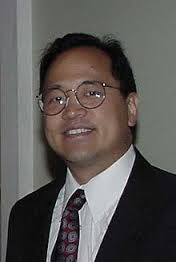
University of Pennsylvania Law School professor Christopher Yoo was nothing less than an enthusiastic cheerleader of the merger deal, claiming it would never jeopardize cable competition. No “independent” witness testified as fiercely in support of the merger as Yoo.

But Yoo never bothered to disclose he has ties to Comcast’s chief lobbyist David Cohen, seated five chairs to his right. Cohen is the chairman of the board of trustees at the University of Pennsylvania. Comcast also contributes to the university in Philadelphia, Comcast’s corporate home.

Yoo was suggested as a possible witness to the ranking member, Sen. Chuck Grassley (R-Iowa), who formally invited him to testify.

“I was stunned to see the committee would allow it, because of at least the appearance of a conflict,” one observer told the NY Post. “It’s a little odd.”

A spokeswoman for Grassley said Yoo had been approved by both the majority and minority members of the committee.

The Cohen-Yoo Penn connection was likely not known, the spokeswoman said.

“The views of any other person in the university administration do not have any impact on my academic views or any public statements I make,” Yoo told the Washington Post in defense against the charges of conflict of interest.

Verizon Wireless to Acquire Central California’s Golden State Cellular

Phillip Dampier April 15, 2014 Competition, Consumer News, Public Policy & Gov't, Rural Broadband, Verizon, Wireless Broadband Comments Off on Verizon Wireless to Acquire Central California’s Golden State Cellular

golden_state_cellular_logo_2The cell phone provider serving Yosemite National Park and the surrounding California counties of Tuolumne, Calav­eras, Amador, Alpine and Mari­posa has been acquired by Verizon Wireless.
The independent Golden State Cellular provides cell service in rural areas of the Mother Lode and cen­tral Cal­i­for­nia, largely bypassed by larger carriers since 1989.

Verizon had maintained a minority interest in the cellular company for several years and provided roaming service for the company outside of its home areas.

GSC operates as a partnership between several regional independent telephone companies.

Verizon would provide funding for 4G LTE upgrades and potentially expand coverage in tourist areas around the region.

The acquisition is awaiting FCC approval.


Nobody Raises Rates Like Comcast: Since 2009 Up 68% for Basic, 21% for Expanded Basic Cable

Phillip Dampier April 15, 2014 Comcast/Xfinity, Competition, Consumer News Comments Off on Nobody Raises Rates Like Comcast: Since 2009 Up 68% for Basic, 21% for Expanded Basic Cable

comcast twcDespite arguing its merger with Time Warner Cable would result in greater discounts for cable programming, America’s largest cable company Comcast is already receiving the best volume discounts available but is not passing the savings on to customers.
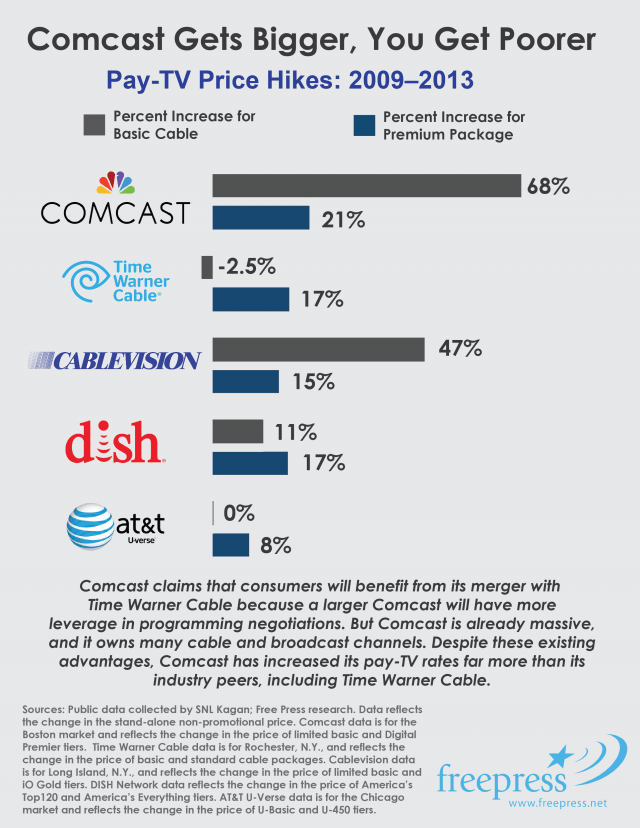
No major cable operator raised cable television rates more than Comcast, according to a new study from Free Press. Since 2009, Comcast jacked up prices on its broadcast basic television tier by 68 percent. Its more popular expanded basic cable service saw rate hikes amounting to 21 percent over the same time.

In contrast, Time Warner Cable actually cut rates for broadcast basic cable by 2.5% and raised expanded basic prices by 17 percent.

Comcast’s top lobbyist David Cohen has made clear the company’s prices are going to keep rising even if the merger is approved. That is likely to give Time Warner Cable customers sticker shock if Comcast takes over. Comcast is likely to pass whatever cost savings it realizes from the merger back to shareholders, not to customers.

free_press_comcast_twc_video_price_hikes

Cogeco Won’t Lower Your Bill; Warns Customers Not to Be “Victims” of Landline Cutting

Phillip Dampier April 14, 2014 Canada, Cogeco, Competition, Consumer News Comments Off on Cogeco Won’t Lower Your Bill; Warns Customers Not to Be “Victims” of Landline Cutting

cogecoDespite growing competition from Bell’s fiber-to-the-neighborhood service Fibe, now expanding into many of Cogeco’s outer suburban service areas, Cogeco will not negotiate a better deal for customers, preferring to emphasize its customer service and “right-sizing” bundles of services to best meet customer needs.

As a result of higher prices, Cogeco’s earnings and profits are up for the second quarter of 2014. In the quarter profits rose to $58.5 million — up from $48.9 million during the same quarter a year ago. Revenue rose to $518.4 million from $458.5 million.

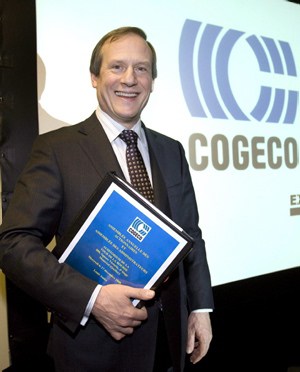
“We don’t like competing on price,” said Cogeco CEO Louis Audet said. “I’m not saying it’s zero, but we really don’t like competing on price.”

Audet

Audet

Customers have been offered sign up discounts from Cogeco’s most aggressive competitor on pricing – Bell. But when customers in parts of Ontario and Quebec call Cogeco to negotiate for a lower price, they are largely being turned down.

Audet said Cogeco instead emphasizes that customers will receive better customer service from the cable company, and customer retention specialists are trained to adjust packages to emphasize the services customers want without cutting their cost.

“It’s a right-sizing exercise,” Audet said. “Maybe the person wants a little less video, but they want higher Internet speeds.”

Cogeco isn’t winning the battle to keep its price-sensitive customers, however. The company lost 10,305 subscribers in the second quarter, nearly double the amount lost in the same quarter a year ago. Cogeco now serves 1.96 million Canadian cable television customers.

Customers are also dropping their Cogeco phone service, a decision Audet said makes them “victims” of cell phones. Cogeco permanently disconnected 6,000 landlines in the quarter, up from 5,550 a year ago. It still serves 473,000 phone customers.

The company lost almost 6,000 telephone customers in the quarter compared with additions of 5,550 in the same quarter last year. It had more than 473,000 residential phone customers left.

Despite the customer losses, rate increases more than made up for lost revenue, giving the company a nearly $10 million boost in profits during the second quarter alone.

More Phantom AT&T Fiber in Texas, North Carolina; Highly Limited Rollouts = Press Release Candy

phantom gigapowerAT&T U-verse with Gigapower is not coming to a home near you, although AT&T hopes you believe it will.

In the public and government relations arena, convincing everyone there is robust competition in broadband is a good prescription to keep the regulators at bay. To make that happen, AT&T continues to roll out more press releases than actual fiber to the home service, this time announcing it is planning to bring its fastest gigabit Internet service to “six cities in North Carolina” and more areas in and around Austin.

“The U-verse GigaPower fiber-optic service will be offered in parts of Carrboro, Cary, Chapel Hill, Durham, Raleigh and Winston-Salem, North Carolina,” AT&T said today in a statement.

But AT&T will not say exactly how many homes it will offer service to, but gave a clue mentioning it plans to connect as many as 100 businesses and 100 “public sites.” It also said it will provide a free, but slow-speed service to as many as 3,000 homes — something it can offer on its existing copper-fiber U-verse platform.

AT&T claims it is ‘racing’ to offer fiber service, but evidence suggests otherwise. Much of AT&T’s U-verse with Gigapower is turning up in condos, new housing developments, and other multi-dwelling units like apartments. Single family homes are evidently not a priority. AT&T’s costs to bring fiber to the back of a complex or large apartment building is lower than stringing or burying fiber to individual homes.

In Austin, one of AT&T’s major Gigapower expansions will come to communities under construction and condo complexes developed by PulteGroup. AT&T signed a favorable agreement with the developer to bring fiber into up to 3,000 homes. AT&T routinely signs similar agreements with developers that offer AT&T exclusive access to existing inside wiring and, in some cases, provide AT&T services to every resident, billed as part of the rent or neighborhood association service fees, deterring competition from cable operators.

AT&T likely selected the communities in North Carolina after receiving a Request For Proposals from a regional group called North Carolina Next Generation Network, which has enticed private providers to build gigabit fiber networks. The coordinated effort is led by six municipalities and four leading research universities and supported by local Chambers of Commerce and businesses in the Research Triangle and Piedmont regions.

With local governments directly involved in the initiative, AT&T was likely satisfied they would not face much difficulty from zoning and permitting procedures to expand their network, and might even receive favorable treatment.

Search This Site:

Contributions:

Recent Comments:

Your Account:

Stop the Cap!