Home » Competition » Recent Articles:

Verizon: If Your Town Doesn’t Already Have a FiOS Commitment, Forget About Fiber

Verizon's FiOS expansion is still dead.

Verizon’s FiOS expansion is still as dead as Francisco Franco.

Verizon is prepared to watch up to 30% of their copper landline customers drift away because the company is adamant about no further expansion of its FiOS fiber to the home network.

Fran Shammo, chief financial officer at Verizon, told attendees of the Jefferies Global Technology, Media & Telecom Conference that Verizon will complete the buildout of its fiber network to a total of about 19 million homes, and that is it.

“Look, we will continue to fulfill our FiOS license franchise agreements,” Frammo said. “[We will] cover about 70% of our legacy footprint. So 30%, we are not going to cover. That is where we are still going to have copper.”

That is bad news for Verizon customers stuck with the company’s copper network because Verizon isn’t planning any further significant investments in it.

“We will continue to harvest that copper network and those customers and keep them as long as we can,” Frammo said. “But we will not be building FiOS out for those areas.”

In fact, Frammo admitted ongoing cost-cutting at Verizon’s landline division is allowing the company to shift more money and resources to its more profitable wireless network.

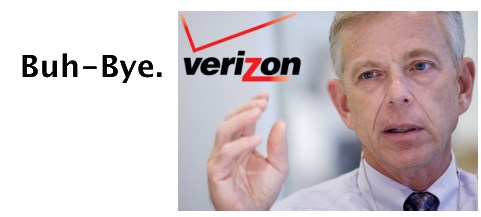
verizon goodbye

Verizon CEO Lowell McAdam doesn’t want to spend money on non-FiOS areas when more can be made from its wireless network.

“It is also taking cost structure out,” Frammo said.  “As I mentioned, the migration of copper to fiber has been very big for us. Our Lean Six Sigma projects have really significantly helped us in our capital investment in the wireline which is why I can put more money into the wireless side of the business.”

Verizon has shifted an increasing proportion of its capital investments towards its wireless division year after year, while cutting ongoing investment in wireline. Ratepayers are not benefiting from this arrangement, and critics contend Verizon landline customers are effectively subsidizing Verizon’s wireless networks.

Verizon will still complete the FiOS buildouts it committed to earlier, particularly in New York City, but it is increasingly unlikely Verizon will ever start another wave of fiber upgrades.

In fact, Michael McCormack, the Jefferies’ Wall Street analyst questioning Shammo at the conference foreshadowed what is more likely to happen to Verizon’s legacy copper customers.

“We have talked extensively in the past about the non-FiOS areas and I guess in my second reincarnation as a banker, I will try to help you get rid of those assets,” said McCormack.

Comcast Promises Wonderland of Broadband Ecstacy if Time Warner Cable Deal Goes Through

Phillip Dampier May 7, 2014 Broadband Speed, Comcast/Xfinity, Competition, Consumer News, Data Caps, Editorial & Site News, Net Neutrality, Online Video, Public Policy & Gov't, Video, Wireless Broadband Comments Off on Comcast Promises Wonderland of Broadband Ecstacy if Time Warner Cable Deal Goes Through
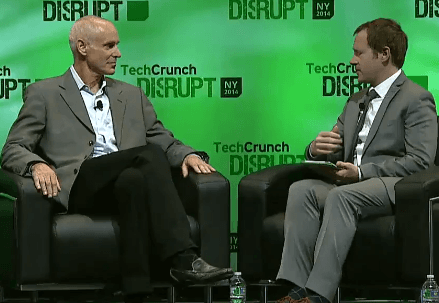
Neil Smit, CEO Comcast Cable (left), Ryan Lawler, TechCrunch (right)

Neil Smit, CEO, Comcast Cable (left), Ryan Lawler, TechCrunch (right)

Of all the tech companies to turn up at TechCrunch’s Disrupt New York 2014 event, Comcast Cable seemed the least likely to qualify as the kind of innovative start-up TechCrunch loves to cover.

But there sat Comcast Cable CEO Neil Smit with TechCrunch’s Ryan Lawler, discussing Comcast’s mega-merger with Time Warner Cable, its peering agreement with Netflix, broadcast TV streamer Aereo, and Comcast’s legendary dismal customer service.

Smit’s arrival on stage to a smattering of tentative applause was a clear sign there was no love for the cable giant in the audience, particularly from many New York area Time Warner Cable customers dreading a future with Comcast.

Smit was immediately confronted with the fact Comcast was recently voted the Worst Company in America by Consumerist readers, prompting yet another promise that improving customer service was Comcast’s “top priority,” the same promise Comcast gave in 2007, 2008, 2009, 2010, 2011, 2012, and 2013.

“I think if there’s one thing to disrupt in our business, it’s customer service,” Smit added.

Smit defended Comcast’s merger with Time Warner, relying heavily on video subscribers to downplay the concentrated market power Comcast would have after the merger. Smit pointed out Netflix has the largest subscriber count of any pay television channel or platform and denied Lawler’s contention that a merger would give Comcast more than 50% of the American broadband market.

“I think the number is a little less than that — it is closer to 40% but if you include wireless than it would be less than 20%,” Smit responded, referring to the LTE 4G wireless networks from wireless carriers that come with very low usage caps and very high prices.

Comcast-LogoSmit also promised major broadband speed upgrades and other improvements for Time Warner Cable customers, but nobody mentioned Comcast’s gradual reintroduction of usage caps on residential broadband accounts.

Comcast Cable’s CEO also addressed several other hot button issues:

Smit claimed Comcast has a good working relationship with the FCC and is providing advice on whatever changes to Net Neutrality FCC chairman Tom Wheeler will propose later this month.

Despite the fact Comcast could ultimately benefit if Aereo is found to be legal by the U.S. Supreme Court, Smit recognized Comcast also owns NBC and other broadcast programmers and was concerned about the economic impact if cable operators stopped paying for over-the-air programming.

“We pay $9 billion a year for content,” Smit said. “One of the things that I question in the Aereo solution is: are they paying for content? The spend for that content has to come from somewhere.”

Smit also noted Comcast is increasingly targeting younger audiences by signing deals with college campuses to bring Comcast service to students to hook them as future subscribers. Comcast is also creating new packages with fewer channels to appeal to millennials. Smit also acknowledged many younger family members are accessing cable programming using passwords associated with their parent’s cable account.

[flv]http://www.phillipdampier.com/video/TechCrunch Interview with Neil Smit 5-6-14.mp4[/flv]

Here is the complete interview TechCrunch conducted with Comcast Cable CEO Neil Smit. (22:20)

Frontier Raises Standalone Broadband, FiOS Video Pricing: $5 Increase for New Customers

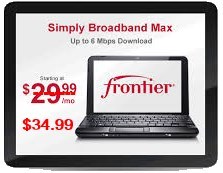
frontier simply broadbandAs of May 1st, Frontier Communications has raised the price of its standalone DSL service $5 a month, primarily because its competitors have also raised prices.

Current subscribers to Frontier’s basic 6Mbps ADSL service Simply Broadband will continue to pay $29.99 a month for now, but new customers will see a rate increase to $34.99.

“We increased the price [… because it] better reflects the value of that offering, given the robust capability of our network and comparable pricing from our competitors,” Frontier CEO Maggie Wilderotter told Wall Street analysts on a quarterly results conference call.

Frontier also announced Frontier FiOS TV price increases that “reflect increasing programming costs” also taking effect this month.

Frontier added 37,000 new broadband customers during the first quarter, a record for the company and the fifth consecutive quarter of broadband customer growth. Frontier increasingly depends on broadband to retain existing customers and develop new customer relationships in rural areas where broadband service has not been available in the past.

“As of April, 74% of our customers have access to 12Mbps, up from 60% in the fourth quarter,” said chief operating officer Dan McCarthy. “Now 61% of households we pass can get 20Mbps or greater, and 83% can get 6Mbps. At the end of the fourth quarter in 2012 only 40% of our network was capable of 20Mbps and only 50% was capable of 12Mbps.”

frontier frankDespite the speed increases, cable competitors still made their presence known. Most cable companies sell faster service than Frontier offers and on the low-end, Time Warner Cable’s 2Mbps $15 broadband package, marketed to current DSL customers, was acknowledged to have an impact by Wilderotter, but not enough to bring a significant change in competitive intensity.

Frontier continues to argue that broadband speeds are simply not that important to most customers. McCarthy claimed that less than 20% of Frontier’s broadband customers subscribe to speeds above 6Mbps.

“Quite frankly we’ve had focus groups with our customers and potential customers […] and what they say is that they don’t really know what speed they have,” McCarthy said. “They just need enough and that’s really what it’s about — providing a good quality product that’s reliable and gives them the speed that they need. It’s not necessarily a 60Mbps connection that they’re really never going to use.”

“We’ve also found [in the focus groups that we do] that a lot of customers, even those upgrading to higher speeds don’t really change their behavior,” Wilderotter added. “It’s not like they have 10Mbps more so now they’re a gamer. They just keep doing the same thing they were doing before. We still have the majority of our customers taking around 6Mbps and they have a choice to go up but they decide that that’s enough for what they’re doing and we’re happy to sell them just what they need.”

Frontier has also reduced its landline losses nationwide to 9,600 during the last quarter. It will begin running advertising this year that reminds customers landline service is often more robust than wireless or Voice over IP during power or weather-related outages. Wilderotter said emphasizing the traditional landline as a protective and security measure really resonates with Frontier’s customers.

Competition Killer: Access to Time Warner Cable’s Business Fiber Network at Risk from Comcast Merger

comcast twcCompanies in the Pacific Coastal region of California are concerned about losing wholesale access to Time Warner Cable’s business fiber network if the cable company is acquired by Comcast.

Independent business communications providers acquire connectivity at wholesale rates from providers like Time Warner Cable and provide competition in the telecommunications marketplace.

“Time Warner Cable actually provides wholesale access, at least to its fiber network,” Dave Clark, president of Santa Barbara-based Impulse Advanced Communications, told the Pacific Coast Business Times. “From a competitive telecom perspective, they cooperate and work with competitive telecoms. Comcast does not. The big fear in the competitive telecom industry is that Comcast buys Time Warner and cuts [wholesale access] off.”

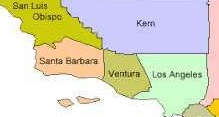
3 countiesCurrently, third-party access to cable broadband technology is provided on a voluntary basis by cable operators. Regulated telephone companies like Verizon and AT&T that serve California are required to offer open access to competitors, at least on their copper line networks.

If Comcast decides it won’t continue wholesale access to Time Warner’s network, it can cut off access almost immediately.

“The worst impact is going to be Ventura County, which has chunks of Time Warner,” Clark told the newspaper. “If Time Warner down there stops providing any wholesale access to facilities, those customers will be worse off. They’ll have fewer competitive options.”

Customers in Ventura, San Luis Obispo, and Santa Barbara counties would see the number of cable providers serving the area cut in half, from four providers to two. Charter and Time Warner Cable customers would be transferred to Comcast. That’s a major development, because Comcast now only operates in a tiny area of Santa Maria and the Santa Ynez Valley. Now the company would be dominant in Ventura and San Luis Obispo counties. Cox would still serve its customers in the South Coast region.

The 5 Cable & Phone Companies Intentionally Sabotaging Your Use of the Internet

Phillip Dampier May 6, 2014 AT&T, Broadband "Shortage", Broadband Speed, Charter Spectrum, Comcast/Xfinity, Competition, Consumer News, Cox, Net Neutrality, Online Video, Verizon Comments Off on The 5 Cable & Phone Companies Intentionally Sabotaging Your Use of the Internet
network_map-1024x459

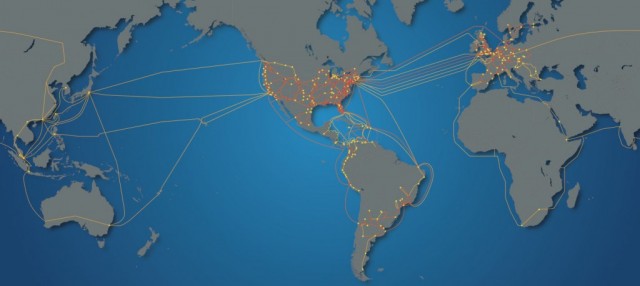
Level 3’s global network: Orange lines represent Level 3-owned infrastructure, yellow lines show leased or co-owned connections.

Five of the largest Internet Service Providers in the country are intentionally sabotaging your use of the Internet by allowing their network connections to degrade unless they receive extra compensation from content companies they often directly compete with.

Mark Taylor, vice president of content and media for Level 3, wrote a lengthy primer on how Internet providers exchange traffic with each other across a vast global network. While clients of Level 3 are likely to have few problems exchanging traffic back and forth across Level 3’s global network, vital interconnections with other providers that make sure everyone can communicate with everyone else on the Internet are occasional trouble spots.

Every provider has different options to reach other providers, but favor those offering the most direct route possible to minimize “hops” between networks, which slow down the connection and increase the risk of service interruptions. These connections are often arranged through peering agreements. Level 3 has 51 peers, minimized in number to keep traffic moving as efficiently as possible.

This oversaturated port in Dallas cannot handle all the traffic trying to pass through it, so Internet packets are often dropped and traffic speeds are slowed.

This oversaturated port in Dallas cannot handle all the traffic trying to pass through it, so Internet packets are often dropped and traffic speeds are slowed.

Taylor writes most peering arrangements were informal agreements between engineers and did not involve any money changing hands. Today, 48 of the 51 Level 3 peering agreements don’t involve compensation. In fact, Level 3 refuses to pay “arbitrary charges to add interconnection capacity.” Taylor feels such upgrades are a matter of routine and are not costly for either party.

Peering agreements have been a very successful part of the Internet experience, even if end users remain completely in the dark about how Internet traffic moves around the world. In the view of many, customers don’t need to know and shouldn’t care, because their monthly Internet bill more than covers the cost of transporting data back and forth.

Because of ongoing upgrades the average utilization of Level 3’s connections is around 36 percent of capacity — busy enough to justify keeping the connection and providing spare capacity for days when Internet traffic explodes during breaking news or over the holidays.
csat-1024x635However, Taylor says more than a year ago, something suddenly changed at five U.S. Internet Service Providers. They stopped periodic upgrades and allowed some of their connections to become increasingly busy with traffic. Today, six of Level 3’s 51 peer connections are now 90 percent saturated with traffic for several hours a day, which causes traffic to degrade or get lost.

“[The] congestion [has become] permanent, has been in place for well over a year and […] our peer refuses to augment capacity,” Taylor wrote. “They are deliberately harming the service they deliver to their paying customers. They are not allowing us to fulfill the requests their customers make for content.”

Taylor adds all but one of the affected connections are U.S. consumer broadband networks with a dominant or exclusive market share. Where competition exists, no provider allows their Internet connections to degrade, said Taylor.

Taylor won’t directly name the offenders, but he left an easy-to-follow trail:

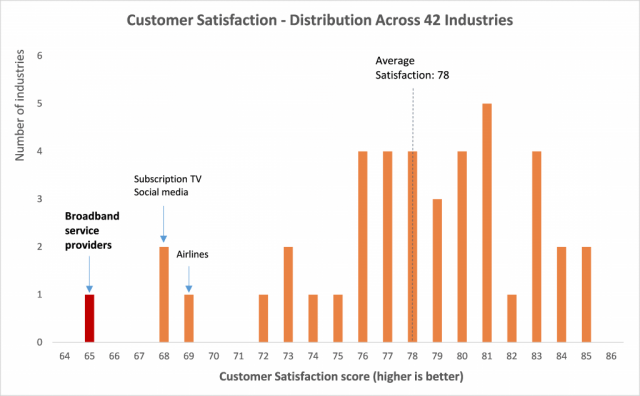
“The companies with the congested peering interconnects also happen to rank dead last in customer satisfaction across all industries in the U.S.,” Taylor wrote. “Not only dead last, but by a massive statistical margin of almost three standard deviations.”

Taylor footnotes the source for his rankings, the American Consumer Satisfaction Index. The five worse providers listed for consumer satisfaction:

  • Comcast
  • Time Warner Cable
  • Charter Communications
  • Cox Communications
  • Verizon

AT&T has also made noises about insisting on compensation for its own network upgrades, blaming Netflix traffic.

level3In fact, Netflix traffic seems to be a common point of contention among Internet Service Providers that also sell their own television packages. They now insist the streaming video provider establish direct, paid connections with their networks. Level 3 is affected because it carries a substantial amount of traffic on behalf of Netflix.

Ultimately, the debate is about who pays for network upgrades to keep up with traffic growth. Taylor says Level 3’s cost to add an extra 10Gbps port would be between $10-20 thousand dollars, spare change for multi-billion dollar Americans cable and phone companies. Normally, competition would never allow a traffic dispute like this interfere with a customer’s usage experience. Angry customers would simply switch providers. But the lack of competition prevents this from happening in the United States, leaving customers in the middle.

This leaves Taylor with a question: “Shouldn’t a broadband consumer network with near monopoly control over their customers be expected, if not obligated, to deliver a better experience than this?”


Search This Site:

Contributions:

Recent Comments:

Your Account:

Stop the Cap!