

Home » Competition » Recent Articles:

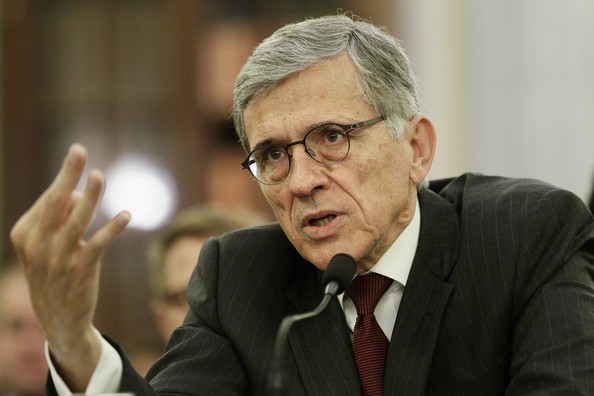
FCC’s Tom Wheeler Falls in Line Behind President Obama’s Strong Net Neutrality Agenda

Wheeler

Wheeler

The chairman of the Federal Communications Commission has foreshadowed his revised plan for Net Neutrality will include reclassification of broadband as a utility, allowing the agency to better withstand future legal challenges as it increases its oversight of the Internet.

Tom Wheeler’s latest comments came during this week’s consumer electronics show in Las Vegas. Wheeler stressed he supports reclassification of broadband, away from its current definition as an “information service” subject to Section 706 of the Telecom Act of 1996 (all two broadly written paragraphs of it) towards a traditional “telecommunications service.” Under the Communications Act of 1934, that would place broadband under Title II of the FCC’s mandate. Although at least 100 pages long, Title II has stood the test of time and has withstood corporate lawsuits and challenges for decades.

Section 706 relies almost entirely on competition to resolve disputes by allowing the marketplace to solve problems. The 1996 Telecom Act, signed into law by President Bill Clinton, sought to promote competition and end “barriers to infrastructure investment.” Broadly written with few specifics, large telecom companies have successfully argued in court that nothing in Section 706 gives the FCC the right to interfere with the marketing and development of their Internet services, including the hotly disputed issues of usage caps, speed throttling, and the fight against paid fast lanes and Internet traffic toll booths. In fact, the industry has argued increased involvement by the FCC runs contrary to the goals of Section 706 by deterring private investment.

An executive summary of a report published on the industry-funded Internet Innovation Alliance website wastes no time making that connection, stating it in the first paragraph:

Net neutrality has the potential to distort the parameters built into operator business cases in such a way as to increase the expected risk. And because it distorts the operator investment business decision, net neutrality has the potential to significantly discourage infrastructure investment. This is due to the fact that investments in infrastructure are highly sensitive to expected subscriber revenue. Anything that reduces the expectation of such revenue streams can either delay or curtail such investments.

netneutralityUnfortunately for consumers, even the chairman of the FCC concedes the broadband marketplace isn’t exactly teeming with the kind of competition Section 706 envisioned to keep the marketplace in check. In fact, Wheeler suggested most Americans live with a broadband duopoly, and often a monopoly when buying Internet access at speeds of 25Mbps or greater. Further industry consolidation is already underway, which further deters new competitors from entering the market.

Net Neutrality critics, the broadband industry, and their allies on Capitol Hill have argued that adopting Title II rules for broadband will saddle ISPs with at least one hundred pages of rules originally written to manage the landline telephone monopoly of the 1930s. Title II allows the FCC to force providers to charge “just and reasonable rates” which they believe opens the door to rate regulation. It also broadly requires providers to act “in the public interest” and unambiguously prohibits companies from making “any unjust or unreasonable discrimination in charges, practices, classifications, regulations, facilities, or services.”

Both Comcast and Verizon have challenged the FCC’s authority to regulate Internet services using Section 706, and twice the courts have ruled largely in favor of the cable and phone company. Judges have no problem permitting the FCC to enforce policies that encourage competition, which has allowed the FCC some room to insist that whatever providers choose to charge customers or what they do to manage Internet traffic must be fully disclosed. The court in the Verizon case also suggested the FCC has the authority to oversee the relationship between ISPs and content providers also within a framework of promoting competition.

DC Circuit Court

DC Circuit Court

But when the FCC sought to enforce specific policies governing Internet traffic using Section 706, they lost their case in court.

Although Net Neutrality critics contend the FCC has plenty of authority to enforce Net Neutrality under Section 706, in reality the FCC’s hands are tied as soon as they attempt to implement anti-blocking and anti-traffic discrimination rules.

The court found that the FCC cannot impose new rules under Section 706 that are covered by other provisions of the Communications Act.

So what does that mean, exactly?
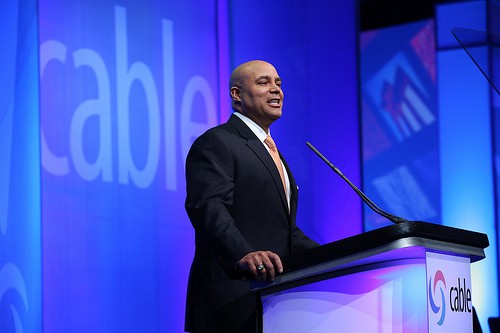
Michael Powell, former FCC chairman, is now the chief lobbyist for the National Cable & Telecommunications Association. (Photo courtesy: NCTA)

Michael Powell, former FCC chairman, is now the chief lobbyist for the National Cable & Telecommunications Association. (Photo courtesy: NCTA)

In 2002, former FCC chairman Michael Powell (who serves today as the cable industry’s chief lobbyist) presided over the agency’s decision to classify broadband not as a telecommunications service but an “information service provider” subject to Title I oversight. Whether he realized it or not, that decision meant broadband providers would be exempt from common carrier obligations as long as they remained subject to Title I rules.

When the FCC sought to write rules requiring ISPs not block, slow or discriminate against certain Internet traffic, the court ruled they overstepped into “common carrier”-style regulations like those that originally prohibited phone companies from blocking phone calls or preventing another phone company from connecting calls to and from AT&T’s network.

If the FCC wanted to enforce rules that mimic “common carrier” regulations, the court ruled the FCC needed to demonstrate it had the regulatory authority or risk further embarrassing defeats in the courtroom. The FCC’s transparency rules requiring ISPs to disclose their rates and network management policies survived Verizon’s court challenge because the court found that policy promoted competition and did not trespass on regulations written under Title II.

The writing on the wall could not be clearer: If you want Net Neutrality to survive inevitable court challenges, you need to reclassify broadband as a telecommunications service under Title II of the Communications Act.

Major ISPs won’t hear of it however and have launched an expensive media blitz claiming that reclassification would subject them to 100 pages of regulations written for the rotary dial era. Broadband, they say, would be regulated like a 1934 landline. Some have suggested the costs of complying with the new regulations would lead to significant rate increases as well. Many Republicans in Congress want the FCC to wait until they can introduce and pass a Net Neutrality policy of their own, one that will likely heavily tilt in favor of providers. Such a bill would likely face a presidential veto.

Suggestions the FCC would voluntarily not impose outdated or irrelevant sections of Title II on the broadband industry didn’t soothe providers or their supporters. Republican FCC commissioners are also cold to the concept of reclassification.

O'Rielly

O’Rielly

“Title II includes a host of arcane provisions,” said FCC commissioner Michael O’Rielly in a meeting in May 2014. “The idea that the commission can magically impose or sprinkle just the right amount of Title II on broadband providers is giving the commission more credit than it ever deserves.”

Providers were cautiously optimistic in 2014 they could navigate around strong Net Neutrality enforcement with the help of their lobbyists and suggestions that an industry-regulator compromise was possible. Early indications that a watered-down version of Net Neutrality was on the way came after a trial balloon was floated by Wheeler last year. Under his original concept, paid fast lanes and other network management and traffic manipulation would be allowed if it did not create undue burdens on other Internet traffic.

Net activists loudly protested Wheeler’s vision of Net Neutrality was a sellout. Wheeler’s vision was permanently laid to rest after last November when President Barack Obama suddenly announced his support for strong and unambiguous Net Neutrality protections (and reclassifying broadband as a Title II telecommunications service), No FCC chairman would likely challenge policies directly advocated by the president that nominated him.

Obama spoke, Thomas Wheeler listened. Wheeler’s revised Net Neutrality plan is likely to arrive on the desks of his fellow commissioners no later than Feb. 5, scheduled for a vote on Feb. 26. It’s a safe bet the two Republicans will oppose the proposal and the three Democrats will support it. But chairman Wheeler also listens to Congress and made it clear he doesn’t have a problem deferring to them if they feel it necessary.

“Clearly, we’re going to come out with what I hope will be the gold standard,” Wheeler told the audience in Las Vegas. “If Congress wants to come in and then say, we want to make sure that this approach doesn’t get screwed up by some crazy chairman that comes in, [those are] legitimate issues.”

If that doesn’t work, the industry plans to take care of the Net Neutrality regulation problem itself. Hours after any Net Neutrality policy successfully gets approved, AT&T has promised to challenge it in court.

[flv]http://www.phillipdampier.com/video/Fox Business News Net Neutrality Wheeler 1-8-15.flv[/flv]

Free Press CEO Craig Aaron appeared on Fox Business News to discuss Tom Wheeler’s evolving position on Net Neutrality. (3:54)

Verizon Wireless Arrives in Alaska; Helps Drive Alaska Communications Out of the Wireless Business

acs logoWhen Verizon Wireless finally fired up its network in Alaska in September of 2014, the writing was on the wall for at least one of Alaska’s homegrown wireless competitors.

Faced with competing against Verizon’s $115 million, state-of-the-art advanced LTE network that already supports new features like Voice over LTE (far ahead of what many customers in the lower 48 states get) Alaska Communications System Group, Inc., decided it was time to sell.

An ACS and GCI-shared cell tower. (Photo: Rosemarie Alexander)

An ACS and GCI-shared cell tower. (Photo: Rosemarie Alexander)

ACS’ 109,000 wireless customers won’t be going far. The buyer, General Communications, Inc., (GCI) is a co-investor in the Alaska Wireless Network that ACS also relies on to offer wireless service. Besides billing and rate plans, most ACS customers won’t notice much of a change after the $300 million sale is complete during the first quarter of this year. GCI will end up with about 253,000 customers after the transaction is finished, which represents about one-third of the Alaskan wireless marketplace. The sale will mean most Alaskans will have a practical choice of three major wireless carriers — AT&T, Verizon Wireless, and GCI.

ACS, weighed down by debt, wanted out of the wireless business because it has proven expensive to support a network serving a high-cost, low margin state like Alaska, where small communities are often far apart. Serving cities like Fairbanks and Juneau is one thing. Serving hundreds of settlements like Meyers Chuck (pop. 21) or towns like Unalakleet (pop. 688) is another.

Like many traditional rural or independent telephone companies, ACS sees gold in its future focusing on selling lucrative broadband service to residential and business customers, where profit margins often exceed 50 percent. There is plenty of room to grow if ACS invests in network upgrades. ACS currently only has a 20 percent share of Alaska’s broadband market, primarily selling DSL service. GCI, which sells cable broadband, has managed a speed advantage.

Both companies have reassured Wall Street that despite ACS’ renewed focus on broadband, there will be no fierce competition, no price wars, or lower prices for consumers. ACS will devote considerable resources into bolstering its business broadband marketing and has already secured contracts with the state government and a regional health consortium.

Despite the $300 million windfall, ACS plans to turn most of that money towards paying off its debts and possibly reinstating a dividend payout program for shareholders. The company is expected to only spend $35 million to $40 million annually on capital investment projects and executives promise they will only open their wallet for projects that guarantee a high return on that investment. As a result, ACS will likely not spend much on rural broadband expansion.

Comcast Announces 2015 Rate Hikes – Broadcast TV Surcharge More Than Doubles; New Regional Sports Fee

Phillip Dampier January 6, 2015 Comcast/Xfinity, Competition, Consumer News 24 Comments

comcast highwayComcast Internet-only customers looking for speeds up to 100Mbps will pay Comcast an unprecedented $88.95 a month for a package containing the company’s Blast! broadband service with a rented cable modem.

The company has begun informing subscribers of the first of its 2015 rate increases that took effect in some areas on Jan. 1.

“We have worked very hard to hold down price adjustments, and there are no price changes for our Limited Basic ($16.10), Digital Preferred ($85.90) or Internet Essentials ($9.95) services,” said Bob Grove, Comcast’s vice president of public relations. “While we continue making investments in our network and technology to give customers more for their money, including more video across platforms, better experiences like X1 and faster Internet service, we periodically need to adjust prices due to increases we incur in programming, business costs and new technology. On average, nationally, the customer bill will increase by 3.4 percent.”

Some will pay more than others. Here is a sample:

  • Customers with DVR service face a $2 rate hike for the monthly DVR service charge, which now stands at $10 a month;
  • Digital Premier, which includes an assortment of premium movie channels, is rising from $131.75 to $140.35;
  • The hourly service charge for service calls is increasing from $33.80 to $35.80;
  • Each extra cable outlet in your home will cost a one time service fee of $33.20, up from $32.75;
  • Any pre-existing outlet in your home will now be charged a one time activation fee of $22.95, up from $22.05;
  • Service upgrades that require an in-home visit will be charged $28.45, an increase from $26.30;
  • The in-home wiring service protection plan that covers you in case of an inside cable wiring or service deterioration problem will see a price increase of $1 to $4.95 a month. Customers without the plan will now pay $35.80 an hour for service calls.

Cable television customers face an increase of more than 100% for the company’s Broadcast TV surcharge introduced in 2013. In most areas, the fee is rising from $1.50 per month to $3.25. A previously announced $2 increase in modem rental charges will raise the cost of using Comcast-supplied equipment including Comcast’s Gateway to $10 a month.

Comcast is also introducing a new compulsory regional sports network surcharge of $1 a month for all XFINITY TV packages starting with Digital Starter and higher tiers and XFINITY 450 Latino.

Customers with analog-only televisions using a DTA converter box to handle digital cable television channels on these older sets face an even more dramatic price hike. Customers that used to pay as little as $0.50 for Digital Adapter Additional Outlet Service will now pay $2.99 a month.

Premium channels such as HBO have seen price reductions, possibly in response to declining subscriber numbers. HBO drops to $15 a month and all other premiums decrease to $12 a month.

Comcast customers looking for the biggest bang for their buck should consider bundled service packages which discount Internet, television, and telephone service. Current customers should also consider letting Comcast know they are shopping the competition for a better deal. Ask them to lower your rates if they want you to stay.

Time Warner Cable Wants to Keep Its Taxpayer Subsidized Rural Broadband Expansion a Secret

rural cableTime Warner Cable has appealed to the Secretary of the New York Department of Public Service to keep information about taxpayer-subsidized broadband expansion projects in New York a secret.

The case is part of a series of ongoing requests for disclosure of information about the proposed merger of Comcast and Time Warner Cable under New York’s Freedom of Information Law.

Several public interest groups are requesting copies of documents submitted to the state Public Service Commission that the two cable operators have repeatedly asserted should remain confidential. Gerald Norlander from the Public Utility Law Project has been seeking details about how the two companies plan to address New York’s rural broadband dilemma before any decision about the merger is made by state regulators. Norlander requested copies of documents that include details about Time Warner’s taxpayer-subsidized rural broadband expansion under the auspices of Gov. Cuomo’s Connect NY program. Time Warner wants to keep the information confidential, citing competitive concerns.

New York Administrative Law Judge David L. Prestemon ruled earlier this month that while Time Warner could maintain secrecy in the early stages of its proposed expansion efforts, once the company disclosed details about a project in a public filing with state or local officials, confidentiality should be lifted.

shhPrestemon rejected efforts by Time Warner Cable to maintain confidentiality even after news of one broadband expansion project was reported by Albany-area media outlets. Prestemon added that public regulatory filings submitted by the company as a project commences effectively places information about it in the public domain.

Counsel for Time Warner Cable rejected that assertion, claiming information found in certain regulatory filings or in a newspaper article lacks the granularity sought by Time Warner’s competitors.

“Simply because physical construction begins on a project does not mean that the public or competitors would be aware of who is completing the project, the geographic extent of the project, the number of passings, or the estimated completion date,” argued Maureen O. Helmer and Laura L. Mona in an appeal filed by Time Warner’s legal team at Hiscock & Barclay, LLP. “This information would be difficult and costly for a competitor to compile, such that disclosure would significantly harm Time Warner Cable’s competitive advantage.”

The attorneys revealed Time Warner Cable’s use of subcontractors is already helping shield the company from having expansion projects become public knowledge:

Time Warner Cable typically uses subcontractors to complete the physical construction. Therefore, the vehicles used to construct the build-out are often not Time Warner Cable owned vehicles. While Time Warner Cable generally requires contractors to display signs stating “Contractor for Time Warner Cable,” the existence of construction vehicles on the side of a road would not convey to an average member of the public or a competitor that Time Warner Cable was engaged in construction of new facilities, as opposed to repair, maintenance, or some other activity. In similar fashion, if a Time Warner Cable vehicle was present on the side of a road, it would not mean that a new build-out was being constructed as the vehicle could be performing any number of tasks that would not be known to the public.

Norlander’s group is concerned Comcast intends to combine Time Warner Cable’s systems in New York and could focus entirely on large urban markets while potentially abandoning rural customers to maximize revenue.

This is the third time Time Warner Cable has appealed one of Judge Prestemon’s rulings on this subject.

HD Smorgasbord: Rogers Tells Customers to Stop Worrying and Crank Up the Streaming Video

Phillip Dampier December 9, 2014 Broadband Speed, Canada, Competition, Consumer News, Data Caps, Online Video, Rogers Comments Off on HD Smorgasbord: Rogers Tells Customers to Stop Worrying and Crank Up the Streaming Video

In a complete about-face for eastern Canada’s largest cable operator, Rogers Communications is inviting customers to take the brakes off their usage and go hog-wild with high bandwidth HD streaming and downloading with an unlimited use plan.

“Whether you use shomi, Netflix, YouTube or all three as your go-to streaming service(s), if you’re a subscriber to an unlimited Rogers Internet package, you don’t have to worry about streaming video in anything other than their highest-quality settings – the image is pristine and the sound is awesome,” the company writes on its online blog.

Rogers had argued for at least five years before Canada’s telecommunications regulator that compulsory usage caps and overlimit fees were necessary to manage congestion on their networks and to make sure that heavy users pay their fair share.

Those days of congestion are evidently over because Rogers takes customers through several tutorials to teach them how to turn up their streaming settings to deliver HD and 4K video streams.

“Rogers comes very close to implying it is Netflix and YouTube that compromise the video experience of customers, despite the fact Netflix created its user-definable video playback settings precisely to help Canadians manage usage allowances from companies like Rogers,” said online video analyst Rene Guerdat. “It’s clear that competition from independent providers offering unlimited use accounts has made Rogers’ usage cap regime impossible and they were forced to market an unlimited option of their own.”

Here is Rogers’ guide for cranking up the video quality of video streams, useful for anyone else who subscribes to these services as well:

shomi

This new video-streaming service for Rogers Internet or TV customers has three video-quality settings (Good, Better, Best). Each uses different amounts of bandwidth and offers different levels of viewing quality. These settings can be individually changed for each user profile, and can be made only from the Web application via the account holder’s profile.

To check / change your stream settings

  1. In a browser, go to shomi.com and log in with your account credentials.
  2. Go to the dropdown menu at the top far-right corner of the Web page.
  3. Select ‘Manage Account and Profiles.’
  4. Select the profile that you want to edit (or create a profile if it is a new profile), and under the ‘Manage Profiles’ menu you’ll see your ‘Max Video Quality’ settings.
  5. Click ‘Edit’ and then select the video-quality setting that you want.

Note: These profile settings update all devices except your Rogers cable box (if you’re using one).

Netflix

Netflix has streaming-video playback settings that use less data (in case you have a small monthly data cap). If you’re on an unlimited Rogers Internet package, though, you can get a better experience by streaming at the highest settings. Here’s how.

To check / change your stream settings

  1. In a browser, go to Netflix.ca and sign in with your Netflix username and password.
  2. If prompted, select the appropriate user profile you want to change.
  3. In the top-right corner, click the downward arrow, then click ‘Your Account.’
  4. In the Your Profile section, click ‘Playback Settings.’
  5. Click the radio button to select the highest-quality streaming setting (‘High’), then click ‘Save.’

This setting will be your new default across all your devices. If you have multiple user profiles under your Netflix account, follow the above process for them, too.

YouTube

YouTube gives you a lot of playback control, and typically does a pretty good job of balancing video quality and connection. However, to ensure you’re seeing the best-quality video possible from YouTube, you can change the settings for the videos you watch. Here’s how.

Play a YouTube video in HD (when available)

  1. While playing a video, move your cursor over the player window. Video-player elements will appear.
  2. Click the gear icon in the lower right of the player.
  3. In the bottom of the pop-over menu that appears, click on the ‘Quality’ option.
  4. Select the highest video-quality setting and click it to apply.

Tip: Not all video content that’s uploaded to YouTube is available in full 1080p HD. If no HD option is offered, just choose the highest-quality setting that’s available.

Default to high-quality YouTube playback

Setting default playback behaviour on YouTube requires an account. If you have a Google account (Gmail, Google+, etc.), you already have everything you need.

  1. Log in to YouTube using your Google or Gmail account ID.
  2. Click on your username and, in the menu that appears, choose the gear icon. If you’re already logged in, click your profile image in the top-right corner to find the gear icon instead.
  3. In the left navigation pane, click ‘Playback.’
  4. Select ‘Always choose the best quality for my connection and player size.’
  5. Click Save in the top right.

Now, YouTube will give you the best-quality video it can, based on the above-mentioned factors. Double-click a video to launch it in full-screen and to get a full-HD version of the video, where available.

Search This Site:

Contributions:

Recent Comments:

Your Account:

Stop the Cap!