

 Subscribe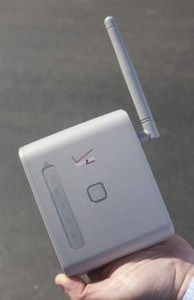
Verizon Voice Link
Verizon’s wireless solution for landline infrastructure damaged during last year’s Hurricane Sandy has not been a runaway success for the phone company, only attracting 120 customers on New Jersey’s barrier island.
After Hurricane Sandy damaged the telephone network on the peninsula, Verizon announced it would reinstate telephone service using Verizon Voice Link — a wireless landline replacement that works over Verizon Wireless’ network. The announcement was not well received by New Jersey residents — customers don’t want the service and after Verizon Wireless experienced a major service outage in Ocean County, N.J. in September, many don’t trust the service to be as reliable as the landlines it replaced.
Mantoloking resident Peter Flihan thinks Verizon delivered its own blow to the island, post-Sandy. Flihan has Voice Link, but after using it he says he wants his old landline back and is very unhappy with the performance of Verizon’s wireless replacement.
“They told us this was the greatest thing in the world,” Flihan told the New York Times.
But the service takes away more than it provides, argue consumer groups including the AARP. Flihan’s old landline worked during power outages, Verizon Voice Link only has two hours of backup battery talk time. Landlines reliably reach 911. Verizon is less confident about Voice Link, going out of its way to disavow any responsibility if a customer cannot reach the emergency number because of technical problems or network congestion. Data services of all kinds don’t work with Voice Link either, even the venerable old dial-up modem. Neither will fax machines, medical monitoring equipment, or home security systems.
Flihan complains Verizon’s Voice Link can’t even reliably manage the function it was designed for — making and receiving voice phone calls.
Flihan told the newspaper roughly 25 percent of the calls he makes through the landline replacement do not go through the first time he dials, or sometimes the second or third. Other times, calls are disturbed with unusual clicking sounds, static, and other voices breaking into the line.
Fire Island residents report Voice Link also misses incoming calls, refuses to ring phone lines and often sends callers straight to voice mail. Others get recordings or busy signals.
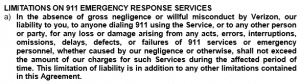
Verizon disclaims legal responsibility for failed 911 calls in its Voice Link terms and conditions.
Verizon’s attempt to retire landlines in high cost areas has proven to be a public relations debacle for the phone company. More than 1,700 negative comments have been received by the New York Public Service Commission about Voice Link’s performance on Fire Island. Politicians also delivered repeated lashings to the phone company, claiming Verizon was abdicating its responsibilities by seeking to offer second-rate phone service.
In New Jersey, residents at least have a choice. Verizon maintains a monopoly on Fire Island, but in New Jersey it competes with Comcast, which also provides phone service.
Lee Gierczynski, a Verizon spokesman, noted Verizon’s landline business suffered even before Hurricane Sandy arrived. The FiOS-less island has left Verizon with a 25 percent market share. Verizon Voice Link’s numbers are even lower. Gierczynski admitted Verizon Voice Link has only 120 (out of 540 affected customers) signed up on the island.
While Verizon has refused to invest in an upgraded network for impacted customers, Comcast issued a press release announcing major upgrades for the New Jersey shore.
 Comcast upgraded 144 miles of infrastructure supporting the hardest hit communities, reopened renovated service centers with increased staffing and extended hours, increased the number of available service technicians, and provided free access to an expanded Wi-Fi network.
“We know that Hurricane Sandy complicated life for millions of people, and many of our employees and facilities were affected by the storm,” said LeAnn Talbot, senior vice president of Comcast’s Freedom Region. “We were here for the Jersey Shore during and immediately after Sandy, we have been here to support since then and will remain as a partner tomorrow and beyond as people and communities work to rebuild.”
This summer, Comcast introduced its X1 set-top platform, rolled out a new Wireless Gateway, added a home security option, and opened thousands of additional Wi-Fi hotspots across coastal New Jersey. Customers were also given a dedicated phone number to reach Comcast regarding its rebuilding efforts.
Comcast invited Verizon customers to switch to its telephone service and noted it works fine for faxing, security systems and medical devices.
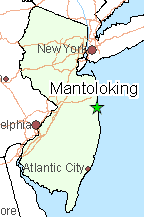 But Mantoloking resident Christine Wilder still isn’t happy.
“I didn’t want Voice Link,” Wilder told the Asbury Park Press last summer. Wilder signed up for Comcast, but would rather have her copper landline back.
Unfortunately for Flihan and Wilder, although Fire Island residents’ loud displeasure drowned Verizon’s plans for Voice Link in New York, those affected in New Jersey are fewer in number. To date, their criticism of Voice Link has not made Verizon uncomfortable enough to change course as they have on Fire Island and bring a FiOS fiber network solution to Mantoloking and other affected boroughs.
That face “troubles” New Jersey Rate Counsel Stefanie A. Brand.
“I am not sure why New Jersey is not getting the same level of service as New York from Verizon,” Brand told the newspaper in September. “It’s not enough to simply say there is cable in Mantoloking; therefore we don’t need to meet our obligation. Why are they not willing to do it for similarly situated customers in New Jersey?”
[flv width=”640″ height=”380″]http://www.phillipdampier.com/video/Verizon Voice Link A Reliable Alternative 10-3-13.mp4[/flv]
Verizon produced this video defending Voice Link as a reliable alternative to customers experiencing persistent problems with their landline service. (2 minutes)
 CenturyLink is seeking “greater flexibility” to set its own prices, terms and conditions of service without a review by Washington State regulators, even as its broadband customers complain about bait and switch Internet speeds and poor service.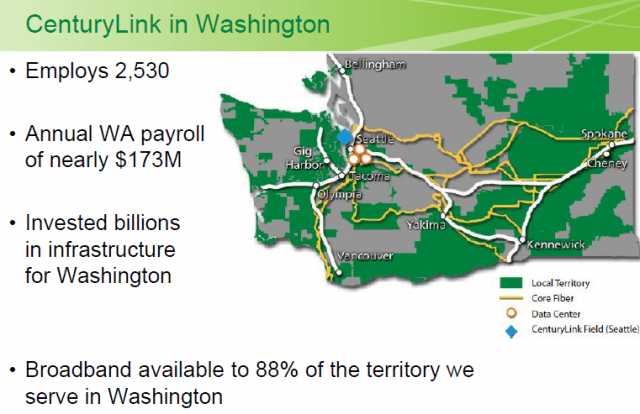

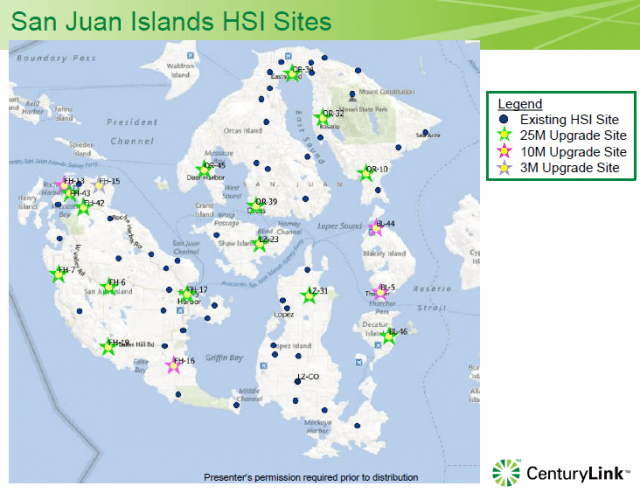
 “For our long-term financial interests in this county, we need to have reliable 10-25Mbps service to customers on any part of the islands,” Hughes added. “My goal has always been 90+ percent should be able to get 25Mbps or better connectivity in the county.”
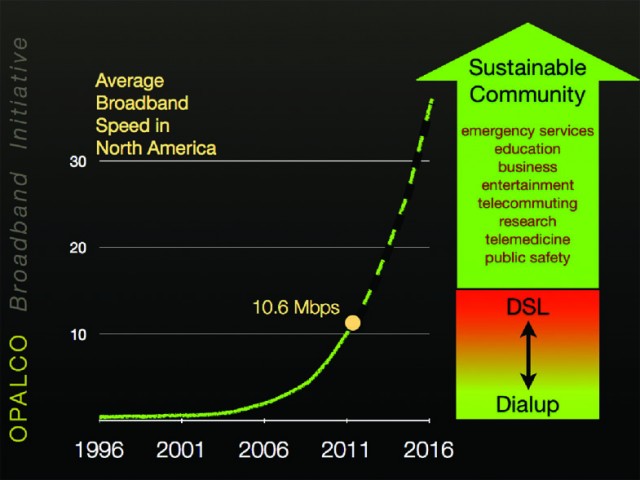 OPALCO originally proposed a hybrid fiber-wireless system designed to reach 90% of the county with a $34 million investment, to be built over two years. When completed, all county residents would pay a $15 monthly co-op infrastructure fee and a $75 monthly fee for broadband and telephone service. To gauge interest, OPALCO asked residents for a $90 pre-commitment deposit. By the annual meeting in May, the co-op admitted only 900 residents signed up and it needed 5,800 customers to make the project a success.
 “Our data communications network brings exponential benefit to our membership,” OPALCO notes. “It includes tools that allow the co-op to: control peak usage and keep power costs down, remotely manage and control the electrical distribution system, manage and resolve power outages more efficiently, integrate and manage community solar projects and improve public safety throughout the county.”
 Time Warner Cable has added two new lobbying firms, despite running up nearly $4 million in lobbying expenses during the first half of 2013, to advocate a hands-off policy on broadband and changes in how television stations get compensated from cable providers after a month-long dispute with CBS helped fuel subscriber losses.

 Nebraska City, Neb. understands how super fast broadband can transform local businesses, education, health care, and consumer entertainment. The only problem for the community of 7,277 residents is getting a provider to supply it.
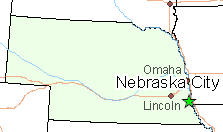 “To be competitive with other communities in retaining and attracting industry, businesses, families and individuals and to continue to provide a high quality of life for our citizens, we must have greater bandwidth,” Nebraska City Mayor Jack Hobbie said.
 Efforts by New York’s largest cable operator to deregulate telephone service in New York, potentially cutting off delinquent ratepayers’ phone service at inconvenient times, has run into opposition from an Albany newspaper.