Home » Competition » Recent Articles:

Senator Schumer Promotes Western NY Fiber Project: “Fiber Optic Broadband is the Erie Canal of the 21st Century”

Phillip Dampier April 5, 2010 Broadband Speed, Competition, Public Policy & Gov't, Rural Broadband, Video Comments Off on Senator Schumer Promotes Western NY Fiber Project: “Fiber Optic Broadband is the Erie Canal of the 21st Century”

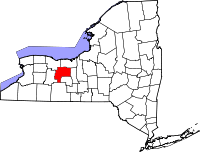
Ontario County, New York

Senator Charles Schumer (D-New York) visited Canandaigua Monday to promote Ontario County’s fiber optic broadband project, in hopes of securing federal funding to expand the fiber project into adjacent counties in the Rochester-Finger Lakes region.

Schumer likened fiber optic broadband development to other revolutionary transportation projects in New York’s past which transformed local economies, created jobs, and brought prestige to the region.

“One fact has proven true since the days of the Erie Canal: if you don’t have good infrastructure, you’re not gonna bring jobs, but when you do have good infrastructure, you are gonna bring jobs. And the fiber optic ring that we are talking about here in Ontario County is the Erie Canal of the 21st century. It’s that simple,” Schumer told an audience at the Center for Infotonics.

Ontario County began constructing a fiber ring more than a decade ago to improve connectivity across the often-rural county.  Bookmarked between high growth areas around Victor and Canandaigua to the east and Geneva to the west, large expanses of Ontario County are rural. Being a part of central New York’s Finger Lakes Region means the often hilly terrain and winding roads can make wiring expensive and difficult in certain areas.  But the prospect for 21st century connectivity has helped fuel growth — and jobs — into the region.

Sen. Schumer

Schumer wants FCC officials to visit Ontario County to explore the project as a potential blueprint for wiring other counties.

“We will not only put this region at the cutting edge of attracting new businesses that need high speed fiber optics, but we’ll do a service to the rest of the country by showing them how it can work,” said Schumer.

New York’s senior senator said he will aggressively pursue millions in federal funding to expand the project outside of Ontario County, and help complete the fiber optic network.

The senator may find some opposition to federal funding initiatives from incumbent providers Frontier Communications and Time Warner Cable, particularly if funds originate from broadband stimulus programs.  Both companies would likely object to federal spending on a fiber network that crosses areas both companies already serve.

Frontier Communications offers DSL service in many parts of Ontario County, and Time Warner Cable has wired most of the significant-sized towns and cities in the county.

The Ontario County project has been built without any federal stimulus money.

[flv]http://www.phillipdampier.com/video/Ontario County Fiber Schumer Visit 4-5-10.flv[/flv]

Sen. Schumer’s visit to Canandaigua, New York to promote Ontario County’s fiber project was covered in these three reports from YNN, WROC-TV, and WHAM-TV — all in Rochester, New York.  (6 minutes)

[Updated] Verizon FiOS Winds Down Buildouts – If You Don’t Have It Now, You’re Not Getting It

Verizon Communications is indefinitely finished expanding FiOS — its fiber to the home triple-play package of broadband, phone, and TV — to new cities across its service area.  In short, if your community isn’t already engaged in franchise negotiations with the telecommunications company, there is no fiber from Verizon in your immediate future.

The company said after spending $23 billion upgrading its aging copper wire phone network, it needs to finish construction and improve its reach in existing FiOS-wired communities.  When the company ceases FiOS construction, it hopes to pass 18 million customer homes across its multi-state service area.

The decision to stop expansion of advanced fiber optics threatens to leave hundreds of communities behind, too late to the party or simply too far down Verizon’s priority list.  Among important cities Verizon will pass up include Alexandria, Virginia, Boston and Baltimore.

That concerns city officials, especially in Baltimore which already considers itself on the disadvantaged list.

“My take on it is that Baltimore is not equipped for the future,” Rev. Johnny Golden, past president of the Interdenominational Ministerial Alliance and an advocate for improved access to technology in the city told the Baltimore Sun. “We have a decent broadband system for today, but it does not have the infrastructure to take us into the future where we need to go.”
Despite the fiber bypass, the company will continue negotiations with about a dozen communities where negotiations were already underway – mostly in New York, Massachusetts, and Pennsylvania.  Despite company spin, the decision to drop the shovels and wheel away the spools of fiber does represent a dramatic change of plans, evidenced by the company’s decision to bypass the aforementioned lucrative urban communities.

For cable companies like Comcast and Time Warner Cable, Verizon’s announcement brings a sigh of relief.  Both cable operators handily beat Verizon’s DSL offerings and are swiping increasing numbers of Verizon’s phone customers who are disconnecting their landline service in favor of cell phones or “digital phone” service from the cable companies.

Both Time Warner Cable and Comcast have also kept a larger percentage of their customers than Verizon hoped.

In markets where FiOS is available, Verizon has only achieved 25% penetration for television service and 28% for Internet, far below the 40 percent penetration Verizon CEO Ivan Seidenberg hoped to achieve.  The reasons consumers didn’t switch to Verizon FiOS vary, but include:

  • Pricing was not always lower than what the incumbent cable operator offered, and in many cases prices for some service were higher once the promotional rate expired;
  • Cable operators in competitive areas improved service, offered more aggressively priced bundles, and increased broadband speed;
  • Many cable operators locked their customers into two year “price protection agreements” which hold customers in place until agreements expire (if they don’t auto-renew);
  • Installation can prove disruptive because of the elaborate rewiring required in many homes;
  • Consumers didn’t see enough compelling reasons to switch.
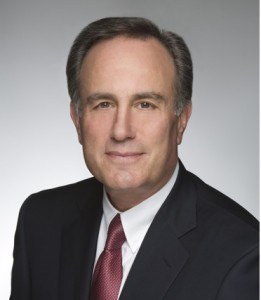
Seidenberg

Still, Verizon has future-proofed their fiber optic service areas and are better positioned to deliver extremely high broadband speed and HD offerings than their cable counterparts.  But that has never impressed short-term focused Wall Street.  Many in the financial press have attacked Verizon for the costly fiber upgrades they believe will not work for the short-term investor seeking immediate return from their Verizon stock purchase.  With the rumor mill predicting upcoming retirement for Seidenberg, his likely successors are hardly FiOS fanboys.

John Killian, Verizon’s current chief financial officer, is a short-term results man.  Samuel Greenholtz, an analyst with the Gerson Lehrman Group, doesn’t see Killian sharing much of Seidenberg’s visionary long term thinking.  Lowell McAdam, another prospect for the top job, is currently the president of the Wireless Services division, and would likely bring a wireless “solution” for broadband customers left off the FiOS list.  Neither man seems particularly interested in restarting the push for fiber in the future.

For 2010, capital expenses are flat or down across the company except in the Wireless Services division.  Verizon already declared copper phone wiring dead, and has elected to abandon its rural and suburban customers,  systematically sold off to America’s “rural phone companies” Frontier, CenturyLink, or Windstream.  Those still with Verizon but without FiOS will find the future of their landlines increasingly perilous.  Greenholtz notes Verizon has terminated another 1,200 line technicians and the company intends to spend two percent less on its copper wire network this year over last.

Greenholtz witnessed first hand what happens when a company starts to ignore its legacy network — his residential phone line quit working:

Having worked at Verizon and its predecessors for over 25 years, I expected a fix would be swift and trouble-free.  Wrong. I was offered a two-week appointment date for repair people to come out and look at the problem. I might add here that my wife does not use the cellular device that she carries around anymore than necessary and certainly never uses it when in close proximity to the hardwired set. By resorting to measures that I certainly would never have thought of using 10 years ago, I was able to get attention brought to the problem much quicker — and the issue has been resolved satisfactorily.

It seems that Verizon’s residential repair and maintenance has sunk to a new low.  Neighbors and other people on copper cabling are often experiencing problems. If there is static on the line, subscribers are frequently told nothing can be done to correct the situation because they need to replace the cable or do cable maintenance – but there is no budget available to do the work.   So, repairmen take the brunt of the public’s unhappiness with the service they are receiving. In contrast, when I spoke with some friends regarding FiOS and its maintenance issues, I found a much better response time to any difficulties the customers were experiencing.

Shockingly for a Wall Street-focused “expert network,” Greenholtz was allowed to offer his belief the only real solution to phone companies ignoring their undesirable customers is to regulate the heck out of them.

What can be done to cure the situation with residential landline services?   Unfortunately, it is going to have to come down to regulation.  Verizon, and no doubt, AT&T, has been doing what they want for many years now.  The PUCs have given them a lot of opportunities to offer advanced services that the commissions thought would spread throughout the serving areas, but they are increasingly realizing that is not in the plans.  They are going to have to force these companies to be responsive to the needs of the entire footprint, not just the Fortune 500 territories — and the nearby residential homes.

[Update 4/1/2010: While working on another story, I was amused to discover we had written about Mr. Greenholtz before, back on April 15th, when he was telling his readers “do-gooders” forced Time Warner Cable to attempt usage caps on customers.  I wonder if we would have heard something different from him had his broadband service faced an Internet Overcharging scheme.]

Blind deregulation and legislative-friendly handouts to companies like AT&T and Verizon have never resulted in better service for consumers.  They haven’t proven to save consumers any money either.  Ultimately, the decision to provide FiOS and U-verse came with investor consent, and when the economic downturn threatened the value of the stock and dividends, no deregulation or statewide franchise agreement is going to keep the fiber party from coming to a close.

[flv]http://www.phillipdampier.com/video/WSYR Syracuse Verizon FiOS Winds Down 3-26-10.flv[/flv]

WSYR-TV in Syracuse reports on the demise of Verizon FiOS’ expansion plans, which have a significant impact on central New York where many communities will be left behind.  One saving grace for New Yorkers ticked off at Albany — they’re now off the FiOS list indefinitely.  (2 minutes)

Wall Street Journal Report: Verizon iPhone Could Arrive By June

Phillip Dampier March 30, 2010 AT&T, Broadband Speed, Competition, Verizon, Video, Wireless Broadband Comments Off on Wall Street Journal Report: Verizon iPhone Could Arrive By June

Apple iPhone

The Wall Street Journal reports Apple is developing two new iPhones for launch this June, including one that’s designed to work with Verizon Wireless.

According to the report, the new iPhone models can run on CDMA networks, such as the one Verizon Wireless uses.  The introduction of such a phone would mark an end for the three year exclusivity agreement Apple has with AT&T in the United States.

“There has been lots of incorrect speculation on CDMA iPhones for a long time. We haven’t seen one yet and only Apple knows when that might occur,” an AT&T spokesman told the Wall Street Journal.

For AT&T, the Apple relationship has been crucial, helping to make the carrier the U.S. leader in lucrative smart-phone market share. According to comScore Inc., AT&T has over 43% of all U.S. smart-phone customers, compared with 23% for Verizon. These customers are especially attractive because they generally pay higher monthly rates for data plans.

For several quarters, AT&T’s growth has come almost single-handedly from the iPhone. In the fourth quarter of 2009, the carrier said it activated 3.1 million new iPhones. In comparison, it counted only a net total of 2.7 million new subscribers as some customers moved from other phones to iPhones.

“You’re not going to lose the iPhone [exclusivity] and make up growth somewhere else without bearing the cost,” said Sanford C. Bernstein & Co. research analyst Craig Moffett.

The impact on Verizon Wireless data network will be an important measure of whether American wireless broadband networks can sustain the demand customers have for wireless broadband service and speed.

[flv]http://www.phillipdampier.com/video/CNBC Verizon Getting iPhone 3-29-10.flv[/flv]

CNBC carried three reports about the Verizon Wireless iPhone story published in the Wall Street Journal and its potential impact on the American wireless marketplace.  (11 minutes)

[flv width=”512″ height=”308″]http://www.phillipdampier.com/video/Wall Street Journal iPhone On Verizon 03-29-10.flv[/flv]

The Wall Street Journal included this “web-extra” report on their story and what it means for consumers.  (2 minutes)

Everything New is Always a Threat to Everything Old – The Cable TV Monster

Phillip Dampier March 26, 2010 Competition, Editorial & Site News, Net Neutrality, Public Policy & Gov't, Video Comments Off on Everything New is Always a Threat to Everything Old – The Cable TV Monster

[flv]http://www.phillipdampier.com/video/Anti-Cable Pay TV Ad from the 70’s.flv[/flv]

I ran across this “public service announcement” about the perils of cable television coming from the over-the-air broadcasters terrified of the implications of a new concept in television delivery — coaxial cable.

Back in the 1960s and early 1970s, big lobby dollars from broadcasters kept a foot on the throat of the newly-born cable television industry, prohibiting them from showing sporting events, movies and programs offered in syndication, unless they were from local stations of course.

To allow this new competitor to gain access to lucrative programming would cost local jobs, hurt investment in television stations providing local community service, and ruin it for everyone!

Ironically, broadcasters are still using these arguments when confronting intransigent cable companies that won’t write checks to pay those “free TV stations” for the right to carry them on the cable lineup.

Whenever a new player enters the marketplace, the existing ones panic.  That’s why the National Broadband Plan, Net Neutrality, and the concept of open networks terrifies incumbent players.  It’s a whole new world — one they aren’t comfortable with — market instability and players out of their comfort zones always invoke a fear-based response, especially on Wall Street.

Forty years after the pay television monster envisioned in this advertisement, we are still watching local over-the-air broadcasters.  In fact, the only harm viewers have experienced comes from an industry that treats local TV stations like commodities, bought and sold for millions of dollars, even as many stations cut local programming and community service.  These days, it’s not uncommon to find a major local affiliate not even producing a newscast any longer.

We now face another transformation in telecommunications with the release of a national blueprint for improved broadband.  Existing players have no problem with it, as long as they define it, benefit from it and get to implement it.  But the idea of opening their networks and providing consumers with additional choice, as well as protection from meddling providers who want to monetize all-things-Internet, just cannot be entertained.  To do so would … you know, cost jobs, harm investment, and ruin it for everyone.

Much like a broken record, this rhetoric is obsolete.

Delmarva Towns Join Forces to Fight for Better Mediacom Franchise Renewal Agreement

Phillip Dampier March 25, 2010 Competition, Mediacom, Public Policy & Gov't Comments Off on Delmarva Towns Join Forces to Fight for Better Mediacom Franchise Renewal Agreement

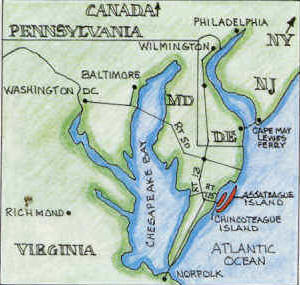
The Delmarva Peninsula

Four towns are better than one when trying to negotiate improved service and better terms for Delmarva Mediacom cable customers.

Bethany Beach, Millville, Ocean View and South Bethany are considering joining forces to renegotiate their agreements with Mediacom, all coming up for renewal within a year of each other.

Councilman Jay Headman from South Bethany is among those advocating the joint effort to get a better deal from Mediacom, which provides cable service across many parts of the peninsula encompassing Delaware and parts of Maryland and Virginia.

Mediacom serves many parts of the Delmarva Peninsula with cable service

“If we could come together and negotiate as one, we could save money and have more clout,” Headman told The Daily Times. “We know for a fact that it’s smart to negotiate together. When we have a larger clientele, (Mediacom) has to deal with us, and we can split the cost for the lawyer.”

While the four communities would find a competing provider launching service on the peninsula a useful tool to increase competition, they don’t necessarily believe its likely.  Many residents of the towns are part-timers, staying for extended summer vacations.  In fact, getting a better deal for part-time residents who wish to subscribe for part of the year is one of the concessions they hope to obtain from Mediacom.  The towns are also seeking a shorter agreement — the current franchise is for a 15-year term — and better service in general.

Vice Mayor Carol Olmstead, of Bethany Beach, told the newspaper the town is allocating $5,000 in next year’s budget to cover legal fees related to the negotiation.

“I think everyone who has cable TV would like better service,” she said. “Why not join together? I think the feeling is there’s strength in numbers.”

Search This Site:

Contributions:

Recent Comments:

Your Account:

Stop the Cap!