Home » Competition » Recent Articles:

You Win! Consumers Fighting Back Help Kill Municipal Broadband Ban in North Carolina

Rep. James Boles Jr. of Moore County seen yawning as the North Carolina Legislature worked long hours to close the session for the year. (Photo: Charlotte Observer photographer Corey Lowenstein)

A bill to temporarily ban municipal broadband projects in North Carolina went down in flames early Saturday after a marathon 19-hour closing session of the legislature allowed a handful of pro-consumer legislators to finally corner and kill the bill.  But that victory would not have come without a coordinated effort by consumers and communities across the state vociferously objecting to legislation designed to protect the duopoly of phone and cable service offered by Time Warner Cable, AT&T, and CenturyLink.

This was the fourth attempt by big telecom companies to get state legislators to do their bidding.  It’s almost as if they want to work harder to stop competitors from delivering service than they work at delivering it themselves.  North Carolina is ranked 41st out of 50 states in broadband adoption. Significant areas of the state are not served by any broadband provider, and broadband speeds experienced by customers in North Carolina are among the slowest in the country.

This year’s battle was among the most difficult because its biggest backer, retiring Senator David Hoyle (D-Gaston), was considered a heavyweight in the legislature, serving in the North Carolina Senate for 18 years.

The drama that would eventually wind its way to the bill’s demise began late Friday evening in an overnight session of the state legislature.

Catharine Rice from the SouthEast Association of Telecommunications Officers and Advisors (SEATOA) is our tour guide through the winding, treacherous waters of a North Carolina legislature in its final hours of the session for the year:

Saturday morning, July 11, at 5 a.m., the NC House of Representatives killed Senator Hoyle’s (D-Gaston) attempt  to force a moratorium on municipalities seeking to provide their communities broadband service. This was the industry’s 3rd (actually 4th) attempt to stop municipalities from providing superior broadband infrastructure to the communities.

Rep. Luebke

The bill died on Saturday after a one-two punch. First, the House Ways & Means Committee had refused to hear S1209 since June 8, under the hands of Committee Chair-Rep. Faison (D-Orange, Caswell), when it crossed from the Senate to the House. Then late Friday evening, the House itself added an amendment to its Study Authorization Bill (SB900) permitting, but not requiring, the Revenue Laws Study Committee to study the laws and circumstances surrounding municipalities providing broadband service to their communities, but dropping all other terms of S1209, mainly  the moratorium. The Senate concurred with House bill 900 unanimously later in the evening (9:49pm) and it was enrolled for review and signature by the Governor. (See Sections 7.5 (a) and (b) here)

Ten minutes later, Sen. Clodfelter introduced H455, a bill whose effect would have changed the approach of the House’s version of the municipal bbnd study. With H455, Senator Clodfelter gutted a House kidney awareness bill, and poured into it the “study” portion of S1209 (Hoyle’s Anti-Muni broadband bill), changing the House version by setting a date certain when the study (and recommended legislation) would have to be completed (March 2011), and increasing the number of seats on the subcommittee from 12 to 14, adding assigned seats for telephone coops and the NC County. The House version did not mandate a study, but made it optional, did not specifically authorize the committee to recommend legislation, and set the seats for the subcommittee at 12, naming 8 with an additional four unassigned seats. Clodfelter’s H455 contained two other sections, one addressing a fluke in sales tax refunds for MI-Connection, the Mooresville-Davidson muni broadband system.

Around 2:45 Saturday morning, on Rep. Paul Luebke’s (D-Durham) motion, the House denied concurrence with the Senate on H455 (96 to deny, 1 to allow). At 3:45 a.m., the House approved a Senate/House conference committee report for the purpose of keeping only one section of H455, (effectively deleting H455′s changes to the House study version of S1209). H455 (here) now provides a state sales tax refund status for Davidson and Mooresville’s MI-CONNECTION system, status the two towns would have if individually providing cable service, but from which they were disqualified by having  joined together to provide broadband cable  service.  On a vote of 91 to 6, the House approved the Senate/House conference report. At 4:55 a.m. the Senate concurred with that report and it was enrolled for the Governor’s attention.
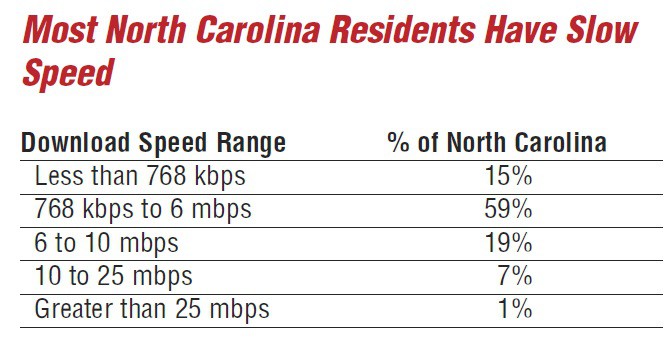
Source: SpeedMatters/CWA

Bottom line, the effort to place a moratorium on consideration for new municipal broadband projects in the state is dead for 2010.  The next opportunity big telecom has for another anti-consumer bill is in January 2011.  At least the North Carolina legislature passed some additional ethics and government reform measures that will give consumers even more tools to fight the next battle:

  • It toughens penalties for illegal campaign donations above $10,000.  As we’ve seen repeatedly, big campaign contributions can make all the difference when legislators throw their constituents’ interests under the bus.  Big phone and cable interests are among the most generous contributors, making it easy to find one or more members willing to carry their legislative agenda forward;
  • Requires board and commission members to account for campaign fundraising activities for elected officials who appointed them.  A case of mutual back-scratching, powerful legislators can often find places for their special interest friends and supporters to serve on state commissions and boards.
  • Expands personnel information that must be released to the public about state employees.  We saw the implications of conflicts of interest in the legislature this past session when one member contemplating municipal broadband bans also happened to be one of Time Warner Cable’s engineering contractors.  More information, this time about past work by state employees, prevents these kinds of conflicts from staying secret.

Please thank Reps. Faison and Luebke for their hard work to stop the broadband moratorium.  It’s unfortunate Rep. Faison’s efforts to bring better broadband to Caswell County, part of his district, were unsuccessful.  But at least Caswell County leaders won’t face a broadband moratorium should they wish to renew their efforts to provide broadband service where CenturyLink will not.

[flv width=”640″ height=”500″]http://www.phillipdampier.com/video/WBTV Charlotte Salisbury A Wired Community 5-2010.flv[/flv]

Why we fight.  Communities like Salisbury, N.C., can now move forward on their own municipal broadband projects.  Back in May, WBTV-TV in Charlotte highlighted Fibrant, the community’s answer to bad service from incumbent providers.  (4 minutes)

Those Who Control Broadband Maps Get to Control the Debate: The Texas Broadband Two-Step

For more than a year, Stop the Cap! has been covering the issue of broadband mapping, warning against allowing incumbent telecommunications companies from being able to control or influence statewide maps that show who has broadband, and who does not.  A perfect example of why we repeatedly call out telecom-connected groups like Connected Nation being granted a piece of the mapping action can be found this weekend in a guest editorial published in the Fort Worth StarTelegram written by Todd Baxter, vice president of government affairs and general counsel for the Austin-based Texas Cable Association — the Texas cable lobby:

Newly released maps show that broadband — high-speed Internet — is widely available in Texas. They also underscore that the broadband stimulus program has been ill-conceived and poorly executed by the federal government.

That’s because the federal government put the cart before the horse.

It gave out more than $270 million of your money to a dozen projects in Texas before actually determining where current broadband operators provide service. Common sense would say to find out where broadband is, or isn’t, available before spending the money.

The feds also should better define “underserved,” since the money is intended to help both unserved and underserved areas. It sounds like a riddle — how many broadband providers have to serve a household before it isn’t considered “underserved”? So far that riddle has no answer, and it is costing you, the taxpayer, a lot of money.

Without the data or the definition, how can the federal government make sure it is spending taxpayer money wisely and where it is really needed?

Now that we have the maps, we can see that more than 99 percent of all Texans can access some form of broadband, whether wired, wireless or mobile, from more than 123 providers. Yet — without this information — the federal government awarded hundreds of millions in grants and loans to the Texas projects, with possibly more to come before the broadband stimulus program wraps up in September.

The Texas Cable Association formally objected to seven of the dozen Texas projects when in the application stage, because the areas addressed are already covered by existing broadband providers. We don’t believe the areas are unserved or underserved.

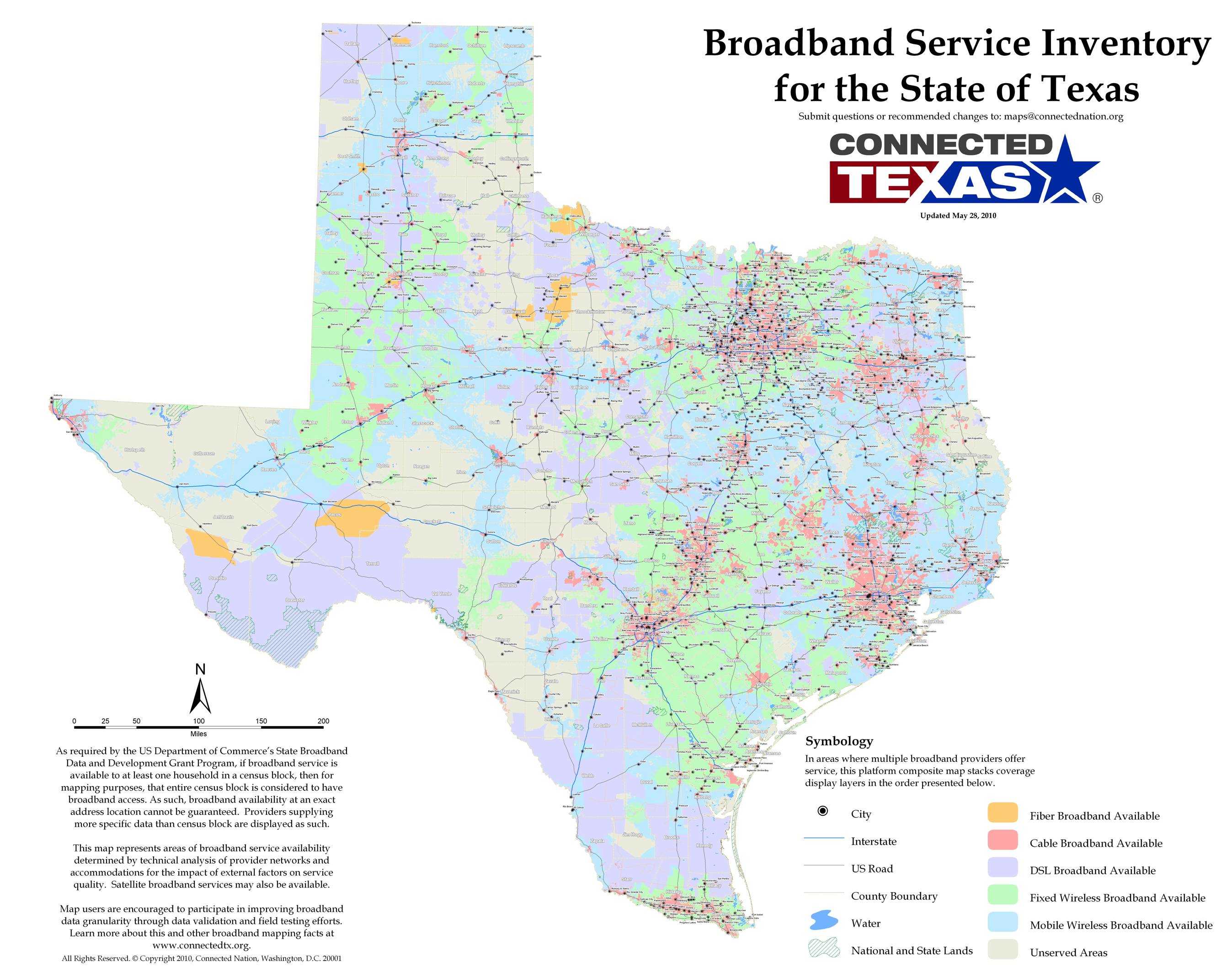
Just a few weeks ago, the Texas Agriculture Commissioner Todd Staples, with great fanfare, unveiled the current state of broadband in Texas.  Connected Texas, a subsidiary of Connected Nation joined forces with the state government to perform a broadband census across the state, based on voluntary information provided confidentially by existing service providers.  The result was the stunning “achievement” that 97 percent of Texas already had broadband access, quite a revelation to the scores of consumers who aren’t served by cable companies and cannot get DSL service from the phone company, even if the Broadband Map of Texas says they can.

Texas Broadband Map (click to enlarge)

Kelly from Childress, located in the Texas panhandle, is a perfect example.  She writes Stop the Cap! to tell us how thrilled she was to see the phone company had finally brought DSL service to her street just on the outskirts of town.  She had nagged everyone she could for more than three years about her lack of broadband.  The cable company offered service, if she paid $9,300 for installation of an extended cable line to reach her.  The phone company, despite serving her neighbors less than 1/2 mile away, said she was not “qualified” to receive DSL service.  Today, her husband and two kids do access broadband service, albeit from the equivalent of the broadband black market.  Her nearest neighbor has rigged a souped up Wi-Fi system that allows her family to share the neighbor’s DSL account.  A directional antenna mounted on the roof of each home provides line-of-sight access.  They split the cost of the account and Kelly, an accomplished baker, keeps her neighbors well-supplied with some great pies in gratitude.

Connected Texas collected the information about where broadband service was supposedly available in Texas

Texas has a well-deserved reputation for neighbors helping neighbors to solve problems they’ve long since decided the government can’t, won’t, or shouldn’t solve for them.  Now that neighborly spirit has taken a high-tech approach to share broadband.

With the release of the new broadband map, Kelly thought the days of sharing accounts was over, and she called the phone company to sign up for service.  But, in no surprise to us, broadband availability to her home changed only on paper, not in reality.  No, she was told, she could not sign up for DSL service today or tomorrow for that matter — the company had no plans to extend service her way… indefinitely.

For others, the map is inaccurate because it shows service from dominant cable and phone companies, but ignores the competition.  Regular Stop the Cap! reader Michael Chaney noted, “I know for a fact this map is inaccurate. They show no fiber to the home coverage in Cedar Park, Williamson County, even though I’ve had residential fiber service for almost two years.”

In 2009, Public Knowledge released a report highly critical of Connected Nation, the group responsible for broadband mapping across many states.  Among the findings:

In order to be effective, a national broadband data-collection and mapping exercise should be conducted by a government agency, on behalf of the public, with as granular a degree of information as possible and be totally transparent so that underlying information can be evaluated.

Connected Nation is none of those and represents none of those characteristics. It is an organization sponsored by the telephone and cable companies and represents their interests in deciding what data to collect and how information should be displayed. They are quite up front about their company sponsorship and, in fact, believe it is an asset, if in a way counter to solid public policy.

It would be a setback for our broadband policy if Connected Nation were to take a prominent role in broadband mapping and data collection if it continues on its present policy course because the organization does not represent wise public policy and because it distorts its results.

Kentucky Gov. Steve Beshear (D) was correct in April, 2008, when he vetoed a $2.4 million appropriation for Connect Kentucky, which until then had received almost $7 million from the commonwealth. Beshear said that the program was being rejected for state financing because it had asked for funds “without specifically identifying any services to be rendered to the state or providing for any oversight, control or performance measures relative to the services being rendered.”

The group’s close association to incumbent cable and telephone company interests were easily apparent just from the national organization’s board which has 12 outside directors, eight of whom are well known cable and phone company lobbyists or those with direct interests in the industry:

  • James W. Cicconi – AT&T senior executive vice president-external and legislative affairs
  • Steve Largent – CTIA – The Wireless Association president and CEO
  • Joseph W. Waz – Comcast senior vice president, external affairs and public policy counsel
  • Larry Cohen – Communications Workers of America president. CWA is in frequent agreement with telecom companies on policy issues.
  • Thomas J. Tauke – Verizon executive vice president for public affairs, policy and communication
  • Walter B. McCormick – United States Telecom Association president
  • Kyle E. McSlarrow – National Cable and Telecommunications Association president
  • Grant Seiffert – Telecommunications Industry Association president. (The members are the equipment makers who sell their gear to the telecom industry.)

These individuals, and others, are listed as “national advisors” on the Connected Nation Web site. They are listed as “directors” in their filing with the Kentucky Secretary of State.

The implications of allowing incumbent service providers to influence broadband mapping can be seen in Baxter’s editorial.  If Texas cable and phone companies can declare broadband service available even in areas where it is not, they can then argue against broadband stimulus projects to expand availability as an unnecessary waste of taxpayer money.  The answer to Baxter’s riddle is, unfortunately, too often “none.”  Areas that declare access to wireless broadband, cable and DSL often have access to none of these options.  The cable company doesn’t wire that Texas ranch located too far away from the phone company for DSL and is in an area that just can’t get a good wireless signal.

In smaller communities in rural Texas, efforts by local entrepreneurs to launch needed local broadband services often meet fierce opposition from incumbent interests who declare communities already served, backed up with a map that shows coverage, and therefore should not be allowed to receive stimulus funding.  Often, objections from existing providers effectively disqualifies stimulus applicants and the result is a continued blockade for rural broadband.

The dividend Connected Nation hands to the Texas Cable Association is the political argument that there is no broadband problem in Texas — nearly 100 percent of homes can already access it.  That means broadband stimulus is, in the eyes of the cable lobby, just another federal government giveaway — wasteful spending of tax dollars.  Just look at the Texas Broadband Map and see for yourself.

The Texas Department of Agriculture failed the people of Texas by relying on a group with a vested interest in not finding a broadband availability problem.  And even worse — taxpayers nationwide effectively picked up the $3 million dollars in grant money given to Connected Nation for its map.  That’s a waste of tax dollars that Baxter didn’t bother to bring up.  Somehow I knew he wouldn’t.

[flv]http://www.phillipdampier.com/video/KOSA Odessa Internet in Rural Areas 6-17-10.flv[/flv]
KOSA-TV in Odessa delves into the challenges west Texans face getting broadband service.  (2 minutes)

[Updated] Clearwire Launches 4G Service in Rochester & Syracuse, Road Runner Mobile Also Forthcoming

[The article was updated at 10:30am to include promotional and coverage information not available when the article was published late last night]

Clearwire today announced the launch of its 4G mobile broadband service for businesses and consumers in Rochester and Syracuse, New York.  Designed to deliver the Internet at speeds four times faster than 3G, CLEAR is priced comparably to many wireless broadband plans, but has no usage caps.

Pricing from their website offers customers stay-at-home and mobile service plans (or both).  Customers choosing month-to-month service have to buy the equipment up front, starting at $70 and pay a $35 activation fee.  Those who commit to a two-year service contract can lease the equipment for $4-6 a month and skip start-up fees.  Packages start at $40 a month for 6/1Mbps service.  At $55 a month, they take the speed limit off, providing occasional bursts of wireless speed up to 10Mbps.  Another $15 on top of that buys you nationwide 3G roaming.  Sales tax is not included.  Customers get a 14 day trial period to evaluate the service and can cancel within that window with no obligation, although our Jay Ovittore reports they’ll drag you through the cancellation process.

At $40 for unlimited use, CLEAR’s 4G service beats Cricket, which charges the same price for 3G speeds, but limits consumption to 5GB per month before they start throttling your speed to dial-up.  Other mobile broadband services typically charge up to $60 for 5GB of usage at 3G speeds.  Ironically, while 4G service from Clearwire is unlimited, the slower 3G speed service is not — there is a usage limit of 5GB per month on the 3G network, and then overlimit fees of five cents per megabyte kick in.

A statement from the company released early this morning talks up the fact CLEAR does not burden their 4G customers with Internet Overcharging schemes like other wireless broadband providers.

“Our residents now have a fast Internet connection that’s as mobile as they are,” said Jerry Brown, regional general manager for CLEAR. “And we’re thrilled to offer affordable rate plans with no limits on the amount of data customers use. No caps on usage, no penalties – our customers just use the Web as much as they want wherever they go – it’s that simple.”

Clearwire's coverage area in Rochester & Syracuse

In Rochester, CLEAR covers approximately 560 square miles and more than 600,000 people with service extending as far north as Lake Ontario, as far south as Canandaigua and Geneva (Ontario County), as far west as Spencerport, and as far east as Webster.

In Syracuse, CLEAR covers nearly 230 square miles and more than 265,000 people with service extending as far north as Brewerton, as far south as Nedrow, Auburn, and Cortland; as far west as Village Green, and as far east as Fayetteville and Manlius.

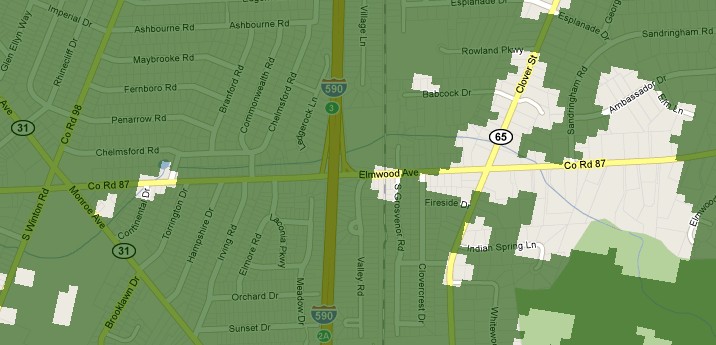
However, the company’s 4G coverage area is spotty in many areas in both cities.  Verifying coverage from their website is essential before considering CLEAR.  Anecdotal reports from some of our readers and others suggest 4G service from Clearwire is not nearly as robust as 3G service from some other providers, and dead zones and slow speeds have caused some to cancel service.  Here’s an example of their coverage in my part of the town of Brighton, just southeast of Rochester:

Clearwire's coverage of the 12 Corners/Elmwood Avenue area of Brighton, N.Y.

Some minor gaps in coverage are apparent near Commonwealth Drive, and if you were getting gas at the 12 Corners Mobil station or visiting Citizens Bank behind it, you’d be out of luck, but otherwise coverage looks fairly good to the west of Interstate 590.  However, a very strange gap pops up between Valley Road and South Grosvenor Road, also impacting a few apartment buildings at Elmwood Court Apartments, 3100 Elmwood Avenue.  That’s odd because although that part of Elmwood slopes slightly downwards, it’s still much higher than the homes on Valley Road or the apartments further back in the complex.  A major service gap opens up on Elmwood at Clovercrest Drive and extends into the very tony neighborhoods around Ambassador Drive and Clover Street.  But the country club set will do fine browsing away on the golf course at the Rochester Country Club further east.

In short, service can vary dramatically street by street, block by block, from nothing at all to full speed ahead.  Be sure to check your area before you commit to keeping the service, much less sign a two year contract for it.

For the rest of Rochester, if you live in the city or an inner-ring suburb, coverage is generally available.  Those further out in towns like Henrietta, North Chili, southern Pittsford, Honeoye Falls, Avon, Scottsville, Churchville, Brockport, Penfield and Perinton face significant gaps or no coverage at all.  Things improve dramatically in Ontario County in towns like Farmington and Victor and the cities of Canandaigua and Geneva.

For the greater Syracuse area, coverage pops up in Auburn and then disappears eastward until reaching Camillus.  Generally, coverage in Syracuse is not nearly as dense as in Rochester, with large gaps opening between suburbs and the city itself.  Mattydale is solidly covered, for instance, while Minoa isn’t.

Now that CLEAR has launched 4G service in Rochester and Syracuse, Road Runner Mobile, which is simply CLEAR rebranded as a Time Warner Cable service (they partly own Clearwire) will also soon be on the way.  Pricing in other Time Warner Cable cities wasn’t much different than from Clearwire direct, and some cable plans really push service contracts, which you really do not want on a service this new.  Do not commit to one unless you are satisfied with the service where you plan on using it.

Clearwire’s 4G Network in 2010

CLEAR 4G service is currently available in 44 markets across the United States, including: Syracuse and Rochester, N.Y.; Atlanta and Milledgeville, Ga.; Baltimore, Md.; Boise, Idaho; Chicago, Ill.; Las Vegas, Nev.; St. Louis and Kansas City, Mo.; Philadelphia, Harrisburg, Reading, Lancaster and York, Pa.; Charlotte, Raleigh, and Greensboro, NC; Honolulu and Maui, Hawaii; Seattle, Tri-Cities, Yakima and Bellingham, Wash.; Salem, Portland and Eugene, Ore.; Merced and Visalia; Calif.; Dallas/Ft. Worth, Houston, San Antonio, Austin, Abilene, Amarillo, Corpus Christi, Killeen/Temple, Lubbock, Midland/Odessa, Waco and Wichita Falls, Texas; central Washington, D.C.; Richmond, Va.; and Salt Lake City, Utah.

In the summer of 2010, CLEAR 4G will launch in Tampa, Orlando and Daytona, Fla.; Nashville, Tenn.; Modesto and Stockton, Calif.; Wilmington, Del.; and Grand Rapids, Mich. By the end of 2010, CLEAR 4G will also be available in major metropolitan areas such as New York City, Los Angeles, the San Francisco Bay Area, Boston, Denver, Minneapolis, Miami, Cincinnati, Cleveland and Pittsburgh.

You can read a company-provided tutorial about the service below the jump.

… Continue Reading

Call to Action North Carolina: Senator Hoyle Infects Popular House Bill With His Parting Gift to Big Telecom [Corrected]

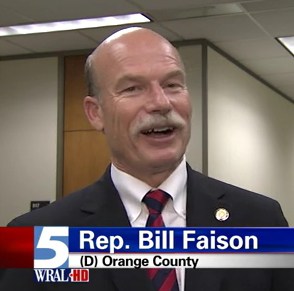
The bill is pending in the House Ways and Means Committee, whose chairman, Rep. Bill Faison, sees the moratorium as an attempt to protect the powerful cable monopoly. Faison, a Democrat who represents Orange and Caswell counties, is meeting Wednesday with representatives of the telecommunications industry and local government leaders to discuss options.

Senator David Hoyle (D-Gaston) couldn’t get his Senate bill the time of day in the North Carolina House, so he attached it to a popular House bill to extend the e-NC Authority — North Carolina’s initiative to promote better broadband.  Now a good bill is infected, like a virus, by Hoyle’s tireless work on behalf of Time Warner Cable.

Hoyle, who has cashed checks from the cable and phone lobbies for years, is proud of sticking it to consumers in his state.

“I want my bill passed. They want their bill passed. So, if they want theirs, they’re going to have to take up mine,” Hoyle told WRAL-TV.

Hoyle, who plans to retire at the end of his term, faces no consequences from Gaston County voters, so he doesn’t care if his bill effectively protects incumbent cable companies who have raised their rates far above the rate of inflation for years.  Hoyle wants a one year moratorium to stop local communities from building their own broadband networks to improve service to residents and deliver lower pricing.

One community that escaped Time Warner’s relentless rate hiking is Wilson, where a municipal broadband project called Greenlight effectively forced a red light on Time Warner’s plans to increase rates in the community earlier this year.  Wilson was the only city we could find in the state where rates remained the same, and residents have Greenlight and city officials to thank for that.

Hoyle and his friends at the cable company are outraged at the thought of North Carolina communities stopping the rate hike gravy train.  After all, less money for Time Warner equals less money for campaign contributions to friendly politicians.

“Do we, as government, want to get in competition with private enterprise and my answer to that is no, and I am passionate about that,” Hoyle said.

If only his constituents could afford to pay him enough to be passionate about their interests.

Rep. Bill Faison, (D-Orange), is among the lawmakers sponsoring the broadband stimulus bill, which was a sure thing until Hoyle got his hands on it.  Faison called Hoyle’s amendments anti-competitive and pro-rate increase, both bad for North Carolina consumers.

“I decide what gets put on the agenda,” Faison told the Charlotte Observer. “It’s unlikely that any bill with a moratorium in it has a chance of getting through the House.”

Hoyle’s strenuous efforts to perform legislative gymnastics on behalf of cable and phone companies have not gone unnoticed by Faison.  He suggested Hoyle’s latest move represented an “interesting political maneuver,” but he doesn’t intend to sit still for it.  Faison and other pro-consumer legislators are meeting this week to consider how to strip Hoyle’s nonsense out of HB1840 and shove it in the nearest trash can.  For comparison purposes, here is the original bill.

Consumers show no love for Time Warner.  Charlotte residents had choice words for their cable company when they learned it was behind the push to stop municipal competition:

Time Warner is about to pay for being jerks to their customers, and it’s high time.

Time Warner cable: I hope they rot. It’s about dang time that municipal governments started providing free broadband to their citizens. The fact that multiple households need their own wireless routers, broadcast on different channels, is a totally inefficient use of technology. Companies like TW Cable want to keep citizens constrained, which runs totally opposite to the promise of the Internet. Find out which boneheads in the Senate are pushing for this and vote them out. They’re clearly more interested in money from the cable companies than in serving their constituents.

For cable to argue unfair competition is laughable when they operate a virtual monopoly.

Instead of fighting this legislation, why doesn’t Time-Warner Cable focus on making its service so reliable and reasonably priced that no city or county will seriously consider managing this themselves? I find it hard to believe any local government could actually run this type of technology more efficiently than a company with TWC’s resources can, but the threat of competition helps keep TWC on their toes. P.S. I lost my TWC signal for 90 minutes this past Sunday right in the middle of the US Open and Brazil-Ivory Coast World Cup game. Nice.

A vote on the House measure is imminent, so North Carolina consumers should be contacting the House Committee members listed below and urge them not to allow any part of Hoyle’s language to remain in HB1840.

[flv width=”576″ height=”344″]http://www.phillipdampier.com/video/WRAL Raleigh NC Broadband Bill Debate 6-28-10.flv[/flv]

WRAL-TV in Raleigh discusses Hoyle’s language and how it ended up in a broadband stimulus request bill.  (2 minutes)

House Ways and Means/Broadband Connectivity Committee

County Name Telephone # E-Mail Party
Mecklenburg Kelly Alexander 919-733-5778 [email protected] Democrat
Nash, Hallifax Angela R. Bryant 919-733-5878 [email protected] Democrat
Rowan Lorene Coates 919-733-5784 [email protected] Democrat
Orange, Caswell Bill Faison 919-715-3019 [email protected] Democrat
Burke, McDowell Mitch Gillespie 919-733-5862 [email protected] Republican
Mecklenburg Jim Gulley 919-733-5800 [email protected] Republican
Haywood, Jackson, Macon, Swain R. Phillip Haire 919-715-3005 [email protected] Democrat
Brunswick, Columbus Dewey L. Hill 919-733-5830 [email protected] Democrat
Catawba Mark K. Hilton 919-733-5988 [email protected] Republican
Franklin, Hallifax, Nash John May 919-733-5860 [email protected] Democrat
Allegheny, Surry Sarah Stevens 919-715-1883 [email protected] Republican
Mecklenburg Thom Tillis 919-733-5828 [email protected] Republican
Edgecomb, Wilson Joe P. Tolson 919-715-3024 [email protected] Democrat
Durham, Person W. A. (Winkie) Wilkins 919-715-0850 [email protected] Democrat

This article contains the following correction since original publication: Our original article did not fully explain the bill to which Sen. Hoyle attached his municipal broadband moratorium. For clarification purposes, that bill is HB1840, legislation to extend the authority of the e-NC Authority. Our original article carried WRAL-TV’s language that said the bill provided for “$5 million in federal stimulus to help provide high-speed Internet access in parts of the state.” While that would be nice, it wasn’t an accurate characterization the bill’s intent.  Our apologies for the error.

Obama Administration Seeks to Free 500Mhz of Spectrum to Bolster Wireless Broadband, But Will It?

Phillip Dampier June 29, 2010 Competition, Editorial & Site News, Public Policy & Gov't, Video, Wireless Broadband Comments Off on Obama Administration Seeks to Free 500Mhz of Spectrum to Bolster Wireless Broadband, But Will It?

Obama

President Obama signed a memorandum this morning that will free up 500Mhz of government and privately-owned spectrum over the next decade to double the amount of wireless broadband capacity in the United States.

The Obama Administration claims the newly available spectrum will throw a rescue line to overburdened wireless networks that are facing a spectrum crunch.  The White House estimates wireless data usage will explode — growing between 20 and 45 times in the next five years.

President Obama:

Few technological developments hold as much potential to enhance America’s economic competitiveness, create jobs, and improve the quality of our lives as wireless high-speed access to the Internet.  Innovative new mobile technologies hold the promise for a virtuous cycle — millions of consumers gain faster access to more services at less cost, spurring innovation, and then a new round of consumers benefit from new services.  The wireless revolution has already begun with millions of Americans taking advantage of wireless access to the Internet.

Expanded wireless broadband access will trigger the creation of innovative new businesses, provide cost-effective connections in rural areas, increase productivity, improve public safety, and allow for the development of mobile telemedicine, telework, distance learning, and other new applications that will transform Americans’ lives.

In practical terms, the reallocation of spectrum could spark a battle between the current spectrum holders — often government agencies and private UHF television stations — and the government.  Parts of the plan will require Congressional approval, a sure-fire guarantee that wireless providers will have to write some more checks to their astroturf and sock puppet friends to help sell the benefits of the plan to a wary Congress.

Since most of the spectrum would likely be sold at auction, the proceeds could deliver the administration a tidy sum to either reduce the federal budget deficit and/or fund broadband initiatives.

But what might seem at first like a win-win might not turn out that way in the end.

We have the following concerns:

Past spectrum auctions have largely benefited incumbent wireless carriers, especially companies like AT&T and Verizon who have the deep pockets that guarantee successful bids at auctions.  Both wireless carriers are not actually using all of the spectrum they already acquired in earlier auctions and have essentially warehoused those frequencies, particularly in rural areas, to keep them out of the hands of other companies that could deliver service.  FCC requirements that auction winners actually utilize their acquired spectrum have been so lax as to be laughable.  Carriers can easily satisfy FCC requirements building only in urban areas and leaving large swaths of the countryside unserved. The FCC must set rules that auction winners use their allotments in both rural and urban areas, or face fines or forfeiture.

Setting aside some frequency blocks for smaller providers and would-be competitors is critical.  In today’s mobile wireless marketplace two companies are superpowers and then there is everyone else.  Both AT&T and Verizon have the resources to outbid virtually anyone.  Allowing blocks of frequencies to be reserved exclusively for new competitors would bolster competition and give consumers more choices.  Those frequencies must be sold in a block that is identical nationwide — not leftover spectrum running through several frequency bands.

Providing additional spectrum for wireless broadband isn’t a problem, but with complaints about wireless service providers growing, along with consumers’ bills, now is the time to reform wireless for the benefit of consumers.  Let’s make it a “win” for everyone.

[flv width=”640″ height=”500″]http://www.phillipdampier.com/video/Bloomberg Obama Proposes to Double Airwaves for Mobile Web Access 6-28-10.flv[/flv]

Bloomberg News explains the controversy behind the transfer of spectrum from the government and broadcasters to the mobile broadband industry.  (2 minutes)

Search This Site:

Contributions:

Recent Comments:

Your Account:

Stop the Cap!