Home » Competition » Recent Articles:

Handing Time Warner Cable an Indefinite Franchise In Return for Wiring Rural South Carolina Towns?

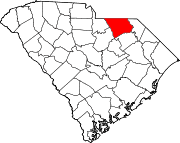
McBee, part of Chesterfield County, S.C.

Residents of McBee, S.C., have been without cable and Internet service since last November, when rural cable provider Pine Tree Cablevision closed its doors and turned the services off in scores of small communities in New Hampshire and South Carolina.  For residents of Lamar, another South Carolina community served by Pine Tree, it wasn’t much of a service to lose.  Pine Tree’s “broadband” in Lamar was limited to 50kbps, with the entire community’s Internet delivered on a single AT&T-provided T-1 line.

But even the loss of a company like Pine Tree was immediately felt by area residents and businesses, now without cable TV and Internet service.  In Lamar, December 10, 2009 will remain a day of infamy:

“I was in the middle of submitting reports to SLED (the State Law Enforcement Division) when [Pine Tree pulled the plug and the cable and broadband system] went down,” Police Chief Charles Woodle told SC Now. Woodle now goes home twice a day to check his work e-mails.

The town’s water office closed December 21st because the town clerk could not upgrade the software needed to process water bills.

In Elloree, residents and local officials found out about Pine Tree’s financial problems when channels started dropping off the cable system, followed by the complete loss of service.  In December, customers mailing payments to Pine Tree had them returned by the post office undelivered.

The now defunct Pine Tree Cablevision used to serve rural communities in New Hampshire and South Carolina.

Elloree Town Clerk Chasity Canaday told The Times and Democrat Pine Tree’s ultimate demise was a travesty.

“It shows a remarkable lack of professionalism to cut services from customers without any prior notice,” Canaday said. “For the majority of our residents, their notice that the cable service was terminated came when their televisions quit working.”

Despite claims from Pine Tree officials that new owners would take over the business they left behind, Canaday says that just isn’t true.

“It has been very, very difficult to get somebody else,” she said. “There is not a large enough customer base to entice a new company to come in. Most people have already switched to satellite.”

The newspaper noted after contacting 20 other municipalities, Canaday said most rural towns have no local cable provider and instead rely on satellite service.

Throughout rural South Carolina, tiny cable companies serving just a few hundred subscribers have come and many more have gone.

The town of Cameron lost Almega Cable about three years ago.  Other communities have said goodbye to operators like Brookridge Cable, SRW Inc., South Carolina Cable Television, Pine State Management Co., and Mid Carolina Cable.

In most cases, satellite television’s ability to deliver hundreds of digital signals it an easy choice over cable systems delivering only 2-3 dozen channels.  Because of a lack of investment to expand rural cable lineups, customer erosion has left many systems financially untenable.  One Texas cable system had just a dozen paying customers left when they called it quits.

That’s why the community of McBee is creating a lot of buzz in rural South Carolina.  They reportedly have Time Warner Cable, the nation’s second largest cable operator, in discussions to take over where Pine Tree left off, restoring cable and broadband service for a community of just 700 people.

But that service may come with a significant price — an indefinite franchise agreement that could eventually threaten the area’s local, customer-owned telephone cooperative.

Town Attorney Tony Floyd says Time Warner Cable in eager to expand into rural areas.  But the question is, will McBee concede too much just to attract a cable company?

“This is a long term contract,” he told SC Now. “If you grant a franchise, Time Warner will be able to keep competition out.”

Newly re-elected councilman Shilon Green is the biggest proponent for the deal.  He will propose an ordinance granting a franchise to the cable company at a town hall meeting to be held tomorrow.  He says Time Warner will bring better cable and broadband service to the area and introduce competition for phone service with their “digital phone” product.

McLeod
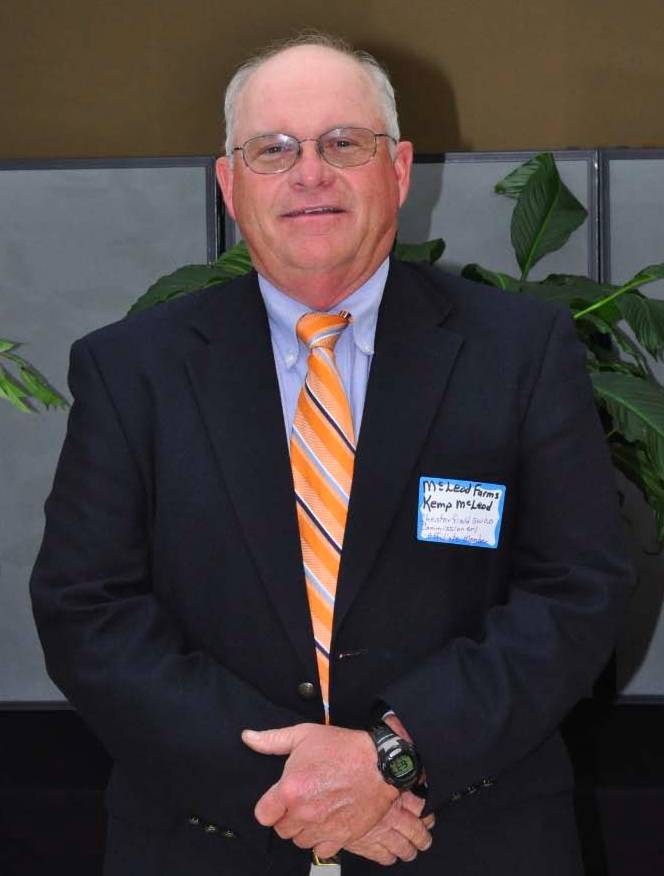
But some other council members are concerned about Time Warner Cable’s impact on the area’s local, customer-owned phone company, Sandhill Telephone Cooperative.

Councilmen A.C. “Kemp” McLeod said he’s afraid the cable company could bully the co-op out of business.

“I know Sandhill is expanding their service into the TV business, and they’ve been very good serving rural communities,” McLeod told the newspaper. “I’d like to check with them first.”

“If [Time Warner] wants to come in [and] lowball this area, they can do it, then run our small business out of business,” McLeod said. “A big company can make it look good, make it look appealing, then once they have the market and run the small guy out, then they can raise the rates. At Sandhill, we have representation.”

Rural communities are often bypassed by cable providers because they lack enough closely spaced customers to make the infrastructure costs worthwhile.  Where smaller communities do cluster most of their population inside the town limits, cable systems have been built.  Many are independently owned and operated by small providers because larger companies have shown no interest in serving areas with just a few hundred potential customers.

That has left town leaders with the prospect of offering generous incentives to attract cable operators.  In addition to franchise agreements that never expire, some communities offer significant tax breaks and other concessions to encourage cable operators to bring service to area residents.  Despite complaints from big city residents that Time Warner is hardly benevolent, its brand and reputation do mean a lot in rural areas burned by Pine Tree’s sudden demise last year.

Green hopes the cable giant will bring a level of cable service not seen before in towns like McBee.

“A little competition is good,” Green said.

Telstra: You Don’t Need Virtually Unlimited Broadband When You Can Have Our Overpriced Service

Phillip Dampier October 11, 2010 Broadband Speed, Competition, Data Caps, Editorial & Site News, Telstra Comments Off on Telstra: You Don’t Need Virtually Unlimited Broadband When You Can Have Our Overpriced Service

Bigpond is Telstra's broadband service

Telstra, Australia’s dominant telecommunications company, is openly concerned about the prospect of Australians finally shedding themselves from Internet Overcharging schemes like low usage caps and throttled speed.  But instead of doing away with these profit-boosting schemes themselves, they’ve decided to argue that consumers don’t need the country’s newest 1TB usage allowance plans, calling them publicity gimmicks.

Of course, Telstra doesn’t offer a 1TB plan.

Heath Gibson tries to explain away Telstra’s Internet Overcharging in a company blog post:

A terabyte is a lot of data. One provider claimed it’s enough to download about 200 DVD quality movies and still have quota left over.  Whilst my inner geek is salivating at the possibilities, the analyst in me is questioning just how many people currently need, or could even use, a terabyte of data each and every month.

Gibson

Gibson believes the average Australian is better off plans like Telstra’s 50GB DSL service, running $49.30US per month on a two-year contract.  When all the charges and fees are totaled, Australians will pay Mr. Gibson’s company $2,364.50US for two years of service that slows to 64kbps once your monthly 50GB allotment is used up.

“Terabyte plans will have appeal to a special niche and demand for these plans will no doubt grow over time,” Gibson wrote. “But for now my advice to most people would be to look past the attention grabbing headline, check how big a plan you really need and keep in mind all the other things that go in to making a great ISP.”

Australians have already made that decision and they have been voting with their feet to other providers.  On the same day Gibson was dismissing the competition, Telstra CEO David Thodey was responding to it, recognizing the company has lost significant market share because of high prices and poor customer service.

He told The Advertiser improvements were underway.

“The focus on customer service is something that is innate within Telstra, but our delivery leaves a lot to be desired,” he said.

So is their pricing.  Gibson’s views defending rationed Internet service are similar to the arguments broadband providers in the States use to defend their failure to keep up in the global broadband speed race.  Only instead of dismissing the need for unlimited service, American providers try and convince customers they don’t need the faster speeds they don’t deliver.

Verizon’s LTE Network On The Way, But At What Price? (And Buffalo Is Upset They’re Not on the List)

Verizon hopes to herd its smartphone owners onto limited use data plans on its new LTE high speed network

Verizon this week unveiled a list of 38 major cities where the company’s much-faster LTE wireless broadband service will launch by year’s end.  Dubbed by some as the “list of cities with NFL franchises,” Verizon’s choices delighted some, but puzzled others.

But before the celebrations get out of hand, incoming Verizon CEO Lowell McAdam warned customers need to prepare themselves, and their wallets, for major price changes.

Specifically, the company intends to treat its new 4G network, with top speeds of 5-12Mbps downstream and 2-5Mbps upstream, as a premium product with a premium price.  It comes complete with a classic Internet Overcharging scheme.

“We think there’s a place for unlimited plans,” McAdam announced, “but we think that over time, because we have finite resources, our customers are going to have to shift to a pay-as-you-use model. I would say that clearly over time we will be migrating to a bucket-of-megabytes” price schedule.

Verizon’s finite resources are more infinite than those of its customers, however.

Much like its partner-in-pricing – AT&T, Verizon is preparing to ditch its unlimited data plan for smartphone customers.  Despite the fact its new LTE network will offer a more efficient network experience for both Verizon and its customers, the nation’s largest wireless carrier wants limits on how much data customers can exchange over their new network, with overlimit fees for those who use too much.

Exact pricing has yet to be announced.

Amidst the flurry of excitement over McAdam’s appearance at the San Francisco wireless industry conference, yet more rumors of the forthcoming arrival of a Verizon iPhone also made headlines.  Apple is reportedly releasing a CDMA version of its popular phone soon, and despite the fact there are other CDMA networks in the world, reporters presumed it must be intended for the American market.

After the press conference, the list of cities to get Verizon’s new LTE network became a hot topic for debate.  In western New York, only Rochester made the cut.  For residents in Buffalo, who would like to remind Verizon they have an NFL team, the slight did not go unnoticed.  It made news on the city’s most watched nightly local newscast.

But those of us in Rochester remind our friends in the Queen City they have Verizon FiOS while we are stuck in a broadband backwater with Frontier Communications.  (Besides, the Buffalo Bills training camp is in Rochester.)  The broadband gap between the two cities could have made Rochester a ripe target for Verizon, assuming customers can afford the price of the service plan.

Folks in Austin noted they are not on Verizon’s list either, despite the Texas city’s high-tech-embracing reputation.  Houston, the Dallas-Ft. Worth Metroplex, and San Antonio did make the list.  But fear not Austin, you will be able to use LTE at the Austin-Bergstrom International Airport.

For existing Verizon customers in the chosen places, the imminent arrival of 4G may stall customers from upgrading phones until new LTE-capable models arrive in time for the holidays.  But the Data Grinch That Stole Flat Rate Wireless may still be confounded by the number of customers who let their contracts expire and stick with their existing phones, refusing to expose themselves to mandatory, overpriced data plans.

Verizon Wireless 4G LTE Initial Major Metropolitan Area Deployment

Akron, Ohio
Athens, Georgia
Atlanta, Georgia
Baltimore, Maryland
Boston, Massachusetts
Charlotte, North Carolina
Chicago, Illinois
Cincinnati, Ohio
Cleveland, Ohio
Columbus, Ohio
Dallas-Fort Worth Metroplex, Dallas, Texas
Denver, Colorado
Fort Lauderdale, Florida
Houston, Texas
Jacksonville, Florida
Las Vegas, Nevada
Los Angeles, California
Miami, Florida
Minneapolis/Saint Paul, Minnesota
Nashville, Tennessee
New Orleans, Louisiana
New York, New York
Oakland, California
Oklahoma City, Oklahoma
Orlando, Florida
Philadelphia, Pennsylvania
Phoenix, Arizona
Pittsburgh, Pennsylvania
Rochester, New York
San Antonio, Texas
San Diego, California
San Francisco, California
San Jose, California
Seattle/Tacoma, Washington
St. Louis, Missouri
Tampa, Florida
Washington, D.C.
West Lafayette, Indiana
West Palm Beach, Florida

Verizon Wireless 4G LTE Initial Commercial Airport Deployment (Airport Name, City, State)

Austin-Bergstrom International, Austin, Texas
Baltimore/Washington International Thurgood Marshal, Glen Burnie, Maryland
Bob Hope, Burbank, California
Boeing Field/King County International, Seattle, Washington
Charlotte/Douglas International, Charlotte, North Carolina
Chicago Midway International, Chicago, Illinois
Chicago O’Hare International, Chicago, Illinois
Cincinnati/Northern Kentucky International, Covington, Kentucky
Cleveland-Hopkins International, Cleveland, Ohio
Dallas Love Field, Dallas, Texas
Dallas/Fort Worth International, Fort Worth, Texas
Denver International, Denver, Colorado
Fort Lauderdale/Hollywood International, Fort Lauderdale, Florida
George Bush Intercontinental/Houston, Houston, Texas
Greater Rochester International, Rochester, New York
Hartsfield-Jackson Atlanta International, Atlanta, Georgia
Honolulu International, Honolulu, Hawaii
Jacksonville International, Jacksonville, Florida
John F. Kennedy International, New York, New York
John Wayne Airport-Orange County, Santa Ana, California
Kansas City International, Kansas City, Missouri
La Guardia, New York, New York
Lambert-St. Louis International, St. Louis, Missouri
Laurence G. Hanscom Field, Bedford, Massachusetts
Long Beach/Daugherty Field, Long Beach, California
Los Angeles International, Los Angeles, California
Louis Armstrong New Orleans International, Metairie, Louisiana
McCarran International, Las Vegas, Nevada
Memphis International, Memphis, Tennessee
Metropolitan Oakland International, Oakland, California
Miami International, Miami, Florida
Minneapolis-St. Paul International/Wold-Chamberlain, Minneapolis, Minnesota
Nashville International, Nashville, Tennessee
New Castle, Wilmington, Delaware
Newark Liberty International, Newark, New Jersey
Norman Y. Mineta San Jose International, San Jose, California
North Las Vegas, Las Vegas, Nevada
Orlando International, Orlando, Florida
Orlando Sanford International, Sanford, Florida
Palm Beach International, West Palm Beach, Florida
Philadelphia International, Philadelphia, Pennsylvania
Phoenix Sky Harbor International, Phoenix, Arizona
Phoenix-Mesa Gateway, Mesa, Arizona
Pittsburgh International, Pittsburgh, Pennsylvania
Port Columbus International, Columbus, Ohio
Portland International, Portland, Oregon
Rickenbacker International, Columbus, Ohio
Ronald Reagan Washington National, Arlington, Virginia
Sacramento International, Sacramento, California
Salt Lake City International, Salt Lake City, Utah
San Antonio International, San Antonio, Texas
San Diego International, San Diego, California
San Francisco International, San Francisco, California
Seattle-Tacoma International, Seattle, Washington
St. Augustine, Saint Augustine, Florida
St. Petersburg-Clearwater International, Clearwater, Florida
Tampa International, Tampa, Florida
Teterboro, Teterboro, New Jersey
Trenton Mercer, Trenton, New Jersey
Washington Dulles International, Dulles International Airport, Washington, D.C.
Will Rogers World, Oklahoma City, Oklahoma
William P. Hobby, Houston, Texas

[flv width=”640″ height=”500″]http://www.phillipdampier.com/video/Verizon Wireless LTE Announced 10-7-10.flv[/flv]

Verizon Wireless’ announced LTE network was a common topic on local newscasts in several cities. We include WIVB-TV in Buffalo, noting that city didn’t make the cut, WCVB-TV in Boston which spent plenty of time on the resurgence of the rumored Verizon iPhone, WLFI-TV in West Lafayette, Indiana which discussed the network’s implications for Purdue University students, and a promotional video from Verizon itself interviewing visitors to a Boston pizzeria gushing over the speed of Verizon’s newest technology. (5 minutes)

Cox Rolls Out Usage Meter for Limited Usage, But Currently Has Few Plans to Enforce It

Phillip Dampier September 30, 2010 Broadband Speed, Competition, Cox, Data Caps 4 Comments

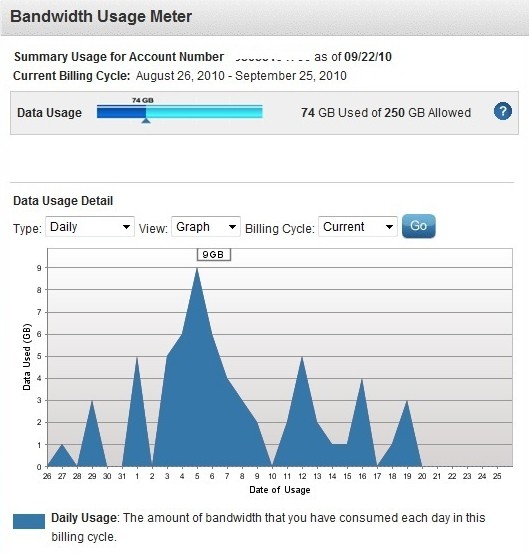
Cox Communications has rolled out a usage meter for its broadband customers, starting with its Gulf Coast market in northwest Florida, but launching elsewhere very soon according to Cox officials.

Broadband Reports readers first noticed the usage meter popping up on Cox’s website under “My Connection” — an account control panel.

The new usage meter accompanies usage limits Cox has had on its broadband tiers for more than a year — limits that have rarely been enforced.

Cox has traditionally left their broadband customers alone unless consumption creates a technical problem or begins to impact other customers.  The usage allowances range from 30-400GB, depending on the speed tier, and they are buried on Cox’s website.

Most Cox customers appear unconcerned about the new usage meter, so long as Cox continues its “soft cap” program that only targets users that create issues for others on its network.  But if the company begins to impose overlimit fees, or begins hard-enforcement of its caps, some customers are prepared to leave.

“AT&T or Knology are just a phone call away in many Cox cities,” writes our reader Kevin.  “If Cox starts a full scale overcharging scheme with customers, we’ll just switch.”

Cox is the nation’s fifth largest pay television provider with just over 5,000,000 customers.

Déjà Vu: Is Frontier the Next FairPoint? – Bill Bungling: $671 for Dial Up Internet, “F” Rating from BBB

Stage two of the nightmare is billing problems, and one West Virginia family discovered a phone bill they couldn't imagine possible.

Frontier Communications’ performance in West Virginia is starting to resemble northern New England’s never ending nightmare with FairPoint, the phone company that couldn’t manage landline service for customers in Maine, New Hampshire and Vermont and ended up in bankruptcy.  Things have gotten so bad, Frontier Communications now earns an “F” rating from the Better Business Bureau, called out specifically for failing to respond to complaints filed against the provider, failure to resolve the complaints they did acknowledge, and government action taken against the company for deceptive business practices.

Stop the Cap! reader Ralph in West Virginia drops us a line to share the latest progress the company is making in his part of West Virginia, or rather the lack thereof, starting with his own personal story:

The afternoon of  Thursday Sep. 2nd, our phones were out of order for awhile but were working by 4pm.  The DSL was still out so I waited to see if they’d get it fixed later that evening.  When it was still out Friday afternoon, I called to report it and asked if they had a reported outage for the area.  Their answer was no, and they proceeded to ask me to reset the modem and perform some additional diagnostic testing.

That didn’t “fix” it so they filed a trouble ticket and told me a technician would be out to check the outside wiring and, if needed, give me a new modem.  Frontier never showed up, so I called again and was left on hold for 30 of the 35 minutes that phone call lasted. I was finally told that it was a known outage affecting 12 people in the area.  No repairs were made on Sunday so I called on Monday and was told the problem now affected 16 people and they had no idea when it would be fixed.  It was finally fixed five days after initially reporting the outage, and nobody bothered to explain why it took so long.  I was later bemused to find an article in the weekly county paper that noted the outage was now up to impacting 20 people.

In your earlier report about Frontier, a spokesman for the company claimed the company follows a protocol about calling customers with service problems to see if the issues were resolved, but that call didn’t come until Sep. 8th, a full 24 hours after our DSL service was restored.  Keep up the good work, maybe Frontier and other providers will realize that the system is broken and we do want and need high speed Internet.

Ralph is not alone in having trouble with Frontier.  Just as Stop the Cap! reported with FairPoint’s failure in New England, service problems are just the beginning of the “fun” for transitioned customers.  Billing problems come next, and Frontier followed through in spades for one West Virginia family.

Meet Johna and Paul Snatchko, who are being billed $671.45 for dial-up Internet service calls by Frontier.  Not only did Frontier fail to deliver broadband service to the northwestern part of the state, now the Snatchko family has had to quit using dial-up Internet as well because the Snatchko’s claim Frontier made accessing the service a long distance call.

“When we switched from Verizon to Frontier, they said nothing will change,” Paul told WTOV News. “Well, there’s change.”

Despite selling the Snatchko family “unlimited long distance” service, Frontier still charged every call to their ISP at the regular long distance rate.  Why use dial-up in the first place?

“In this part of West Virginia, you’re very limited in your service,” Paul explained. “Dial-up is it for us. We’ve tried everything else. The only thing we could get was dial-up.”

The family also endured another Frontier specialty — the constantly changing promotional offers that are poorly explained by the company’s customer service representatives.

“They said it doesn’t include their package deal with the computer,” Johnna said, referring to a common Frontier promotion for a free netbook in return for a bundled package of services on a two year contract. “The first couple months it did and now it doesn’t include it.”

Frontier Communications earned an "F" rating from the Better Business Bureau

Frontier’s spokesman for the area, Bill Moon, made yet another TV appearance to try and explain it all away.

“There are billing problems that can happen anytime you have a switch over like that,” he told WTOV. “It’s probably a simple mistake on this particular customer’s bill, something that can be rectified pretty easy.”

Apparently not. Frontier told the family they have received two credits already and that is the last time the company is willing to provide them.

Despite the increasing frequency and seriousness of complaints now becoming a staple on the nightly news, Moon said incidents like this are rare.  He told the station out of more than 60,000 lines of service, they’ve had about 10 problems at most.

West Virginians are also waking up to the realization that Frontier’s promised “fiber upgrades” are little more than bait and switch, and they’ll never be able to directly access the fiber the company is installing.  As Stop the Cap! has reported previously, Frontier’s residential customers are more likely to encounter beneficial fiber in their morning breakfast cereal than from Frontier Communications.

The Charleston media is abuzz about the fact taxpayers are footing the bill for a $40 million fiber network that the company will own free and clear, and charge top dollar prices to access.  Citynet, one of Frontier’s competitors, blew the whistle over Frontier’s much-ballyhooed fiber expansion that is actually intended to serve public institutions, wholesale customers, and Frontier’s “middle-mile” network — not directly benefit consumers:

[…]Once Frontier spends the $40 million of taxpayer money to expand its network, it will be the sole owner of that network and the State will have no ownership rights. Thus, Frontier’s monopoly in the State of West Virginia will have been financed with taxpayer money.

Frontier will then sell services to state entities such as schools and government offices at the existing exorbitant prices. Those prices will never decrease, because no competitor can afford to spend $40 million or more of its own capital to build out its network.

Citynet, however, has provided the state with a plan for the expenditure of the taxpayer money that will expand broadband access in the state while at the same time lowering the cost of broadband access by 70 percent to 90 percent.

It is true that competitors, like Citynet, have existing contracts with Frontier for access to fiber facilities, but given that Frontier’s new network will be built with your money, it is Citynet’s position that those facilities should be made available to competitors at a nominal cost so that competitors can make their services available to the public at large at much lower prices.

Frontier has flatly refused Citynet’s proposal and intends to require competitors to pay inflated prices for access to fiber facilities it built for free.

As currently structured, the state’s plan for expanding broadband will do nothing more than expand Frontier’s monopoly, and will not address the fundamental problem of the high cost of broadband access.

[flv width=”640″ height=”380″]http://www.phillipdampier.com/video/WTOV Steubenville Speaking Too Soon – Frontier’s Customers Still Complaining 9-15 and 9-28-10.flv[/flv]

WTOV-TV thought Frontier’s problems were behind them when they ran the first of two stories about the company Sep. 15th.  But then they met the Snatchko family and learned they spoke too soon.  Last night, they tried to determine how a West Virginia family could be charged nearly $700 for dial-up Internet service.  (4 minutes)

Search This Site:

Contributions:

Recent Comments:

Your Account:

Stop the Cap!