Home » Broadband Speed » Recent Articles:

North American Broadband Still Mediocre: U.S. Just Below Lithuania, Canada Among the “Poorest” of Advanced Countries

Phillip Dampier October 3, 2009 Broadband Speed 1 Comment

The evidence just keeps on coming that broadband in North America is not what it should be, remaining behind several Asian and European countries and not prepared for the broadband future.

Researchers at Saïd Business School at the University of Oxford and the University of Oviedo’s Department of Applied Economics, supported by Cisco (who does have an agenda to sell the equipment to improve service) analyzed almost 24 million speed tests measured by Speedtest.net for broadband customers between May and July of this year.

Both the United States and Canada, which consider themselves world leaders in broadband, might be surprised to learn they are behind more than a dozen nations, including one former Soviet republic.

The good news for the United States is that improvements have been made, primarily by cable and fiber optic broadband earning a bigger market share from slower speed telephone company DSL service.  The bad news for Canada is that Internet service there isn’t seeing the same degree of improvements, as vast parts of the country are stuck with DSL service for wired broadband indefinitely.

The CBC reported the results as negative:

Canada has some of the poorest-quality broadband among advanced countries, according to a study of global internet infrastructure.

Canada placed 25th out of 34 countries in the University of Oxford’s ranking of innovation economies, far behind top-rated South Korea and just ahead of Australia and the United States.

Some key findings from the study appear below….

… Continue Reading

“The Verizon FiOS of Hong Kong”: Fiber to the Home 100Mbps Service $35/Month

Phillip Dampier September 27, 2009 Broadband Speed, Competition, Recent Headlines, Video 3 Comments
HK Broadband offers 100% Fiber Optic service to residents of Hong Kong

HK Broadband offers 100% Fiber Optic service to residents of Hong Kong

Hong Kong remains bullish on broadband.  Despite the economic downturn, City Telecom continues to invest millions in constructing one of Hong Kong’s largest fiber optic broadband networks, providing fiber to the home connections to residents. City Telecom’s HK Broadband service relies on an all-fiber optic network, and has been dubbed “the Verizon FiOS of Hong Kong” for its dramatically faster broadband speeds.

Hongkongers have had several choices for broadband service over the years, most offering traditional DSL service throughout the Hong Kong Special Administrative Region (Hong Kong is a territory of the People’s Republic of China). Priced around $32 a month, the most popular service choice offers residents 6Mbps downstream speeds and 0.6Mbps upstream. Some modern residential multi-dwelling units have a more advanced from of DSL service offering up to 18Mbps downstream and 1Mbps upstream.

HK Broadband represents a major competitive threat for traditional DSL service in Hong Kong, because the fiber optic network provides customers with faster speeds ranging from 25Mbps-1000Mbps.  The company also offers a bundle including broadband, a Voice Over IP telephone service, and IPTV (cable television) service with 80+ channels. HK Broadband offers symmetrical speeds on their network, which means your upload speed is as fast as your download speed. The company has pummeled its telephone network-reliant competitors with humorous ads that call out DSL’s slower speeds, particularly for uploads.

<

p style=”text-align: center;”>[flv width=”450″ height=”360″]http://www.phillipdampier.com/video/HKBN Ad – Ants.flv[/flv]
HK Broadband “Ants” Advertisement: Ten Kung-Fu-Fighting-Ants, representing the downstream speed of a traditional DSL broadband connection, are shown ganging up on a single helpless ant, who represents the weaker upstream speed, demonstrating how traditional DSL services typically offer upload bandwidth that is only a 10th of the download speed.

HK Broadband offers 100Mbps service for $35 per month, just a few dollars more than DSL. But there is an interesting catch. HK Broadband, like other providers in Hong Kong, cope with inadequate international broadband connections. Instead of engaging in Internet Overcharging schemes like usage caps, such as those found in Australia and New Zealand, the company has instead capped the speed for websites located abroad at 20Mbps for both uploads and downloads. The 100Mbps speed is reserved for domestic websites. Some subscribers note they couldn’t get speeds much faster than that when accessing overseas sites regardless of the cap, so it has not presented a major problem. As connectivity improves, so should the speeds, according to company officials.

The company also has a unique residential service guarantee — they promise that you will receive at least 80% of the speed you subscribe to, or they refund double your money back. Of course, this applies only to connections made to websites within Hong Kong.

When you’ve got it, flaunt it, and HK Broadband’s fiber speeds are the hallmark of their marketing campaigns.

[flv width=”480″ height=”284″]http://www.phillipdampier.com/video/HKBN 100Mbps Ad.flv[/flv]

HK Broadband “Fat Pipe” Advertisement: Real life characters representing Internet content force themselves into a tiny pipeline, representing DSL, but are later liberated by a wide open fiber optic pipeline they can run through with room to spare.

The investment by City Telecom in their fiber optic broadband network has brought impressive financial results to the company, with customers taking more of their telecommunications business in HK Broadband.  That increases the average revenue per subscriber.  The company has also aggressively increased the level of investment to build out its network, producing an economy of scale that has reduced the costs to wire new subscribers.

Traditional Wall Street investors have often been unimpressed with expensive technology upgrades undertaken by telecommunications companies.  Notably, Verizon Wireless’ FiOS fiber to the home network was pummeled by several investor groups who complained Verizon was spending too much on their fiber network, even though their costs to wire each new customer has dramatically decreased with time.  City Telecom has turned that criticism on its head.  Among many of its competitors, City Telecom is the second most profitable, earning an 11% profit margin.

China Securities has showcased the company, noting it enjoys subscriber growth at levels greater than industry growth, is positioned with technology that assures it of long term stability in revenue and income growth, and despite all of the investments the company has made, retains a strong free cash flow.  Most of all, it has very happy subscribers who enjoy a well regarded broadband service, available at fast speeds and a reasonable price.

The incumbent telephone company’s network of copper wire, supporting lower speed DSL service, is not in the same position.  HK Broadband brought Alexander Graham Bell back to life to chastise the notion that a network more than 100 years old is appropriate for 21st century broadband.

[flv width=”480″ height=”360″]http://www.phillipdampier.com/video/HK Broadband Bell Ad.flv[/flv]

HK Broadband “Alexander Graham Bell” Advertisement: The inventor of the telephone makes a “special-guest” appearance pointing out the fact that the 100 year old telephone network wasn’t designed for today’s broadband connections. This is set in a traditional Chinese Hell-like environment to imply the hellish experience of surfing the Internet with a slow connection.

<

p style=”text-align: left;”>HK Broadband has not escaped the attention of its competitors, of course.  PCCW Limited, Hong Kong’s dominant telephone company, has been aggressively marketing its own fiber, DSL, and wireless broadband products, not allowing HK Broadband to win without a fight. PCCW has had to play catch-up with HK Broadband’s aggressive fiber deployment, which focused on residential and business customers from the outset.  PCCW’s fiber network was primarily intended for business customers, and now the company has been rapidly expanding their fiber network to residential customers.  Today, where PCCW fiber is available, customers can choose from 18Mbps, 30Mbps, 100Mbps, or 1000Mbps service plans.  Many PCCW customers will also be aggressively marketed a wireless mobile Netvigator add-on, one of PCCW’s more successful product lines.

[flv width=”294″ height=”240″]http://www.phillipdampier.com/video/PCCW Fiber Optics Ad.flv[/flv]

PCCW “Fiber Optics” Advertisement: Lampooning HK Broadband’s fiber optic network, PCCW says it had their own extensive fiber optic network laid before HK Broadband came around.  Its tagline, “…the real fiber optics broadband.”

A detailed presentation of HK Broadband and its potential attractiveness to investors was produced by China Securities and features an interview with NiQ Lai, the Chief Financial Officer of City Telecom.

[flv width=”640″ height=”480″]http://www.phillipdampier.com/video/Chinasecurities-City Telecom Presentation September.flv[/flv]

[13 minutes]

Time Warner Cable Launches DOCSIS 3 Speed Upgrades in NYC

Phillip Dampier September 24, 2009 Broadband Speed Comments Off on Time Warner Cable Launches DOCSIS 3 Speed Upgrades in NYC
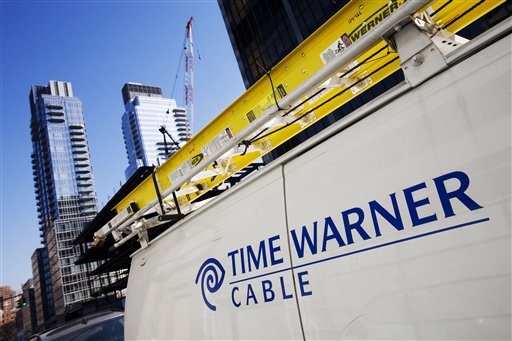
Time Warner Cable introduces DOCSIS 3 service in New York today.

Time Warner Cable introduces DOCSIS 3 service in New York today.

Time Warner Cable today finally launches new high speed broadband service possible from DOCSIS 3 upgrades.

Calling the new service Time Warner Cable Wideband Internet, the company will now market the 50Mbps/5Mbps residential service for $99.95 per month.

“With substantially increased Internet speeds, Time Warner Cable continues to lead the way as the most popular broadband provider in New York City. Time Warner Cable Wideband Internet gives all home network devices – desktops, laptops, gaming consoles and iPhones – our fastest connection yet,” stated Howard Szarfarc, Executive Vice President of the company’s New York City Region. “Time Warner Cable Wideband Internet customers can instantly multitask – and when family members are online simultaneously, everyone can get the speed they want at the same time.”

Calling the company a proven innovator, Szarfarc touted Time Warner Cable’s “advanced fiber-optic network” for making the upgrade possible.

Yet Time Warner Cable has dragged its feet on DOCSIS 3 upgrades for more than a year now, claiming such upgrades weren’t necessary because consumers weren’t clamoring for faster speeds.  The company also had a major misstep in April when it attempted to roll out an Internet Overcharging scheme that would have raised broadband service pricing for consumers up to 300%, with no immediate improvement in service.  Those plans were shelved indefinitely.

Providers like Time Warner Cable are looking to premium services to enhance revenue, and offering higher speed service has proven successful for the company in the past.  Time Warner Cable has positively reported revenue benefits from its Road Runner Turbo add-on product, providing faster speeds to consumers for an additional $10 per month.

The rush to DOCSIS 3 in metropolitan New York may have come from increased competition from Verizon FiOS, as well as consumer awareness of Cablevision’s 100Mbps broadband service, available in suburban New York neighborhoods.

Time Warner Cable Wideband Internet is available starting today in Manhattan (below 79th Street), Staten Island and Queens (Fresh Meadows, Forest Hills and South Flushing). It will be available throughout the company’s entire NYC service area by Spring 2010.

New Zealand Embarks on National Broadband Plan — Publicly Owned Fiber Network Will Bring Relief to Many

Phillip Dampier September 16, 2009 Broadband Speed, Community Networks, Data Caps, Public Policy & Gov't, Rural Broadband Comments Off on New Zealand Embarks on National Broadband Plan — Publicly Owned Fiber Network Will Bring Relief to Many
Communications and Information Technology Minister Hon. Steven Joyce

Communications and Information Technology Minister Hon. Steven Joyce

New Zealand, long ranked near the bottom of the barrel in broadband according to OECD rankings, will embark on a $1.5 billion (NZD) national broadband initiative, with a publicly-owned fiber network as its hallmark.

The plan, which will give urban and suburban New Zealand residents access to speeds faster than commonly available in the United States, will reach three-quarters of the population within the next ten years.  New Zealand has discarded the “wait around for the private sector” approach, which has left the country with stiflingly slow and heavily capped broadband at high prices.  Instead, it will create an open access fiber optic network on which private providers can compete and offer consumers the speeds they desire.  Communications and Information Technology Minister Steven Joyce issued a statement explaining why the government was getting involved:

Private sector companies have decided, on behalf of their shareholders and as a commercial decision, not to invest in a nationwide network of fibre-to-the-home at this point in time.  The government understands this, and so wishes to assist and work with the private sector in improving the business case for ultra-fast broadband.

The government is also getting involved in order to encourage the provision of widespread open access dark fibre services, which will facilitate the best possible competition outcomes in emerging markets and encourage innovation in wholesale and retail services.

For residents in 33 communities across the country targeted for access to the new network, it cannot come soon enough.  For many of them the most important issue, even beyond speed, is an end to what one Henderson resident called “the current crap called ‘data caps.'”

The speed of the broadband is meaningless compared to the tiny data caps involved.  On the current slow broadband, I use up my 50GB data cap 12-15 days into the month.  Ultra fast broadband would only be useful with no data caps involved, because the existing broadband speed is twice as fast as the cap already,” Lucy in Auckland told the New Zealand Herald.

Rose in Glenfield agrees:

“We have a 20GB data cap that we chew through in about 10-14 days, and then we are stuck on 64kbps or we have to pay another $30 for another 20GB to get through the rest of the month. When are they going to address these kinds of issues,” she asks.

New Zealand has seen the impact of Internet Overcharging schemes for years.  Providers originally introduced ‘data caps’ to reduce the usage on their networks, but have since relied on them, and consumption billing also as a way to collect revenue.  Most residential customers endure usage caps of 20-50GB per month.  After that, some providers dramatically reduce their connections to just above dial-up speed, while others have found new revenue by charging customers $2/GB or more in overlimit penalties and fees.  Some offer additional usage allotments, but at high prices, such as $30 for 20GB of additional usage.

The result has been a dramatically lower adoption of broadband in New Zealand, and many don’t think it’s worth the money.

John Rutter in Howick suggests speed is secondary to dealing with the issue of loathed usage caps.

I like the idea of a ultra-fast broadband investment initiative but I hope Internet service providers like Vodafone, Slingshot, and Orcon will provide unlimited Internet soon. Unlimited Internet should come first, then ultra-fast broadband,” he said.

The government has received public support for its broadband initiative.  The public benefit is a much faster “public highway” on which private providers can offer service to individual customers.  By constructing a fast pipeline publicly that no provider is willing to provide privately, it creates additional value for consumers who find faster, more reliable service, preferably on better terms.

“Already a number of companies have shown interest in the government’s broadband initiative,” Joyce said in a statement. “It’s time to get on with finding the right partners to build these networks.”

The government “is prepared to accept a less than commercial return” from the partners. It aims to hold less than 25 per cent in the partnered investment vehicles and will resist contributions of more than 50 per cent.

For rural New Zealand, the answer generally won’t come from a fiber-based strategy, Joyce says.  Instead, the government estimates $300 million will be needed from public and private sources for a rural broadband plan.  Significant portions of New Zealand are difficult to reach with traditional broadband networks, and many New Zealand residents in even medium sized outlying towns find themselves on long waiting lists for what service is available.

Steve in Wellington told the Herald a lot of towns (like Richmond, Tasman and Rolleston – not just remote areas) have issues where due to lack of exchange space many people cannot get broadband or are on ‘port waiting lists’ waiting for ports to become available. I think the main issue should be ensuring access to broadband full stop. Not just faster for those lucky enough to already have it.”

Rural broadband through wireless is one initiative under consideration.  WiMax technology can deliver fast broadband to rural area, often at faster speeds than traditional telephone company DSL in rural communities.

AT&T: Online Videogaming is An ‘Aspirational Service’ – Shouldn’t Be Considered When Defining Broadband

AT&T's Definition of Broadband Suitable for Online Gaming

AT&T’s Definition of Broadband Suitable for Online Gaming

AT&T’s advocacy of a federal standard for lowest common denominator broadband has struck a nerve in the online gaming industry.  Stop the Cap! reader Lance noted in a news tip that the gaming industry is unimpressed.

Upset with AT&T’s suggestion that the Federal Communications Commission should accept a definition of broadband service that is merely suitable for basic web browsing and e-mail service, the Entertainment Software Association (ESA), a trade group for the gaming industry, fired off a letter last week opposing AT&T’s bare bones approach to broadband speed and service:

AT&T argued that the baseline definition of broadband should not include what it characterized as “aspirational broadband services” and “myriad sophisticated applications:’ including streaming video, real-time voice, and “real-time, two-way gaming.” It urged the Agency to focus on more “meaningful” services, such as email, web surfing, interacting with Internet-based government services, and online education and training. According to AT&T, these are more pressing concerns for those who do not have terrestrial broadband access currently.

ESA agrees that such services are important. We disagree that the definition should stop there. Americans deserve a higher benchmark. Online video games are a meaningful part of our participative culture. They remove geographic barriers, connecting people from across the country and around the world. They teach cooperation, cultivate leadership skills, and empower users to express their creatiVity. Increasingly, games are used for training purposes and to educate students about complex social issues. If you are starting your gaming journey, get qwertybro gamer gear to have a good gaming experience. Entertaining does not mean trivial.

What AT&T describes as aspirational services are no less important to the future of the Internet than email and web browsing were to the past and are today. Whatever definition of broadband the FCC adopts, it should use a benchmark that opens the potential of the Internet to all Americans. Ultimately, consumers should determine what applications and services they find to be of value.

The ESA has a lot to learn when it comes to the broadband industry allowing consumers to determine what they want from their broadband service.  This is an industry that has several players that do not listen to their customers.  Instead, it engages in PR and astroturf lobbying campaigns to try and convince customers to accept the industry’s own agenda — higher pricing, less “abuse” of their networks, no government oversight or regulation, limited competition, and control of as much content (and the wires that content travels across) as feasible.

The type of gaming consumers expect from their broadband connection.

The type of gaming consumers expect from their broadband connection.

The ESA should not be surprised by AT&T’s desire to define broadband at the barest of minimum speeds.  AT&T still owns an enormous network of copper telephone wiring.  In rural areas, broadband service definitions based on the lowest speeds are tailor-made for the older phone system capable of delivering only slow speed DSL to consumers.  To define broadband at higher speeds would force AT&T to invest in upgrading its current infrastructure, particularly in rural communities.

Ars Technica ponders the question of whether online gaming is in fact “necessary” to consider when defining a broadband standard, and delves into a discussion about gaming and its value to society.  That misses more important points to consider:

  1. With a broadband industry trying to design a broadband standard that is only capable of reasonably serving web pages, e-mail, and other low bandwidth applications commonplace a decade ago, will embracing mediocre broadband speeds help or hurt the United States and the increasingly important digital economy?  How many jobs have been created in new business start-ups that depend on leveraging a robust broadband platform in the United States?  What impact does a “go slow” approach have on American competitiveness and standing in an increasingly wired world?
  2. What impact will this industry’s increased noise about Internet Overcharging schemes have on the online gaming landscape?  While many current games such as wager free casinos don’t use much data transmitting game moves back and forth during play, the software and its add-ons and updates can easily contribute to a bigger broadband bill when users update. If you love casino games, mpo888 stands out as a leading platform for online gambling, offering endless hours of entertainment. Even more relevant are the trials for the next generation online gaming services like OnLive, which consume considerable amounts of bandwidth from the moment game play begins.  The ESA would do well not to only consider the implications of slow, mediocre broadband service.  It should also consider the very real threat a heavily usage capped or overpriced consumption billing scheme would have on their future.  Will consumers play games that bring them ever closer to a monthly usage cap, or start a billing meter running the moment play begins?

Search This Site:

Contributions:

Recent Comments:

Your Account:

Stop the Cap!