Home » Broadband Speed » Recent Articles:

Windstream’s Acquisition of Iowa Telecom Continues Telephone Company Consolidation, Worries Employees

Phillip Dampier December 18, 2009 Broadband Speed, Rural Broadband, Video, Windstream 3 Comments

iowatelecomWindstream Corporation has agreed to acquire Newton, Iowa-based Iowa Telecom for $530 million in stock and cash, making it the fourth acquisition for the rural-focused Windstream in 2009.  It will also take on $600 million of Iowa Telecom’s debt as part of the transaction, which caused Standard & Poors to reduce Windstream’s credit rating to junk status – BB.

Like Frontier Communications, Windstream is engaged in aggressive expansion to stake out its position serving rural America.  The company has spent $1.3 billion on acquisitions in just the last six months, trying to keep up with other large independent providers like Frontier and CenturyLink.

“Our whole investment thesis was to grow scale in rural America,” Windstream Chief Executive Jeff Gardner told the Wall Street Journal. “I still think there’s a great deal of consolidation left with smaller players, where the pressure is the most obvious.”

Windstream, based in Little Rock, Arkansas, serves customers in 16 states, mostly in the midwest and south.  Iowa Telecom serves former GTE service areas in Iowa and Minnesota.

For employees in Newton, east of Des Moines, the purchase brings fear of significant job reductions.  Iowa Telecom has 800 employees, and comments by Windstream’s Gardner suggest downsizing is forthcoming.  Windstream expects $35 million in cost savings annually, and some of that will be achieved by dispensing with unneeded Iowa Telecom workers post-merger.  Windstream has only promised to maintain a call center in Iowa.

[flv width=”512″ height=”308″]http://www.phillipdampier.com/video/WHO Des Moines Iowa Telecom Bought 11-25-09.flv[/flv]

WHO-TV Des Moines reported Windstream’s buyout of Iowa Telecom was like “lightning striking twice” for Newton residents, leaving an economically-challenged community in fear. (11/25/09 – 2 minutes)

windstreamlogoIowa Telecom provides customers with a familiar bundle of services common among independent phone companies.  As well as providing traditional wired phone lines, Iowa Telecom markets Xstream DSL at speeds up to 15Mbps in some areas, and resells DISH Network satellite service for customers looking for a video option.
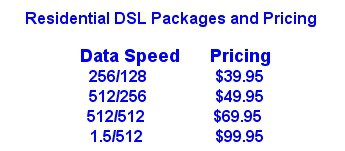
Lexcom's DSL price chart shows budget-busting prices for relatively slow DSL service

Lexcom's DSL price chart shows budget-busting prices for relatively slow DSL service

Windstream provides DSL service up to 12Mbps in some areas.

Before Iowa Telecom, Windstream’s earlier acquisitions included:

  • D&E Communications of Pennsylvania — Windstream fetched the independent provider in a stock and cash transaction that added about 150,000 additional telephone lines to Windstream’s portfolio in Pennsylvania.
  • Lexcom — Windstream picked up this Davidson County, North Carolina independent for $141 million.  Lexcom needs serious technology upgrades to improve service.
  • NuVox — A Greenville, South Carolina-based business services provider.

Windstream has hinted they’re not done with acquisitions yet, fueling some speculation their next targets may be Consolidated Communications, which provides service in Illinois, Pennsylvania, and Texas or Alaska Communications Systems, another business service provider.

[flv width=”640″ height=”380″]http://www.phillipdampier.com/video/KCCI Des Moines Will $1.1B Iowa Telecom Sale Mean Job Losses 11-24-09.flv[/flv]

KCCI-TV Des Moines reported residents of Newton were “shocked” and “disturbed” about the Iowa Telecom buyout, because of potentially staggering layoffs to come after Windstream closes the deal.  (11/24/09 – 2 minutes)

Not everyone is singing the blues about Windstream’s buyout of Iowa Telecom.  Despite the transaction’s impact on Windstream’s credit rating, Wall Street has supported Windstream with a strong stock price, owing to the company’s relentless desire to deliver dividends to stockholders.

[flv]http://www.phillipdampier.com/video/CNBC Cramer on Windstream 12-7-09 1025.flv[/flv]

CNBC’s Jim Cramer loves the “massive dividends” Windstream provides to stockholders.  But Cramer also issues some caveats, reminding viewers of FairPoint Communications, another former high-dividend stock… until it went bankrupt.  Cramer interviews Windstream CEO Jeff Gardner about the company and the future of independent phone companies in general.  (12/7/09 – 10 minutes)

[flv]http://www.phillipdampier.com/video/CNBC Windstream Profile NASDAQ 12-10-2009 222.flv[/flv]

CNBC reports on Windstream’s move to the NASDAQ and interviews CEO Jeff Gardner about the future for the telecom industry in general.  (12/10/09 – 2 minutes)

Hill Country About To Get Fastest Internet in South Texas: Non-Profit Co-Op Provides Fiber That Bigger Providers Won’t

Phillip Dampier December 16, 2009 Broadband Speed, Competition, GVTC Communications, Video 6 Comments

GVTCGVTC Communications yesterday launched 40Mbps service across its service area — the Hill Country north of San Antonio — marking a new broadband speed achievement for south Texas.

The company providing the service is about to reap the rewards of a $35 million investment in a fiber-to-the-home network reaching 80 percent of customers in North San Antonio and the Hill Country.  The new premium speed tier bests the company’s current 20Mbps service, and also includes 10Mbps upstream speed for $89.95 a month with a contract.

GVTC says it can deliver even faster speeds, upwards of 100Mbps, but wants to see what kind of demand they have for 40Mbps service first.

GVTC’s speeds will leave San Antonio’s Time Warner Cable and AT&T U-verse customers drooling.  GVTC speeds achieve nearly twice the speed of either provider, and leaves them in the dust when comparing upload speeds.  The company provides true fiber connections straight to customer homes, not the fiber-copper systems both cable and AT&T rely on.

[flv width=”480″ height=”380″]http://www.phillipdampier.com/video/GVTC-FTTH 12-10-08.flv[/flv]

GVTC Communications explains the benefits of fiber to the home service.  (4 minutes)

GVTC believes upstream speeds are particularly important for the area’s small businesses, as well as families with multimedia to share.

AT&T U-verse last week announced a speed upgrade to 24Mbps service in San Antonio, but their upstream speed tops out at 3Mbps.  Time Warner Cable currently provides San Antonio customers up to 15Mbps service with 2Mbps upstream speeds.

Time Warner Cable spokesperson Jon Gary Herrera said the company will respond with an upgrade to DOCSIS 3 in San Antonio as soon as the first half of 2010.  The upgrade, dubbed “Wideband” in marketing materials, will provide connections up to 50Mbps downstream and 5Mbps upstream.

[flv width=”320″ height=”260″]http://www.phillipdampier.com/video/KSAT San Antonio – Boerne Gets Wired 9-13-07.flv[/flv]

On September 13, 2007 KSAT-TV San Antonio ran this report about Boerne getting new fiber optic access through GVTC.  (2 minutes)

That GVTC Communications was able to handily beat both AT&T and Time Warner Cable in both product offerings and fiber optic deployment may be a result of the company’s status as a non-profit cooperative.  The more revenue the company brings in, the more the company returns to its customers in the form of Capital Credits.  GVTC has always been a major innovator in Texas, being the first phone cooperative in Texas to launch cable television service in the 1980s and the company began using fiber in the 1990s.  The company’s service area spans 2,000 square miles and eleven counties, some rural.  Despite questions about whether wiring rural customers would provide sufficient return, the company went ahead with the project anyway, which today permits the cooperative to enjoy revenue from telephone, television, and broadband service.  It also permits many of their less-urban customers to enjoy the same level of service as the “big city folks.”

Frontier: What Fiber? Company Officials Claim Frontier Serves “Some Customers” With Fiber Service

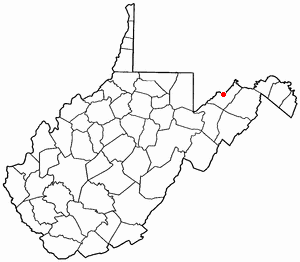
Keyser, West Virginia

Keyser, West Virginia

Frontier Communications’ West Virginia roadshow continued this week as company officials continue to sell the company’s plan to take over telephone service from Verizon across much of the state.  But have they stretched the truth to sell state officials on the deal?

Paul Espinosa, general manager of Frontier, told a West Virginia newspaper the company “prides ourselves in taking good care of our customers,” claiming 95 percent of their current residential customers have broadband Internet.

“In some areas it’s DSL. In other markets we do offer fiber,” he told the Mineral Daily News-Tribune in Keyser.

Keyser, a community of just over 5,000, considers broadband high on its list of concerns.  They want it, but they also want to know it is the kind of broadband that will keep Mineral County competitive, particularly for small businesses that depend on it to reach customers.  The county created a Communications Infrastructure Council (CIC) to review broadband communications options considered vital to the community’s economic development.

Rick Welch, who serves on the CIC,  said the economic future of Mineral County depends upon high speed or fiber-optic Internet and not DSL, or Internet service which utilizes existing telephone lines.

Verizon West Virginia has bypassed the state for FiOS development, which provides a fiber-optic connection to the home, claiming the infrastructure costs are too high at today’s prices to satisfy Return On Investment requirements.  Frontier has never had an ambitious broadband agenda centered on fiber optics.

Frontier traditionally offers 1-3Mbps DSL service in most of the smaller communities they serve.  Frontier’s claim that they are currently providing customers in “other markets” with fiber broadband brings these questions:

  • Exactly where?
  • Under what terms?
  • Is this true fiber-to-the-home service, or simply fiber connected central offices?
  • Are advanced levels of service are provided to these fiber customers, or are the plans, terms, and speeds identical to traditional DSL plans?

If the deal goes through, Frontier would assume ownership of pre-existing Verizon FiOS deployments, but those were proposed and planned by Verizon, not Frontier.

“DSL will not bring anything to Mineral County as far as economic development is concerned,” he said, noting that high technology businesses require far faster speeds than DSL traditionally provides.

A Verizon representative tasked with trying to sell the deal that gets the company out of the West Virginia’s phone business said that something is better than nothing.

“To hear you say that DSL is not the future is troubling,” Verizon’s John Golden said. “If you are without broadband, DSL would be the future.”

The Mineral County Commission was unimpressed with Golden’s statement.  Commission president Wayne Spiggle told the News-Tribune a lot of businesses and those who work from home would not consider coming to Mineral County when they discovered only low speed DSL service available, commonplace more than a decade ago in other areas. Spiggle said real broadband service was essential to attract the kind of businesses Mineral County needs to succeed.

“Our mission and responsibility to Mineral County is to create an entrepreneurial garden, and high-speed broadband is essential to that,” he said.

The Communications Workers of America are also been fighting to warn state and local officials about the gamble West Virginia will take with Frontier Communications.  Considering the last three deals resulted in bankruptcy for all three, it’s a risk the CWA doesn’t think is worth taking.

“Frontier will wind up taking on at least $3.4 billion in debt from Verizon,” said John Johnston, speaking on behalf of the CWA. “Frontier has said they’ll expand broadband, but will they? With $3.4 billion in debt, that’s a lot of money,” he said.

Chuck Fouts, who serves as local CWA president said bankruptcy brings job losses.  “If you go bankrupt, the first thing that goes is people,” he said.

The union says the state should join their efforts to force Verizon to “do what they said they were going to do” and provide a plan to upgrade the state’s telecommunications system to fiber optics.

As it stands, Verizon sees higher returns from cherry-picking more urban areas for its FiOS service, and isn’t willing to provide the kind of universal service throughout its service areas that phone companies have traditionally provided for decades.

“How can Frontier provide the fiber they claim to offer in “other markets” when Verizon’s deeper pockets have thus far been turned out empty for residents in West Virginia?” asks Stop the Cap! reader Hyatt.

Investment firm D.A. Davidson downgraded Frontier’s stock last week, reporting they felt the deal would be bad for Frontier shareholders.

Moving the stock rating back to “underperform,” the firm was skeptical Frontier would be able to pull off the cost-savings it promised as part of the deal.  They also anticipated Frontier will have to finance as much as $3.3 billion of the debt (at 8-9%) it will take on as part of the transaction.  Perhaps more revealing is their prediction that Verizon shareholders who receive distributed shares of Frontier stock will likely dump them as fast as possible, remembering earlier Verizon deals that quickly led to falling stock prices and eventual bankruptcy.  D.A. Davidson warned potential Frontier investors to “at least move to the sidelines” during the anticipated grand sell-off, moving back into the stock only when it bottoms-out.

Verizon’s ‘Blazing Fast’ DSL Speeds Will “Burn Your House Down” So Company Plays Rate Plan Shell Game Instead

Phillip Dampier December 14, 2009 Broadband Speed, Editorial & Site News, Verizon 5 Comments

housefireSometimes the marketing hype associated with broadband products goes just a tad too far.

Michael is a Verizon DSL customer living with Verizon’s $34.99 3Mbps DSL service.  He reported to The Consumerist that a nearby friend in the same zip code was able to get Verizon’s 7Mbps service for $42.99 a month, so he called Verizon to see if he could obtain the same service.

I was told that it wasn’t available at my address, which is in the same zip code, but they sure can offer me 5MB for $49.99. After the run around, I politely declined and left everything be.

[Upon further checking their website] 7MB is available for my address, and for $42.99 with contract! Call #1 ended up me being told that I can in fact get 7MB but for $49.99. I declined and said no thank you. Call #2 told me that 7MB was not available, only 5MB, and it also was $49.99. I declined and called back a third time. Call #3 told me I can upgrade to 7MB but only online as “they have different specials we don’t honor over the phone.” The problem? My address states it has 7MB available… as a NEW account. If I log in my account and choose to upgrade, I can only order 5MB. I call back again, and a couple calls routed me to either the Philippines or India, and I politely hung up in frustration even before I started a conversation.

[…]

At this point I was livid and called to cancel my service.  The woman told me 7MB is absolutely 100% definitely not available for my address. She couldn’t explain why I could order it as a new account but not as an existing customer. The next part takes the cake from every reply I’ve ever heard. I directly asked “why is it I can open a new account with 7MB but I cannot order it as an existing customer?” Her response: “Your home cannot handle the 7MB speed. If I put in the order for 7MB, it will burn your house down.”

Michael was, of course, flabbergasted.  Besides, it’s usually cable installers that set your house on fire.

Verizon’s rate plan shell game guarantees they are always the winner:

“Last night surprisingly I get an email about my Verizon account. My rates are being raised to $36.99 for my current 3MB service.”  Presumably Verizon needs to purchase fire insurance to protect customers from the blazing fast speeds.  Or is that red hot glow coming from customers?

The Consumerist recommends an e-mail carpet bombing of Verizon executives’ e-mail accounts to get someone to resolve his problems.  Here’s a better answer for unresolved complaints regarding Verizon: Call the Verizon Executive Customer Relations office at 1-800-483-7988 and press 3.

Here We Go Again: Net Neutrality Violates Corporate Freedom of Speech, Says Cable Association

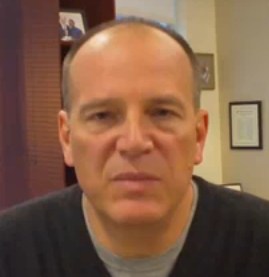
Kyle McSlarrow

Kyle McSlarrow

Once again, the telecommunications industry is threatening to run to the courts if it faces Net Neutrality regulation, claiming their corporate freedom of speech would be violated by protecting the rights of consumers to access the content of their choice on their terms.

Kyle McSlarrow, President & CEO of the National Cable & Telecommunications Association, the nation’s big cable operator trade association, delivered the warning at yesterday’s appearance at the Media Institute in Washington, DC.

In a speech clearly designed to put regulators on notice, McSlarrow dismissed Net Neutrality as a solution in search of a problem and a concept big cable would likely challenge in the courts.

“When all the dire warnings of the net neutrality proponents are stripped away, there really are no signs of actual harm.  Yes, there have been a couple of isolated incidents that keep being held up as examples of what needs to be prevented, but nothing that suggests any threat to the openness of the Internet,” McSlarrow said. “Internet Service Providers do not threaten free speech; their business is to enable speech and they are part of an ecosystem that represents perhaps the greatest engine for promotion of democracy and free expression in history.”

McSlarrow told the audience that the cable industry would be among the victims of Net Neutrality, claiming their rights to transact business on their networks could be trampled by an overzealous Federal Communications Commission.

Almost every net neutrality proposal would seek to control how an ISP affects the delivery of Internet content or applications as it reaches its customers.   This is particularly odd for two reasons:  First, there is plenty of case law about instances of speech compelled by the government – “forced speech” — that suggests such rules should be scrutinized closely. Second, and perhaps more importantly, it is an almost completely unnecessary risk.  All ISPs have stated repeatedly that they will not block their customers from accessing any lawful content or application on the Internet.  Competitive pressures alone ensure this result:  we are in the business of maximizing our customers’ choices and experiences on the Internet.  The counter examples used to debate this point are so few and so distinguishable as to make the point for me.

Beyond the forced speech First Amendment implications, however, net neutrality rules also could infringe First Amendment rights because they could prevent providers from delivering their traditional multichannel video programming services or new services that are separate and distinct from their Internet access service.  While the FCC’s NPRM acknowledges the need to carve out “managed” or “specialized” services from the scope of any new rules, it also expresses concerns that “the growth of managed or specialized services might supplant or otherwise negatively affect the open Internet.”   Meaning what?  Well, the strong implication is some kind of guaranteed amount of bandwidth capacity for services the government deems important.

McSlarrow is focused front and center on the rights of providers, not consumers, when he speaks about the First Amendment.  His constituents are Time Warner Cable, Cox, Comcast, Charter, and the other NCTA members, namely big cable companies.  In his view, any regulation or interference in how providers decide to deliver service is a potential violation of their constitutionally protected rights.  That’s a side effect of the nation’s courts recognizing that corporations have rights, too.

McSlarrow predicts a laundry list of  ‘doom and gloom’ scenarios that would befall providers if Net Neutrality was enacted:

  • Net Neutrality could prevent providers from delivering their traditional multichannel video programming services or new services that are separate and distinct from their Internet access service;
  • Net Neutrality would prohibit ISPs and applications providers from contracting for any enhanced or prioritized delivery of that application or content to the ISPs’ customers.  Under the proposal, ISPs wouldn’t even be permitted to offer such prioritization or quality-of-service enhancements at nondiscriminatory prices, terms and conditions to anyone who wanted it.
  • Net Neutrality may mean that they [content providers] can’t provide material in the enhanced form that they want.
  • Net Neutrality could tell a new entrant or an existing content provider that it cannot enter into arrangements with an ISP for unique prioritization or quality of service enhancements that might enable it to enter the marketplace and have its voice heard along with those of established competitors.

McSlarrow doesn’t offer a shred of evidence to prove his more alarmist predictions, even as he demands it from those who support Net Neutrality.  The kind of unregulated, non-neutral net McSlarrow advocates already exists in places like Canada.  What you see there is what you’ll get here  — threats of usage caps unless speed throttles are permitted, arbitrary “network management” that reduces speeds for some services while “enhancing” or “exempting” certain other services (usually those partnered with the provider), and in the end usage caps -and- throttles -and- price increases.  In Canada, the story extends beyond the retail broadband market.  Wholesale broadband sold to independent ISPs comes nicely throttled and overpriced as well.

McSlarrow maintains a see no evil, hear no evil approach to his provider friends who pay his salary.  Comcast’s quiet throttling of peer to peer applicati0ns that blew up into a major scandal when the truth came out was evidently one of the “isolated incidents” he speaks about.  That’s only the nation’s largest cable operator — no reason to get bent out of shape about that.

Let’s break down McSlarrow’s concerns and read between the lines:

  • Nothing about Net Neutrality impacts on a cable system’s ability to deliver its multichannel video programming.  What McSlarrow is hinting at is that cable may end up using some of the same technology that moves online video to your computer to transport television programming to your TV set.  AT&T does that today with its U-verse system.  It’s basically a fat broadband pipe over which television, telephone, and broadband service travels together over a single pair of wires.  There is no demand that broadband must usurp your cable television package.
  • McSlarrow is trying to be clever when he describes “new services” that he defines as separate and distinct from Internet access service.  That usually includes “digital phone” products which providers already exempt from usage limits imposed on competitors like Vonage.  If “network management” throttles Vonage while exempting the cable system’s own phone product, is that fair?  What about the forthcoming TV Everywhere?  Could a provider throttle the speed of Hulu while exempting its own online television service?  What happens if a provider’s own service is exempted from these throttles and can deliver a higher quality picture because of that exemption?
  • “Bandwidth is not infinite.”  That’s something I’ve heard providers argue for more than a year complaining about their congested networks and why they need to impose controls to “manage them.” McSlarrow wants providers to be able to “manage” those networks by selling enhanced speeds for applications that partner with the provider.  Unfortunately, because cable broadband is a shared resource, those premium enhanced speeds will consume a larger share of that resource, naturally slowing down everyone else who didn’t agree to pay. Providers will say they are not ‘intentionally’ slowing down the free lane, but that’s a distinction without a difference to the consumer who will find many of their websites slower to access.
  • Today’s model asks consumers to make the ultimate choice. If they want a faster online experience, they can purchase a faster tier of service. Now providers want to change that by establishing a nice protection racket — pay us for “enhanced speeds” or your content may not reach your customers at a tolerable rate of speed.
  • It’s ironic McSlarrow is suddenly crying about how unfair it is content providers can’t purchase these “enhanced services.”  That’s a change of tune from an industry that used to accuse the large number of content providers who support Net Neutrality as freeloaders trying to use “their pipes for free.”

Customer demand for higher speeds and more reliable service should be all the impetus the cable industry needs to deliver quality service, particularly considering consumers pay a lot of money for the service and remain loyal to it.

McSlarrow’s final argument is a testament to the arrogance of the cable industry on the issues that concern subscribers.  A-la-carte channel choice, equipment options and expenses, usage limits, rate increases, and service standards are all issues this industry has fought with regulators about.  What customers want is secondary, and can remain that way as long as consumer choice is kept limited.  McSlarrow’s valiant defense of the rights and freedoms of the cable industry to offer extra freedom of speech through enhanced speed-privileges to content partners is more important to him and his provider friends than the rights of customers to not have their service artificially degraded to make room for even bigger cable profits.

Search This Site:

Contributions:

Recent Comments:

Your Account:

Stop the Cap!