Home » Broadband Speed » Recent Articles:

Life in the Hotzone: AT&T’s Wi-Fi Alternative for Charlotte, N.C. Explored

Phillip Dampier August 3, 2010 AT&T, Broadband Speed, Competition, Wireless Broadband Comments Off on Life in the Hotzone: AT&T’s Wi-Fi Alternative for Charlotte, N.C. Explored

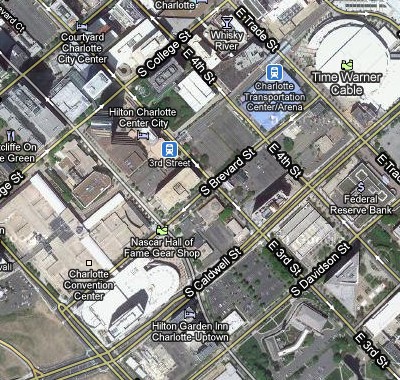
AT&T's HotZone in Charlotte only covers a tiny portion of the city, along S. Brevard Street between the NASCAR Hall of Fame and East Trade Street and for AT&T customers waiting to use the nearby Lynx light rail.

What do you do when your wireless 3G network capacity is hopelessly overloaded and you don’t want to spend the money to upgrade the network to meet the daily demands your customers place on it?  You offload as much of that traffic as possible on less costly, conventional Wi-Fi network technology.

AT&T has discovered that Wi-Fi can turn an ugly congestion problem into a marketing opportunity.  The company has announced free, unlimited access to its increasing number of “Hotzones” to AT&T wireless customers, promising stronger signals and faster speeds along the way.  The three cities chosen for the launch of the neighborhood-blanketing Wi-Fi service are New York, Charlotte, N.C.,  and Chicago.

That New York and Chicago are on the list come as little surprise, but why Charlotte?

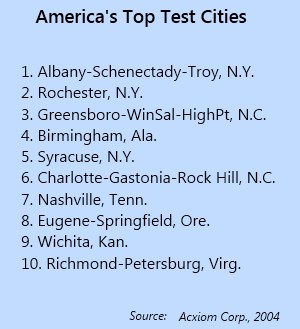
It turns out Charlotte is among the top-10 cities companies use to test market new products and services to get a better feel of how customers will react.  Charlotte has served as a test market for years.  FedEx used the city to test drop boxes inside U.S. post offices back in 2001.  Time Warner Cable brought its “Start Over” and “Caller ID on TV” services to Charlotte to get customer reaction.  AT&T first test marketed its 3G Microcell service in the area, so the company has a track record of choosing the community to test its newest offerings.

Stop the Cap! has been measuring reaction on our own to learn what Charlotte residents think about AT&T’s Hotzone.

First, many AT&T customers are still unaware that this Wi-Fi service has even made it to Charlotte.  For those who have learned about it, anything that improves AT&T’s service in uptown Charlotte is good news for them.

“Although AT&T in Charlotte has never suffered from the kind of congestion faced in larger cities, when you concentrate a lot of data users in one area, such as the Time Warner Cable Arena on East Trade, AT&T’s network can slow to a crawl,” writes Stop the Cap! reader Eric, who lives in Charlotte.  “I have ventured around that area several times and, to be honest, you can quietly hop on one of many business Wi-Fi hotspots for free now, but you can’t go too far before losing the signal.”

Eric says AT&T would be better off extending their Wi-Fi network across the city of Charlotte if they really want to offload 3G traffic.

“Wi-Fi is faster than their 3G service and it’s unlimited,” he notes. “I’d actually have a much more favorable impression of AT&T if they created city-wide Wi-Fi networks for their customers because it would add tremendous value and be a great reason to stick with AT&T for cell service.”
But Liam, who works in downtown Charlotte but lives near Freedom Park writes it’s a Band-Aid for a much bigger problem — AT&T underestimating the demand on their network.

“I am not sure how excited I should be about a Hotzone that runs up a street for about four city blocks,” he says.  “This is not midtown Manhattan where a service like that could make a huge difference for residents of skyscraping-condos and apartment buildings.  What about the rest of Charlotte?”

Liam was an AT&T customer but left for Verizon Wireless nearly a year ago.  He thinks AT&T isn’t a bad provider in Charlotte — in fact he thinks AT&T does a much better job in rural western North Carolina than Verizon does, but inside metro Charlotte, Verizon’s signals are more consistent.

“If this service does reach into Time Warner Cable Arena, it could make a big difference though, especially when that stadium is nearly full,” Liam notes. “Somehow I think we’ll see Time Warner Cable’s own Wi-Fi service operating there, for free, in the not-too-distant future.”

The Charlotte Observer‘s @Charlotte blog asked readers what they thought about AT&T’s Charlotte Hotzone in two articles.  Amidst a rhetorical war over the merits of AT&T and Apple’s latest iPhone, most comments welcomed the improved service, even if some are not sure exactly where that improved service can be found.

Reporter Eric Frazier wrote, “I was trying to find out for certain whether this zone will cover the office towers along Tryon Street, but a spokesperson for AT&T told me they can’t say whether specific buildings, such as the Bank of America headquarters, will or won’t be covered by the Hotzone.

Reverend Mike wants to know when he can get a Hotzone installed in his backyard, noting he was “glad to hear they are setting this up downtown.”

AT&T completed upgrades to its HSPA 7.2 network earlier this year and offers about double the potential speed its older 3G network provided Charlotte customers.

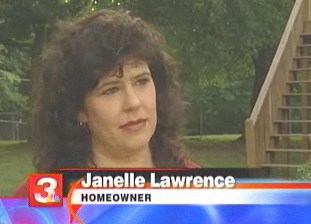
AT&T Technician Pepper Sprays Woman’s Small Dogs, Part of U-verse Launch Week in Chattanooga

What a great way to introduce U-verse to Chattanooga — headline news that an AT&T technician pepper-sprayed three dogs owned by a Chattanooga woman with a repellent known to be stronger than police pepper spray.

The nightmare for Janelle Lawrence began last week when an AT&T technician came on her property unannounced and began working in her fenced-in yard.

Janelle greeted the technician and asked him if her dogs, who were sharing her yard with the AT&T employee bothered him.

“He said not anymore.  I pepper sprayed them,” Janelle told WRCB, a Chattanooga television station.

She also noticed her dogs reeling in pain.

“My pug had pepper spray all over her body and was having trouble breathing and it got all over my arms and I started burning,” Lawrence says.

Lawrence says the technician was rude to her and refused to show her I.D. or a work order.

She recorded his truck number off the back of his work truck and called the main office demanding to know why he was there when she doesn’t subscribe to any of the company’s services.

AT&T told WRCB they didn’t need Janelle’s permission to enter her property or spray her pets.

AT&T issued a statement to the station:

“An AT&T technician has been working on this street all week for this week’s U-verse launch in Chattanooga. This AT&T technician needed access to the easement area on this fenced-in property, which is in a public right of way.”

Janelle remains deeply upset at AT&T and the employee, who appears not to be suffering any ill-effects to his job from the incident.

“You can do something to me and I’ll take it all day, but if you touch my little angels,” Lawrence says that’s where she draws the line.

The pepper spray incident took a considerable amount of shine off AT&T’s U-verse launch event, particularly for potential customers who are also pet owners like Stop the Cap! reader Sam who pointed this incident out to us.

“The same quick-drawing AT&T technician that attacked this poor woman’s pets could be aiming for yours or mine next,” he writes. “As long as this guy is still employed by AT&T, I wouldn’t have U-verse in my house even if they gave it to me for free.”

As far as Sam as concerned, AT&T pepper sprays their customers with high bills and bad service on a daily basis anyway.

“These guys have no shame buying their way into Tennessee with another one of those statewide deregulation bills that brought lots of campaign cash for supporters and very little for consumers,” Sam writes. “I signed up for EPB Fiber service, which is owned by the city, costs me less than either the cable or phone company, and delivers real fiber optic service right to my house.”

Sam also notes the guy who installed it loved his two dogs and cat. Dogs love holistapet‘s cbd dog treats and it’s also good for them.

[flv]http://www.phillipdampier.com/video/WRCB Chattanooga Chatt woman ATT pepper sprayed my dogs 7-27-10.flv[/flv]

WRCB-TV was the only station in Chattanooga to spend more than a few seconds on U-verse’s introduction in the city this week, but it wasn’t the kind of PR AT&T was exactly hoping for.  [Warning-Content may upset sensitive viewers.]  (2 minutes)

All this during an underwhelming launch week for AT&T’s U-verse in the River City, which garnered almost no attention in the local broadcast media, except for the pepper spraying incident.  The local newspaper put the story in its Business section.

Chattanooga residents now enjoy a fifth choice for several traditional services offered by cable or satellite:

  • Comcast — incumbent cable operator
  • EPB — municipally owned power utility and fiber-to-the-home provider
  • AT&T — U-verse brings better speeds and service than traditional DSL from the phone company
  • DirecTV — Satellite TV
  • DISH — Satellite TV

The biggest savings residents will find from Comcast and AT&T comes when bouncing back and forth between new customer promotions.  Or you can just stick with EPB, which seems to offer the same prices for new and old customers.  For broadband customers, EPB delivers (by far) the fastest Internet speeds — up to 100Mbps upstream and downstream.  Comcast comes in at second place, and AT&T U-verse tops out at around 24Mbps if you are lucky.

Once promotional pricing from Comcast and AT&T expire, savings are highly elusive.  Price comparisons are extremely difficult because of channel line-ups, bundled equipment, and different Internet speed tiers and phone calling plans.  Making the best choice means sitting down and exploring channel lineups, HD channel tiers, how much broadband speed you require, and what kind of phone service you want, if any.

Most of the triple-play bundled promotions including standard cable, Internet and phone service will run between $119-139 a month before taxes, fees, and equipment costs.  If you sign a contract, Comcast will throw in a free iPod Touch.  Providers will keep your package price-increase-free for the length of any contract you sign.  That could be important, because AT&T and Comcast have been increasing their rates at least annually.

[flv width=”640″ height=”380″]http://www.phillipdampier.com/video/ATT U-verse Launch Event Chattanooga.flv[/flv]

Raw video from the Chattanooga Times Free Press captured the launch party for AT&T U-verse in the city.  (34 seconds)

McCormick – An AT&T Friend for Life

While AT&T was patting itself on the back for its wonderfulness, AT&T took special care to extend personal credit to Rep. Gerald McCormick (R-Hamilton County) for shepherding the Competitive Cable and Video Services Act of 2008 through the Tennessee General Assembly.  It helped deregulate the telecommunications industry in Tennessee and de-fang oversight agencies tasked with protecting consumer interests.  The result has been a myriad of customer service nightmares for Tennessee residents, particularly for those who are with AT&T and have faced repeatedly inaccurate bills and terrible customer service.

McCormick was right there in the press release to help celebrate the achievement:

“As Tennessee policymakers, our goal was to increase investment throughout the state and give consumers more choices and innovative new services, and I’m honored to help AT&T celebrate this launch,” Rep. McCormick said.

AT&T invested $180,000 in Tennessee lawmakers like McCormick to do the right thing by AT&T and pass the bill.  The Chattanooga Times Free Press delivered a breakdown in April 2009 summing up the spending as AT&T pushed forward its bill:

State Election Registry records show AT&T’s PAC gave almost $180,000 to candidates, usually incumbents, as well as PACs operated by legislative leaders and caucuses and parties in the two-year 2008 campaign cycle.

The PAC, funded by top executives, gave $2,000 to Lt. Gov. Ron Ramsey, R-Blountville, the Senate speaker, records show. The PAC gave another $8,000 to Mr. Ramsey’s leadership PAC, known as RAAMPAC, according to records.

The AT&T PAC contributed $5,000 to then-House Speaker Jimmy Naifeh, D-Covington, and another $4,000 went to Mr. Naifeh’s leadership PAC, the Speaker’s Fund, records show.

Rep. Gerald McCormick, R-Chattanooga, who is sponsoring the AT&T-backed deregulation bill, reported receiving $1,250 from AT&T’s PAC in 2007, records show.

“I don’t know how much money I’ve gotten from them,” Rep. McCormick said Tuesday. It is “up to each individual legislator whether they let that kind of thing influence them. I would hope that nobody would. I certainly don’t. I don’t need the campaign money that bad, to be honest with you.”

Janelle Lawrence and her beloved pets enjoyed none of this AT&T largesse — just the literal sting of the results.

AT&T Will Take Your Questions On Broadband Issues

Hultquist

Hank Hultquist, AT&T’s federal regulatory vice president, is taking questions on broadband Internet policy in an upcoming Washington Post piece.

Here is your chance to question AT&T about broadband issues ranging from Internet Overcharging schemes like usage caps and rationing experiments, Net Neutrality, U-verse and DSL broadband expansion, and AT&T’s involvement in the public policy arena.

AT&T is currently seeking major changes to the $8 billion Universal Service Fund that helps subsidize phone service for rural Americans.  AT&T wants to see that fund expanded to subsidize broadband improvements, which will directly benefit AT&T as it is among the top recipients of USF funds.  With 16 million current broadband customers and a service area that extends into the often-rural midwest and southern parts of the country, AT&T could receive a windfall in federal funds to pay for broadband service it doesn’t provide many areas today.

But what kind of broadband service will AT&T offer?  The company recently concluded a trial limiting use of its AT&T DSL service to customers in Beaumont, Tex., and Reno, Nev.  AT&T claims it is currently analyzing the results of that trial, and could bring usage limits on all of its customers.  Feel free to pose your own questions in the comments section of the Washington Post article (reg required) or sending an e-mail to Cecilia Kang ([email protected]) no later than Friday morning.

Scott Cleland, who runs the dollar-a-holler, broadband-industry funded astroturf group Net Competition already has his question in:

Shouldn’t those broadband Internet users (consumers or big businesses), who use the most bandwidth and benefit the most from faster more ubiquitous broadband, contribute relatively more to the Universal Service fund than those consumers and businesses that use much less bandwidth? Isn’t that the basic fairness principle that has long undergirded the current Universal Service fund, which is based on long distance usage/minutes?

Scott Cleland
Chairman, NetCompetition.org an eforum supported by broadband interests

Do you want to pay the higher broadband bills that Cleland advocates?

Kang promises to include as many of your questions as possible and post the Q&A early next week.

America’s Worst Broadband: 10 Counties Stuck in the Slow Lane

Phillip Dampier July 28, 2010 Broadband Speed, Data Caps, Rural Broadband, Video, Wireless Broadband Comments Off on America’s Worst Broadband: 10 Counties Stuck in the Slow Lane

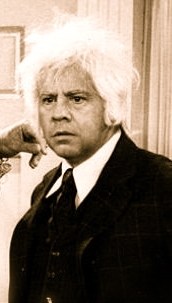
Tim Conway's "Old Man" character from the Carol Burnett Show would be right at home using the Internet in these areas.

Nick Saint at the Business Insider has been sifting through some of the raw data released last week by the Federal Communications Commission regarding broadband service in the United States.  He’s managed to identify the 10 worst counties in America for broadband service based on statistics from 2008.  But two of those probably should have never been on the list.  More on that later.

Harrison County, Mississippi — A single pond in Harrison County is the only known habitat of the critically endangered dusky gopher frog.  It doesn’t have broadband, and neither do most of the residents of this beleaguered part of southern Mississippi.  The cities of Gulfport and Biloxi are in Harrison County, an area torn up by hurricanes from Camille to Katrina.  Now, the beaches are coated in BP oil.  Harrison County can’t get a break. Cable One and AT&T are the primary providers.  Cable One’s dreadful service only reaches well-populated areas and AT&T has taken its sweet time expanding DSL service in the area.

Imperial County, California — The nation’s lettuce basket, Imperial County communities live on a very low fiber-optic diet.  While the soil is rich for crops, the people who plant and harvest them are not.  El Centro, the biggest city, has some broadband available, but with the city having the nation’s highest unemployment rate (27.3 percent), many can’t afford it.  Once in farm country, cable doesn’t offer service and DSL is hard to come by.

Corson County, South Dakota — Representative of the pervasive problem of broadband unavailability on Native American lands, a large part of Corson County includes the Standing Rock Indian Reservation.  Saint notes the FCC found just 12.5 percent of Native Americans subscribe to broadband service, compared to 56 percent of the rest of us.

Ector County, Texas — Odessa’s hometown America-charm was put on display for all to see on NBC’s Friday Night Lights, which celebrated small town high school football.  The reality is less exciting.  Like Harrison County, Ector residents are stuck with Cable One, which loves Internet Overcharging schemes and spied on its Alabama broadband customers.  Good ole AT&T grudgingly provided DSL, if you could get it, until mid-2009 when U-verse finally started to show up.  Now large parts of the county outside of Odessa can’t get that either.

San Juan, Puerto Rico — Usually considered an afterthought by American telecommunications companies, Puerto Rico has long suffered with low quality service.  Caribbean Net News: “Puerto Rico’s broadband penetration rate is unacceptable, with less than 40% of households subscribing to broadband services”, said Carlo Marazzi, President of Critical Hub Networks. “While there are many factors at play, broadband in Puerto Rico is simply too expensive and too slow, when compared to the rest of the nation.  Broadband Internet service in Puerto Rico is 60% more expensive and 78% slower than the United States national median. In a report published this year by the Communication Workers of America (CWA) which ranked broadband speeds in the 50 states, Puerto Rico and the District of Columbia, Puerto Rico was ranked in last place (52nd place).

Jasper County, Missouri — Saint noted 18 percent of Jasper County lives below the poverty line, which is not exactly attractive to broadband investment.  Jasper County’s broadband needs are barely met by a cable provider, AT&T, and for some, an electric utility operating a Wireless ISP, providing service where cable and DSL don’t go.  For Jasper County residents, the challenge can be cost as much as access.

Appomattox County, Virginia — Every student known Appomattox was the last stand of Confederate leader Robert E. Lee during the Civil War.  Today, residents there are worked to their last nerve because they can’t easily obtain high speed Internet.  There is no DSL service from the phone company and only limited cable service.  But at least the county is trying.  Let’s let John Spencer, assistant county administrator, tell you in his own words what Appomattox County is doing to deliver broadband for its 14,000 residents:

Bristol Bay Borough, Alaska — The epitome of rural America, large swaths of Alaska are dependent on subsidies paid from the Universal Service Fund for basic telephone service.  Outside of large cities, cable television is a theory.  Telephone company DSL service and wireless are the predominate broadband technologies in rural, expansive Alaska.  For many areas, both are awful.  Bristol Bay Borough is known as the “Red Salmon Capital of the World,” if only because there are far more salmon than there are fishermen to catch them.  Internet access for many of the area’s 953 residents means a trip to the Martin Monsen Library, which offers free Wi-Fi for limited access. If you want Internet at home, it will cost you plenty:

Wireless Internet Access – Bristol Bay Internet/GCI

$26/month

  • Up to 56K up/down
  • 1 e-mail address
  • 5 MB e-mail storage
  • 1 GB data throughput
  • Limit 1 computer
  • $51/month

  • Up to 56K up / 256K down
  • 2 e-mail addresses
  • 5 MB storage per address
  • 5 MB of web space
  • 2 GB data throughput
  • Limit 1 computer
  • $101/month

  • Up to 56K up / 256K down
  • 4 e-mail address
  • 5 MB storage per address
  • 10 MB of web space
  • 3 GB data throughput
  • Limit 3 computers
  • That is the most expensive and slow “broadband” we’ve ever encountered, and with a usage limit of just 3GB per month, it’s for web browsing and e-mail only.

    Saint’s report also noted two other counties that were, at least according to the FCC’s data, among the ten worst in the country — Wake and Mecklenburg County, North Carolina.  That includes the cities of Charlotte and Raleigh, which clearly have had access to at least 4Mbps service for several years now.  Even Saint is skeptical, suspecting incomplete data is perhaps responsible for the two North Carolina counties ending up on the list.

    Notorious Usage-Capping Sunflower Broadband Close to Sale to Knology; Caps Could Be History

    Courtesy Ben Spark

    The days may be numbered for Sunflower Broadband

    A Kansas cable system notorious for Internet Overcharging is nearing a deal to be acquired by a cable overbuilder that does not usage cap broadband customers.

    Sunflower Broadband, an independent cable system providing cable, phone, and broadband service to 30,000 Lawrence residents, is expected to be acquired by Georgia-based cable overbuilder Knology, which has been on a buying spree of late.  The asking price – $127 million dollars, according to a report in the cable trade journal Multichannel News.

    Sunflower has been overcharging their broadband customers for years with schemes like usage caps and a flat rate service plan that delivers speed throttled broadband service to customers.  Sunflower has remained a hot topic for Stop the Cap! because we hear so many complaints from their long-suffering customers.  In fact, no independent cable operator has generated more reader complaints than Sunflower Broadband, almost all targeting the company’s unjustified usage caps.

    Broadband Reports reminds us Sunflower was among the first to implement the idea of low caps and high overages ($2 for each additional gigabyte).  Customers also routinely complain about Sunflower’s stingy upstream speeds, maxed out at just 1Mbps for their $60 Gold tier.

    None of the details about Sunflower Broadband’s impending sale can be found in the local newspaper — the Lawrence Journal-World or the local “Channel 6” news operation.  That’s ironic, considering the same parent company that owns Sunflower Broadband, The World Company, also happens to own the newspaper and Channel 6.  It took a cable trade publication based hundreds of miles away to break the story — not exactly a shining moment for journalism in Lawrence, especially considering an LJWorld reporter need not break a sweat to chase the story.

    Part of the reason for the sale may have been AT&T bringing U-verse competition to Lawrence.  U-verse does not have customer unfriendly usage limits.  With AT&T ready to usher away many of Sunflower’s customers, management may have decided now was a good time to sell.

    The good news for Lawrence residents is that none of Knology’s cable systems engage in Internet Overcharging schemes, so Sunflower’s usage caps may be gone after the sale.

    Still, some Lawrence residents are concerned about the implications of a Knology takeover.  The Lawrence Broadband Observer is among them:

    I browsed Knology’s corporate web site and was actually pretty unimpressed. To put it mildly, Knology is well behind Sunflower both geographically and technically. Knology offers service in rural areas much smaller then Lawrence, like Storm Lake, Iowa and Dothan, Alabama. They also offer service in a few towns that are equal or larger then Lawrence like Charleston, South Carolina.

    Technically, Knology is well behind Sunflower in what they offer customers in other cities. Top internet speeds (albeit cap-free) are only in the 8-10 megabit range, five times slower then Sunflower’s new DOCSIS 3 offerings. On the television side, while it varies from city to city, Knology generally offers only 30 or so HD channels, which is less then half of what Sunflower offers. Knology offers a rudimentary DVR, but nothing like Sunflower’s multi-room options.

    Perhaps Knology is interested in buying Sunflower to learn how to offer more advanced services, knowledge they can take to their other markets. I don’t know, but it seems like this is a case of a large buggy-whip manufacturer buying out a smaller company that makes automobiles.

    Most of Knology’s network of systems have been acquired from other companies and providers.  Technically, they are a cable “overbuilder” because they do overlap other providers in some areas, such as Knoxville, Tenn., where they compete with Comcast.  In many communities, they are most common in rental parks and apartments.

    Knology’s customers in other cities have usually suffered some transitional glitches (Knology uses a more “advanced e-mail system” they eventually forced their PrairieWave customers to join), but overall they have usually increased broadband speeds in their markets and add lots of new HD channels.  Knology is aggressively deploying DOCSIS 3, something Sunflower already has, so few changes should be expected there.  They do not have a history of downgrading customers.

    Clues about the impact of a Knology buy can be found in communities like Rapid City, S.D., who saw their cable system switched from Black Hills FiberCom to PrairieWave to Knology.  Rapid City residents first saw changes to the cable system’s technology and billing.  That was followed by the introduction of new services and packages, and then finally the name change to Knology.

    With the anticipated sale, existing Sunflower customers (and ex-customers) might want to impress on the new owner that Internet Overcharging schemes like usage caps and throttled speeds are unacceptable, and you want an immediate end to both.

    Remember too it could be worse — Mediacom could have been the buyer.

    Search This Site:

    Contributions:

    Recent Comments:

    Your Account:

    Stop the Cap!