Home » Broadband Speed » Recent Articles:

The Myth of Usage-Based Billing: Providers Would Not Dare Offer Real UBB

Phillip Dampier

In response to one of our pieces today about AT&T, I replied to a reader’s question about why providers are not subject to oversight when it comes to their traffic meters.  The answer is, providers want all of the benefits their monopoly/duopoly status deliver, with none of the oversight and regulation that is supposed to come along with the deal.

When I am asked by reporters if our group would support the concept of usage-based billing if prices were lower, I know some education is in order before answering.

Frankly, what providers define as “usage-based billing” isn’t really usage-based at all.  It’s simply a double-tiered pricing scheme.  Consumers already pay for broadband service based on speed, which informally includes a usage limit of sorts — your maximum amount of consumption is governed by the speed of the connection you purchase.  Not satisfied with the enormous profits already earned selling broadband that way, some companies want to monetize Internet use by inserting usage limits or inserting a new tier of service based on usage allowances, which generally increase with higher-priced levels of service.

When broadband providers attempt to use the argument consumers already pay for usage of essential services like water, gas, and electricity, they are trying to conflate broadband traffic much the same way.  But apart from the fact broadband carries no generation costs and represents a limitless resource, the “fairness” argument falls apart when you consider the provider is effectively double-charging customers by implementing a use-based pricing scheme on top of a speed-based pricing model.

The equivalent would be charging you today’s prices for gas, electric, or water service, but then adding a surcharge or tax based on how fast or when you are using the service. Here’s the kicker: they are not lowering the price of their speed-based tiers, they are simply layering a use tax on top.  In short, it extra-bills customers for what they already paid for.

A true usage-based billing scheme would carry a monthly minimum charge for infrastructure costs (maintenance of the delivery system, meter measurements, etc.) and a traffic cost.  In a regulated utility environment, most providers are required to sell service at a price verified by regulators to cover costs and a small profit.  No gouging.  No provider dares sell service under these terms because it would dramatically slash the cost most consumers pay for the service.  Instead, they sell “usage tiers” that include arbitrary “allowances” that provide no rollover or discount for unused traffic.

Imagine what would happen if AT&T or Comcast sold broadband like electricity?

CartelCountry Broadband & TV

From coast to coast, we put the cartel in cable!

  • Monthly Minimum Charge: $9.95
  • Broadband traffic delivery $0.05/GB
  • Amount consumed 20GB = $1.00
  • Payment Due: $10.95

Thank you for your prior payment of $9.95. We hope you enjoyed your vacation. No broadband traffic consumed equals no broadband traffic charges.

That is why there is no such thing as true usage-based billing. Providers wouldn’t dare because they would lose the enormous income they earn from those “98 percent” of “light users” they keep suggesting are in the majority.

Even “heavy users” probably would not object to this kind of pricing. A 500GB per month user would pay $34.95 at these prices, and providers would STILL be making a profit.


Breaking News: Google Selects Kansas City, Kansas for 1Gbps Fiber to the Home Service

Google announced this morning it has chosen Kansas City, Kansas as the site of the search giant’s experimental 1Gbps fiber to the home service.

The announcement came at 12 Noon ET on Google’s blog:

After a careful review, today we’re very happy to announce that we will build our ultra high-speed network in Kansas City, Kansas. We’ve signed a development agreement with the city, and we’ll be working closely with local organizations, businesses and universities to bring a next-generation web experience to the community.

Later this morning we’ll join Mayor Reardon at Wyandotte High School in Kansas City, Kansas, for an event we’ll carry live on the Google YouTube channel—be sure to tune in at 10am PDT to watch.

In selecting a city, our goal was to find a location where we could build efficiently, make an impact on the community and develop relationships with local government and community organizations.

Google’s video talked a lot about bandwidth and the need for more of it.  While Google is striving to bring one gigabit access to ordinary consumers, other providers like AT&T are seeking to limit it.  The competition between cities looking for super high speed access was fierce, demonstrating Americans are hungry for better, faster, and unlimited broadband service.  Unfortunately, some of the country’s largest providers want to deliver the least amount of service possible for the highest price.

Google’s project is likely to call out more than a few providers, but until companies like Google can deliver real competition to America’s phone and cable broadband duopoly, only a handful of communities like Kansas City will exist as an oasis in the broadband desert AT&T wants to create across its middle-America service area.

[flv width=”640″ height=”380″]http://www.phillipdampier.com/video/Google and Bandwidth.flv[/flv]

Google released this video showcasing what its 1Gbps network will do for the people of Kansas City, Kansas.  (3 minutes)

AT&T Changes Customer Agreements: Can Terminate Your Service If You Holler at Employees

AT&T’s forthcoming changes to their broadband service include more than just an Internet Overcharging scheme.

As the Los Angeles Times reporter David Lazarus discovered, AT&T now reserves the right to terminate your service if you excessively annoy the company’s employees, perhaps while calling to complain about the company’s new 150-250GB usage limits.

Lazarus reports AT&T’s contract now stipulates the company can cancel your service “if you engage in conduct that is threatening, abusive or harassing” to the company’s workers, or for “frequent use of profane or vulgar language” when dealing with service reps.  At least they won’t wallop you with an early termination fee if they pull the plug on you.

But that’s not all.  AT&T also followed Verizon’s lead telling their existing DSL customers once something better arrives from the company, they can stop selling DSL. For AT&T, this means they can switch your standalone DSL service to U-verse with or without your permission, billing you for a potentially more expensive broadband service.

While U-verse delivers a much improved broadband experience over traditional DSL, some budget-minded AT&T customers tough it out with DSL because it often carries a lower price and does not require an expensive bundle of video and phone service to win substantial discounts.  U-verse does.

AT&T spokesman John Britton told the newspaper he couldn’t imagine the company actually doing this to customers, but he acknowledged that this is what the new contract says.  More than a few AT&T customers couldn’t image the nation’s largest phone company would need to cap broadband usage of their customers because of alleged “congestion” problems either.

House Republicans Sell Out North Carolina’s Broadband Future to Big Telecom

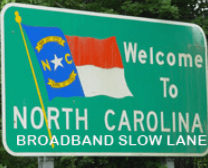
North Carolina: The home of the House-sanctioned broadband slow lane.

Not a single Republican member of the North Carolina House of Representatives stood with consumers yesterday as the cable industry’s custom-written anti-community-broadband bill — H.129 — passed the House in a lopsided 81-37 vote. Fifteen Democrats joined them, some after it was apparent the bill would enjoy lockstep support from their Republican colleagues.  Only three dozen Democrats were willing to choose the interests of their constituents over the interests (and campaign contributions) from Time Warner Cable, AT&T, and CenturyLink.

Rep. Bill Faison (D-Orange) told WRAL-TV voters need to be aware H.129 was Time Warner’s custom-written bill imposing harsh terms and conditions on community broadband networks, while exempting big cable and phone companies.

“Where’s the bill to govern Time Warner?” Faison asked.

Faison predicted the bill will make it next to impossible for any future community broadband effort to deliver service, even in areas where nobody else has or will.

In the communities of Mooresville and Davidson, House Speaker Thom Tillis (R-Cornelius), who represents north Mecklenburg including Davidson and Rep. Grey Mills (R-Mooresville) both voted for the bill, throwing the local community-owned MI-Connection cable system under the bus.  That cable system, acquired from bankrupt Adelphia Cable and rebuilt to modern standards, faced unexpected financial hurdles from the decrepit state the infrastructure was left in when it was sold.  H.129 would limit the system’s ability to reach its entire natural service area in an effort to remain viable, likely banning service for unincorporated Mecklenburg and Iredell counties, and parts of the community of Corelius.

Avila’s statements defending her bill ranged from confusing to the downright absurd — particularly the assertion that high tech businesses will avoid North Carolina if her bill didn’t pass because companies would not want to do business in a state where the local government provided competing broadband service.  That’s a ludicrous notion for a business confronted with 1.5Mbps DSL from CenturyLink.  No high technology business will want to do business in a state that delivers some of the nation’s least adequate broadband service.  With Ms. Avila’s efforts, that fact of life could gain rubber stamp approval from many in the state legislature more interested in protecting the profits of New York-based Time Warner Cable than Wilson, N.C.-based GreenLight.

The bill is headed to the Senate next.  We’ll have a Call to Action up shortly regarding this.

If your member from the House of Representatives is not on the list below, they need to be held accountable for doing the wrong thing for North Carolina broadband.

NC House of Representatives Members Voting For Consumers By Opposing H.129

(Click the name of your member to obtain current contact information, and please send thanks for their vote yesterday.)


Party District Member Counties Represented
Dem 58 Alma Adams Guilford
Dem 107 Kelly M. Alexander, Jr. Mecklenburg
Dem 106 Martha B. Alexander Mecklenburg
Dem 21 Larry M. Bell Sampson, Wayne
Dem 63 Alice L. Bordsen Alamance
Dem 60 Marcus Brandon Guilford
Dem 7 Angela R. Bryant Halifax, Nash
Dem 100 Tricia Ann Cotham Mecklenburg
Dem 50 Bill Faison Caswell, Orange
Dem 24 Jean Farmer-Butterfield Edgecombe, Wilson
Dem 114 Susan C. Fisher Buncombe
Dem 43 Elmer Floyd Cumberland
Dem 33 Rosa U. Gill Wake
Dem 45 Rick Glazier Cumberland
Dem 66 Ken Goodman Montgomery, Richmond
Dem 54 Joe Hackney Chatham, Moore, Orange
Dem 119 R. Phillip Haire Haywood, Jackson, Macon, Swain
Dem 29 Larry D. Hall Durham
Dem 57 Pricey Harrison Guilford
Dem 56 Verla Insko Orange
Dem 39 Darren G. Jackson Wake
Dem 59 Maggie Jeffus Guilford
Dem 115 Patsy Keever Buncombe
Dem 42 Marvin W. Lucas Cumberland
Dem 30 Paul Luebke Durham
Dem 34 Grier Martin Wake
Dem 69 Frank McGuirt [ Appointed 03/07/2011 ] Anson, Union
Dem 9 Marian N. McLawhorn Pitt
Dem 5 Annie W. Mobley Bertie, Gates, Hertford, Perquimans
Dem 44 Diane Parfitt Cumberland
Dem 72 Earline W. Parmon Forsyth
Dem 118 Ray Rapp Haywood, Madison, Yancey
Dem 38 Deborah K. Ross Wake
Dem 23 Joe P. Tolson Edgecombe, Wilson
Dem 35 Jennifer Weiss Wake
Dem 55 W. A. (Winkie) Wilkins Durham, Person
Dem 71 Larry Womble Forsyth


Verizon Launches FiOS-TV in Albany, NY; Company Still Expanding Service in Existing Markets

Phillip Dampier March 28, 2011 Broadband Speed, Competition, Consumer News, Verizon, Video 3 Comments

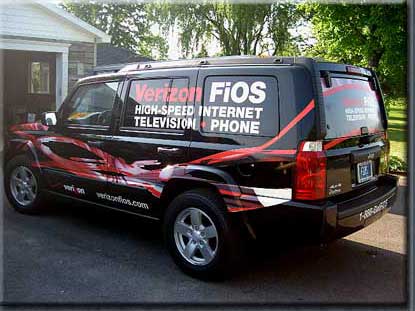
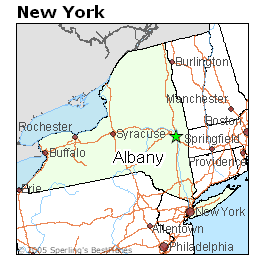
The 500 channel universe has arrived for around 23,000 households around the state capital as Verizon officially unveiled its FiOS television service last week.

The company added television to its broadband service offering after securing video franchise agreements in suburban Bethlehem, Colonie, Guilderland, and Scotia.  It also expects to win approval to provide television service to the nearby city of Schenectady and the town of Colonie shortly.

The arrival of Verizon’s triple-play package begins with a $100 monthly promotional package (go to Verizon’s FiOS website and the online price can be lower) including phone, Internet, and television service for a year, rivaling a similar $99 promotion on offer for new customers from incumbent Time Warner Cable. But Verizon delivers faster broadband service and more HD channels than its cable rival, and will deliver up to 535 channels to subscribers — 130 in High Definition.

“Consumers and small businesses in these communities at long last have a better choice for TV,” said Tracey Edwards, president and general manager for Verizon’s Upstate New York region. “We’ve had great success in many other parts of the state. Now it’s time to bring FiOS TV to this part of northeastern New York and provide customers in the region a choice that is truly different from the cable TV company.”

Verizon officials also claimed the introduction of FiOS TV would result in lower prices for local residents, a claim that does not necessarily hold up when examining the rates for each company.  Both deliver triple-play promotions and retention offers that come within a few dollars of each other.

Time Warner Cable says Verizon’s service does not come with the same local commitment to the region the cable operator has provided with its local news channel YNN, and features that allow customers to start programs over from the beginning or watch live streams of 32 channels on the company’s iPad application.

But the fact a new choice is now available has delighted some of our readers.

Jeff in Guilderland says a number of Albany residents were upset when Time Warner Cable unveiled its $99 promotion which turned out not to be available to existing customers.

“They only give the best prices to their least loyal customers who are ready to cancel their service or sign up as new customers,” Jeff says.  “We’ve had cable from these guys for over a decade and when we sought a temporary price break, they wanted to give us a $20 credit — thanks for nothing.”

Now Jeff says with Verizon around, Time Warner better offer more than that.

Verizon put expansion of its Verizon FiOS fiber-to-the-home service on hold more than a year ago, stopping new cities from winning new options made possible with fiber optics.  But Verizon is still continuing to meet its commitments to communities where the network has already broken ground.  Where communities have not given Verizon video franchise agreements, Verizon markets its broadband and phone options.  But delivering video completes the triple play package many consumers want.

[flv width=”640″ height=”500″]http://www.phillipdampier.com/video/Albany Gets FiOS TV 3-26-11.flv[/flv]

WNYT and WXXA-TV reports some Albany-area residents can now get FiOS TV, showing Verizon is still expanding its FiOS product line in areas where fiber has already been laid.  (3 minutes)

Search This Site:

Contributions:

Recent Comments:

Your Account:

Stop the Cap!