Home » Broadband Speed » Recent Articles:

Road Runner Extreme/Wideband Arrives in Greater Rochester; Broadband Price Promotions

Phillip Dampier April 28, 2011 Broadband Speed 10 Comments

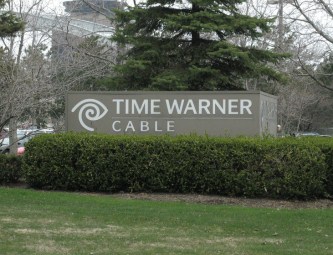
Time Warner Cable's office on Mt. Hope Avenue in Rochester, N.Y.

More than two years after Time Warner Cable unveiled its DOCSIS 3 cable modem upgrade for New York City customers, Time Warner Cable has begun rolling out faster speeds in the metro Rochester area.  Rochester is the last upstate city to get DOCSIS 3, and Time Warner Cable has only soft-launched the upgrade in selected parts of the area — especially on the east side extending into Wayne County.

According to a Time Warner Cable representative we spoke with this afternoon, the service can now be ordered by customers in the following towns:

  • Webster
  • Perinton
  • Sodus
  • Macedon
  • Medina
  • Lima
  • Covington

What do these communities all have in common?  They were all suffering from some congestion problems earlier this year.  Webster, in particular, was one of the worst-impacted areas.  Our readers reported dramatic speed reductions during peak usage times, often slowing to 1Mbps during the evening hours.  The most curious town on the list is Covington — a tiny community of 1,300 in extreme northeast Wyoming County.  Time Warner solved their congestion problems, and those experienced by other towns with DOCSIS 3 upgrades.

The representative we spoke with indicated a service call is required to activate either Road Runner Extreme (30/5Mbps) or Wideband (50/5Mbps).  A modem replacement is necessary.  Rochester area customers do not pay a modem rental fee, so the replacement comes free.  Signature Home customers in these areas should soon see 50/5Mbps speeds, if they have the company’s DOCSIS 3 modem.

Time Warner Cable will slowly expand the service to their other Rochester/Finger Lakes Region customers, with an estimated completion date of early summer.  The representative warned us not every Time Warner Cable representative may have the latest information allowing customers in these areas to order the service, so if you are told it is not available yet, and you live in one of these towns, you may want to try calling again.  Most of the Rochester area operators are briefed on the expanded service, but many in Buffalo are not, we were told, and there is no way to tell where your call will be answered.

Time Warner Cable has also unveiled some new price promotions for western New York.  Time Warner Cable’s website now sells its broadband-only service for a whopping $54.95 a month for Standard 10/1Mbps service.  Turbo runs an additional $10 a month (15/1Mbps service.)  That’s $15 more per month than just a few years ago when service could be had for $39.95 a month.  Broadband-0nly customers pay the highest prices because the company wants to drive its customers into multi-service bundled offerings.  The more services you take from Time Warner, the lower the price for each of them.

But for now, Road Runner Standard can be had by new customers for $33 a month for 12 months.  Turbo costs an extra $5 per month, making the out the door price for both around $38.  After the first year is up, prices go up.  Time Warner Cable in Rochester can be reached at (585) 756-5000.

Verizon’s 4Gee, It’s Down (Still): Nationwide LTE Outage Extends Into Second Day

Phillip Dampier April 27, 2011 Broadband Speed, Verizon, Wireless Broadband 1 Comment

Verizon 4G users across the country are still without their super-fast wireless service thanks to a major outage that wiped the LTE network out for users of the HTC Thunderbolt, Samsung Charge, and mobile broadband units from Novatel and Samsung.

The network has been down since late Tuesday evening, and Verizon took their sweet time telling customers, only admitting the outage after media outlets began reporting on it.

Verizon Wireless spokesman Jeffrey Nelson says 4G users are temporarily being punished with data sessions that use Verizon’s ancient 1XRTT data connection — largely worthless for most broadband apps:

We are aware of an issue with 4G LTE data connections and our network engineers are working to resolve this quickly. We have determined the cause of our issue and are working with our major vendors to restore connections.

  • 4G LTE Smartphones will still be able to make calls.
  • Customers are temporarily unable to activate any 4G LTE devices.
  • Please note: Customers may experience a 1XRTT data connection during this time.
  • After determining the cause of our 4G LTE network connection issue, we are continuing to work to restore connections.
  • We expect to see the network restored on a market-by-market basis. Timing and additional details will be provided as they become available.

Lucky for Verizon comparatively few customers rely on LTE service.  As of late Wednesday evening, the service remains down.


Shaw Increases Broadband Speeds You Can’t Use For Long Because of Data Caps

Phillip Dampier April 20, 2011 Broadband Speed, Canada, Data Caps, Online Video, Public Policy & Gov't, Shaw Comments Off on Shaw Increases Broadband Speeds You Can’t Use For Long Because of Data Caps

Shaw Communications today announced they are boosting speeds on one of their popular broadband tiers — Shaw Extreme, from 15/1Mbps to 25/2.5Mbps.  The current price for the Extreme plan remains the same.  So does the monthly usage limit of 100GB.

Customers appreciate the faster speed, but are not impressed Shaw has continued to limit customers to how much service they can use.

“Now I can hit my 100GB usage cap that much faster,” shares Shaw customer Dan Peek, who lives in Calgary.  “Shaw just completed dozens of listening tours, but they are obviously not listening at all.  What good are the faster speeds when you are effectively limited from using your broadband account to full advantage?”

Shaw claims the new broadband speeds are part of an effort to unveil new Internet packaging anticipated for early summer.

“It’s an exciting time at Shaw as we begin to create a world-class Internet product, giving our customers the ultimate experience in connectivity and entertainment,” said Peter Bissonnette, President, Shaw Communications Inc. “The Shaw Extreme speed upgrade is just the first spark of a whole new world of entertainment and offerings to come. We’re building the network of the future and our customers are at the very heart of it.”

Shaw also plans to introduce new equipment options, including a new box that will allow customers to access files stored on personal computers on their television set.  Shaw’s efforts suggest the company recognizes customers are increasingly interested in accessing multimedia content with their broadband connections.  Unfortunately, the company’s usage caps preclude customers from doing more than dabbling.

“It’s a PR effort made for the Canadian government and the Canadian Radio-television and Telecommunications Commission,” offers Peek.  “This summer they will be in Ottawa promoting their new broadband speeds as evidence the Canadian ISPs are not the backwater players they’ve always been, all while hoping their usage-based billing schemes will get a pass.”

Peek suggests broadband speed is not Canada’s biggest broadband challenge — the usage caps are.

“If you asked most Canadians if they would prefer 10Mbps service with no cap or 20Mbps service with caps starting at 40GB per month, people will take the slower speed,” Peek says.  “Shaw doesn’t seem to understand that basic message.”

Shaw's usage billing shark is still circling western Canada. The company may have increased speeds, but their 100GB usage cap on the Extreme tier remains.

Shaw’s listening tour across western Canada brought “summaries” from company officials that are being criticized by several Shaw customers who were at the meetings.

“I was at one of the Calgary meetings and the “summary” that showed up after the fact was the work of one of Shaw’s marketing hacks,” says Steve, a Stop the Cap! reader.  “The one thing they left out of the summary is the fact we do not want these caps and that they are not justified by the facts.”

Steve claims Shaw left customer demands for the end of usage caps out of their summaries, even though many customers brought up how much they hated usage-based billing and caps.  But there was plenty of room for customers who asked, “why should low usage customers pay for usage,” something Shaw’s customers in fact don’t do.  Another frequent meme from Shaw — “[customers] rejected the idea of subsidizing high bandwidth consumers.”

“That’s Shaw propaganda designed to fix a pre-determined conclusion around their distorted facts,” Steve says.  “The company presented charts and graphs with their world view and asked customers to comment on them in a focus group-like setting.  If you didn’t know those ‘facts’ were actually company ‘positions,’ you end up debating their numbers on their terms.”

Steve thinks Shaw’s version of “fair” is unique to Canada and would never be accepted in the United States.

“When you have media types parroting Shaw’s claim that practically nobody exceeds their usage limits, it quickly allows the cable company to claim heavy users are abusing the system, necessitating the caps,” Steve says.  “Now that Netflix is here, we’re all going to be heavy users now.”

Marie from Burnaby, B.C. confirmed Shaw’s new Extreme speeds were active as of this evening, noting speed test results of 20Mbps downstream and just over 2Mbps upstream once she reset her cable modem.  But she considers it of little value because of the usage cap.

“This will help our family when we’re all sharing the connection after school and at night, but since the 100GB cap remains unchanged, those faster speeds invite more usage, which will also eventually bring a higher bill,” she writes.

Commentary: Plans to Expand EPB’s 1 Gigabit Fiber Network Shelved After a Festival of Lies

Commercial providers and their pals in the legislature will go to any length — even lie — to protect their cozy duopoly, charging high rates for poor quality service.

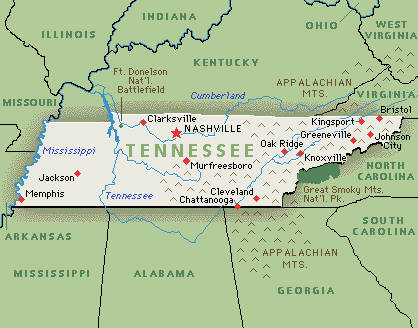
That fact of life has been proven once again in the state of Tennessee, where an effort to expand EPB Fiber — a community owned fiber network — to nearby communities outside of Chattanooga, was killed thanks to a lobbying blitzkrieg by Big Telecom interests.

The “Broadband Infrastructure for Regional Economic Development Act of 2011,” supported by chief sponsor House Majority Leader Gerald McCormick, (R-Chattanooga), is dead after telecom industry lobbyists unleashed a full court press to stop the legislation from passing into Tennessee law.

The bill would have permitted EPB and five other municipal electric services that have or are developing broadband infrastructure to expand service up to 30 miles outside of their service area, where appropriate, to meet the needs of businesses or consumers.

With the legislation, EPB could bring its 1 gigabit fiber broadband service to Bradley County, home to a future Amazon.com distribution center.  Amazon already operates a huge warehouse in Hamilton County, where it was able to obtain EPB’s super-fast broadband service.  According to Harold DePriest, EPB President and CEO, Chattanooga’s fiber network is helping sell the city as a high-tech mecca for business, where broadband connectivity is never a problem.

DePriest says EPB’s network has been a proven job-creator, and Amazon.com’s ongoing expansion in the region is just one example.

Chattanooga residents and businesses now have the fastest broadband service in the southern United States, at prices often far less than what the competition charges.  Expanding EPB’s success to other parts of Tennessee represents a major threat to the likes of Comcast and AT&T, the state’s dominant telecom companies.

EPB provides municipal power, broadband, television, and telephone service for residents in Chattanooga, Tennessee

Lobbyists fought the bill off with some whopper tall tales about the “horrors” of community broadband.

Some Republican lawmakers friendly to Comcast and AT&T’s point of view have bent their philosophical positions on government and regulation into logic pretzels.  One has even called for EPB to be regulated by Tennessee’s Regulatory Authority, a body many state Republicans feel is about as helpful as a tax increase.

Despite that, there was Rep. Curry Todd (R-Collierville) at a recent hearing telling fellow lawmakers EPB and other community providers should be regulated by the TRA to protect ratepayers from the “loss of tremendous amounts of money coming out of taxpayers’ pockets.”

Does Todd think Comcast and AT&T should also be regulated?  Of course not.  Nobody should protect consumers from AT&T’s and Comcast’s relentless rate hikes.  Todd cannot even get his facts straight.

After 19 months, EPB has 25,500 customers — far ahead of its projections, and is well ahead of its financial plan, according to DePriest.  So much for being a “financial failure.”

Rep. Curry Todd has trouble with the facts, but has no problem counting campaign contributions amounting to more than $12,000 from Comcast, AT&T, the state cable lobby and other telecom companies

On cue, the same cable industry that tried to sue EPB Fiber out of existence is now comparing the Chattanooga fiber network to Memphis Networx, a disastrous effort by that city to build a public-private wholesale fiber optic network only business and institutions could directly access.  It’s hard to earn critical revenue from consumers when you run a wholesale network.  Even harder when you build it just before the dot.com crash.

EPB sells its service directly to business and consumers, so it gets to keep the revenue it earns, paying back bondholders and delivering earning power.

Stop the Cap! reader John Lenoir notes some of the local tea party groups are also being encouraged to oppose EPB’s efforts to expand.

“Just as Americans for (Corporate) Prosperity is lying about North Carolina’s community broadband, these corporate front groups are also engaged in demagoguery over EPB in Tennessee,” Lenoir says.  “In addition to the usual claims EPB represents ‘socialism,’ the locals are also being told EPB wants to use their fiber network to run smart meters, which some of these people suspect are spying on them or will tell people when they can and can’t use their electric appliances.”

Lenoir in unimpressed with the telecom industry arguments.

“AT&T’s opposition is downright laughable, considering this company raised its rates on U-verse and will slap usage limits on every broadband customer in a few weeks,” Lenoir adds.  “We thank God EPB is here because it means we can tell AT&T to stick their usage limits and Comcast can take their overpriced (and usage limited) broadband somewhere else.”

Lenoir thinks EPB should embarrass both AT&T and Comcast, but since neither company feels any shame in his view, it’s more about business reality.

“Why do business with AT&T or Comcast and their gouging ways when you can sign up for something far better and support the local community,” Lenoir asks.

AT&T spokesman Chris Walker complains that the phone company is somehow faced with an unlevel playing field in Tennessee, despite the legislature’s repeated acquiescence to nearly every AT&T-sponsored deregulatory initiative brought before it.  The company wants a “level playing-field” statute like the very-provider-friendly (it should be — it was written by them) one currently before the North Carolina state Senate.

Comcast questions whether anyone needs 1 gigabit service, but the cable company’s Chattanooga vice president and general manager Jim Weigert told the Times Free Press it could deliver 1 gigabit service… to business customers… assuming any asked.

DePriest questions that, noting Comcast tops out its broadband service at 105Mbps, and only for downstream speeds.  Comcast upload speeds top out at 5Mbps.  EPB can deliver the same upstream and downstream speeds to customers and do it today.

Don’t Meet Me in St. Louis — AT&T and Charter’s Internet Overcharging

One of America’s largest midwestern cities is being victimized by not one, but two major Internet Service Providers with Internet Overcharging schemes that will limit broadband use by customers.

Charter Communications, which calls St. Louis home, delivers cable service to much of the city, and has lightly enforced arbitrary usage limits on its cable broadband customers since last November.  AT&T, the major telephone provider, plans to limit its DSL and U-verse customers starting in early May.

“Now we get to choose between Charter’s usage cap or AT&T’s,” says Reginald, a Stop the Cap! reader in St. Louis.  “As usual, AT&T is always the bigger ripoff — this company hasn’t done one consumer-friendly thing in at least a decade.”

Reginald is currently a U-verse customer who fled Charter around the time the cable company went bankrupt.

“Charter was, is, and will always be abysmal in providing good service and accurate bills, and I was not about to pay for their business mistakes,” Reginald writes.  “When U-verse became available I told AT&T I was signing up because they were offering unlimited use plans and Charter was playing games with their usage cap.”

When AT&T’s cap is in place, St. Louis residents will get to choose between the lesser of two evils:

Usage Limits

  • AT&T DSL Customers:  150GB per month
  • AT&T U-verse Customers:  250GB per month
  • Charter Lite/Express: 100GB per month
  • Charter Plus/Max: 250GB per month
  • Charter Ultra 60: 500GB per month

AT&T will deliver three warnings and then a higher bill — $10 for each 50GB of “excess usage.”  Charter sends out occasional warnings, then reserves the right to terminate your service.

“It stinks, and if I had my way I would not do business with any provider who has a usage cap,” Reginald says.  “I would rather pay a few dollars more a month and not have to worry, and I can’t imagine I’ve ever used over 100GB in a month.”

Jess, another St. Louis resident, pulls the plug on AT&T U-verse May 2nd.

“I almost wanted them to charge me an early cancellation fee so I could pound them with their sudden change of terms,” Jess says.  “I am switching back to Charter on May 2nd, the day AT&T starts their crap.  AT&T acted all surprised about why I would possibly ever not do business with them over this issue.”

Jess says she would rather deal with warning letters from Charter than a higher AT&T bill.

“Every penny more AT&T gets from us goes right into their lobbying to screw consumers more, and here are the results for everyone to see,” Jess says.  “If Charter wants to pull their games with me and my family, the next step is to declare war on the politicians who let this stuff happen.”

Bill says AT&T offered him a discount to stay with the company — he is canceling his U-Verse service May 1st.  But he refused, telling AT&T he will not do business with a company that engages in Internet Overcharging.

“I’m not too worried about Charter,” Bill writes Stop the Cap! “If they try and threaten me, I’ll let them cut me off and then we’ll sign up under my wife’s name, and bounce from account to account.”

Your money = Their Money

For all three of our readers, none of whom claim they will exceed the allowance, it’s a matter of principle.

Reginald, Jess, and Bill all feel strongly usage caps and overlimit fees are unjustified, and are more about protecting video packages than “unclogging” providers’ networks.

Bob Zimmermann, an AT&T customer in Richmond Heights, tells the Post-Dispatch he doesn’t like the new limit either. He watches an occasional Internet movie, and sometimes downloads video to his iPad. He doubts he’ll exceed the cap, but he doesn’t want to worry about it.

He is shopping for alternatives.

“I’ll see if I can negotiate a better deal,” he told the newspaper.

Jess wishes him luck finding someone else in St. Louis.  She suggests customers like Zimmermann play AT&T and Charter off each other to get a lower bill, at least temporarily.

“What is most important right now is to tell AT&T you are leaving them because they are abusive, and then sign up with a new customer discount with Charter,” Jess suggests.  “Then if and when Charter cuts you off, go back to AT&T and see if you can get them to waive any fees after the third warning or else you are switching back to Charter.”

Another alternative is to sign up for Charter’s business service, which has no usage cap, but comes at a significantly higher price than residential service.  Their starter package includes unlimited Internet at 16/2Mbps speeds, a domain name, and a business phone line with unlimited long distance and calling features.  It runs a steep $120 a month.

“If Charter didn’t offer a 500GB allowance on their 60Mbps tier, I might consider a business package if I used my connection a lot,” admits Bill.  “Isn’t it ridiculous when someone wants to sell you a super fast package you cannot really use because of usage limits?”

Bill partly blames the state legislature for letting AT&T get abusive with customers.

“AT&T shows up with a lot of cash to dole out in the Missouri legislature and in return they get to abuse customers,” Bill notes.  “You notice Verizon cannot get away with this in the more consumer-protection-friendly northeast.”

Jess says the whole thing is a mess.

“It really shows how the midwest is getting screwed once again — this time for Internet access,” she notes. “There is no Verizon fiber here, and even Google showing up in Kansas City won’t be enough to shame the likes of AT&T.”

Search This Site:

Contributions:

Recent Comments:

Your Account:

Stop the Cap!