Home » Broadband Speed » Recent Articles:

Kinston Mayor Defends Broadband Duopoly Throwing Rural North Carolina Under the Bus

Phillip Dampier May 12, 2011 Broadband Speed, Community Networks, Editorial & Site News, Public Policy & Gov't, Rural Broadband Comments Off on Kinston Mayor Defends Broadband Duopoly Throwing Rural North Carolina Under the Bus

Phillip Dampier

Stop the Cap! reader Angela sent us a print-out, by mail, of a recent guest editorial published by the online news site, the Lincoln Tribune.  White, who is 89 and lives in North Carolina was irritated by the piece, written by Kinston, N.C. mayor B.J. Murphy.

“B.J., who was all of 29 when he was elected in 2009, is the first Republican mayor in Kinston since Reconstruction, and after writing pro-cable company nonsense like he did in that [online] paper, he better be the last,” White wrote.  “My mother and father grew up with the same kind of monopoly these cable companies have today, only then it was the damn railroads.  How we ended up electing a mayor who wants us back in that era is beyond me.”

What caught my attention early on skimming the mayor’s views was a single passage early on in his piece:

Municipal broadband, also known as Government Owned Broadband Networks (GONs) is quickly becoming our state’s new enterprise service of choice for cities and towns.

Really?  GONs?  Now I’ve been editing Stop the Cap! since mid-2008, and we’ve covered North Carolina’s broadband landscape extensively, and this is the first time I’ve ever seen community-owned broadband referred to as “Government Owned Broadband Networks.”  A quick Google search reveals why: it’s a loaded term conjured up by corporate-funded, dollar-a-holler groups that oppose public involvement in broadband.  People don’t like “government” they surmise, so let’s relabel these networks accordingly.  Besides, bin Laden is dead and we can’t use him.

In this case, the acronym ‘GONs’ doesn’t even make sense — shouldn’t it be GOBN?  But that wouldn’t sound as demagogic as “gones,” would it?

Your cable dollars pay for consultants who cook up these silly labels, which are not even accurate.  Community-owned broadband need not be a “government-owned” enterprise it all.  Some are public-private partnerships, others are co-ops or run on a not-for-profit basis independent of government.  What they do have in common is the ability to offer better broadband than the “take it or leave it” service many cable and phone companies provide, if they deliver it at all.

After getting past the pretzel-twisted acronym, it’s clear Mayor Murphy is no fan of community broadband.

I believe we should refrain from the temptation to compete with private communications providers on services and infrastructure that we are not equipped to properly manage.
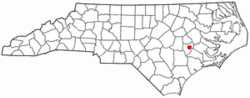
Kinston, N.C.

Who is “we” exactly?  The city of Kinston?  Mayor Murphy must not believe in the talents and abilities of his employees.  Is Mayor Murphy confessing he is in the ironic position of attacking local government while also being an integral part of it?

Most of Murphy’s editorial is a rehash of talking points already delivered by dollar-a-holler groups like the Heartland Institute or something called the Coalition for the New Economy.  The hypocrisy of both “small government” groups calling for more government regulation on certain broadband providers while exempting their corporate friends and backers is lost on them.

Murphy suggests municipal utilities are not well run, and the locals evidently complain regularly about the one serving Kinston.  Are the complaints about service in other towns about companies like Duke Energy and CP&L — private providers — any fewer in number?  Who exactly loves their local gas and electric company?

Murphy concedes “many cities and towns throughout the years have seen voids in service or infrastructure, not easily duplicated by the private sector.  Those areas of service tend to be water, sewer, and sometimes electricity.”

Our rural grandparents lived that life, waiting for electricity and telephone service that private companies refused to provide because it was simply not profitable enough for them to do so.  In fact, NC Public Power was created precisely because private companies wouldn’t deliver electric service in rural North Carolina.  Just 30 years ago, the state allowed municipal construction of generating plants because there were fears private companies lacked the resources to handle the growth in electricity demand.  The Three Musketeers: Mayor Murphy, the Heartland Institute, and the “Coalition” would prefer cities go dark waiting for private capital to show up?  And at what rate of return would they demand from a state in desperate circumstances?  Imagine the complaints rolling in over that.

And so it goes with rural broadband — a service still not reliably available throughout rural communities in Murphy’s state and 49 others.  The problem of rural North Carolina’s pervasive lack of consistent service is so bad, the Golden LEAF Foundation targeted rural broadband development in 69 North Carolina counties, most lacking more than the slowest speed DSL.  Lenoir County, which includes Kinston is not among them.  Perhaps Murphy’s myopic views apply in his local community, but they certainly don’t in large parts of the rest of the state.  Nobody is forcing the mayor to build Kinston a broadband network.  It would be nice if he didn’t advocate away that right for other less fortunate areas.
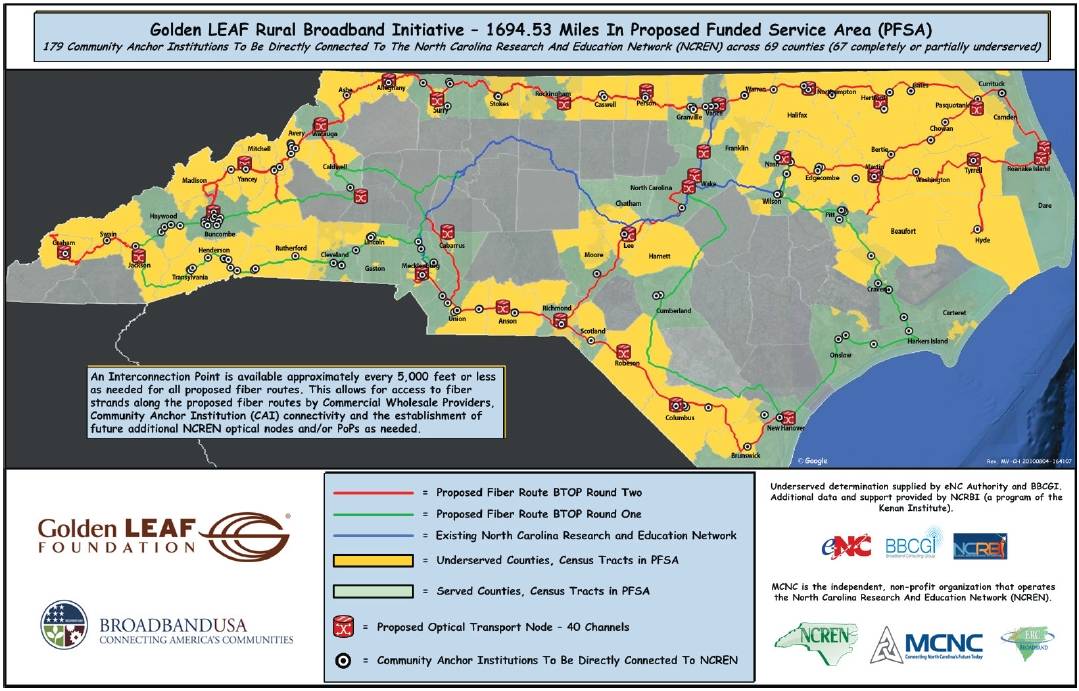
Golden LEAF Broadband Project (click to enlarge)

Golden LEAF’s initiative, which is just one of several projects in the state, has garnered more than 130 letters of support including approximately 70 from state, county and municipal officials and 12 from middle-mile and last-mile service providers interested in using the fiber network to reach consumers and small businesses.  Part of the project is being funded by federal tax dollars.  Many of the providers eager to connect to that network are private companies, who seem to have no problem hopping on board a fiber backbone paid for, in part, by taxpayer dollars.

Other projects are community fiber to the home networks, designed to support high bandwidth requirements of the digital, knowledge-based economy.  These community providers didn’t appear out of nowhere.  Communities built these networks after incumbent providers refused upgrade requests, repeatedly.  Some communities even open up their existing municipal fiber networks to residential use.

The hue and cry among those opposing community broadband usually begins when these new providers start selling service to the public.  Private providers don’t complain when public networks provide service only to schools, health care facilities, and public buildings.  But when anyone can sign up, the complaints rage from corporate-funded dollar-a-holler groups, the companies themselves, and certain politicians, some who take campaign contributions from the other two.  The talking points are remarkably similar.  Too similar.

Murphy

Mayor Murphy makes an unfortunate comparison in his editorial — to those railroads which made Angela’s hair stand on end.

“His only experience with that monopoly and the barons who ran it came from his American History class and he wasn’t paying attention,” she says.

Government better serves the people by creating the framework for private business to thrive, not by actually owning or competing with private, tax-paying businesses.  Rarely, if ever, will one see two railroad tracks side by side owned by different companies.  Yet, that is what would happen with broadband service in many communities. In many cases, GONs would essentially use taxpayer dollars to build Internet infrastructure on top of that which has already been put in place by private providers.

Uh

Is the mayor actually promoting a monopoly for broadband?  I suggest the mayor read our earlier piece about the historical plight of Danville, Virginia — a community on the border with North Carolina.  He will learn that those one-railroad-towns desperately wanted a second or third railway serving their community, if only to escape the horrible and expensive service monopolies and duopolies provided in places without sufficient competition.  It took decades to break the railway monopolies up, and consumers and businesses overpaid millions of dollars to robber barons who fixed prices and the type of service communities would receive.  That kind of control could make or break the economy of a town or city.  So it will be with broadband.

Of course, the mayor could suggest we liberalize access to existing broadband infrastructure and allow competitors to sell services on every available network, or allow a community to build one giant fiber optic pipeline on which every provider can deliver service, but we know what his free market friends would say about that.

Boiled down, Murphy’s arguments come from a position of already having access to the broadband resources he needs, wants, and can afford.  That’s a classic example of “I have mine, too bad you don’t have yours”-politics.

That seals the fate of rural North Carolina to an indefinite future of never getting broadband service.


10 Turkish Cities Getting 1Gbps Broadband; Turkcell Upgrades Budget Plan to 20Mbps Service

Phillip Dampier May 12, 2011 Broadband Speed 1 Comment

Ten Turkish cities are getting major speed upgrades from their fiber-to-the-home provider Turkcell, which announced this week they are doubling the speed of their basic plan and introducing 1Gbps service.

“Through our investments, amounting to nearly $890 million U.S. dollars over the past three years, Turkcell Superonline has continued to pioneer the fiber-optic era in Turkey,” said Turkcell CEO Süreyya Ciliv.  “Now we are proud to provide a 1,000Mbps Internet speed service in Turkey.”

Superonline General Manager Murat Erkan announced current budget plan customers would get free speed upgrades from 10Mbps to 20Mbps, with no rate change.  Budget plan customers can choose from a usage-limited plan offering 4GB of monthly usage for $18 a month, or unlimited use for $31.

Higher speed unlimited use packages are already available, including 50Mbps for $63 a month and 100Mbps for $126 a month.  The new 1Gbps package is pricey by any consumer’s standard — $634 a month, but even at business rates is a bargain for any company paying for dedicated data circuits. Turkcell even offers a pay-as-you-go Internet package for many of their speed tiers.  Pay $3.17 a month for the connection and around $5 per gigabyte of usage.  On vacation or away for an extended period?  Just pay the connection fee — no usage charges.

Fiber service is currently available in Adana, Ankara, Antalya, Bursa, Istanbul, Izmir, Gaziantep, and Kocaeli.  Two additional cities will be wired by the end of 2011.

For the rest of Turkey, ADSL, bonded ADSL, and some ADSL 2+  service predominates, with speeds ranging from 2-16Mbps.  Unlimited and usage quota packages are available starting at around $18.40 a month.  The first six months of service are provided at a special discounted rate of $6.33.

In comparison, American cable company ISPs charge an average of $40-50 a month for 10/1Mbps service, $50-60 for 20/1Mbps service, and $99 a month for 50/5Mbps service.

Mexican Cities Getting Multiple Fiber to the Home Providers While You Are Stuck With 3Mbps DSL

Phillip Dampier May 11, 2011 Broadband Speed, Competition 1 Comment

Telefonos de Mexico is known as Telmex, the country's largest telecommunications provider.

Mexico’s largest phone company Telefonos de Mexico SAB is not about to allow themselves to be outgunned by upstart competitors like mobile-phone carrier Grupo Iusacell SA, which is installing fiber to the home broadband service in up to 40 cities offering 100Mbps speeds.  Now they are working on a fiber to the home network of their own, planned to reach up to one million Mexicans by the end of this year.

Mexico’s broadband expansion is coming on all fronts.  Cablevision (no relation to the U.S. company with the same name) is delivering cable broadband service to an increasing number of cities.  But news that consumers will soon have the choice of not one, but two fiber to the home networks has the country buzzing with excitement.

“Fiber-to-the-home is the best technology that exists,” Martin Lara, an analyst at Corp. Actinver SAB in Mexico City told Bloomberg News. “It’s going to be good for the consumer.”

The broadband speeds in Mexico will rapidly exceed those in the United States if the two fiber providers end up in a speed and pricing war .  For now, Telefonos plans on offering packages of 10, 20 and 50Mbps to subscribers.  That may increase to 100Mbps if competitors make an issue about maximum available speeds.  That’s quite a change from traditional DSL packages from Telefonos, which range from 1-5Mbps in most areas.

Upstart Iusacell is Mexico's third largest cell phone provider, but it has big plans for fiber-to-the-home service.

Iusacell, mostly known for its cell phone service, is building its own quad-play of wired fiber broadband, television, and telephone service — wireless and wired.  It’s Totalplay package risks Telefonos’ decades of dominance in the Mexican telecommunications marketplace, so the phone company is investing to compete.  The company’s Telmex landline customers are switching to wireless just like customers in the United States and Canada, so developing an attractive multi-element package is critical to keeping customers.

Mexico’s telecommunications laws are different from those in the United States.  Mexico’s dominant phone company has traditionally been prohibited from offering video services to their customers — a policy designed to protect cable providers and other competitors from heavyweight competition.  Those policies are likely to be revisited as a result of competitive fiber initiatives.  Additionally, Mexican providers have not been required to wire entire communities as part of operating agreements, and many don’t.  Instead, most cable and fiber providers build in lucrative neighborhoods where higher income residents live, often leaving poorer neighborhoods unwired. Foreign investment is also common in Mexico, with American and British companies joining Mexican super-billionaire Carlos Slim in financing and/or building out the advanced networks.

Mexico’s decision to adopt the latest fiber technology straight to customer homes increases questions about why American providers are mostly unwilling to do the same.

Boston’s Cable Conundrum: Mayor Upset With Comcast Rate Hikes, But Did Little to Bring Competition

Menino

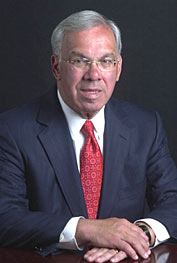
Boston Mayor Thomas Menino has problems with Comcast.  The cable operator, long a dominant player in the city of Boston, has been raising basic cable prices for the last several years, and the mayor’s office has had enough.  This week Menino filed a petition asking the Federal Communications Commission to give the city “emergency control” over the price of basic cable service in Boston — the only control permitted in the largely deregulated cable television marketplace.

Menino waved a study done at the behest of the city showing residents were paying substantially higher prices for the lowest level of service from Comcast.  Basic Service, which includes 37 local over the air stations and a handful of shopping and public access channels costs $15.80 inside city limits — up from $9.05 in 2009.  In nearby Cambridge, the same service costs $7.30 a month.  What’s the difference?  Cable rates are completely deregulated in the city, but smaller communities around Boston lack sufficient meaningful competition, so they are permitted by law to continue regulating rates for the lowest tier: Basic Service.

Now Menino wants those rates brought back under control for the benefit of seniors and low income residents, among the 10,000-15,000 local homes that subscribe to the economy service.

It’s just the latest challenge for Boston, which is among a few cities along the coast of the northeastern United States not benefiting from aggressive broadband and video competition between the phone and cable company.  Just over 200 miles away, metropolitan New York and the bedroom communities in that state, as well as New Jersey and Connecticut, have access to super fast broadband from Verizon FiOS, Time Warner Cable, Cablevision, and Comcast — the latter predominately serving greater Philadelphia.

Boston has been bypassed for Verizon FiOS, is ignored by other potential cable competitors, and is stuck with poor-performing cable overbuilder – RCN, which has focused most of its efforts on multi-dwelling apartment and condo units in the city.  The rest of Boston gets ‘take it or leave it’ service from Comcast or DSL from Verizon.

Comcast was quick to respond to Menino’s call for reregulation, noting they provide $5 senior discounts for their cable customers and offer cheaper service than the alternatives — $17.50 a month from RCN or between $30-35 for promotions from DirecTV and DISH Satellite.

Menino’s dealings with telecommunications companies in Boston have run hot and cold for years.  In February, Menino appeared with Comcast senior vice president Steve Hackley to celebrate the opening of a Digital Connectors program for up to 2,800 low income households, paid for by federal stimulus grant money.  Under the program, students who complete computer training courses receive discounted Comcast Internet service for $10.95 a month for the first year and $15.95 for the second year.

Boston

Menino’s office has often been a watchdog when it comes to Comcast fulfilling its franchise obligations, and the city had high hopes competition from RCN would extend a choice of cable providers to most city residents.  That has not happened.

The city’s other telecommunications provider, Verizon, has been in contention with the city for several years.  The trouble began in 2007 when Menino declared war on property tax exemptions for utility poles dating back to 1915, granted to telecom companies like Verizon.  Four years later, that battle has culminated in Verizon literally wiring its fiber optic FiOS service around the city of Boston, refusing to deliver service inside it.

The promise of Verizon fiber has often gone unfulfilled or delayed in many larger cities, subject to bureaucratic delays not experienced in smaller communities.  Some towns and villages in Massachusetts signed franchise agreements just a few months after the company came knocking.

One local official, not authorized to speak publicly on the matter, told Stop the Cap! many communities welcomed Verizon’s fiber optic initiative with open arms.

“You have to understand there is a different mentality among government officials in smaller towns than there is among larger cities,” the official tells us. “In our town of 35,000 when Verizon offered to wire competitive service in our area, we wanted to know where to sign and when they could get started.”

The official says the local government was concerned about making sure Verizon repaired any damage to local infrastructure, abided by local zoning rules, and guaranteed they would not bypass parts of the town.  Negotiators also fought for funding to upgrade equipment for the community’s public access channels, but never went into the negotiations thinking about how much they could extract from the phone company.

“In larger cities in this state, there is a definite mentality that Verizon represents a golden goose ready and willing to lay golden eggs in return for franchise agreements,” the official told us.  “Maybe that is true, but when you are in a smaller town, you recognize the degree of willingness to invest capital to tear out old wires and replace them with fiber is far less here than a city like Boston, which has the potential of many more customers.”

Boston, like other large cities, prepared for protracted negotiations with the phone company over the new fiber service.  At the same time, Mayor Menino infuriated Verizon when he won his property tax lawsuit against the company, collecting $5 million in tax payments that one city official rubbed in.

Ronald W. Rakow, Boston’s commissioner of assessing, told the Boston Globe at the time: “We will actually be sending a bill to them for that later today,’’ Rakow said. “Don’t want to let the ink dry.’’

No Verizon FiOS for Boston

The argument over property taxes may have been the final straw for Verizon FiOS in Boston.  Menino suspected as much, telling the Globe “they insinuated that we weren’t going to get it because of my position on telecommunications.’’

Even then-Verizon CEO Ivan Seidenberg warned the city during a speech at the Boston College Chief Executives’ Club of Boston “to be careful when considering new taxes or regulations.”

Verizon has since stopped expanding its FiOS service to new cities.

“We knew as the financial crisis grew we were smart to sign up earlier rather than later, because if we didn’t, we would never have the service today,” the local official tells us.  “I have sympathy with local officials in every city trying to do what is best for their residents, but anyone who understands wired telecommunications should know these kinds of projects are exceedingly rare — grab them when you have the chance.”

Just a few years later, the impact of earlier decisions not to hurry competition into the city of Boston and the city’s tax policies have become clear:

  • Comcast may be forced to reduce their Basic Service rate, but nothing prevents them from increasing Digital Service cable rates to make up the difference;
  • RCN’s network has languished, providing competitive choice to just 15,000 local residents.  Comcast serves at least 170,000;
  • Verizon has no plans to offer FiOS in the city indefinitely;
  • Menino’s victory claim that Verizon should pay its fair share in property taxes seems less victorious today as the phone company began passing on the new taxes to ratepayers as a “Massachusetts Property Tax Recovery Surcharge” in March, 2010.
  • No other competitor has appeared on the horizon willing to take on Comcast in the city of Boston.

Getting the Best Rate for Broadband-Only Service from Time Warner Cable

With Time Warner Cable’s broadband now running as high as $50 a month for standard, stand-alone service, getting the best deal possible can save you as much as $20 a month off those prices.  Time Warner Cable has been repricing their services to deliver the most value to customers who bundle all of the company’s products into a single package.  But if you don’t want television or telephone service from the cable company, you are going to pay a lot more than your service-bundled-neighbors for Road Runner High Speed Internet.

Stop the Cap! presents our strategy to help broadband-only customers get the best possible prices from Time Warner Cable:

Choose Earthlink

Customers paying Time Warner Cable’s regular prices for broadband service are paying too much.  Time Warner currently charges just short of $50 a month for Standard 10/1Mbps service (speeds are slower in some areas).  That’s up from years of charging $40 a month, slightly higher if you were a broadband-only customer.  But with the help of Earthlink, you can cut that broadband bill to $29.99 a month for the first six months.  Earthlink co-exists with Road Runner, Time Warner Cable’s own broadband service.  With just a few mouse clicks and a quick phone call, Time Warner can switch your regular price Road Runner to Earthlink without any equipment changes.  Billing and service will continue to be provided by Time Warner and the change literally takes less than five minutes by phone.

You can escape Time Warner Cable's Road Runner rate hike by switching to Earthlink service at a substantial discount.

Earthlink’s broadband service is indistinguishable from Road Runner — same speeds, same level of service, with two exceptions:

  • Earthlink does not benefit from PowerBoost, which delivers temporary speed increases during file downloads
  • You will forfeit your rr.com e-mail address

We recommend you avoid using ISP-provided e-mail addresses when possible, because they help tie you down to an existing provider.  Instead, sign up for a free e-mail account from Google’s Gmail, or Yahoo! Mail, or any of the dozens of other web-based e-mail providers.  Or, purchase your own domain name from GoDaddy or 1and1, which includes e-mail, and either read it on those sites or forward it to a web-based e-mail provider.  Domain names can be had for under $10 a year and deliver maximum flexibility for those who want the freedom to change Internet providers.

After Six Months, Switch Back to Road Runner

When your Earthlink promotion expires at the end of six months, your price will increase to $41.95 per month.  Just before that happens, switch back to Time Warner Cable’s Road Runner service.  You qualify for new customer pricing promotions.  As of this week, Time Warner Cable in western New York is offering one year at $29.99 per month for 10/1Mbps service.  Other areas may have different pricing promotions.

After the year is up, you can start all over again, heading back to Earthlink for another six month promotional term.  Earthlink has offered its promotional plan for more than two years, and it shows no signs of ending anytime soon.

Promotional Half-Truths

Promotions come and go from Time Warner Cable, so it is wise to check with them often if the $29.99 deal is not currently running in your area.  Start by checking Time Warner Cable’s website, and remember if you are using Earthlink, you will want to select pricing for new customers.  If you find a good price on the website, you may be able to complete your order online.  Otherwise, call your local office and ask about currently running promotions.  Some common ones:

  • Road Runner Turbo at 50% off for the first year;
  • Road Runner Turbo free for six months;
  • Road Runner with wireless router/modem free for six months to one year;
  • Road Runner with free installation (especially useful if you want Road Runner Extreme/Wideband service, which carries a pricey installation fee);
  • Road Runner for $29.99 for six months;
  • Bundled promotions — $99 for all three services, $79 for broadband/cable or broadband/phone

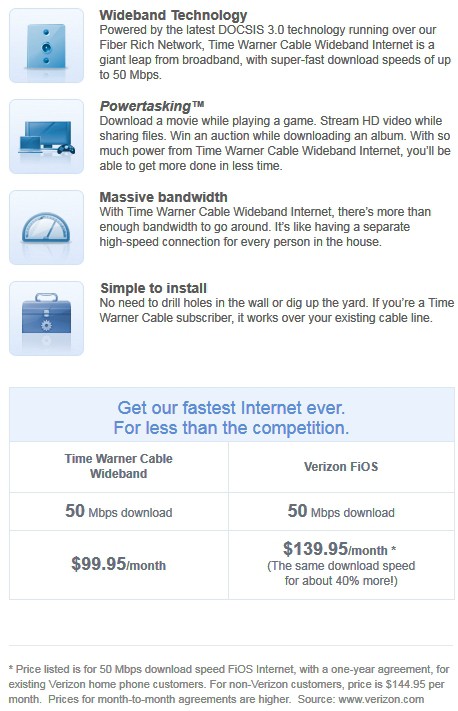
Not every promotion delivers the best deal for customers, and some have been slightly deceptive, such as this speed comparison we found on the cable company’s website this morning:

Our View:

  1. Time Warner Cable has been spanked before for their claims about running a “fiber network.”  In fact, their “Fiber Rich Network” is a marketing stretch.  All modern cable systems use fiber optics to help distribute their service into various communities, but coaxial copper cable delivers the signal through neighborhoods to your individual home.  Cable companies still cannot match the broadband speeds available on an all-fiber network.
  2. “Powertasking” is a meaningless marketing claim.  Any high speed network will allow the entire family to effectively share a broadband connection.
  3. We’re glad to know Time Warner Cable has “massive bandwidth” — more than enough to go around.  We’ll remember that if and when the company ever entertains bringing back their experimental Internet Overcharging scheme they claimed was necessary to pay for equipment upgrades to cope with broadband traffic growth.
  4. It would be simpler to install Time Warner’s DOCSIS 3 upgrade if we could do it ourselves, but the cable company currently requires a mandatory service call ($67.98 fee) to install it.
  5. Time Warner is being cute comparing their broadband speed with Verizon FiOS.  In fact, FiOS is faster because of what isn’t mentioned here — upstream speeds.  Time Warner tops out at 5Mbps, Verizon offers 20Mbps for uploads.  But Time Warner’s pricing is better at that download speed.  Verizon is more aggressively priced when they bundle services together.  For example, Time Warner’s $99 triple play bundle only offers 10/1Mbps service.  Verizon offers up to 25/25Mbps service for the same price.  Both include phone and television service.

Search This Site:

Contributions:

Recent Comments:

Your Account:

Stop the Cap!