Home » Broadband Speed » Recent Articles:

Time Warner Cable Increasing Prices (Again) and Teases Faster Broadband in WNY

Phillip Dampier May 19, 2011 Broadband Speed, Consumer News 9 Comments

Another rate increase

Time Warner Cable is raising prices again, less than five months after their last rate increase which took effect in January in the Rochester area.

This time, the cable company is adding $1-2 dollars for each premium movie channel, already battered by cord-cutting and consumers cutting back on high cable bills:

Effective with your July 2011 billing, the price for premium channels will be adjusted as follows:

  • HBO: $13.95$14.95
  • Cinemax:  $10.95$12.95
  • Showtime:  $10.95$12.95
  • Starz:  $10.95$12.95

This rate increase covers the Rochester/Finger Lakes region, but other areas can expect similar pricing in the future.  The response to these price hikes will likely bring another round of cord-cutting as consumers increasingly look for less expensive alternatives.
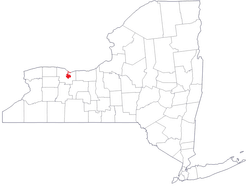
Rochester

We also note a Brighton customer who signed up for the $29.99 12-month promotion for Road Runner Standard on Time Warner Cable’s website is currently fighting with the cable company over claims the real price of the promotion is $34.95 — the $5 difference reflecting a hidden modem rental fee.  If true, it will be a first for the Rochester area where cable modems have always come with the service at no additional charge.  We are waiting to learn whether this is a mistake or something new for Rochester.

In other news, Time Warner Cable has been teasing some customers on the company’s waiting list for Road Runner Extreme (30/5) and Road Runner Wideband (50/5Mbps) DOCSIS 3 broadband service.  Several people, myself included, received phone calls earlier today notifying us the service was now available in our area.  Don’t you believe it.  After more than 45 minutes (and a call back a few hours later), we were told the service was not actually available in our area… yet.  It’s certainly an annoying situation for both those getting the calls and the confused customer service representatives who then had to disappoint.

Interested customers can call (585) 756-1119 and bypass the usual voice prompts and speak directly with a customer service representative.  They verify service availability based on the phone number/address on the account.  Installation fees of around $68 apply, and although some customers report having them waived or reduced, we’ve heard the $68 fee often ends up on the bill anyway.

Anecdotal reports indicate early adopters are experiencing some technical glitches getting consistently fast speeds, but these are usually remedied after service calls or refreshing the cable modem from the office.
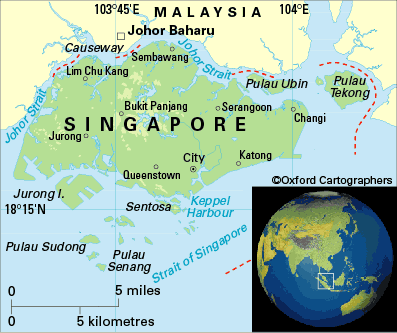

Singapore Extends Fiber to the Home Across the Country – 1Gbps “A National Priority”

Homes and businesses across Singapore are rapidly being wired with fiber to the home broadband service as part of the country’s Next Generation Nationwide Broadband Network.

Under the Intelligent National 2015 Master Plan, the Infocomm Development Authority of Singapore (IDA) has specified fiber broadband as the only technology capable of meeting the country’s requirement that all homes, offices, and schools have a minimum capacity of 1 Gigabit per second broadband no later than 2015.

Government officials have declared Gigabit broadband “a national priority” to keep Singapore a world leader in high tech business, medical care, and innovative education.  The country considers older broadband standards, including ADSL, cable broadband, and wireless service inadequate or outdated, and began installing fiber optic cables in 2009.

Singapore’s advanced fiber network is a public-private partnership between four partners – Axia NetMedia (Axia), Singapore Telecommunications (SingTel), Singapore Press Holdings (SPH) and SP Telecommunications (SPT).  Government policy has helped reduce red tape and the country’s largest telecommunications companies are working together to build a single fiber platform on which various services can deliver what they call “a richer broadband experience with more choices at more affordable prices.”

Residents and businesses are being encouraged to participate with incentives like free installation, which represents a savings of $300 or more over regular installation costs.  A third-party company, OpenNet, has been contracted to handle wiring, installation, and maintenance of the fiber network.

Once installed, customers can choose any provider they like to establish service.  One of the country’s largest — SingTel, is already selling access at speeds currently up to 150Mbps:

Consumer Plans exPress 50 exPress 100 exPress 150
Monthly Subscription
(24 months contract)
Inclusive of GST
$48.28
U.S. Dollars
$56.38
U.S. Dollars
$69.28
U.S. Dollars
FIBRE SPEED (Up to)
Download 50Mbps 100Mbps 150Mbps
Upload 25Mbps 50Mbps 75Mbps
International 15Mbps 15Mbps 15Mbps

Once the country’s fiber network is firmly established across the entire country, speeds will be increased.  Singapore has solved the domestic broadband speed problem, but like other countries in and around the South Pacific, international capacity remains constrained, and so are broadband speeds for international destinations.  But several undersea fiber projects are expected to vastly expand capacity within five years, allowing providers to eventually lift speed caps.

While many of Singapore’s residents live in multi-dwelling units like apartments and condominiums, many others live in individual homes.  Singapore decided fiber access must be ubiquitous, so coverage will extend to all types of buildings.

[flv width=”640″ height=”380″]http://www.phillipdampier.com/video/OpenNet Overview Singapore 5-2011.flv[/flv]

This video contains an overview of Singapore’s fiber network, how it will be installed, what services it brings, and how it is being marketed across the country.  (14 minutes)

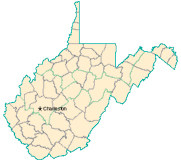
West Virginia Upset With Current State of Broadband; Companies Losing Business Over Lack of Service

At least 41 percent of West Virginian economic development professionals responding in a new survey rate their area’s existing broadband service as “not very good,” a result that could have profound implications for high tech economic development in the state because of poor quality business broadband service.

Some of the results of the survey, conducted by Internet Service Provider Citynet:

  • 77% said government involvement in steering broadband policy was “very important.”
  • 78% believe modern, reasonably priced broadband Internet infrastructure is “extremely important” or “very important” in competing against other locations for jobs.
  • On a 10-point scale, broadband Internet infrastructure (8.56) rates as slightly more important than road improvements (8.26) and water infrastructure (8.26).

“Seventy-eight percent of respondents say it has been their experience that businesses considering locating in their areas place high priority on access to affordable, high-speed Internet when evaluating site selections,” said Jim Martin, president and chief executive officer of Citynet. “And 66 percent say cost and capacity of broadband service are factors more than half of the time when discussing new business prospects.”

Some participants in the survey said they are losing business prospects in part due to the lack of broadband capacity, its speed or cost. Most of the professionals said they were “very familiar” or “somewhat familiar” with broadband expansion programs, such as middle-mile infrastructure, being implemented in adjoining states.

In West Virginia, most broadband expansion is being done by “last-mile” service provider Frontier Communications, which took over most of the state’s landlines from Verizon.  For most homes and businesses outside of areas where cable companies compete, Frontier provides DSL broadband service ranging from 1-3Mbps in smaller communities, perhaps 7Mbps or slightly better in larger cities.

West Virginia has proved to be one of the least impressive states for broadband owing to its terrain and large number of rural communities, providing few incentives for robust competition.  That has meant slow speed service at high prices.

Survey respondents were less than impressed:

  • “I have a project pending [and] will probably lose it based on costs of broadband.”
  • “The lack of high speed service in the rural areas totally extinguishes the possibility of new small business start-ups.”
  • “Prospects don’t look here because of the lack of high speed, affordable, reliable broadband…. Current speeds of up to 3 mb while may be suitable for residential use are not suitable for business.”
  • “Not only do too many areas still not have broadband, but too many places where people live do not have it and that affects the quality of life issue when attracting a prospect to live, work and play in WV.”
  • “We were looking at a possible location of a data center and the lack of affordable, large capacity broadband was a deciding factor in them not locating in WV.”
  • “We need the middle-mile and trunk-line services in West Virginia to remain competitive for many of today’s industries. What good is it if we get high-speed to every place in West Virginia, when we can only reach each other and do not have the facilities to get out of the state and into the major lines?”
  • “[We] lost a company that looked at an existing building located in an area that doesn’t have high-speed access. They ended up locating in another area.”
  • “You are not in the game without it.”
  • “What are we waiting for?”

Citynet has a dog in this fight.  Martin has tangled with Frontier Communications in the past year over broadband stimulus funding and where taxpayer dollars are being spent in the state.  While Frontier has touted “fiber projects” in West Virginia, those are primarily directed at increasing capacity for Frontier’s middle-mile network between its telephone exchanges, in hopes of expanding DSL further out into rural areas.  The company is also trying to address congestion issues that have grown since buying out Verizon’s landline-based broadband business.

Martin has criticized state officials for supporting Frontier’s efforts because the company will end up owning and controlling the network built, in part, from taxpayer dollars.

Stop the Cap! hears regularly from ordinary consumers in the state who are dissatisfied with their broadband choices, especially when they come from just a single provider — Frontier.  Slow speeds, poor service, and repeated service outages have been documented here and by the state’s local media.  Some outages are attributable to Verizon’s poor quality infrastructure (now owned by Frontier), others to Frontier’s unwillingness to replace that infrastructure — instead choosing to repair it, even if further outages occur later.

United Arab Emirates Forecast to Achieve 100% Broadband Penetration by 2012

Phillip Dampier May 17, 2011 Broadband Speed, Competition, Public Policy & Gov't, Rural Broadband Comments Off on United Arab Emirates Forecast to Achieve 100% Broadband Penetration by 2012

United Arab Emirates

While North American broadband providers complain about the costs of wiring America’s rural expanse, the United Arab Emirates is on track to deliver 100 percent of its citizens with high speed broadband service by the end of next year.

The UAE made fiber optic broadband a priority, despite the fact the individual emirates that make up the federation are often separated by vast, rural salt pans, sand dunes, and mountain regions.

Sultan Bin Saeed Al Mansoori, UAE’s Minister of Economy told attendees at the Abu Dhabi Telecoms CEO Summit that despite the fact the country is already a mature market for telecommunications products, healthy competition is driving providers to temporarily reduce revenue expectations as they invest heavily to deliver better service to the UAE’s 8.3 million residents.

Broadband providers in the UAE already deliver a vastly superior experience than most customers in North America receive, and the country is currently measured as the world’s fifth fastest by Akamai.  The average broadband connection speed in the UAE exceeds 25Mbps, and that is before fiber-to-the-home service becomes available to nearly every home in the Emirates.

Al Mansoori

Providers are spending considerable sums of money to improve their networks to deliver faster, more reliable service to even the most rural communities.

”Customers definitely have gained from this diversity,” noted Al Mansoori.  “For operators, revenues have dropped in the short term but I understand this was something anticipated, and which the industry is well-equipped to eventually absorb.”

The Telecommunications Industry Association (TIA) reports 2011 may be the biggest year ever in communications spending, with the world’s fastest growing telecommunications markets being in the Middle East and Africa.

The UAE’s largest phone company, Etisalat, is now a major player in 18 markets across the Middle East and North Africa and has over 100 million customers.

Al Mansoori noted that fiber-to-the-home service was best equipped to deliver UAE world-class broadband service at an affordable rate to consumers.  He further recognized that robust competition inspired the country’s telecommunications companies to choose that technology to best compete with other players in the market — wired and wireless.

“Superior infrastructure that enables social and economic growth that keeps the UAE in the forefront of technology is an integral part of our development vision,” he declared.

New Study Proves What You Already Knew: Satellite Fraudband Is No Replacement for the Real Thing

The Rural Mobile and Broadband Alliance (RuMBA) USA released a whitepaper this week concluding that satellite-delivered broadband is more promise than results.

“When measured against the prevailing definition of broadband, satellite technology falls far short of conventional wired and wireless alternatives, mainly due to latency, bandwidth, price, performance and service shortcomings,” the Alliance wrote in a statement.

In other words, everything.

“Given the limitations of satellite Internet service detailed in this report, RuMBA cannot consider satellite a viable solution for rural communities who are increasingly cut off from mainstream America by the lack of access to affordable broadband service,” says Luisa Handem, founder and Managing Director of RuMBA USA.

“There is every indication that America’s reliance on broadband is only going to increase, especially in the areas of business, education, healthcare, government and entertainment, so it is vital that America’s rural communities have all the facts before deciding on broadband access, and delivering those facts is what this paper is about,” says Sascha Meinrath, Director of Open Technology Initiative, New America Foundation.

Among the Key Findings:

  • The latency inherent in satellite Internet connections limits their use for standard broadband functions such as Voice over IP (VoIP) and Virtual Private Networks (VPNs).
  • The capacity limits of satellite Internet service rule out broadband functionality taken for granted by Americans living in communities served by cable, fiber optic, and DSL services. These functions include automatic software updates, online backup, streaming video, telecommuting, and website hosting.
  • Notwithstanding those limitations satellite Internet service is less affordable than wired Internet service.

While Stephen Cobb, author of a whitepaper on the subject, considers satellite Internet access an amazing technology, it has proved to be a poor substitute for ground-based, wired alternatives, including DSL.

More than 20 million rural Americans live without any access to the Internet, despite the country’s growing reliance on broadband service.  Those that do subscribe to satellite service generally report a dismal experience, in part because of a punitive usage limit that dramatically lowers already-slow speeds when exceeded.  Weather disturbances and heavy snow can also disrupt satellite signals, and contract terms often carry hefty termination fees if one cancels before the end of the contract.

Search This Site:

Contributions:

Recent Comments:

Your Account:

Stop the Cap!